America's librarians are taking a feud with Amazon and other publishers to Congress as lawmakers investigate competition in digital markets.
Driving the news: The American Library Association said libraries are struggling to acquire ebooks because of an "abuse of market power by dominant firms," as part of a report for the House Judiciary Committee's digital markets investigation that was made public Thursday.
Amazon's stock fell sharply Thursday after the company narrowly missed analysts' expectations on earnings per share for the third quarter, reporting $4.23 vs. the expected $4.62. The tech giant's revenue for the quarter was higher than expected ($69.9 billion vs. $68.8 billion), CNBC reports.
The big picture: It's not yet clear why Amazon missed expectations, but analysts have raised questions about how much the retailer's move this year from two-day to one-day Prime delivery will cost as it becomes widely implemented.
More than 800 independent musicians announced an initiative on Thursday called "No Music for ICE," pledging not to participate in Amazon-sponsored events or exclusive partnerships with the tech giant over its entanglements with the U.S. immigration authority.
Republican FTC Commissioner Christine Wilson wants her agency to probe how social media companies use consumers’ information to shape the algorithms that determine what their users see and read.
Why it matters: A wide-ranging study of social media data practices could lay the groundwork for more enforcement from the agency, as well as legislative recommendations to Congress.
Twitter's stock took a significant premarket hit Thursday after the company reported that it missed third-quarter revenue and advertising expectations due to several "headwinds," like product issues and greater-than-expected advertising setbacks in July and August.
The state of play: The company blamed a series of bugs that impacted its ability to monetize users' engagement, including a bug that was revealed earlier this quarter that allowed users' phone numbers and email addresses to be used for advertising micro-targeting.
Technology has advanced to the point where research study participants can be identified by their MRI scans even after all other identifying information has been stripped, according to an experiment detailed yesterday in the New England Journal of Medicine and reported on by the New York Times.
Why it matters: If stored medical data were leaked, it could potentially be used to identify study participants for marketing, scams or even stalking.
For decades, America's tech giants scaled up quietly — paying little attention to the cities and towns that hosted them. Now, they're answering to the communities that have felt the most acute effects of their explosive growth.
Why it matters: Much of the backlash against Big Tech is occurring on a national — or even global — scale, but the giants are realizing some of their toughest and priciest fights are in their hometowns.
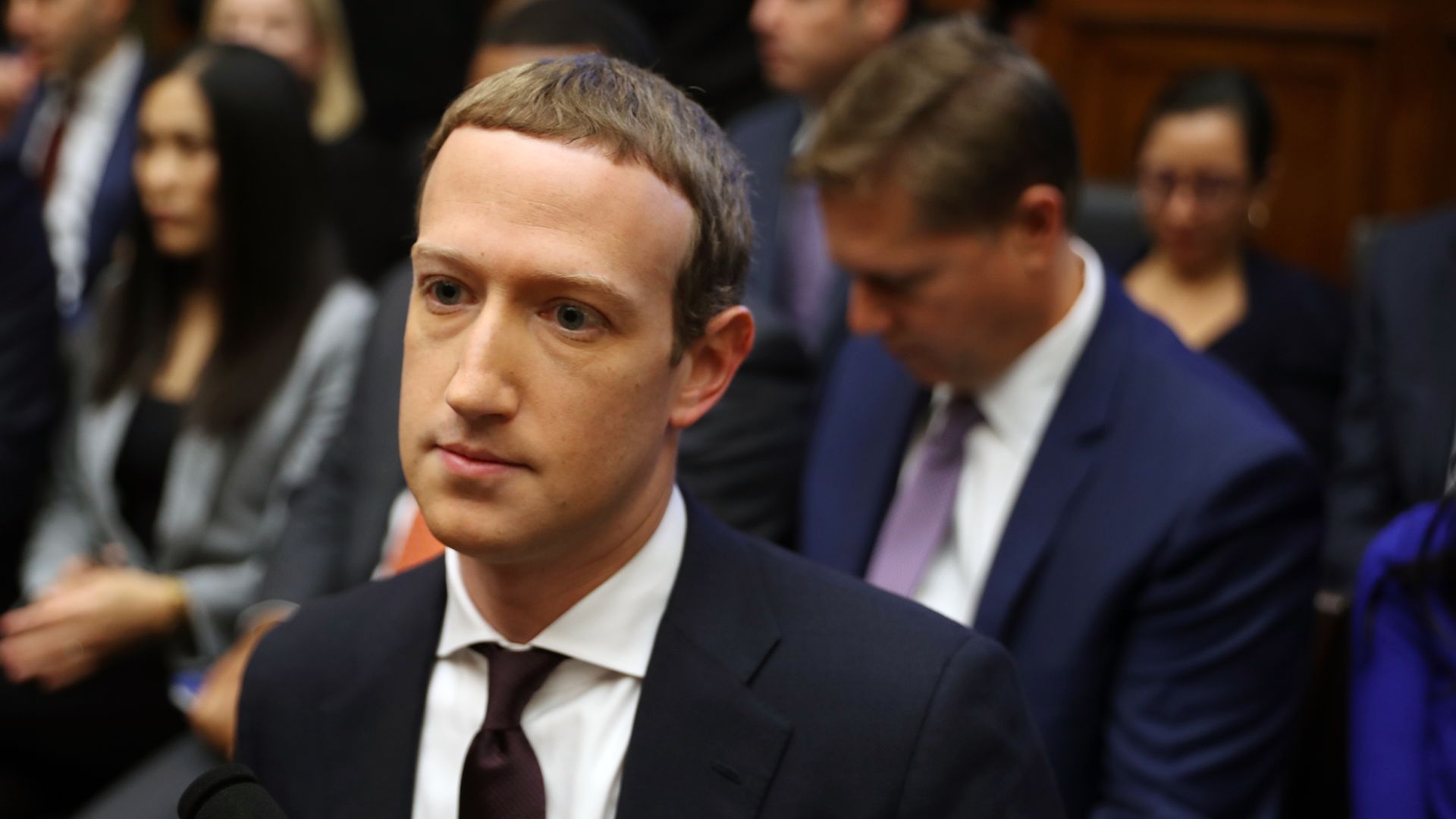
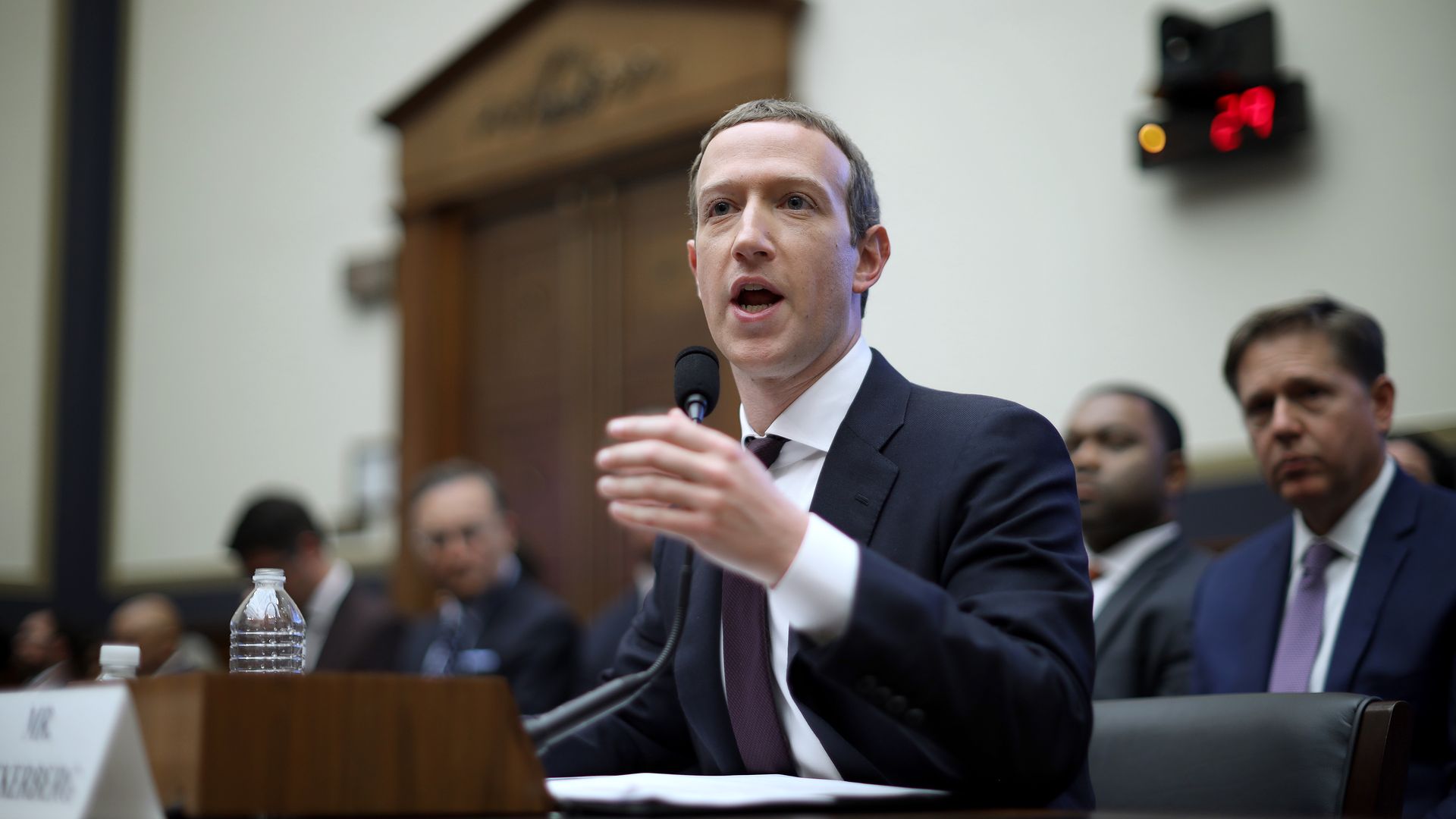
More than 50 members of Congress barraged Facebook CEO Mark Zuckerberg from all directions at a six-hour House Financial Services Committee hearing on Wednesday that ranged far afield from its ostensible topic — Facebook's cryptocurrency project, Libra.
Driving the news: Instead, Wednesday's hearing focused on Facebook's handling of discrimination and civil rights and its lack of diversity, its role in elections, free speech and content moderation, monopolistic behavior, anonymity, terrorism, child sexual abuse, and more.
In a paper published Wednesday in the journal Nature, Google reportedly achieved a milestone by using quantum computers to solve a calculation in mere minutes that current machines could not complete in thousands of years.
Why it matters: "Quantum supremacy," the achievement Google is touting, would represent a big but early step toward reliable quantum computers that could solve some currently intractable problems.
97% of tweets from U.S. adults regarding national politics came from only 10% of users in a yearlong analysis conducted by the Pew Research Center.
Why it matters: Those with intense opinions on President Trump — especially those who strongly disapprove of him — are "among the most prolific political tweeters," Pew notes.
Databricks, a San Francisco-based data analytics SaaS company, raised $400 million in Series F funding led by Andreessen Horowitz at a $6.2 billion valuation.
Why it matters: Because this one can legitimately lay claim to all the hottest enterprise software buzzwords, from open-source to machine learning to cloud.
The agenda for Facebook CEO Mark Zuckerberg's return to Capitol Hill Wednesday before the House Financial Services Committee is largely devoted to Facebook's cryptocurrency project, Libra.
Yes, but: Rep. Maxine Waters, the committee's chair, lit into Facebook in her opening statement, making clear that the hearing would be about all the other charges lawmakers have leveled against the social network, too — including monopolistic behavior, discrimination, privacy violations, breaches in election security, and whether the government should break up Facebook.
Boeing reported Wednesday that its third-quarter revenue fell 21% from a year earlier to $20 billion, and profits fell 51% to $1.17 billion, according to the Washington Post.
Why it matters: The company's sales have slowed as it waits for regulators to approve proposed software fixes for the 737 MAX, which is a mandatory step before the jet can return to service.
California, Delaware and Utah are the states that best protect users' online privacy in 2019, according to an annual ranking by privacy and cybersecurity research firm Comparitech.
Why it matters: States are taking the lead on online privacy protections in the U.S. as bipartisan efforts in Congress have yet to produce a federal privacy law.








/2019/10/23/1571850077076.gif?w=3840)