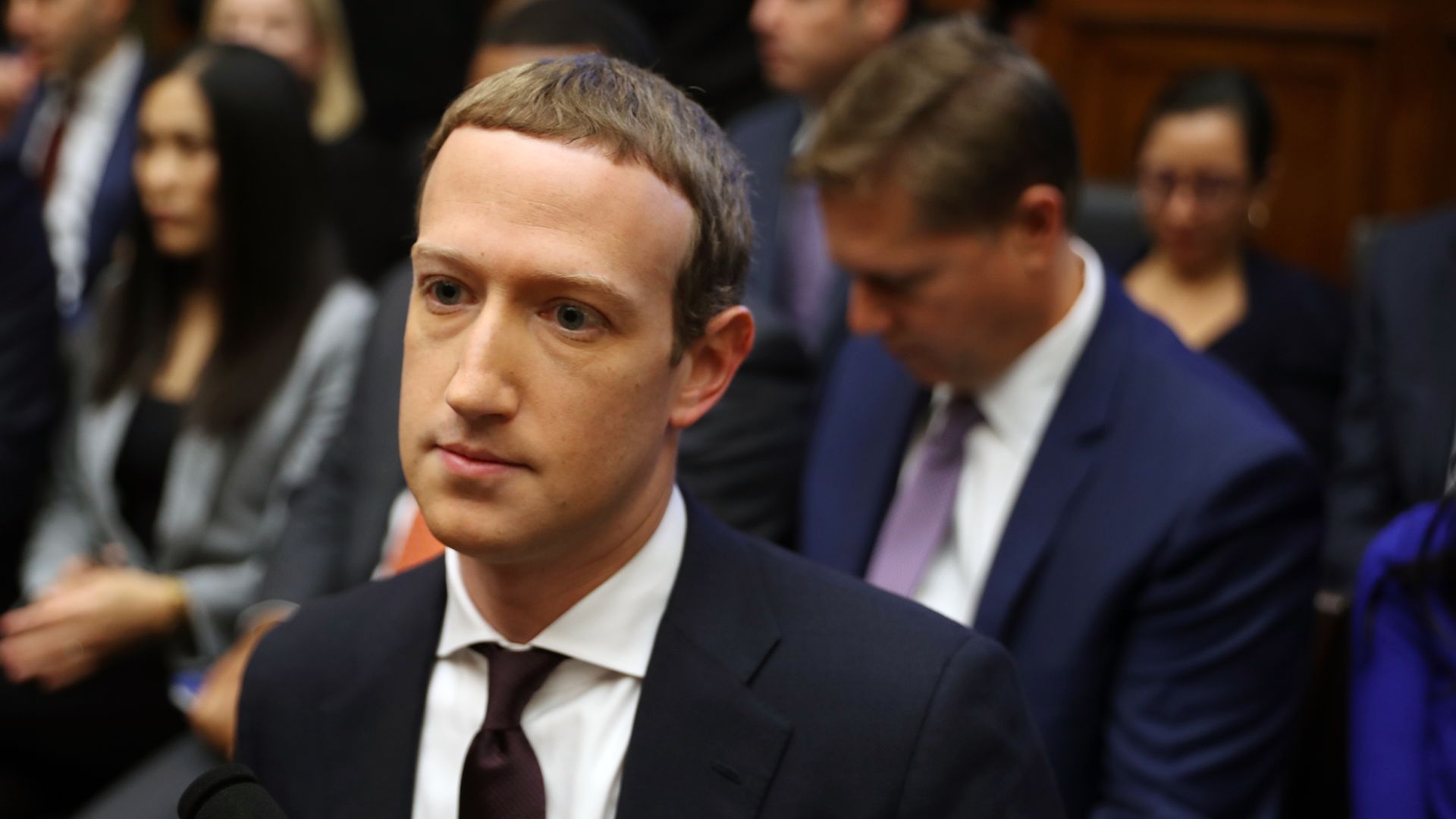
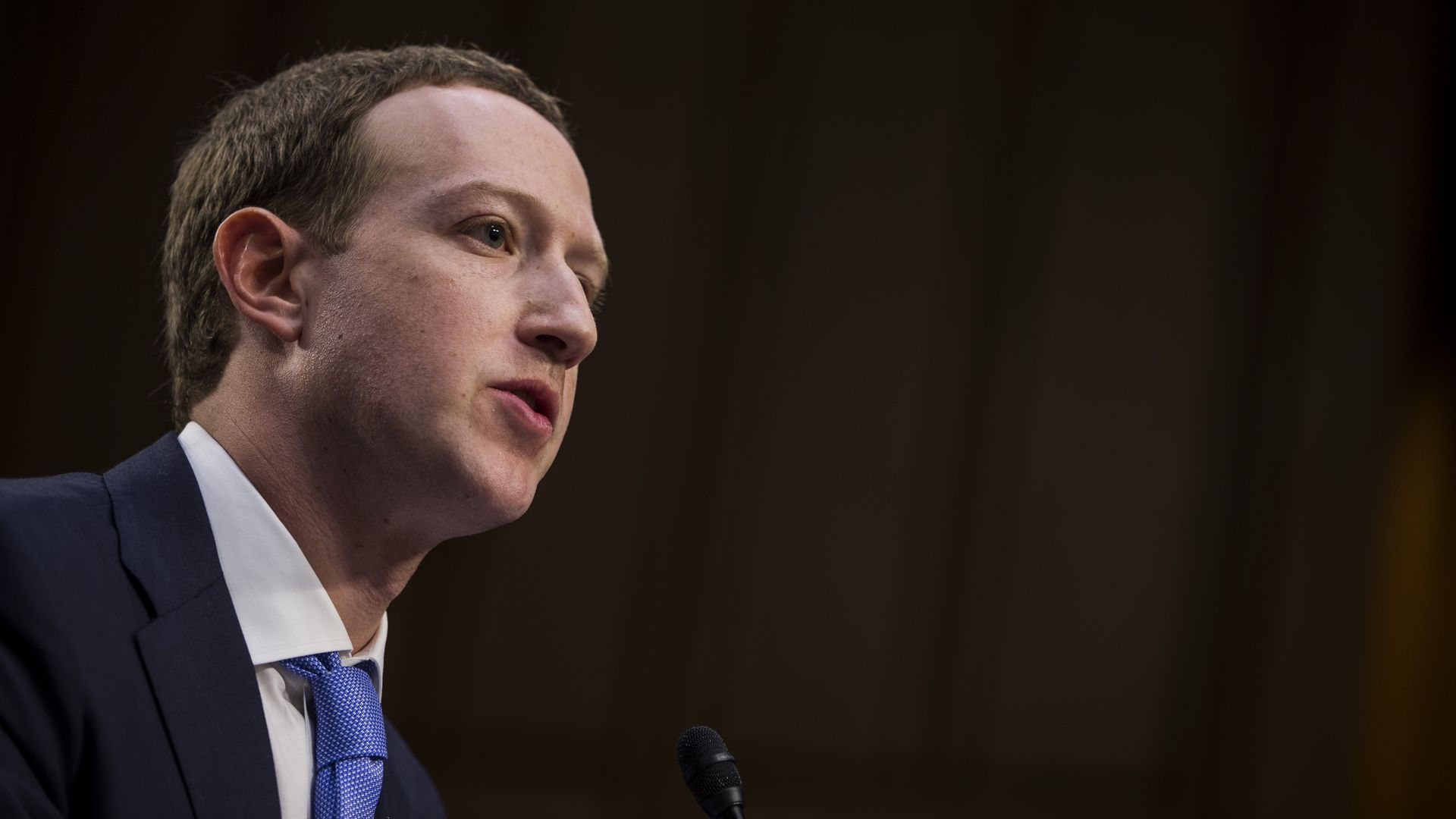
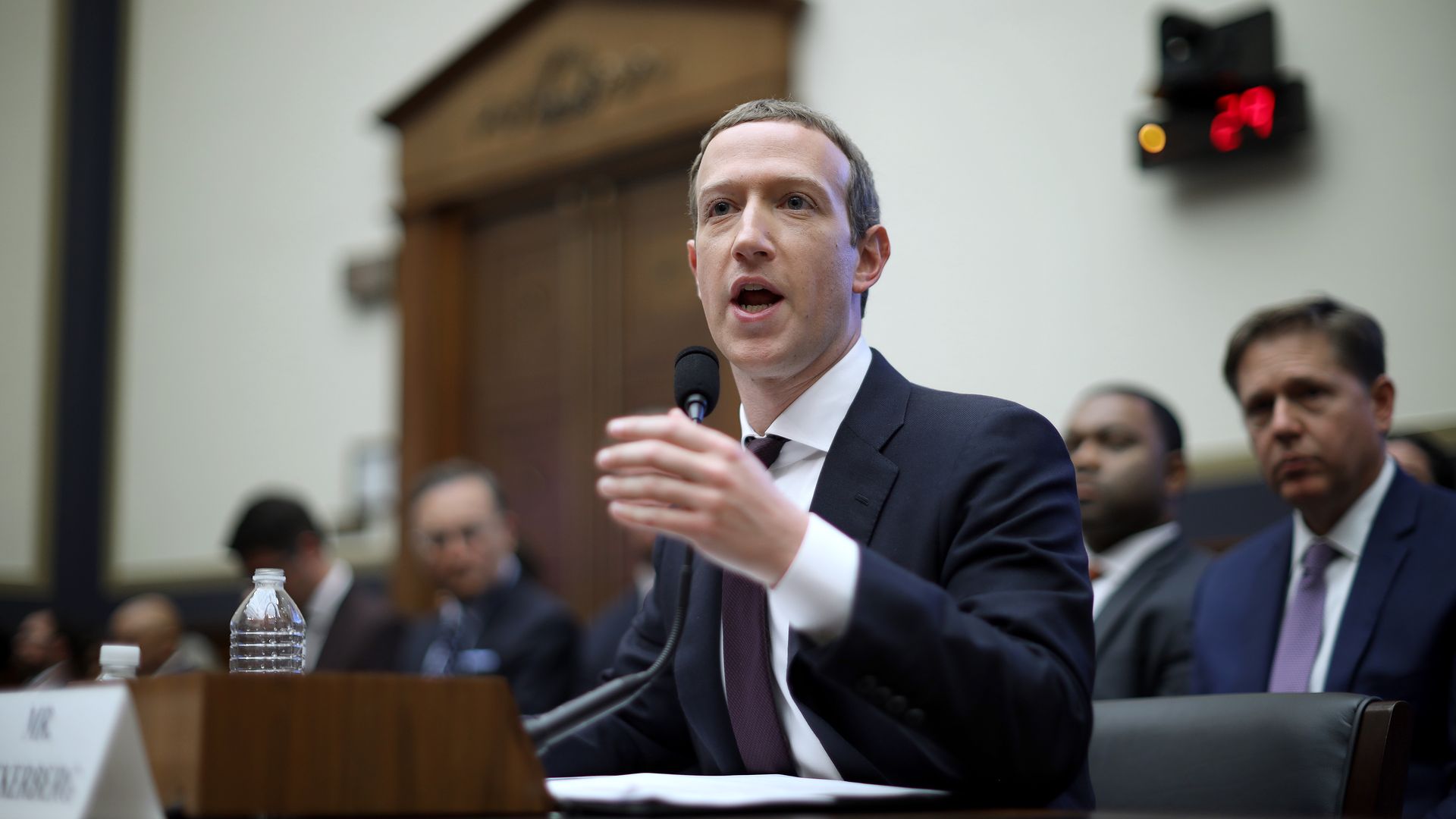
More than 50 members of Congress barraged Facebook CEO Mark Zuckerberg from all directions at a six-hour House Financial Services Committee hearing on Wednesday that ranged far afield from its ostensible topic — Facebook's cryptocurrency project, Libra.
Driving the news: Instead, Wednesday's hearing focused on Facebook's handling of discrimination and civil rights and its lack of diversity, its role in elections, free speech and content moderation, monopolistic behavior, anonymity, terrorism, child sexual abuse, and more.
In a paper published Wednesday in the journal Nature, Google reportedly achieved a milestone by using quantum computers to solve a calculation in mere minutes that current machines could not complete in thousands of years.
Why it matters: "Quantum supremacy," the achievement Google is touting, would represent a big but early step toward reliable quantum computers that could solve some currently intractable problems.
97% of tweets from U.S. adults regarding national politics came from only 10% of users in a yearlong analysis conducted by the Pew Research Center.
Why it matters: Those with intense opinions on President Trump — especially those who strongly disapprove of him — are "among the most prolific political tweeters," Pew notes.
Databricks, a San Francisco-based data analytics SaaS company, raised $400 million in Series F funding led by Andreessen Horowitz at a $6.2 billion valuation.
Why it matters: Because this one can legitimately lay claim to all the hottest enterprise software buzzwords, from open-source to machine learning to cloud.
The agenda for Facebook CEO Mark Zuckerberg's return to Capitol Hill Wednesday before the House Financial Services Committee is largely devoted to Facebook's cryptocurrency project, Libra.
Yes, but: Rep. Maxine Waters, the committee's chair, lit into Facebook in her opening statement, making clear that the hearing would be about all the other charges lawmakers have leveled against the social network, too — including monopolistic behavior, discrimination, privacy violations, breaches in election security, and whether the government should break up Facebook.
Boeing reported Wednesday that its third-quarter revenue fell 21% from a year earlier to $20 billion, and profits fell 51% to $1.17 billion, according to the Washington Post.
Why it matters: The company's sales have slowed as it waits for regulators to approve proposed software fixes for the 737 MAX, which is a mandatory step before the jet can return to service.
California, Delaware and Utah are the states that best protect users' online privacy in 2019, according to an annual ranking by privacy and cybersecurity research firm Comparitech.
Why it matters: States are taking the lead on online privacy protections in the U.S. as bipartisan efforts in Congress have yet to produce a federal privacy law.
As a housing shortage afflicts portions of California, Facebook plans to spend $1 billion to build up to 20,000 new, affordable housing units, the Silicon Valley-based social media giant announced on Tuesday.
Why it matters: Facebook is the third tech company to make a financial commitment to help fix the housing crisis. The problem is at least in part attributed to the growth of the technology industry and the resulting influx of workers. Google, too, made a $1 billion Bay Area pledge in June, and Microsoft put $500 million toward building affordable housing in Seattle in January.
Snap Inc.'s stock whipsawed Tuesday in after-hours trading after the company reported positive earnings but offered weaker-than-expected revenue growth estimates for the next quarter.
The big picture: The company beat analyst expectations by adding 7 million daily active users, including 5 million users overseas. Snapchat struggled to add users internationally last year prior to its Android redesign.
Facebook CEO Mark Zuckerberg will tell the House Financial Services Committee Wednesday that Facebook's Libra cryptocurrency project will help bring millions of people who don't use banks into the financial system and help the U.S. overcome global challenges from China and other competitors, according to an advance copy of his testimony.
The big picture: Libra has faced skepticism and headwinds from lawmakers and regulators. Several financial services providers announced as launch partners, including Visa, Mastercard and Paypal, have since bailed on Facebook's effort to create a global digital currency.
The FTC took its first-ever action Tuesday against a maker of "stalkerware," software used by spouses, parents and others to surveil purported loved ones' cell phones.
What's happening: The company, Retina-X, and its owner James N. Johns, will be required to delete all data hoarded by the apps and cease the sale of products, requiring a user to circumvent phone security until it can reasonably guarantee "legitimate" use.
The multi-state antitrust investigation into Facebook, which moved forward Monday as state officials met with experts, now counts 47 attorneys general among its membership.
The big picture: Facebook is facing attacks on all fronts, with antitrust scrutiny of the company's size and power also taking shape at the Federal Trade Commission, the Justice Department and Congress.
A war of words (and numbers) between workplace messaging service Slack and Microsoft is heating up, as Slack finds itself having to compete in the category it pioneered.
The big picture: Slack, which went public in June via a direct listing, now finds itself up against Microsoft, which has the luxury of including its rival Teams product as part of its big Office bundle.



/2019/10/23/1571850077076.gif?w=3840)