Police departments throughout the U.S. are quietly rolling out facial recognition systems, according to a pair of new reports, even as scrutiny intensifies over the technology's accuracy and fairness.
What's happening: From high-tech systems in Chicago and Detroit to ongoing tests in every corner of the country, law enforcement is taking advantage of near-total freedom to deploy the surveillance technology without oversight or public announcement.
Uber on Friday completed its first full week of trading at $41.91 per share, or 6.87% below its $45 per share IPO price and just a touch below its first post-IPO trades of $42 per share.
The bottom line: As the IPO stumbled last Friday,there had been some happy talk that traders would return to Uber after the weekend. They didn't.
Self-driving cars can be programmed to stay in their lane and obey speed limits. What they lack is human intuition — the ability to know what's going on inside someone else's head.
Why it matters: Autonomous vehicles are getting closer to reality but if they're ever going to drive better than people they need to learn how to share the road with other cars, pedestrians and cyclists. Turning them into social creatures with human instincts is arguably the biggest roadblock to autonomy.
Industries began tallying up the likely costs of President Trump's latest executive orders this week targeting Huawei, the Chinese telecom manufacturer that sits at the center of the U.S./China trade dispute, after Trump essentially barred all U.S. telecommunications firms from using its equipment and blocked it from access to U.S.-made goods.
The impact: Major U.S. telecoms don't use Huawei equipment, but roughly a quarter of smaller rural network providers do, according to a Financial Times story, and those companies may have to spend millions to replace those devices.
Google’s chief economist raised some eyebrows during a talk yesterday when he claimed that web search was actually a hard business to compete in — despite the company reaping massive profits for years from its search ad business.
What they're saying: "My claim is, if you look at web search, it’s really a tough business," Hal Varian said at a conference presentation at the University of Chicago’s Booth School of Business.
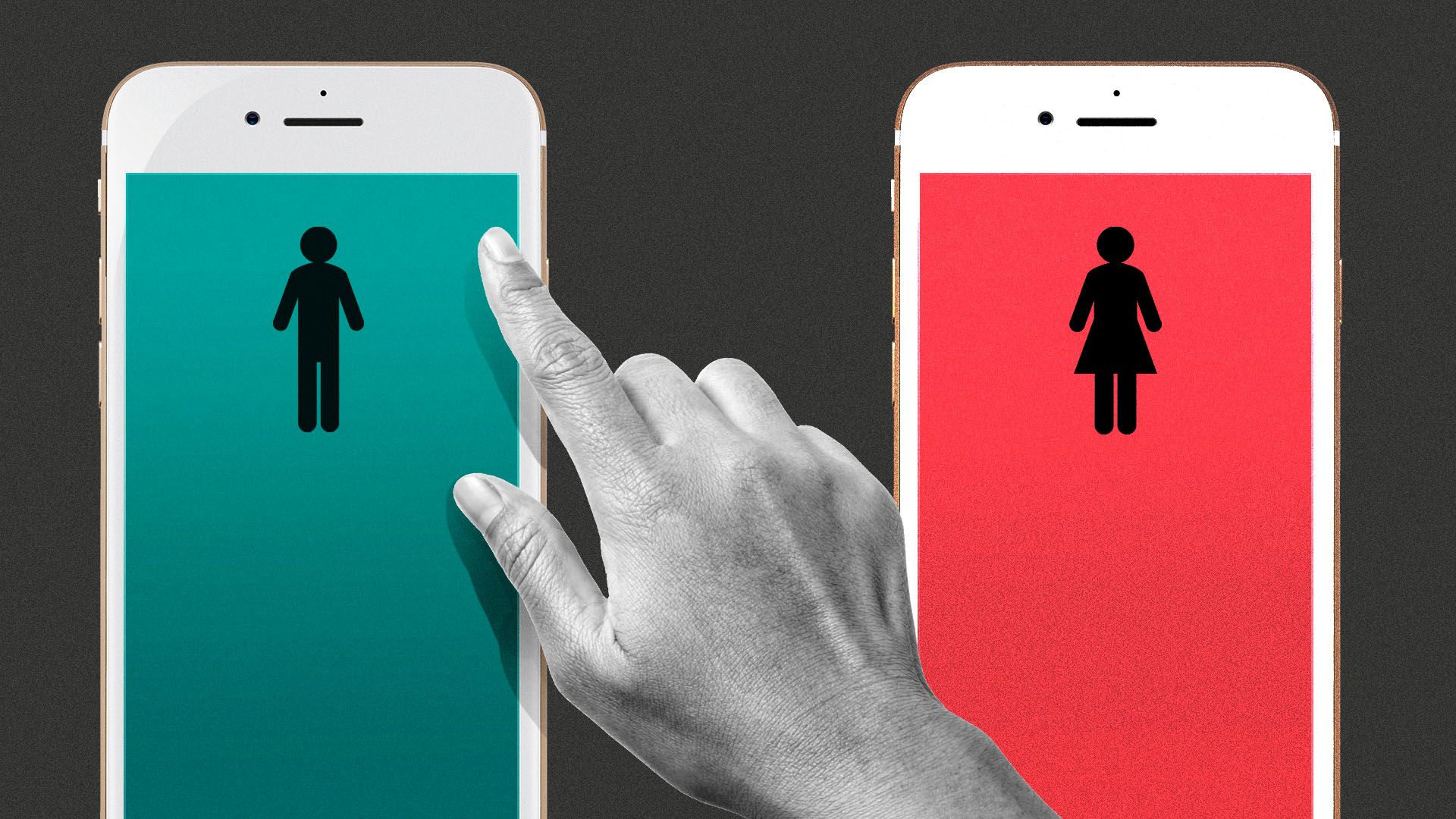
A Snapchat photo filter that lets people see themselves in highly feminized or masculine form has proven wildly popular. It's drawn a mixed reception, though, from people whose real-life journeys have taken them beyond the roles assigned to them at birth.
Between the lines: The filter has proved to be a surprisingly powerful tool for people to imagine themselves in another gender. It also has highlighted society's continuing challenges with understanding people who are transgender, intersex, nonbinary and gender non-conforming.
Student loan servicing company Navient was the latest company to feel Twitter's wrath on Thursday after tweeting about its inclusion in the annual Fortune 500 list of most valuable companies.
The backdrop: Navient is facing multiple lawsuits that allege it engaged in deceptive practices to squeeze more money from borrowers by pushing them into more costly repayment plans.
The insurance industry is learning how to incorporate artificial intelligence in various scenarios to determine liability and calculate risk, including AVs, where the responsibility for malfunctions and accidents could fall on safety drivers, on the vehicle manufacturer, or on software and hardware providers.
Why it matters: Insuring AVs is an unprecedented insurance challenge, as they will generate huge volumes of data from a variety of parts and will be comprised of complex systems that share responsibility in interlocking ways.
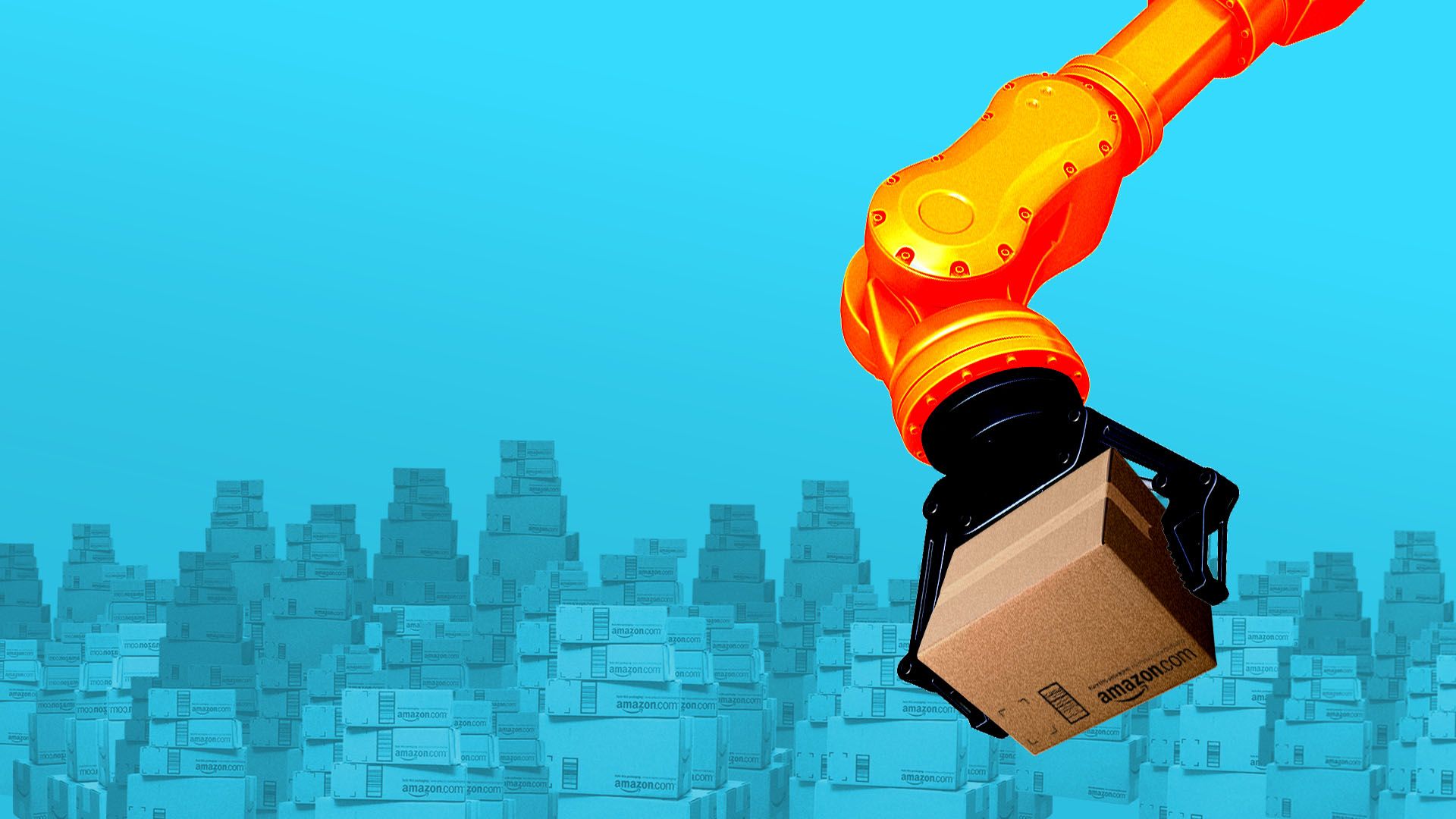
With robots that can pack orders, an ecosystem of delivery helpers and a fleet of trucks, Amazon is building a shipping juggernaut.
Why it matters: It's not as glossy as space travel or as flashy as AI, but the $1.5 trillion per year business of moving stuff around is one of the most lucrative and complex industries in the U.S. And Amazon is attempting to conquer it.