Generation Z students, classified as being between the ages of 14 and 23, believe that YouTube is a bigger contributor to their education than textbooks, according to a study by Pearson Education.
Why it matters: Education in America is shifting from more traditional methods of learning through text and lesson plans to more technological methods such as YouTube videos and other virtual platforms.
Comcast has prevailed in a suspenseful settlement auction against 21st Century Fox for European Broadcaster Sky. Comcast submitted a £17.28 per share bid while Fox submitted a £15.67 per share bid. The auction ends a nearly two-year-long battle for Sky.
Why it matters: Sky reaches nearly 23 million pay-TV households across six European countries, which will help Comcast develop an international footprint to be able to take on some of the big tech streaming giants, like Netflix and Amazon.
Google's upper management is forcing employees to delete a confidential memo detailing a censored search engine the company is planning to launch in China, reports The Intercept.
Why it matters: Google employees have had internal protests over the search engine, codenamed Dragonfly, given the engine would enable the company to censor and track Chinese citizens.
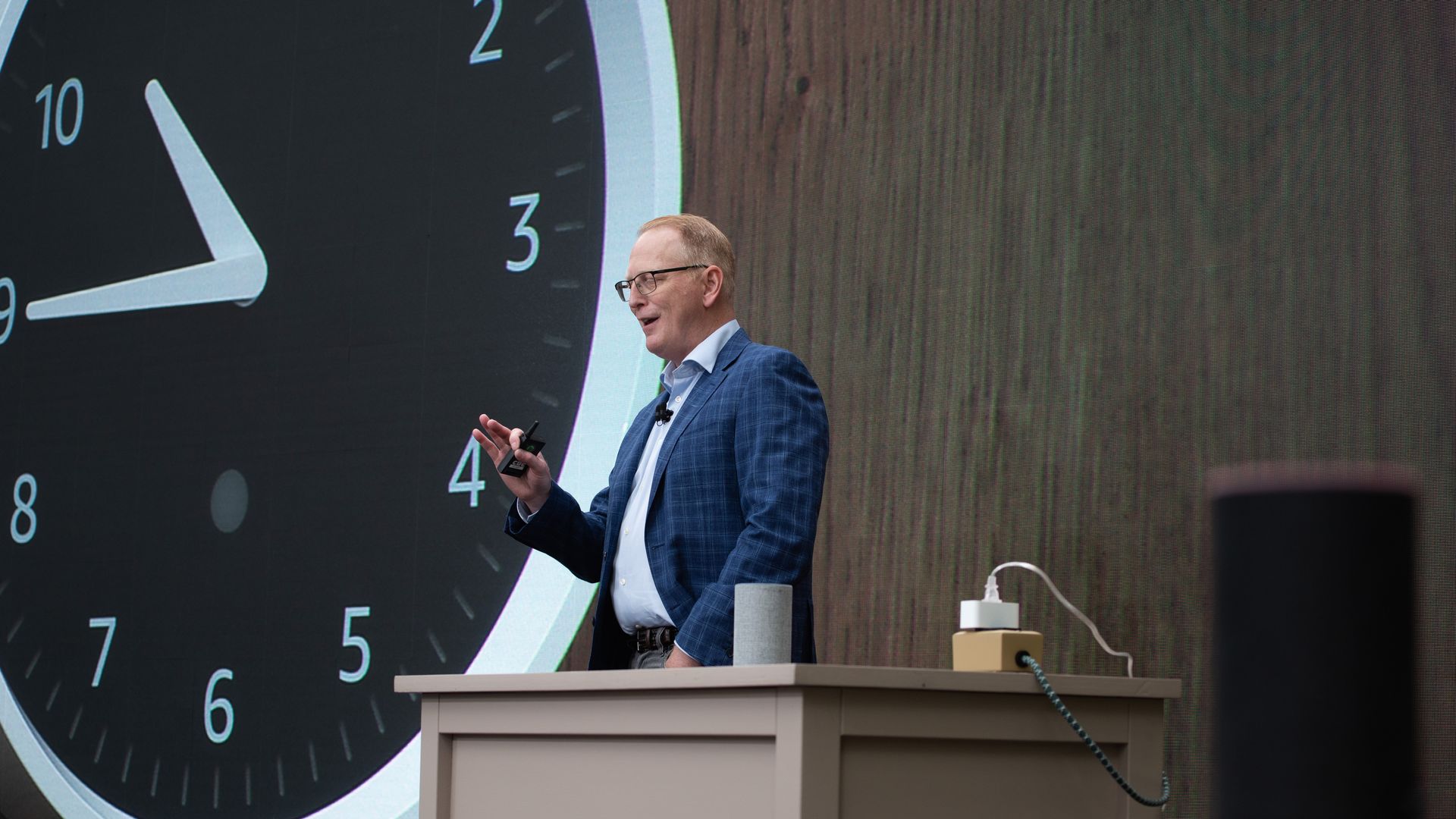
You may have already heard that Amazon Alexa can now be a part of every aspect of your life — including a wall clock. But here are some other stories from the week to catch up on.
Catch up quick: Amazon announced a flood of new Alexa-powered appliances; Lime and Bird pass the 10 million ride mark; Instagram's IGTV algorithm recommended videos of disturbing and graphic content; Facebook is pulling back site support for Donald Trump's 2020 campaign; and Google staff discussed search-related tweaks after 2017 travel ban.
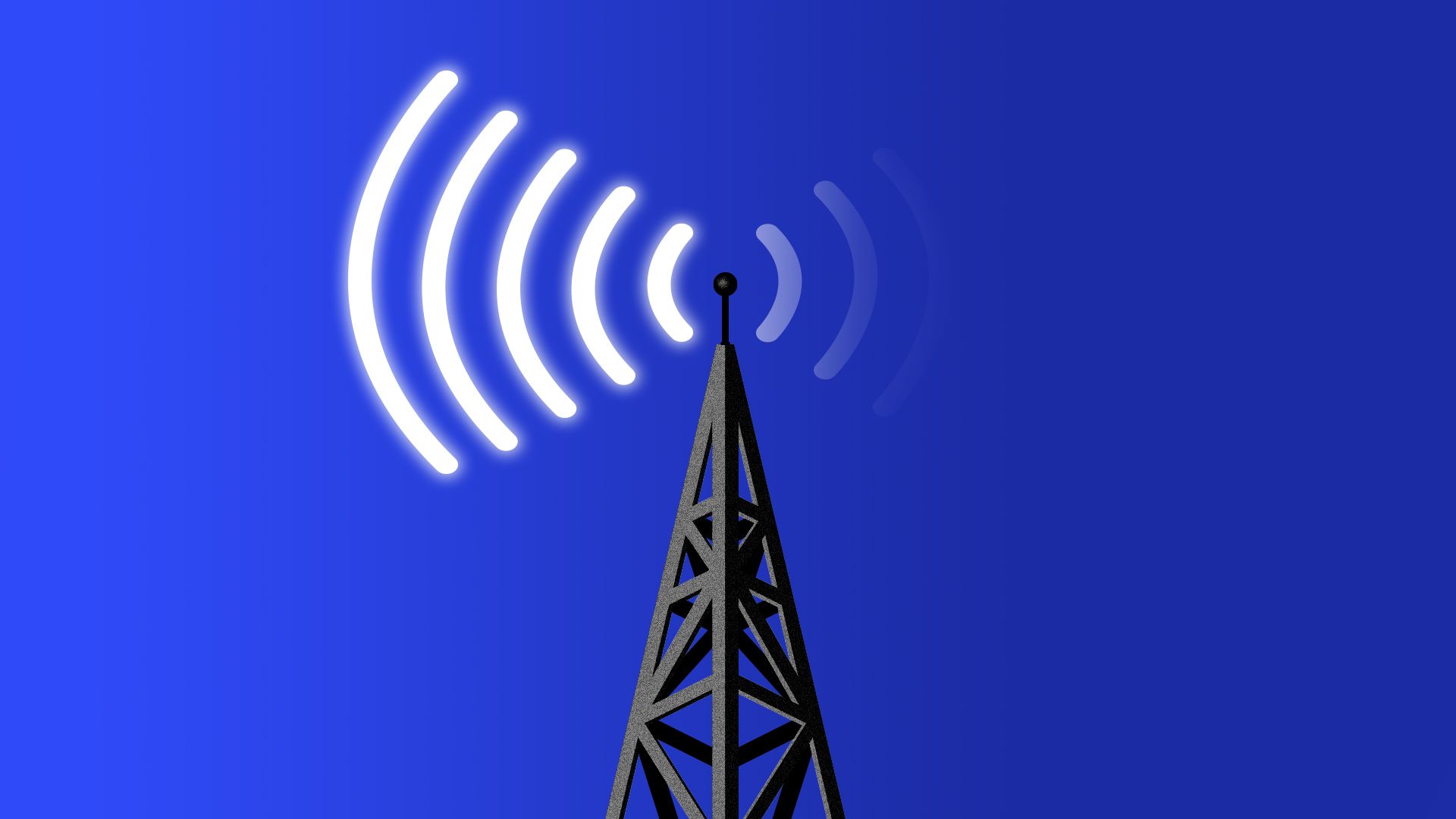
The next generation of mobile networks will make or break the big tech ideas of the future, allowing each one to be field-tested at scale and checked off as a revolution or a dud.
Why it matters: Autonomous vehicles, smart homes, smart cities, "Internet of Things" devices, virtual and augmented reality — 5G will carry this raft of new technologies out of the labs and into our streets and homes, weaving the internet into the fabric of daily life.
All of the major U.S. carriers have plans to deploy mobile 5G networks by early next year, with some early efforts planned for later this year. But the first 5G-ready smartphones won't arrive until 2019.
The big picture: Most of us will be using 4G devices for the foreseeable future.
What's a G?The mobile industry refers to new "generations" or Gs each time it introduces a new industry-wide technical standard and rebuilds the fundamentals of mobile data networking. That's been happening at roughly a once-a-decade pace.
How it works: The initial version of 5G builds on today's LTE networks but introduces a new type of radio technology that responds more quickly, moves data faster, and uses less power.
The advent of 5G has turned into a serious geopolitical fight — actually, two.
Why it matters: Being first brings the opportunity to take the lead with the kinds of never-before-possible apps that exploit a new generation of network capabilities. For example, in being first with 4G, the U.S. was able to lead the way with services like Uber and Snapchat.
Experts say 5G phone networks will jump-start the smart cities movement — which deploys tech to try to make communities more sustainable and efficient — by tying together traffic, energy, communications, waste disposal, and many other municipal systems.
Why it matters: Smart-city ideas haven't transformed into reality yet for most Americans, but if government and industry get this right, cities could reduce traffic, cut carbon emissions, protect neighborhoods and save money.
Wireless companies say one of the biggest hurdles to deploying super-fast 5G networks is negotiating with city officials to for permission to install antennas on city property like buildings, street lights, lamp posts and bus shelters.
The big picture: It took 30 years to erect 150,000 cell towers for 4G. 5G transmitters are smaller, but the networks will need five times that many in the next few years to achieve the speeds providers are promising.
New 5G networks are expected to supercharge wireless speeds and trigger an explosion of new services — but they also may exacerbate the stubborn digital divide and leave out wide swaths of rural Americans.
Why it matters: According to FCC data, 31% of rural residents don't have fixed broadband service, compared to 2% of city residents. Despite the hype around 5G,there's still little financial incentive for the major telecom firms to spend the billions of dollars necessary to serve rural communities, experts say.
Tech companies see the transition to 5G as an opportunity to gain new footholds in the connectivity business that's dominated by major wireless providers.
Why it matters: For consumers, 5G will likely be a collection of technologies rather than one single technical solution. For industry, that means fighting over who gets what airwaves and under which conditions.
The first businesses to invest in and take advantage of 5G will be heavy industries, not consumer brands.
The bottom line: 5G will boost a range of technologies, from transportation to virtual reality, but the initial impact will be on industrial and other business uses rather than consumer applications.
Google CEO Sundar Pichai sent a company-wide email Friday, which Axios obtained, denying any effort to politically bias the company's search results and emphasizing that Google needs to remain politically neutral.
Why it matters: The Wall Street Journal reported Thursday that Google staffers had looked for ways to adjust search results in the wake of President Trump's first travel ban in 2017 — reinforcing conservatives' ire over what they have charged is censorship by Google-owned YouTube and anti-conservative bias in search results.




/2018/09/21/1537561374853.gif?w=3840)

/2018/09/21/1537556565709.gif?w=3840)
/2018/09/21/1537556108667.gif?w=3840)
/2018/09/21/1537555920164.gif?w=3840)
/2018/09/21/1537555532792.gif?w=3840)
/2018/09/21/1537554070281.gif?w=3840)


/2018/09/21/1537553106726.gif?w=3840)
/2018/09/21/1537552638991.gif?w=3840)

/2018/09/21/1537551450966.gif?w=3840)