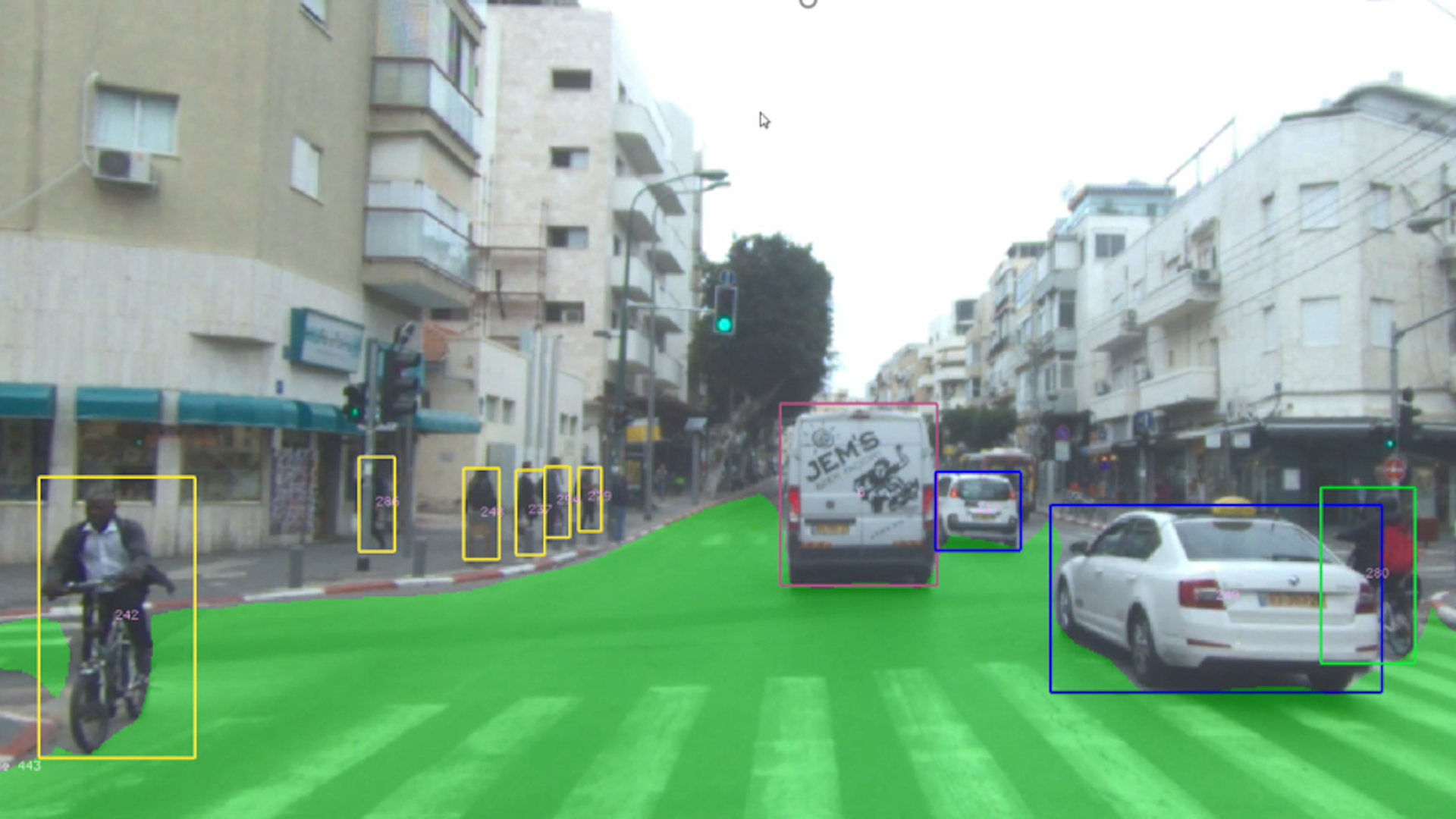
Most driverless vehicles rely on a clutch of sensors — radar, cameras and especially a 3D, 360-degree viewing technology called lidar, which is that big spinning thing you see atop test vehicles.
Why it matters: A big problem, in addition to making the sensors better and cheaper, has been unifying all their feeds into a single stream of information and acting reliably on what they indicate. If they could be fused in a sensible way, that could compensate for flaws in the individual sensors.
Adobe on Thursday said it will buy marketing software company Marketo from private equity firm Vista Equity Partners for $4.75 billion.
The bottom line: While Adobe is best known for its creative tools like Photoshop, much of its business has come from software for other types of workers, including sales and marketing professionals. For example, in 2009 it bought Omniture for $1.8 billion (which is the same amount Vista paid for Marketo two years ago).
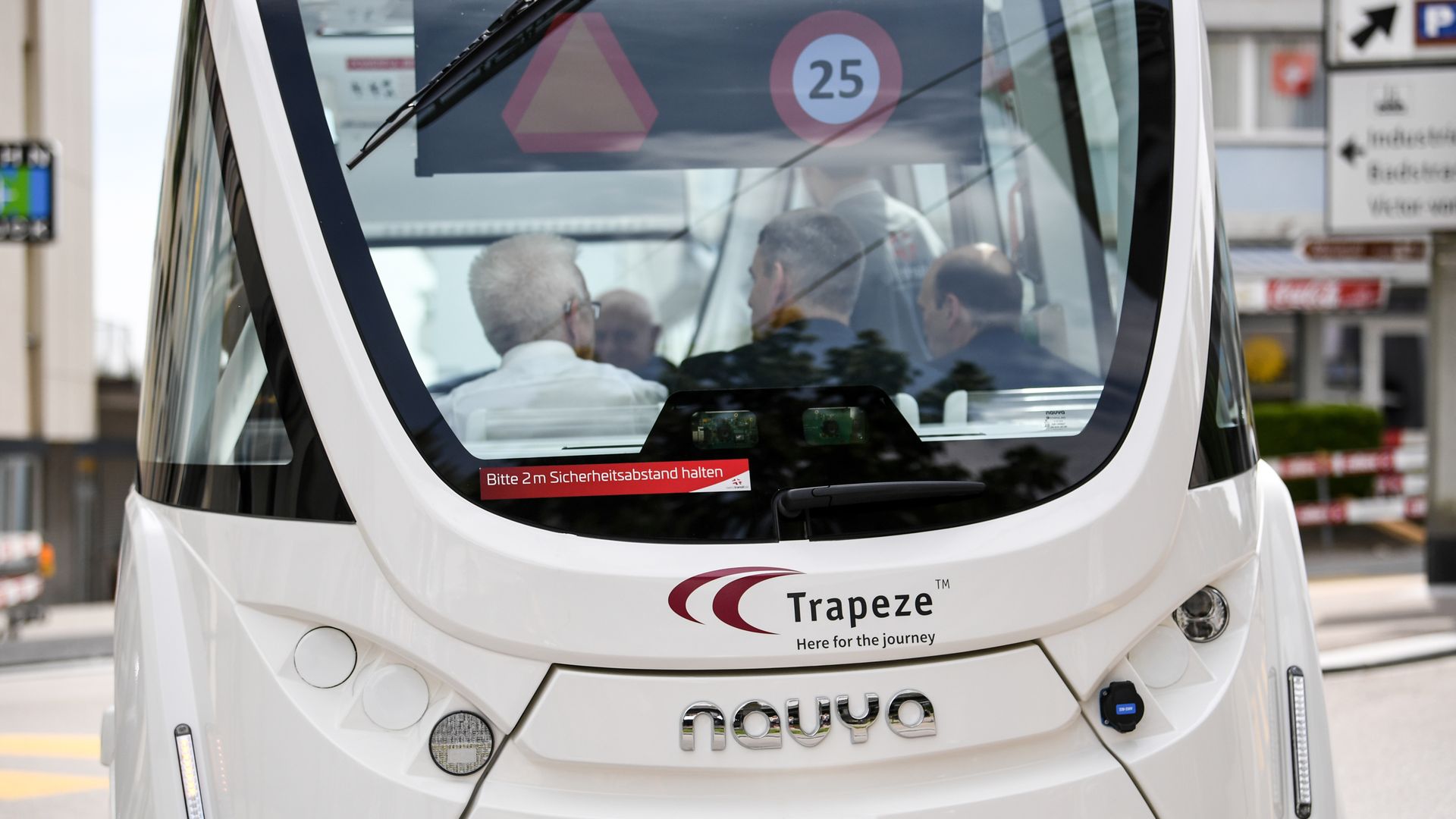
The Swiss state of Shauffhausen was the first in the world to incorporate an autonomous bus into regular route public transit in mixed traffic, a service that has transported over 12,000 passengers since it began in March. City and transit officials tasked a research team with conducting a public survey on the program's performance.
Why it matters: While the participants seem to have some concerns and unanswered questions about the transition to autonomous vehicles, the autonomous bus enjoyed high levels of approval. Public acceptance and support are key to the success of AVs in public transportation, and these results bode well for other cities looking to try autonomous buses in their transit systems.
In a letter received by lawmakers in July and obtained by Axios, Google said it has continued allowing apps to collect and share data from Gmail accounts even though lawmakers have raised questions about privacy and possible abuse of user data, reports the WSJ.
Why it matters: Google has been drawing the ire of users, employees, and lawmakers in recent months over some of its practices and for failing to send a senior-enough executive to a hearing on privacy and tech issues earlier this month. Google is expected to face lawmakers at a contentious hearing next week with the Senate Commerce Committee.
As housing prices in the Bay Area have skyrocketed, more people have moved to peripheral cities and seen their commutes lengthen as a result. Between 2005 and 2016, the number of people in the region who commute more than 90 minutes per day increased 113%.
The big picture: Once autonomous vehicles come to market, this issue will only get worse. As spending time in a car becomes less onerous, the tradeoff of moving a few hours away to save money on rent will look increasingly favorable. Aside from its environmental impact, this shift could also lead to increased income inequality: Recent studies have uncovered an inverse relationship between time spent commuting and economic mobility.
A new report shows that a military contractor has likely sold spyware to repressive regimes. But the study's authors and other experts differ on how to stop the problem.
The big picture: That study, released Tuesday by the University of Toronto's Citizen Lab, found that 36 surveillance networks used commercial militarized spyware made by the Israeli NSO Group.
Equifax is being hit with a £500,000 fine over its massive 2017 data breach that affected 146 million people globally, the UK's Information Commissioner's Office (ICO) announced Wednesday.
Why it matters: The fine is very small compared to what Equifax would've received had the breach happened just one year later, when the U.K. implemented GDPR, the sweeping data privacy law that would've penalized Equifax up to 4% of its global annual revenue.
Objections to Google’s possible re-entry into the Chinese search market are uniting Republicans, Democrats and some of Google's own employees in a rare alignment against the company.
Why it matters: Google abandoned China in 2010 rather than censor its search results according to the Chinese government's wishes. Any effort by the company to return to this gigantic market stirs up ethical questions raised by that history.
21st Century Fox and Comcast are likely headed to a settlement auction this weekend, after a months-long bidding war for European broadcaster Sky.
Why it matters: Sky is a unique international property because it reaches millions of European homes and has a growing streaming audience. Both American broadcast giants were looking to increase their international footprints, although the equation has changed for Fox now that it has agreed to sell some of its assets to Disney.
A new study from one of the world’s biggest ad firms, its digital ad agency and a programmatic ad tech company suggests that digital ad campaigns optimized by machine learning tools outperformed campaigns managed by humans over the course of one month.
Why it matters: Although advertising has traditionally been a creative industry, stakeholders — like agencies, ad tech firms, and even brands — are pushing the effectiveness of their automation and machine learning tools, to lure clients that are focused on cost-efficient data-driven ad campaigns.