It's finally happening: Twitter is testing extending tweets beyond 140 characters — to 280 characters, to be exact. On Tuesday, the company said it's experimenting with allowing all languages except Chinese, Japanese, and Korean to have twice as many characters as its signature length. Of course, this is still a small test, so it may not be a permanent change.
Why it's doing this: Twitter says that a lot of users are frustrated with the tweet length limit, which seems to make it harder to express themselves (except in Chinese, Japanese and Korean). Rumors of this change have been around for some time. Last year, for example, the company was said to be considering letting users tweet up to a staggering 10,000 characters. Twitter found that 9% of English tweets have 140 characters (most have around 34 characters), compared to only 0.4% of Japanese tweets that have 140 characters.
Russia and China took steps to regulate media outlets over content issues:
China blocks WhatsApp: "China has largely blocked the WhatsApp messaging app, the latest move by Beijing to step up surveillance ahead of a big Communist Party gathering next month," the New York Times reports.
China fines social media sites for not censoring banned content: "Chinese internet watchdog said on Monday that it has imposed maximum fines on tech giants Baidu, Tencent and Sina Weibo for failing to adequately deal with online content," per CNBC.
Russia threatens to block Facebook: "Russia will block access to Facebook next year unless the social network complies with a law that requires websites that store the personal data of Russian citizens to do so on Russian servers, Russian news agencies reported on Tuesday," per Fortune.
Why it matters: As the U.S. figures out whether and how to regulate its online platforms, other regimes are aggressively clamping down on how social sites monitor content and use citizen data.
Some of the biggest names in tech and health care are taking part in a pilot program from the FDA that looks to make it easier for companies looking to offer technology approaches to issues that fall under the agency's purview.
Why it matters: A lot of tech companies have been focusing on relatively modest products in the "wellness" space rather than more ambitious efforts that require cumbersome and time-consuming regulatory approval.
Venture capitalist Reilly Brennan believes that self-driving cars are coming faster than most people expect, but that the market doesn't have the best mix of startups yet.
Too much: Companies selling dongles for car data. "There are a hundred of those and there should probably be three," says Brennan, who last year co-founded transportation-focused Trucks Venture Capital. There are also too many "Uber for freight" companies, he adds.
On Friday, Iran claimed to have tested a new medium-range ballistic missile capable of striking Israel with multiple warheads — but, according to Fox News, that missile launch never actually took place. Video footage purporting to show the launch was actually from a failed test back in January.
Why it matters: The world is waiting to hear President Trump's decision — he claimed to have made up his mind last week — on whether or not to stay in the Iran nuclear deal. It's significant that Trump used the "launch" to again decry the deal, tweeting on Saturday: "Not much of an agreement we have!"
Snapchat doesn't have a "platform" for helping outside developers build products using the ephemeral messaging app, but that isn't stopping them. One of the latest examples of apps building their following through Snapchat is Polly, a young app for creating and answering fun polls. Anonymous feedback app Sarahah is another example.
Our thought bubble: It's obvious that Polly is capitalizing on current popular trends, namely Snapchat and polling apps. Less clear is whether it has staying power. Many social apps burst onto the scene and fade away just as quickly. Another key question is where Snapchat will go. It could take formal steps to work with outside developers who want to plug into its social network as social media giants like Facebook and Twitter have. So far, however, the company has declined to even build tools for brands and celebrities, so we're not holding our breath.
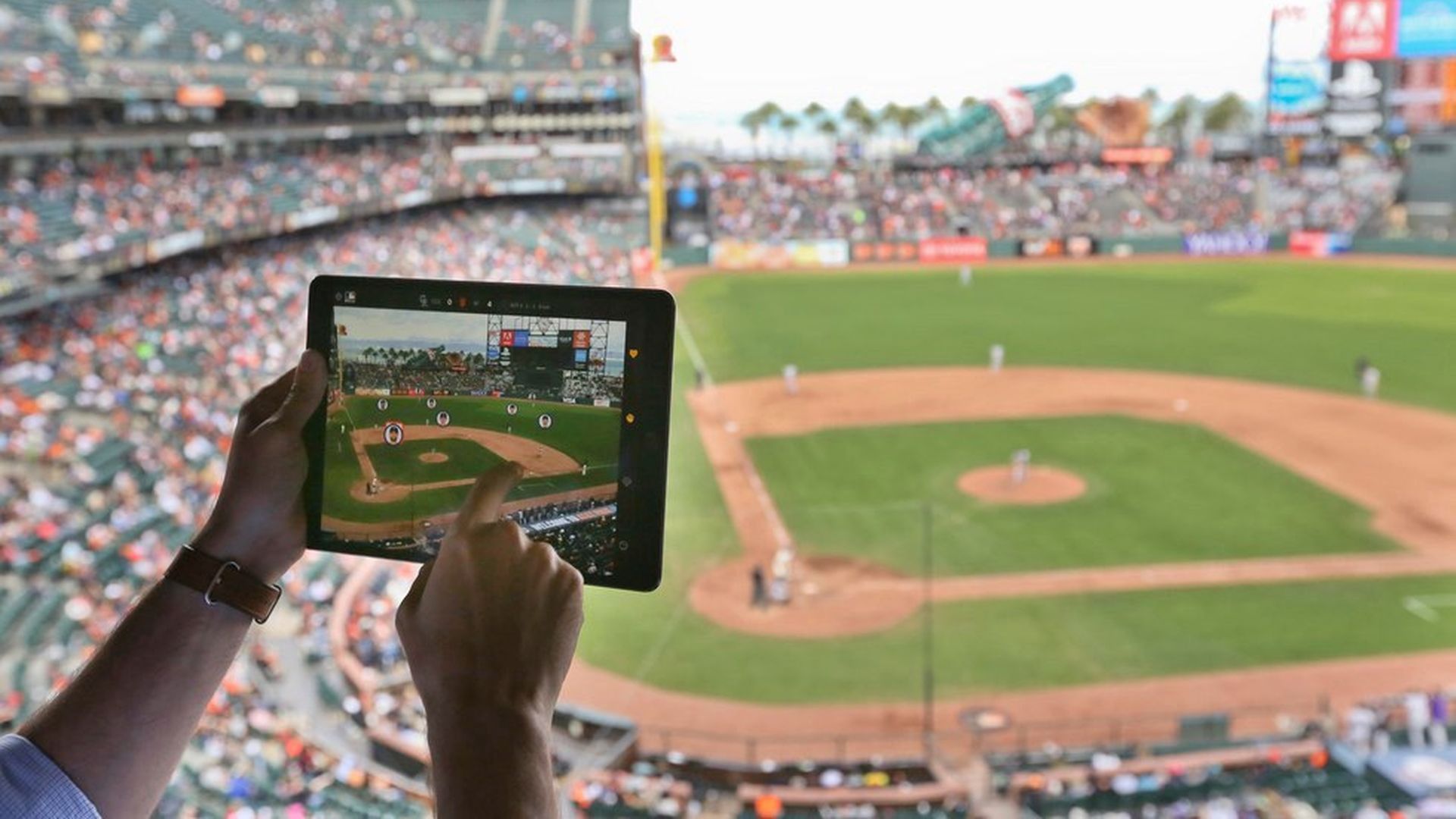
A new augmented reality app could easily answer that perennial baseball question of "who is on first?" and a whole lot more for fans at the ballpark.
What's happening: Major League Baseball is testing a number of ways it can incorporate AR into its apps from labeling player positions to serving up relevant stats to showing fans how much ground an outfielder could potentially cover on a fly ball.
The political environment for Facebook gets rougher with this WashPost tour de force: "Nine days after Facebook chief executive Mark Zuckerberg dismissed as 'crazy' the idea that fake news on his company's social network played a key role in the U.S. election, President Barack Obama pulled the youthful tech billionaire aside and delivered what he hoped would be a wake-up call," Adam Entous, Elizabeth Dwoskin and Craig Timberg write: