Thursday's technology stories

Lyft releases first diversity report
Ride-hailing company Lyft has released its first ever workforce diversity report. And it's a bit better than some in the tech industry at not only employing white or Asian men, there's still room for improvement.
Why it matters: The lack of diversity in the tech industry has been a hot topic in Silicon Valley over the last couple of years. And while Lyft has generally enjoyed a positive public image as far as its business practices, this report shows that it nevertheless faces challenges similar to the rest of the Valley.

Europe says tech companies are removing more hate speech
The European Union says platform companies are removing more instances of reported illegal hate speech:
- Facebook and Google-owned YouTube both removed around 66% of content that they were notified about in a newly-released evaluation of a code of conduct adopted by European regulators and the companies. Richard Allen, Facebook's Vice President of Public Policy for Europe, the Middle East and Africa, said in a statement "that our partnership is having a significant positive impact for people in the EU."
- Twitter, meanwhile, only removed 37.5%. Karen White, Twitter's Head of Public Policy in Europe, said in a statement that the company tries to "to reach the right balance between showing all sides of what's happening and tackling hateful conduct."

Intel CEO: Apple would be foolish not to consider using own chips
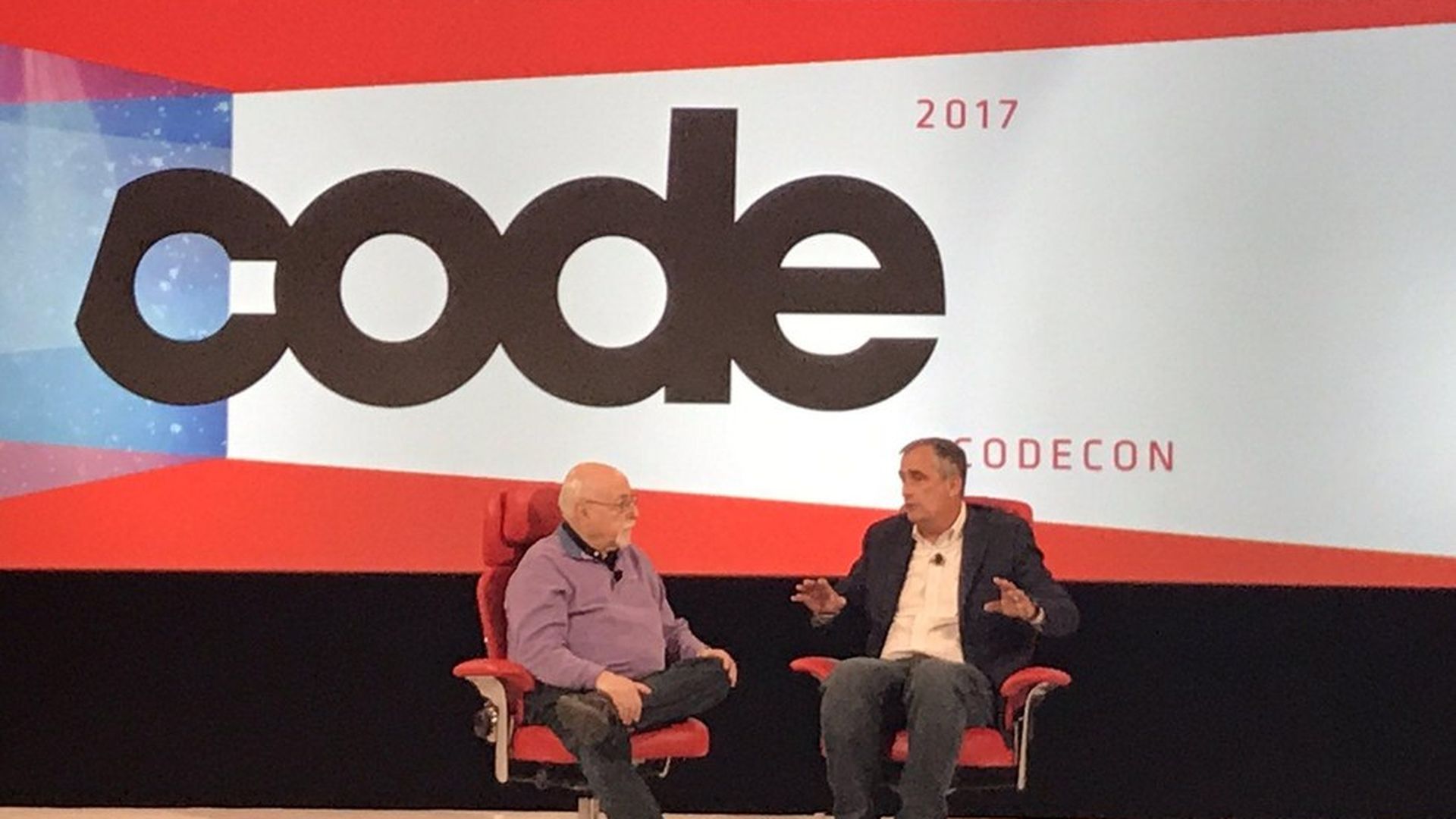
Asked about the prospect of Apple using its own chips in the Mac rather than those from his company, Intel's CEO says the company is probably always looking at whether such a move makes sense.
"As an engineer I think they'd be foolish not to do that test," Brian Krzanich said at Code Conference on Thursday. "We always look at it as a competitive battle we have to win. "Our job is to make our products so compelling – the power the battery life."

The next great test for computers: creativity
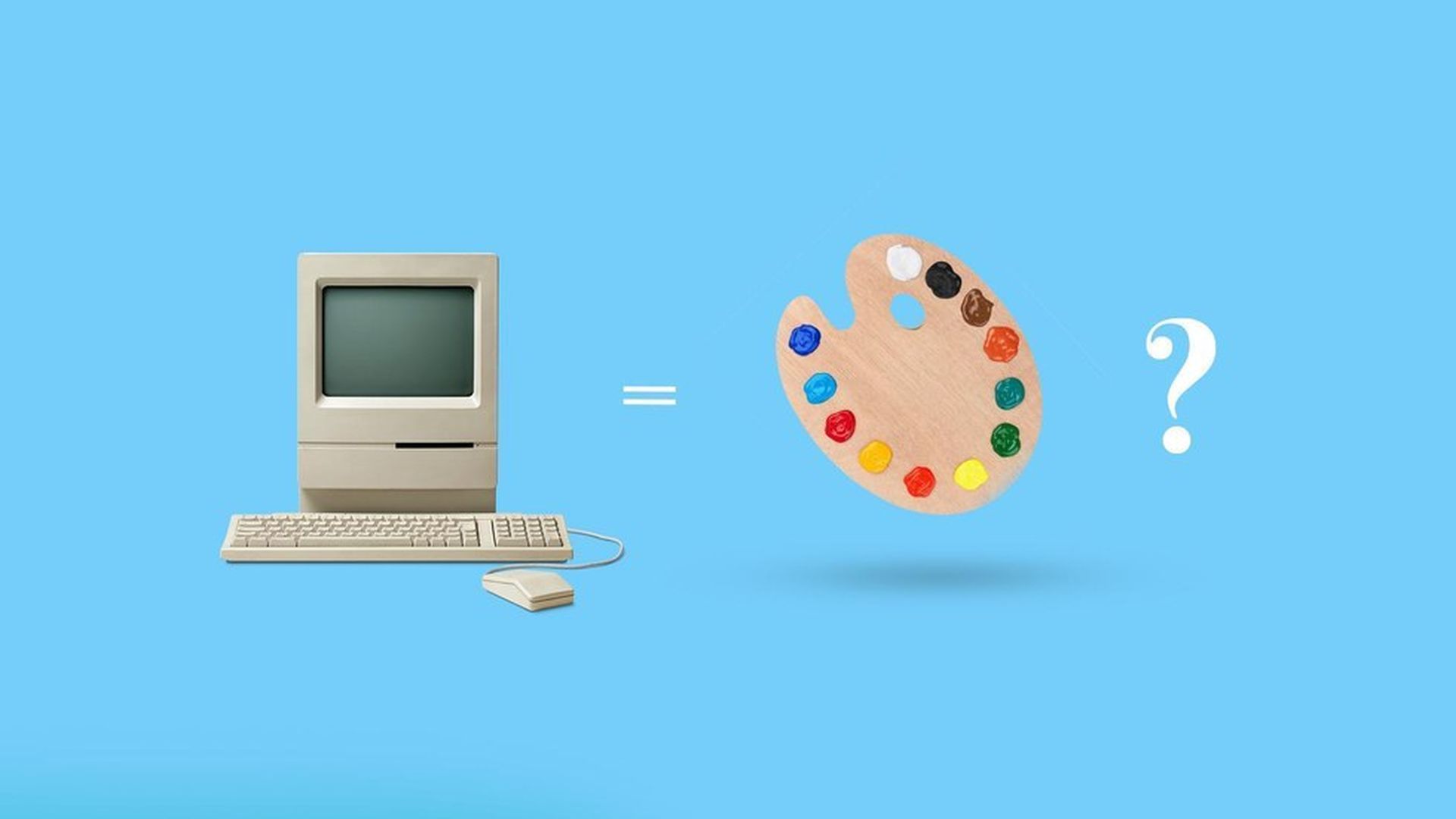
Computers beat us at our own games, surpass us in diagnosing some diseases and fool our senses. Some of us worry about them taking our jobs while others envision they'll free us up to do more meaningful, creative work. But as algorithms acquire and improve human skills, will they too become creative?
A contest at Dartmouth that serves as a Turing test for creativity assures us that hasn't happened yet. Contestants submit algorithms that produce sonnets, complete stories and can perform as one partner in dancing and singing duets. Last year's submissions for a short-story-concluding-code, for example, fooled just one human judge one time.
But will creativity remain a seemingly untouchable aspect of human intelligence? That's the question we asked researchers.
- Jesse Engel, artificial intelligence researcher, Google Brain: Augmenting human creativity
- Simon DeDeo, complexity theorist and cognitive scientist, Carnegie Mellon University and the Santa Fe Institute: thy commitment, decorated with Joy, begins to speak briskly
- Ed Newton-Rex, founder and CEO, Jukedeck: Computers are already creative
- Tony McCaffrey, CTO, Innovation Accelerator: Computers and humans and super-creativity
- Oded Ben-Tal, composer and researcher, Kingston University: Our definition of creativity will change
- Simon Colton, artificial intelligence researcher, University of London: Machines will be creative for, with and despite us
Uber finance chief to leave in July
Uber's executive exodus continues, as head of finance Gautam Gupta is leaving in July, the company told the Wall Street Journal on Wednesday and later confirmed to Axios. Gupta will be joining an undisclosed San Francisco startup where he'll be COO, Axios has learned.
Uber also revealed its latest quarterly financials (which it also reported to investors) on Thursday: It brought in $3.4 billion in revenue in the first quarter, up 18% from the fourth quarter. Its losses (not including employee stock and other items) also shrunk to $708 million, down from $991 million three months earlier. Its non-GAAP revenue for the quarter, which is adjusted for fares from carpool rides, is much lower at $1.5 billon, up from $1.4 billion.
Samsung delays Bixby voice assistant yet again
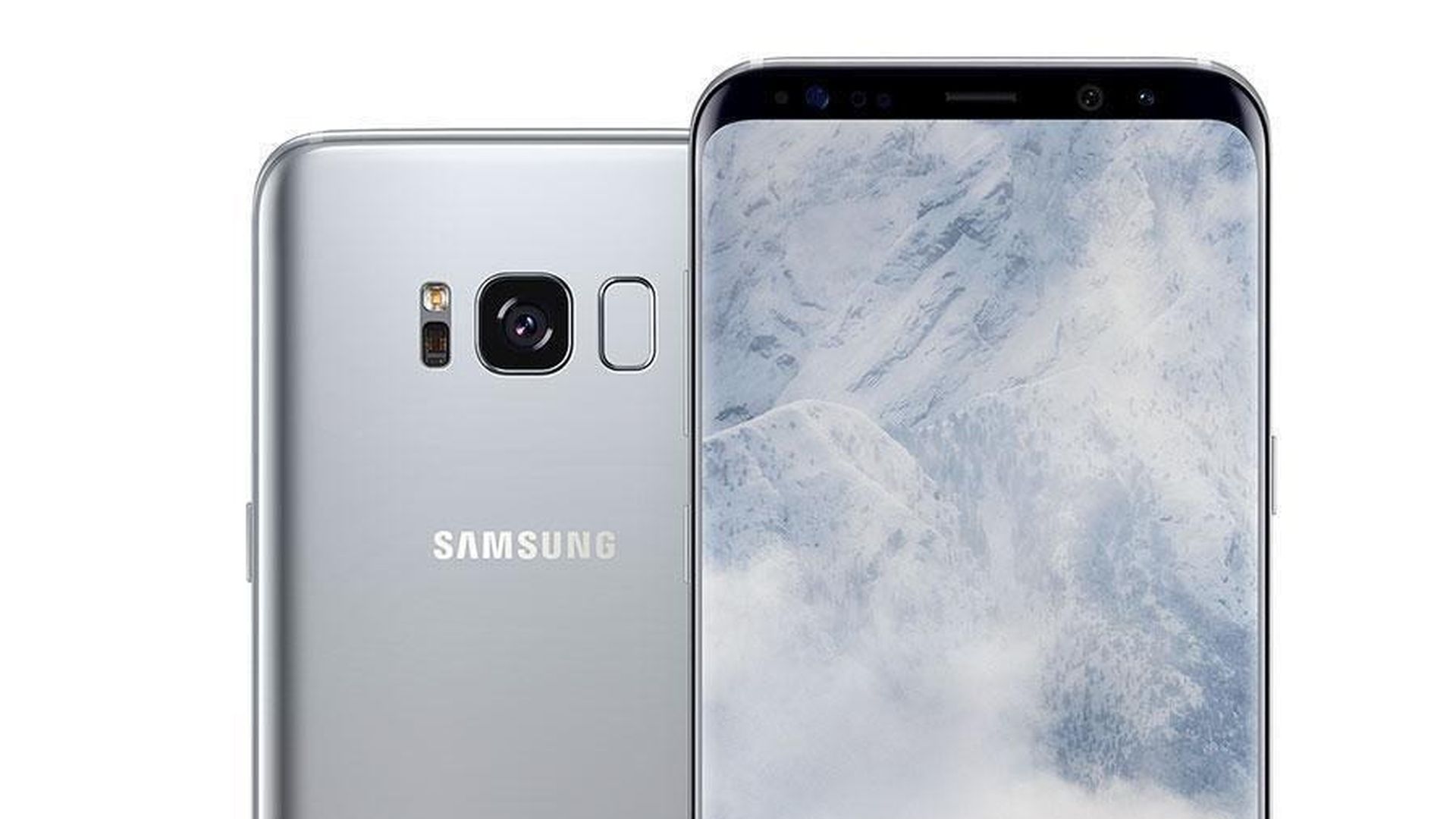
Samsung has once again delayed the U.S. launch of its Bixby voice assistant, saying more testing is needed. The feature was originally due to launch with the Samsung Galaxy S8, but was earlier pushed back until spring.
The latest delay was first reported by the Wall Street Journal; a Samsung representative confirmed the pushback to Axios
Bixby Voice benefits from time to further enhance natural language understanding, and we are currently growing our user testing in the U.S. to prepare for launch. Key features of Bixby, including Vision, Home and Reminder, are available now.
Samsung didn't offer a new timeframe, but Spring runs through June 20, so it clearly won't be until after that point.
Apple said to be readying an Amazon Echo competitor
Apple is reportedly in the midst of manufacturing a Siri-powered device to compete with Amazon's Echo and Google Home, according to Bloomberg. The device has long been rumored.
Why it matters: Despite its success with mobile devices and laptops, Apple has been criticized for Siri's stalled improvement, especially while competitors Google and Amazon developed and launched their own digital assistants and home devices.
Timing: Apple could unveil the device as soon as its annual developer conference next week in Silicon Valley, though it won't be ready to ship the device until later in June, according to Bloomberg.
Different approach: Apple's device will reportedly offer virtual surround sound technology and be deeply integrated with the company's other hardware and software, including HomeKit-compatible devices and Apple Music.
ISPs tip-toe around contentious privacy bill
Major internet service providers are treading carefully around a new proposal from conservative Rep. Marsha Blackburn that would place strict privacy restrictions on their networks as well as the web platforms that use them.
The details: Comcast's top policy executive David Cohen said at a Wednesday event that "we'll see how it plays out" and said it was an "appropriate inquiry" as to whether privacy regulators should treat all web browsing data as equally sensitive, as the proposed bill does.
AT&T's Bob Quinn said that it was "the first draft of the bill, we'll see where it all goes" but noted that the company's priority is to be subject to the same rules as web services.
Why it matters: The carefully phrased responses reflect providers' tricky position in the privacy debate. They like the idea of requiring Facebook and Google, which dominate the online ad industry, to play by the same rules when it comes to privacy. And having federal rules rather than varying state statutes would create fewer compliance headaches. But they don't like the idea of having to comply with regulations themselves.
Steve Ballmer wants better government, but not to be part of it
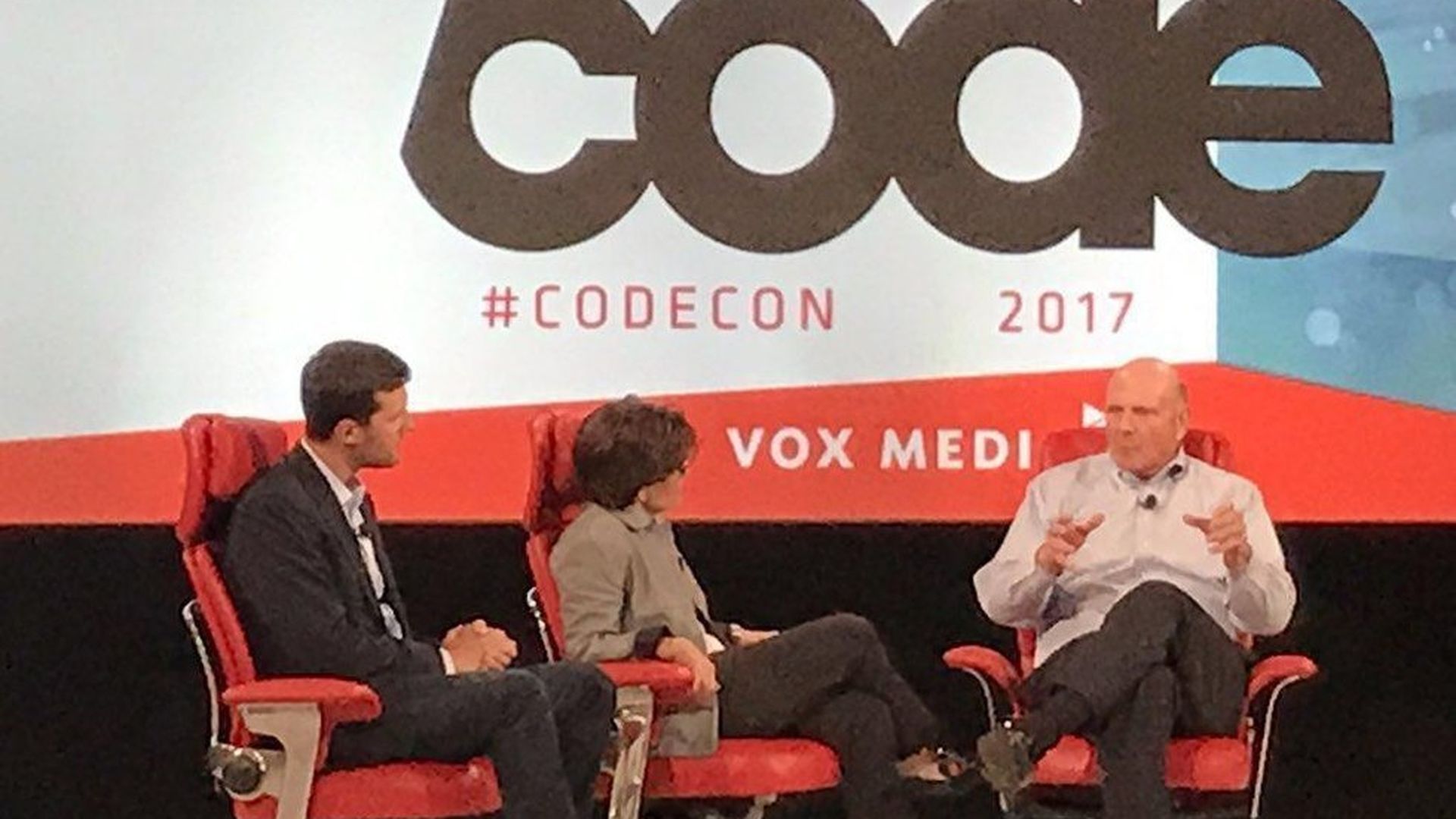
Former Microsoft CEO Steve Ballmer says he thinks more of society's problems need to be solved by government - and is pushing for greater transparency - but insists he has no plans to run for office himself.
"I have no political ambitions of my own — zero, nada, none," Ballmer said, speaking Tuesday at Code Conference. Ballmer recently launched USAFacts, an effort to produce the US government's equivalent of the annual reports that publicly traded companies have to file with the SEC.
USAFacts, he insists, is steadfastly nonpartisan. And Ballmer said he tries to personally steer clear of political stands, with two exceptions. "I do think budgets should balance," he said, adding his other belief is that every child should have the chance to advance economically from the position of his or her parents.
Ballmer also touched on his stake in Twitter, the technology of sports and what he did wrong at Microsoft.