The U.S. military is expecting North Korea to launch another missile in the "next several days," according to U.S. defense officials who spoke with the AP. North Korea claims it is in the final stages of building its ICBMs, which could reach the U.S. mainland in the next couple of years.
The U.S. has increased surveillance operations in the region with satellites, drones, and other aircraft after North Korea launched four ballistic missiles into the Sea of Japan.
Uber, whose CEO has long resisted releasing company data on employee demographics, will release its first report by the end of the month, HR chief Liane Hornsey said on Tuesday during a conference call with reporters.
Hornsey, along with board member Arianna Huffington and regional manager Rachel Holt, reiterated past statements about the company's commitment to change, during the call, but offered few specifics. Huffington also continued to defend CEO Travis Kalanick.
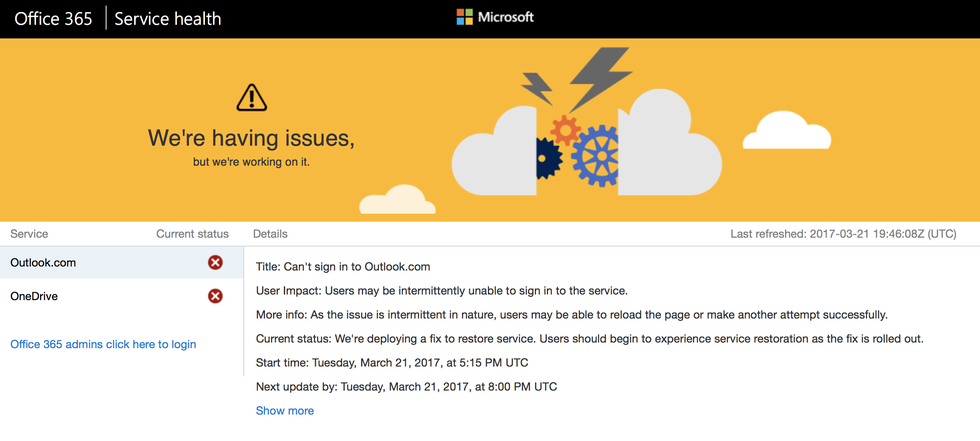
For the second time in two weeks, Microsoft has been experiencing glitches with its online services. Many customers have been unable on Tuesday to sign on to Xbox Live, Outlook.com, Skype and other services.
Microsoft has acknowledged the issues on its various status pages and said it is working to deploy a fix that should restore service.
"We're aware that some users are having difficulties logging in to some services," a representative told Axios. "Our engineers are working to fully resolve this as soon as possible."
Screenshot by Axios
Update: Microsoft says most services are working properly now, but OneDrive is having some residual issues.
MGM Television will partner with Snap Inc. to produce "shows" for Snapchat's Discover platform. The shows will be 4-5 minute episodes of television-like content that are created specifically for vertical viewing on mobile.
Why this matters: This is Snapchat's first deal with a major entertainment studio and follows a set of exclusive deals between Snap and high-end TV companies. Platforms signing exclusive mobile-content deals with Snapchat can be seen as a sign of confidence that the networks see Snapchat as a way to reach an incremental audience, mainly millennials, in a way that will bolster — not compete — with their brands.
A Nielsen study finds that Snapchat reaches 41% of U.S. millennials on any given day, compared to the top 15 U.S. TV network that reach only 6% of milllenials per day.
Snap's push to technologically support mobile video content, through vertical viewing, "tap to swipe" navigation cues, etc., is helping them land exclusive deals with TV networks experimenting on mobile. Recode reports they hope to monetize through content licensing agreements, not just ads, similar to how TV broadcast companies work with telecom companies that distribute their content.
The bitter rivalry between Google and Oracle that has been unfolding in court rooms over the past 7 years is now spilling over into a Capitol Hill lobbying campaign.
Oracle has stepped up lobbying efforts against Google on issues like privacy, according to industry sources. Now Google is pushing back. Last week the tech giant began circulating to congressional offices a deck taking issue with Oracle's claims, a copy of which was obtained by Axios.
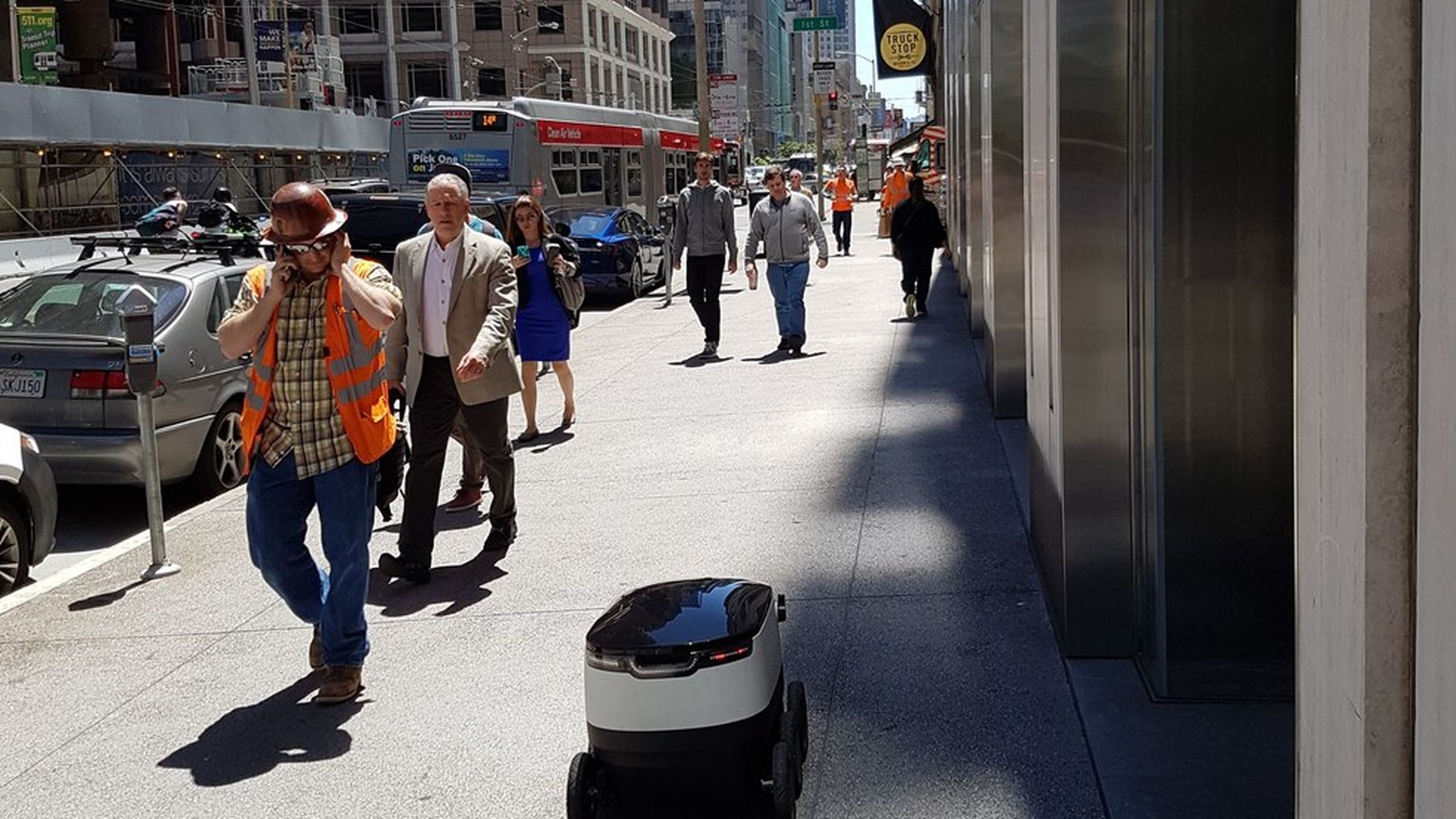
Delivery startup DoorDash is rolling out delivery-by-robot in Redwood City, Calif. A spokesman said Monday that the company hoped to formally begin robot deliveries in Washington, D.C., where it has also been testing the concept, "later this month."
Why it matters: The use of robots is part of a new frontier in the crowded delivery space, with companies like Yelp and Postmates also looking to get in on the trend. Plus, it underscores the potential for a new wave of automation to change the workforce.
San Francisco-based Uber is pulling back on its office expansion into Oakland, according to the SF Business Journal. Instead of the 2,000 to 3,000 employees it planned to have in the upcoming office, only "a few hundred employees" will work out of its upcoming location.
Moreover, it has purchased a stake in the two office buildings currently under constructions as part of the Golden State Warriors' project in the Mission Bay area of San Francisco, adding to its expansion in its hometown.
What it means: Oakland greeted Uber's initial expansion plans with enthusiasm because of the economic opportunities it would bring. Uber's pullback could be a blow to the city, but also good news for critics who worried about the effect it would have on local housing demand.
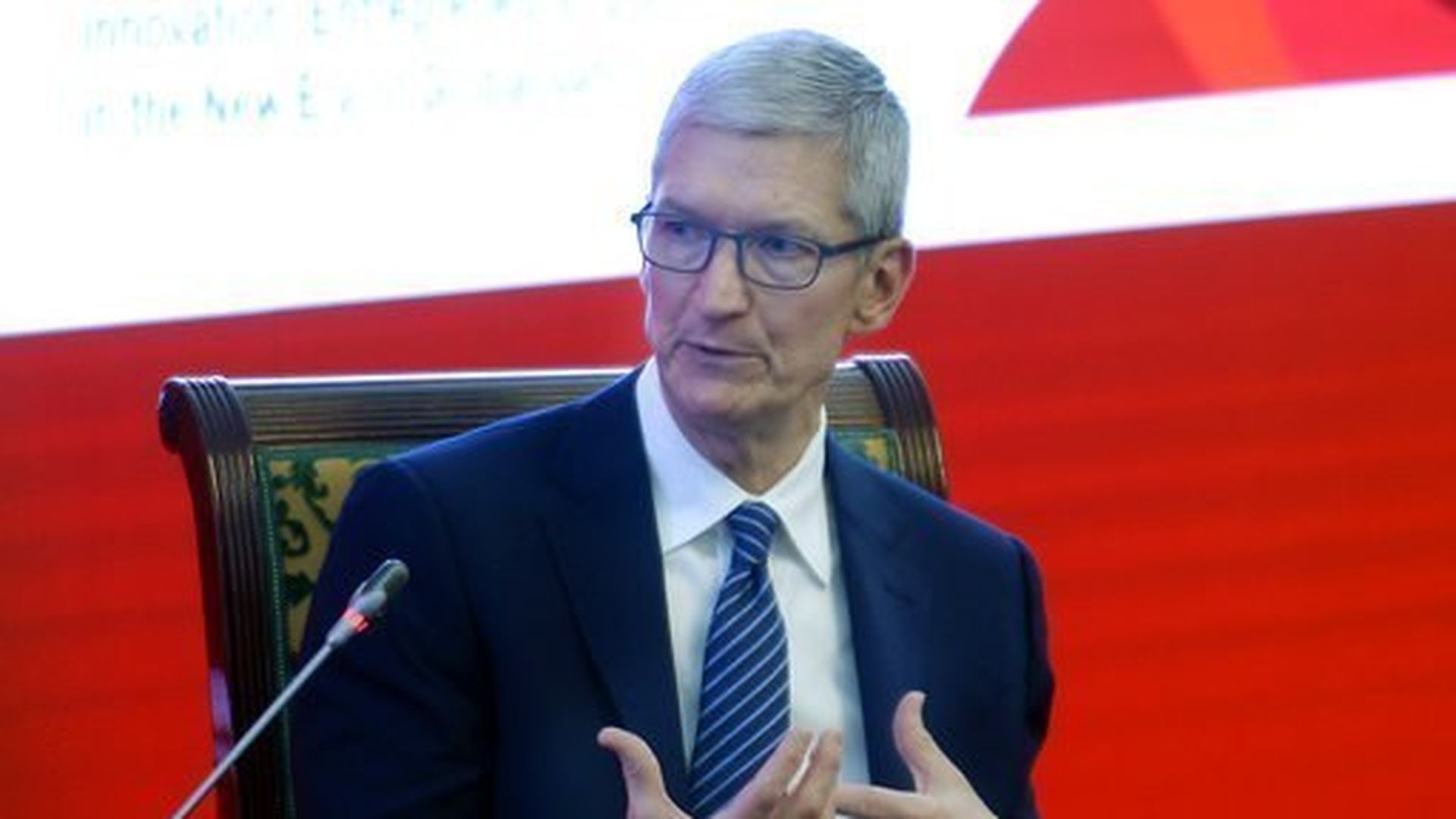
Apple CEO Tim Cook has said for a while now that he finds augmented reality a big deal and a whole lot more interesting than pure virtual reality. However, Apple has been characteristically mum on just what its plans are for overlaying digital objects onto the real world.
Writing for Bloomberg, intrepid Apple scribe Mark Gurman has dug up a number of details on Apple's work in the space, including some big hires, key deals and product plans. Here are the highlights:
Apple is working on its own augmented reality glasses but those should take some time, with the first fruits of the AR push likely to show up on the iPhone itself.
The AR effort is being run by former Dolby hardware chief Mike Rockwell, who previously advised Meta, which makes its own augmented reality glasses. Other hires have come from Amazon, Google and Meta.
Apple has made acquisitions too. It bought AR software firm Metaio in 2015 and AR camera software firm FlyBy Media last year. It's AR effort will also draw heavily on the company's 2013 acquisitiion of Israeli depth-sensing camera maker Primesense.
Hundreds of people are working on AR at Apple, if you include the people doing the underlying iPhone camera work.
Why it matters: AR is seen as a giant new frontier for computing, potentially becoming a to $165 billion market by 2024, according to Global Market Insights. With the smartphone market maturing, Apple needs a big new market to dominate in order to keep growing.
When it bought Viv Labs last year, Samsung said it planned to make the company's voice-powered assistant a key part of its future.
Now, just ahead of next week's debut of the Galaxy S8, Samsung is offering mored details on Bixby, as the assistant is now known. The Korean electronics giant says that Bixby, unlike Apple's Siri or Google's Assistant will be able to tackle most anything a smartphone app as opposed to handling just a small subset of features.
"Bixby is at the heart of our software and services evolution as a company," Samsung R&D chief InJong Rhee said in a blog post on Monday. "As the Bixby ecosystem grows, we believe Bixby will evolve from a smartphone interface to an interface for your life."
Bixby will begin life handling tasks for Samsung's built-in apps for the S8, but will be added over time to other Samsung products, including TVs and appliances. Other app makers will also be able to allow Bixby to work with their apps.
Why it matters: Afrticial intelligence and voice-powered computing are seen as key areas for computing, not just for phones but also for all manner of devices. It also puts Samsung back in software competition with Google, an area where Samsung has not had much success.
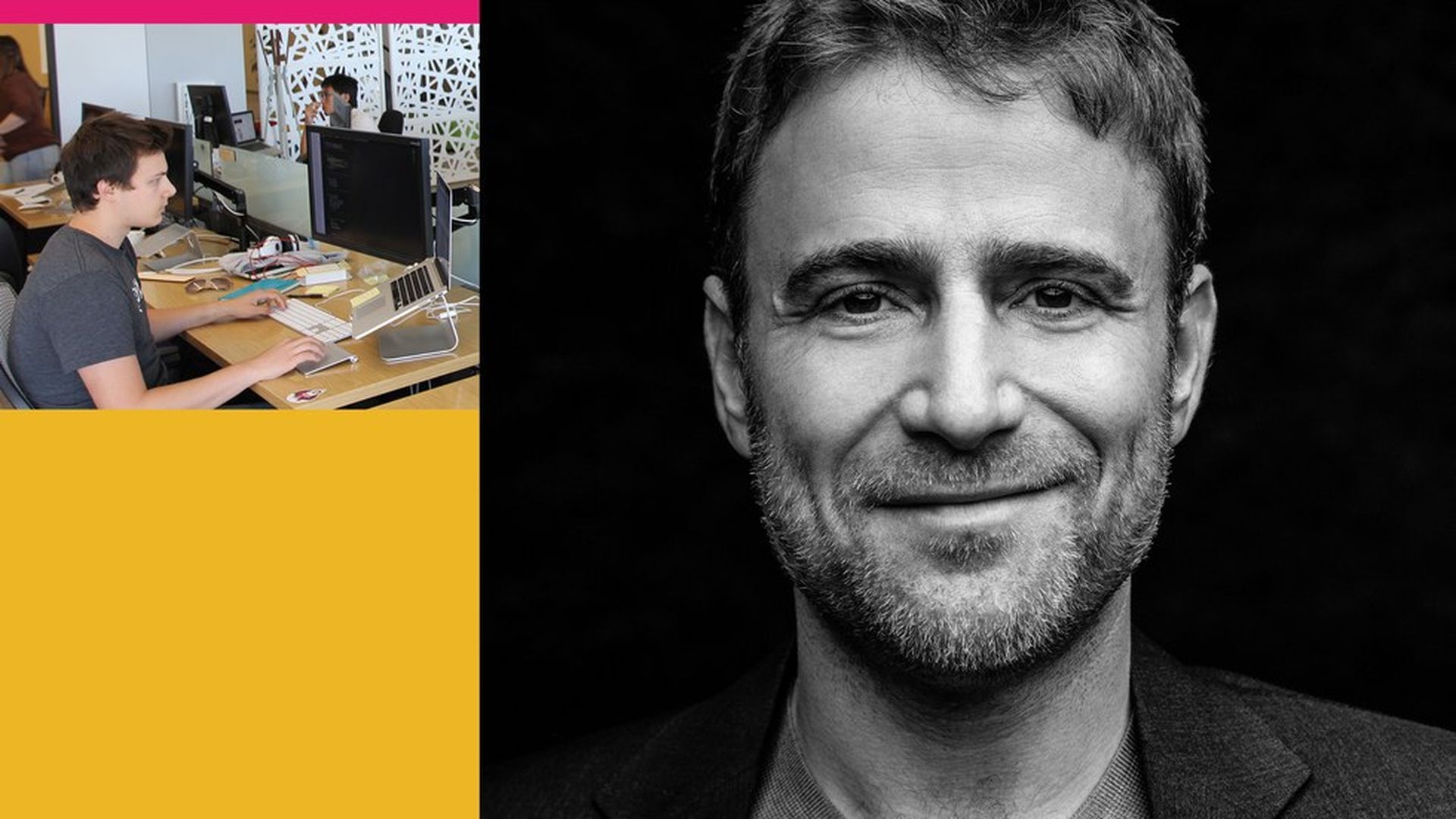
Slack just added Square CFO Sarah Friar as the company's first independent board member. So, is the company readying an IPO?
"No," Butterfield told Axios. "I've said publicly before that we are trying to run the company so that we're ready to go public, not because we are going to necessarily."
Rather, Butterfield characterizes the addition as "part of growing up." an effort that will also see the company invest this year to translate the service into more languages and be more useful to the largest of businesses.
For more on Butterfield's plans for Slack, (and why he won't be buying back Flickr) read on. Click here for his thoughts on Donald Trump (and he has many).
Jeff Jones, who just stepped down as president at Uber, told Recode why:
"It is now clear, however, that the beliefs and approach to leadership that have guided my career are inconsistent with what I saw and experienced at Uber, and I can no longer continue as president of the ride sharing business."