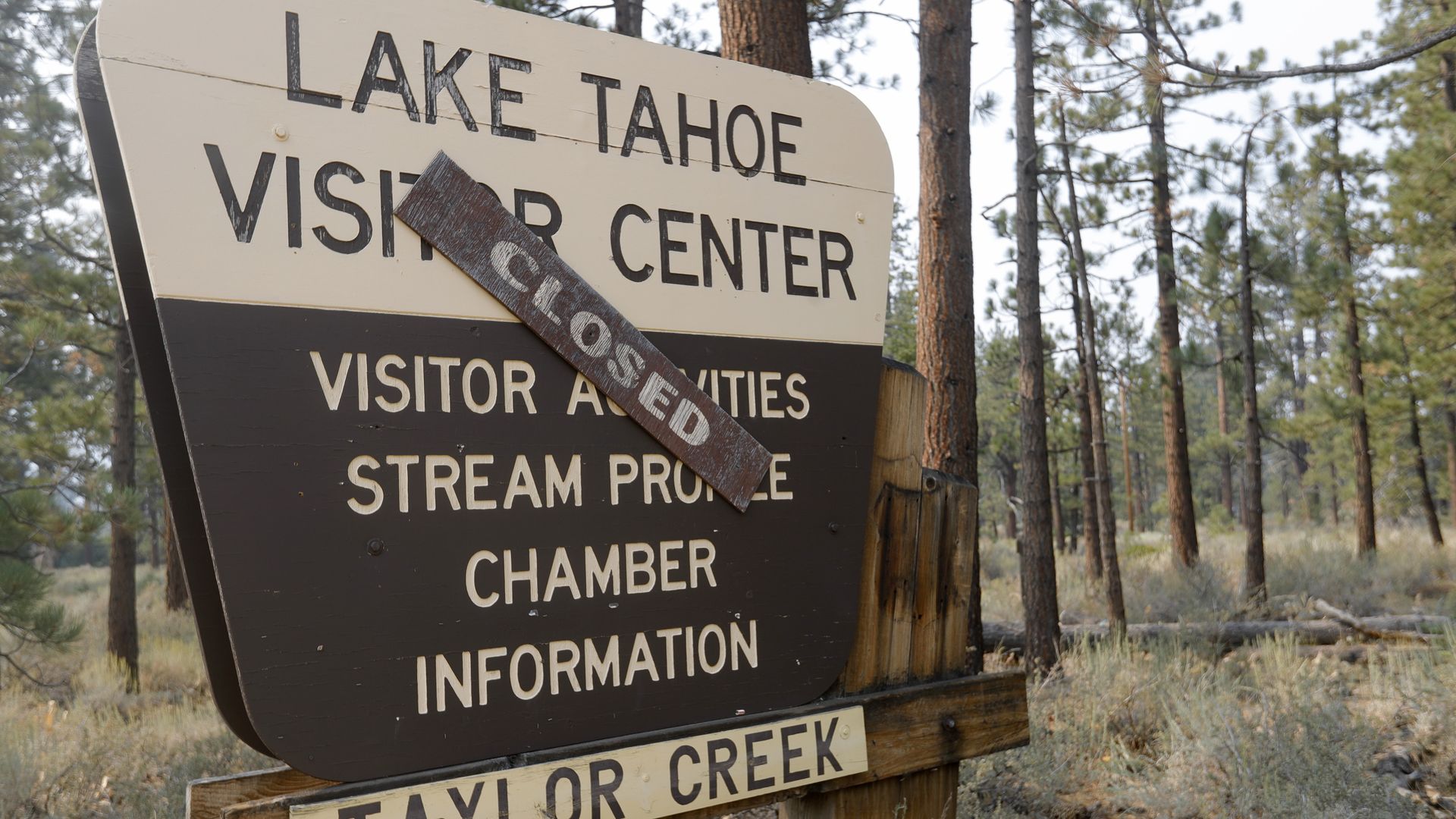
More than 24,000 camping reservations out of 3.2 million have been canceled across the United States this year because of wildfires, AP reports.
The big picture: The recent uptick of national park and forest closures, due in large part to a wave of intense wildfires, coincide with a post-pandemic boom in the number of people engaging in outdoor activities.
Federal Emergency Management Agency (FEMA) Administrator Deanne Criswell told "Fox News Sunday" that the impacts of climate change are “the crisis of our generation."
Why it matters: Criswell's comments come after Hurricane Ida devastated much of the Northeast, causing more than 50 deaths across five states.
Expensive tourism, Mars expeditions, even alien encounters could define space in 2051 — and the Earthly burdens of race could also follow humans to orbit and beyond.
The big picture: Black science fiction writers and artists known as Afrofuturists say the next 30 years of space exploration could address legacies of racial terror on Earth if people of color join ventures and help reimagine human life among the planets.
A growing constellation of satellites that can peer deep beneath the Earth's surface, track global sea level rise in unprecedented detail, and trace pollutants in the air will bolster climate science in the coming decades.
Why it matters: The next few decades are critical for determining the pace and severity of climate change, and efforts to deploy new technologies to cut emissions to net negative numbers will require new planetary monitoring capabilities.
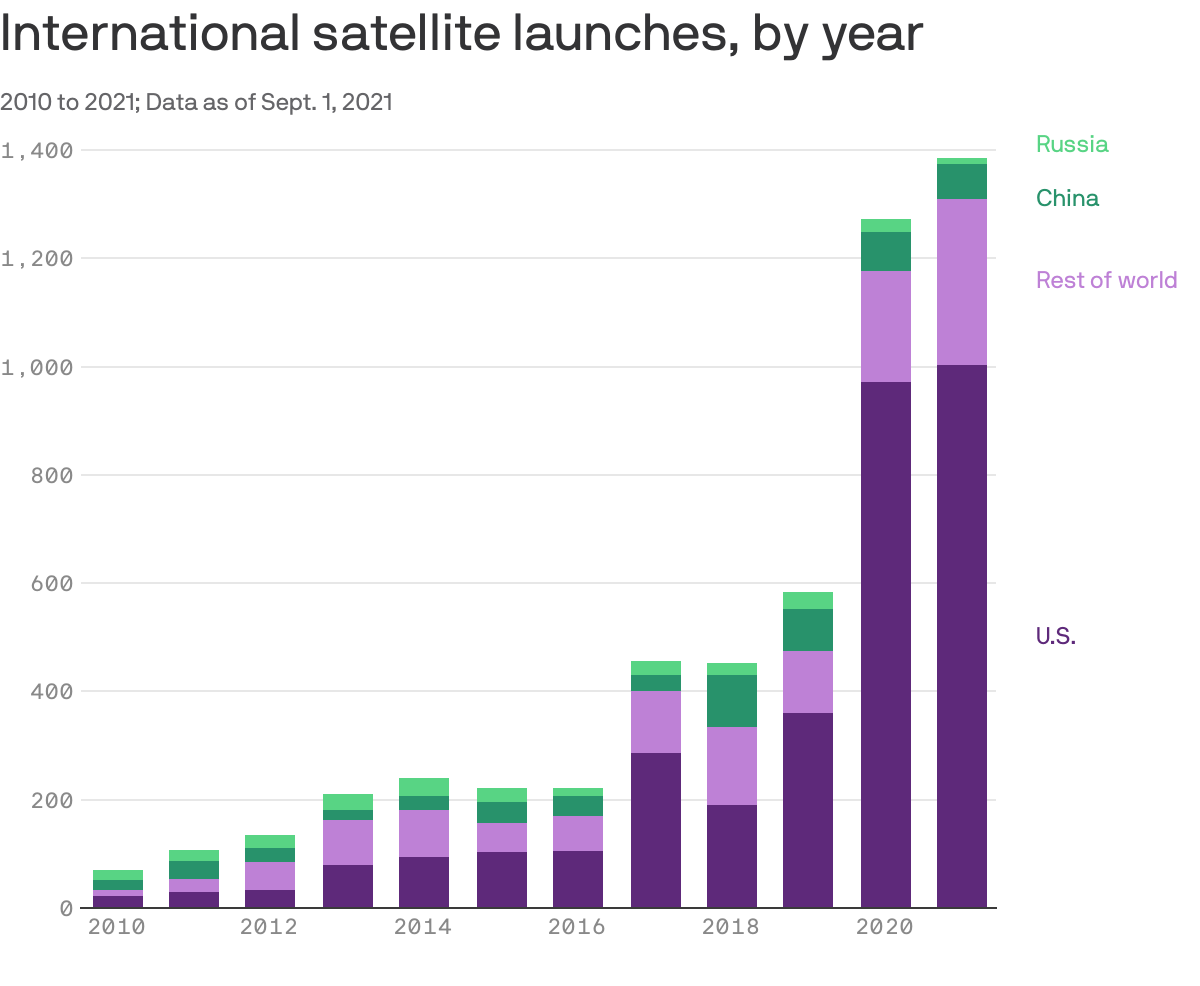
Data: United Nations Office for Outer Space Affairs; Chart: Thomas Oide/Axios
Space is set to become more congested over the next decades as more countries and companies are able to access it and economies become more reliant on space-based technologies.
Why it matters: Though space is seemingly infinite, Earth's orbital capacity is not, and this surge in traffic around the planet may catalyze new competitions — and collaborations — between nations.
The past 50 years in space have been defined by governments, but the futurebelongs to private companies.
Why it matters: The space industry is growing, and what was once the purview of nations is increasingly being taken over by companies looking to profit from their work in space. That new dynamic will shape the coming decades in orbit and beyond.
New probes to study nearby worlds, advanced telescopes to peer at far away planets, and expanding ideas about the signs of life are fueling a renaissance in the search for life beyond Earth.
Why it matters: It's an age-old question — is life as we know it on Earth unique, or is the universe actually teeming with life?
A drastic reduction in launch costs is helping fuel a vision of space not just as a realm of exploration or science, but real industry.
The big picture: Over the short term, space will likely become a place to manufacture high-precision, high-value products that benefit from a microgravity environment. But in the future, as Jeff Bezos noted in July after returning from his space trip, there could be a push to move heavy, polluting industries to operate in space.
Welcome to our Axios AM Deep Dive looking at the future of space from the rise of private company exploration to the ongoing search for extraterrestrial life, led by Axios Space reporter Miriam Kramer (subscribefor her weekly newsletter) and managing editor Alison Snyder.