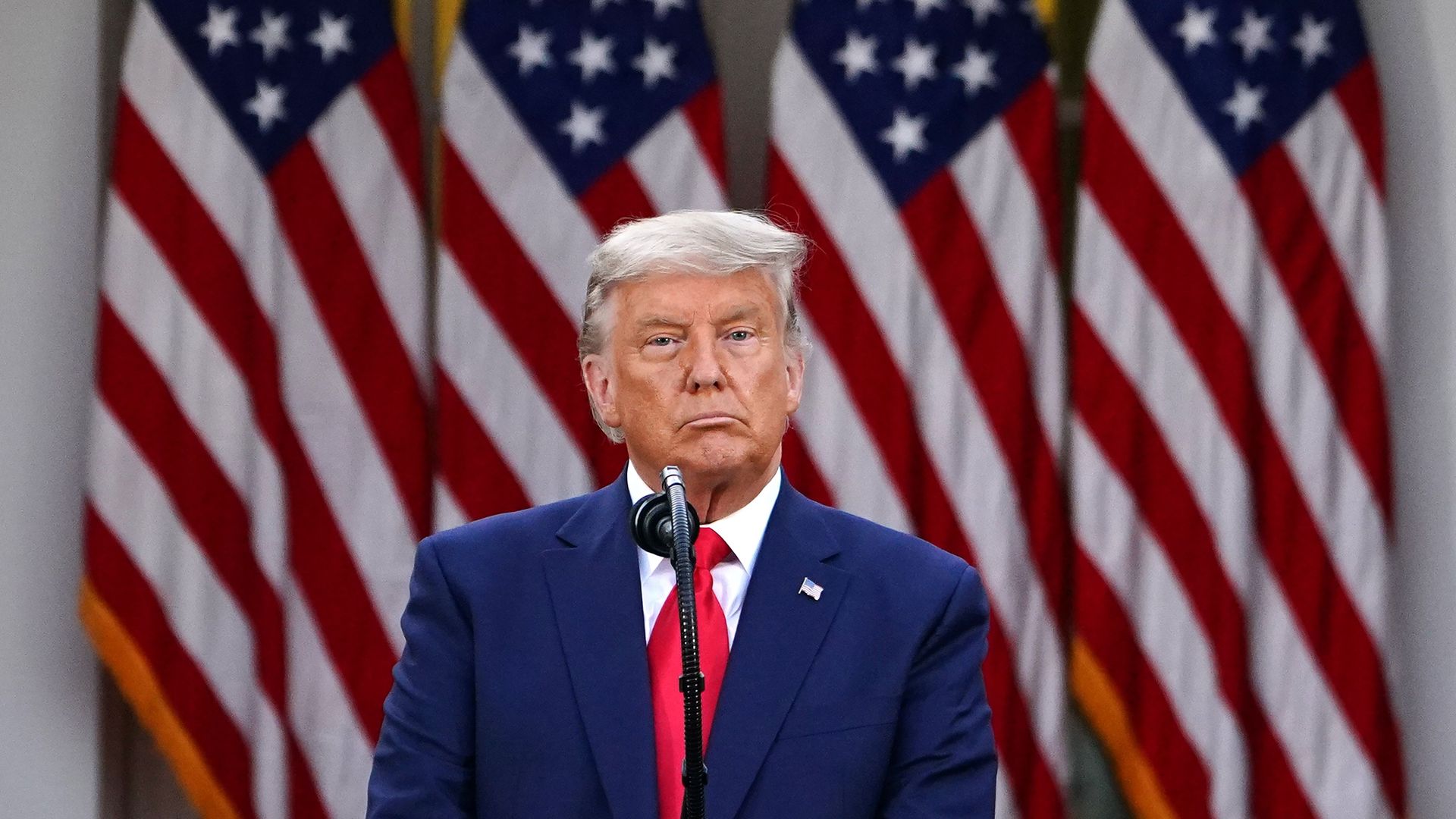
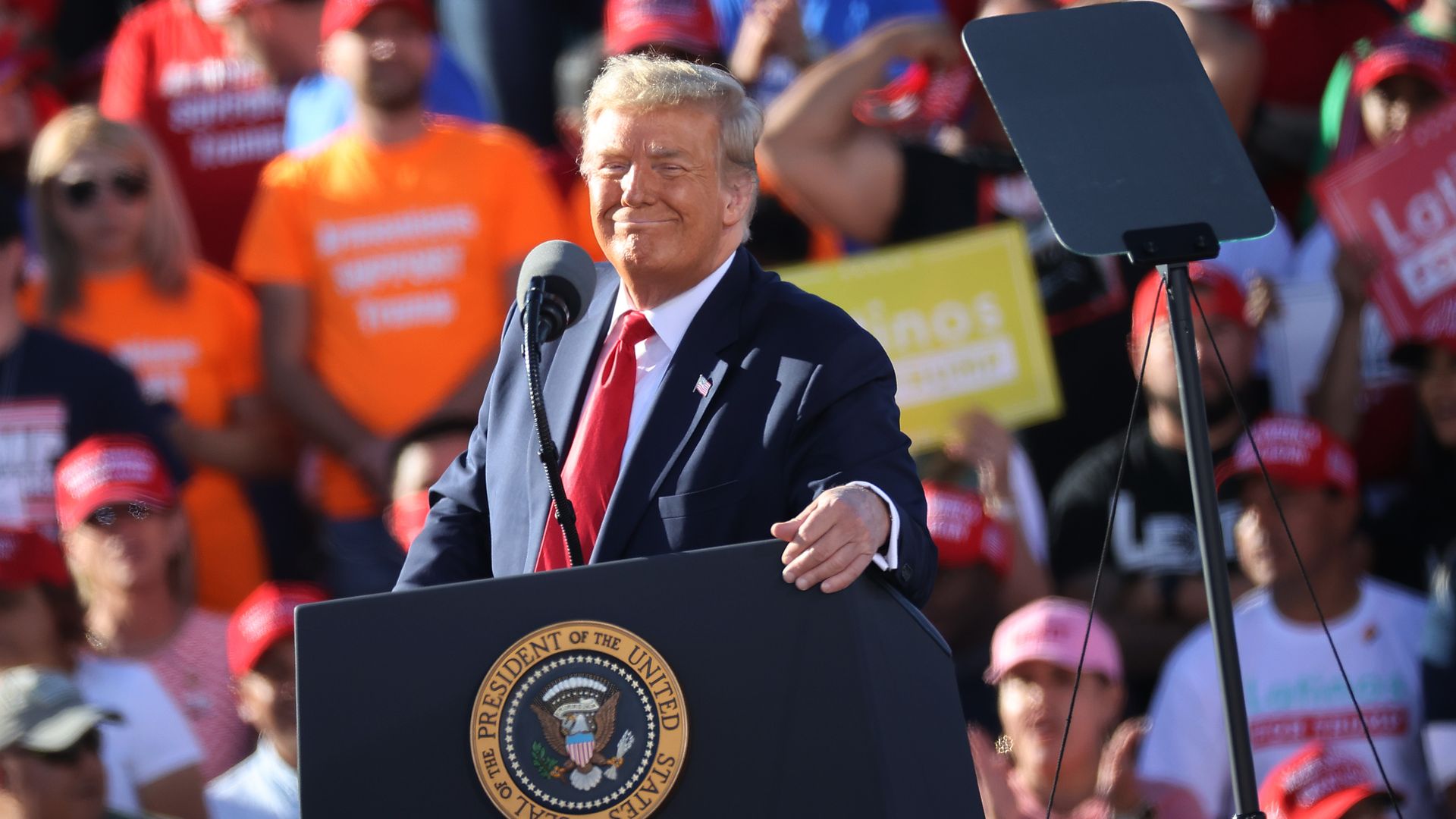
President Trump said Friday that “time will tell” who won the 2020 election, declining to concede the race in his first public remarks since it became clear he’d lost the election to Joe Biden.
What he's saying: "This administration will not be going into a lockdown," Trump said, insisting that so long as he is president there will not be a nationwide coronavirus lockdown. "Hopefully, whatever happens in the future — who knows which administration it will be. I guess time will tell," he added.
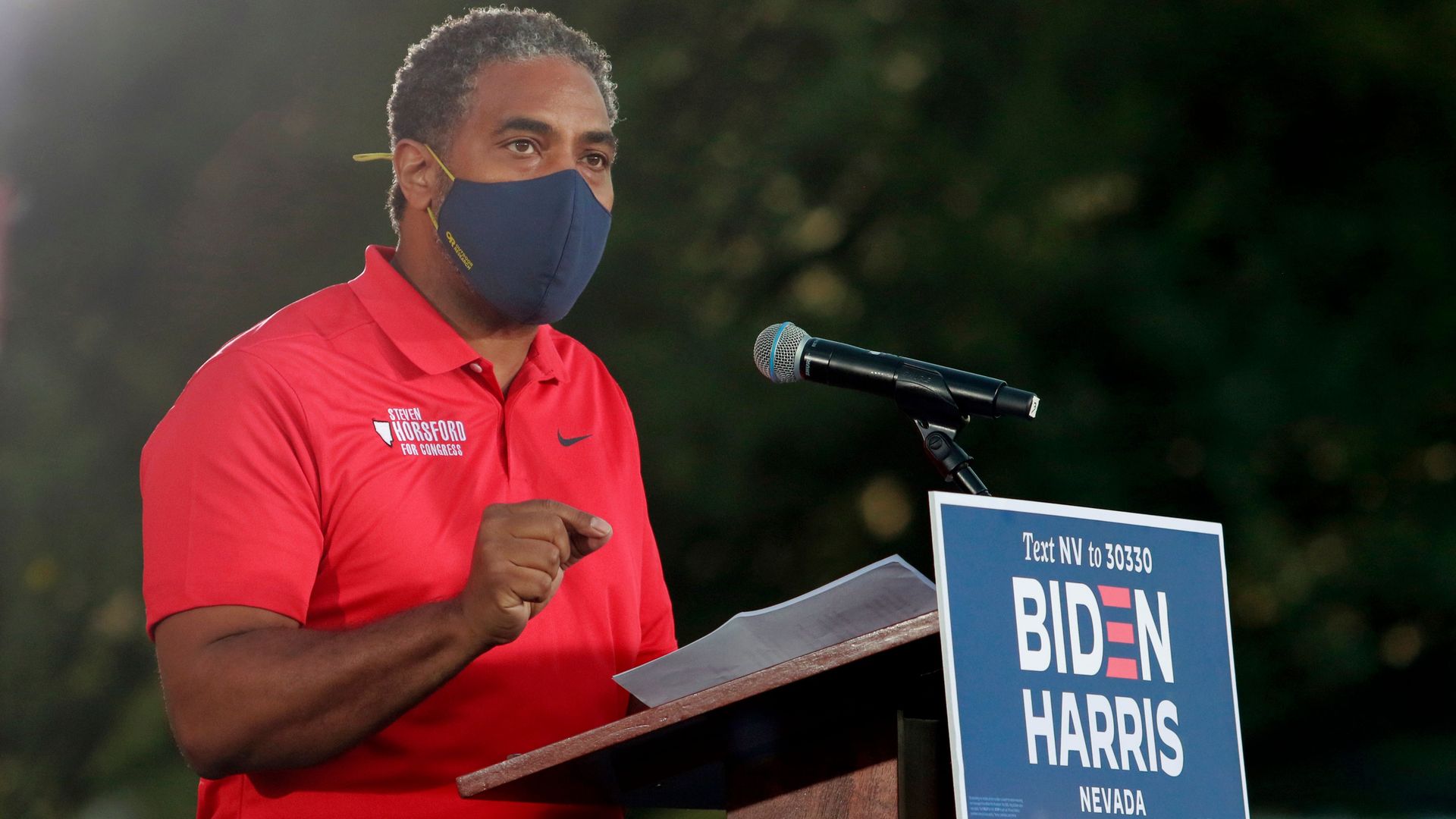
Rep. Steven Horsford will serve as a liaison between the Congressional Black Caucus and Joe Biden's transition team, pushing the caucus' interests with the incoming administration as head of the CBC's first-100-days task force, two sources familiar tell Axios and his office confirmed.
Why it matters: The Nevada Democrat’s role helps give the CBC more collective power when presenting personnel and policy recommendations to Biden's team. It comes at particularly crucial time when the transition team is starting to make staffing decisions, and several lawmakers are publicly and privately lobbying for African American representation in his Cabinet and throughout the administration.
With China belatedly congratulating Joe Biden and Kamala Harris on their election victory on Friday, the list of countries still declining to acknowledge Biden's victory is getting very short.
State of play: Brazil's Jair Bolsonaro, Mexico's Andrés Manuel López Obrador and Russia's Vladimir Putin are among the very few world leaders who say they're waiting for President Trump's legal challenges to play out. North Korea's Kim Jong-un is in a slightly larger group — those who've declined to comment on the results either way.
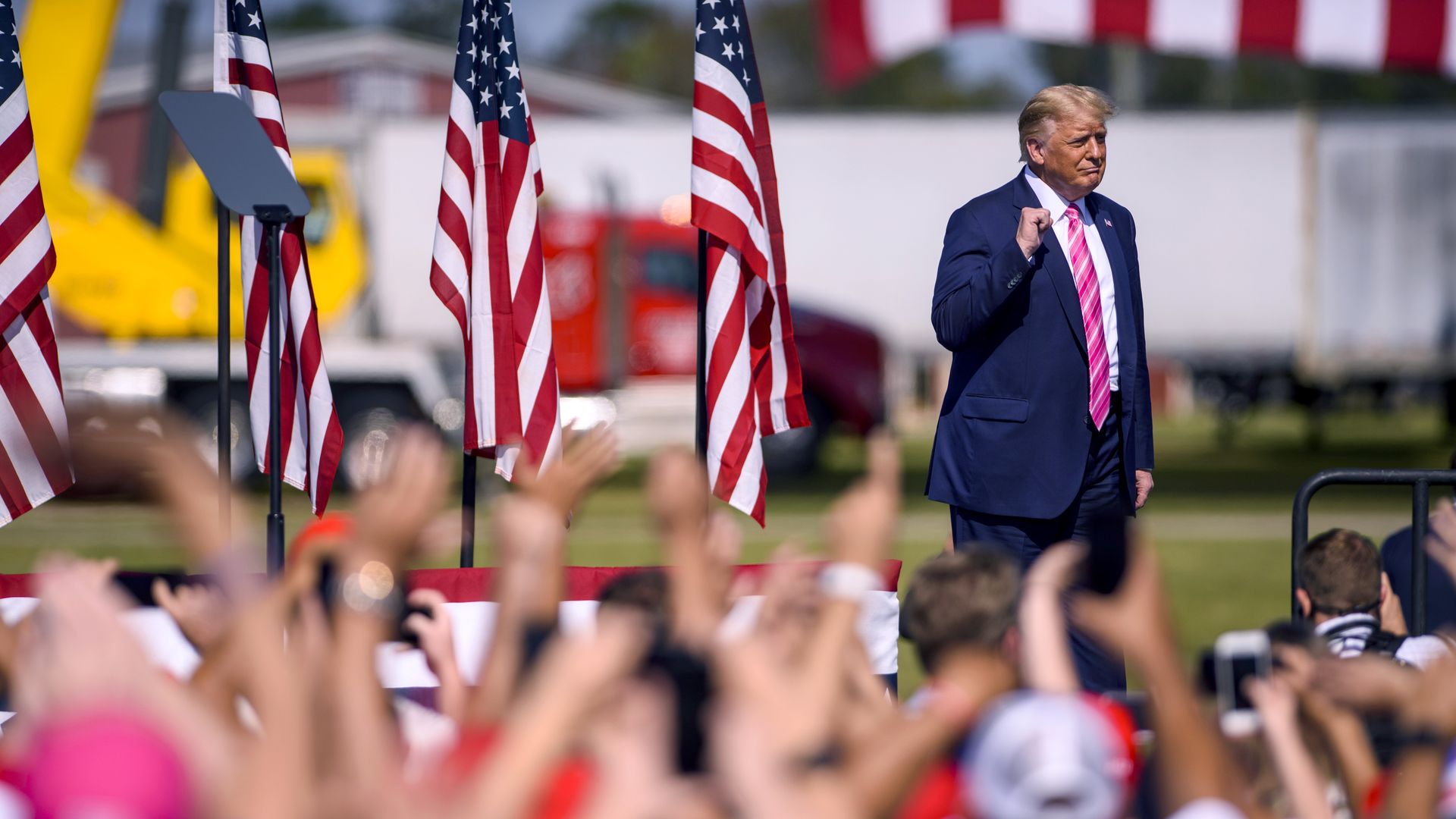
President Trump has won North Carolina, an important swing state in the race for the White House, AP projects.
The big picture: The call comes a week and a half after Election Day. North Carolina carries 15 electoral votes, giving Trump a total of 232 as of Friday. He won North Carolina by 3.6% in 2016. Sen. Thom Tillis (R) won re-election against Democratic challenger Cal Cunningham, AP projected earlier this week.
This story is developing. Please check back for updates.
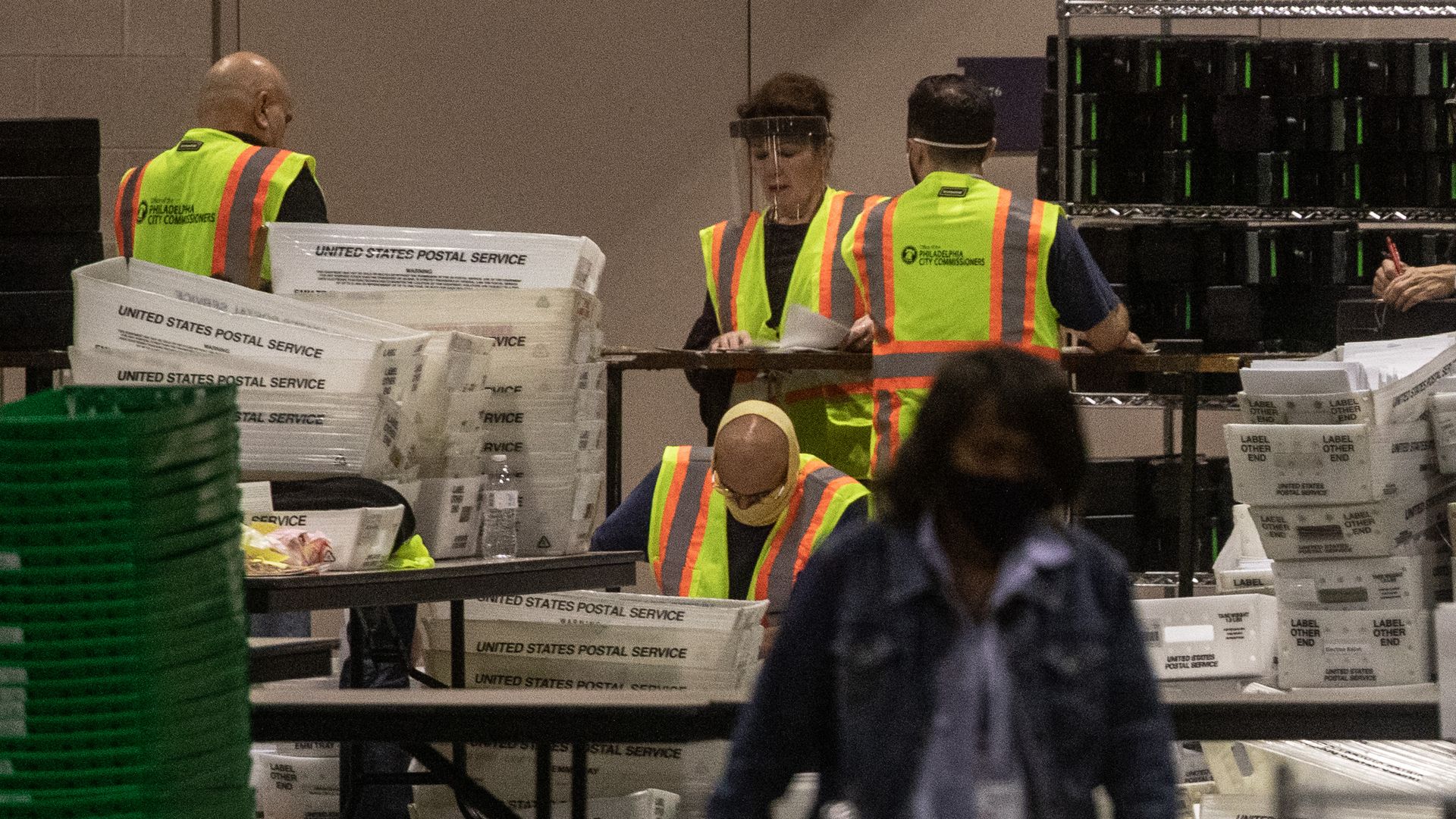
Pennsylvania Secretary of State Kathy Boockvar said on Friday that based on unofficial returns, she will not order a recount or recanvass of ballots cast in the 2020 election, including in the presidential race.
Why it matters: PresidentTrump, who has not publicly conceded to President-elect Joe Biden, continues to litigate election results, including in Pennsylvania.
America's electoral infrastructure survived and thrived last week, despite pandemic complexities and President Trump's unfounded claims of widespread fraud. Yes, including software and machines made by Dominion Voting Systems.
Axios Re:Cap goes deeper with Mike Hanmer research director for the University of Maryland's Center for Democracy and Civic Engagement.
President Trump's campaign said in court Friday that a lawsuit contesting the presidential vote count in Maricopa County, Ariz., was moot, per The Wall Street Journal.
Why it matters: It's yet another tacit acknowledgment from the campaign that its attempt to flip states from President-elect Biden to Trump utilizing legal methods is unlikely to be effective.
More than 130 Secret Service officers are quarantining due to positive coronavirus tests or exposure to a co-worker who has tested positive, the Washington Post reports.
Why it matters: Officials told the Post that they believe the cases at least partly stem from President Trump's run of campaign rallies before Election Day. The number of officers forced off-duty — roughly 10% of its core security team — could stress the Secret Service at large, forcing overtime and missed days off to make up for the strain.
Joe Biden's presidency could bring new efforts to use regulation on Wall Street and action from the Fed and the Treasury to press big companies to take climate change more seriously.
Why it matters: There's a lot of pent-up interest in employing financial regulation to promote better disclosure of climate-related risks and to pressure companies to cut emissions.
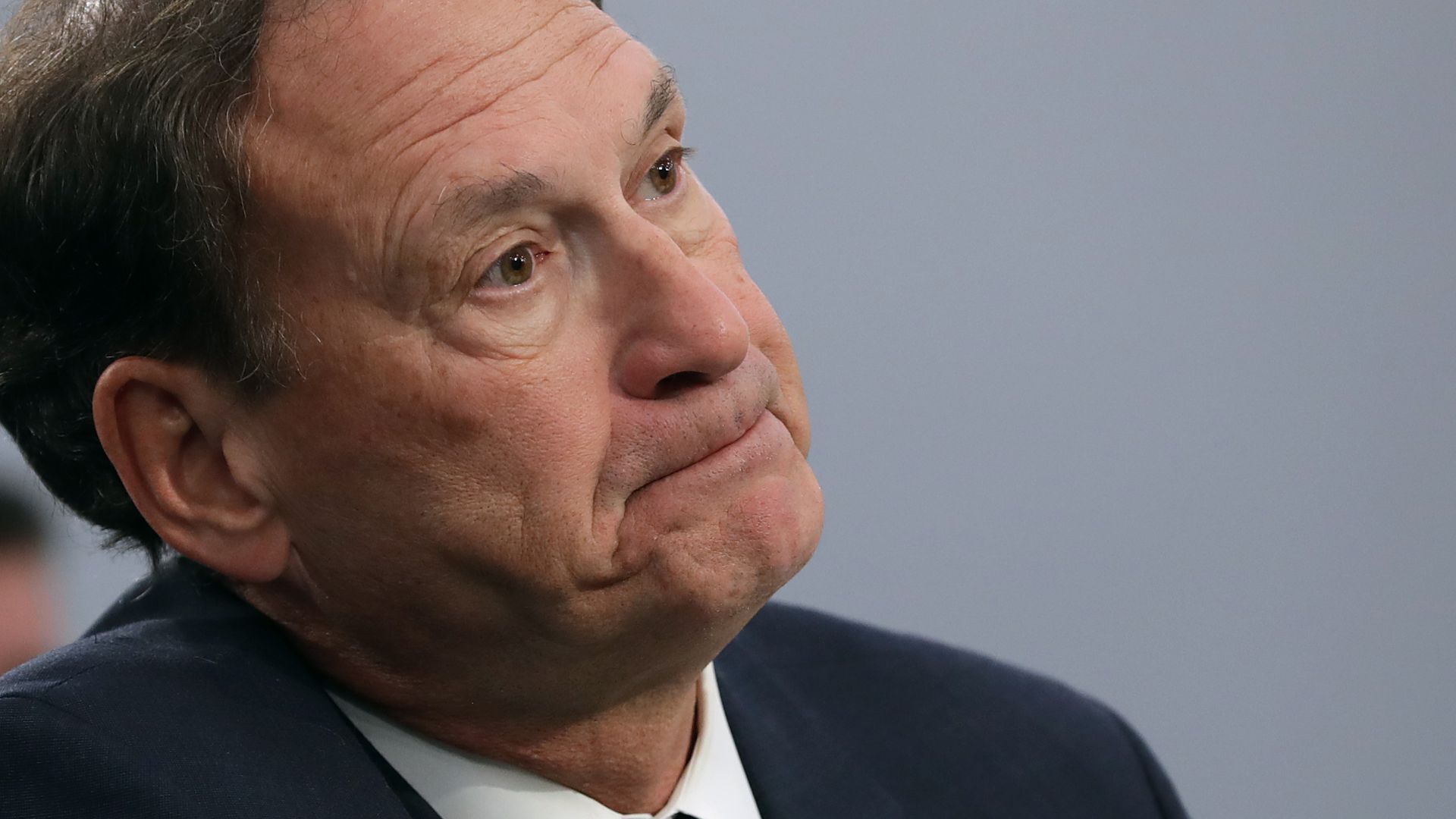
Supreme Court Justice Samuel Alito last night criticized some of the restrictions state and local leaders have imposed during the pandemic, saying they may violate the First Amendment and casting them as part of a long, dark turn toward lawmaking through "executive fiat."
What he's saying: "Think of all the live events that would otherwise be protected by the freedom of speech ... think of worship services ... think about access to the courts or access to a speedy trial," Alito said in a speech to the conservative Federalist Society.
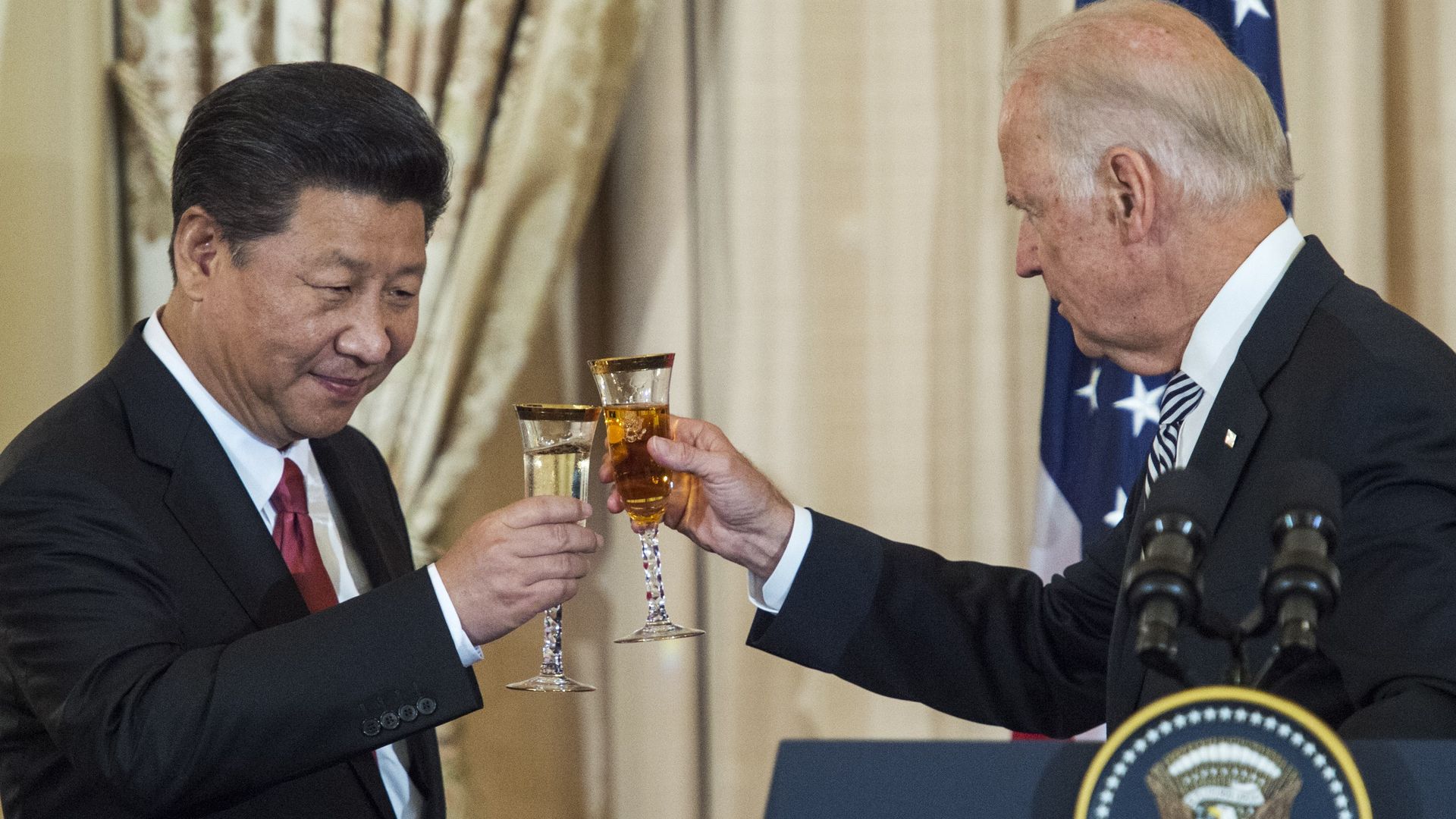
Chinese foreign ministry spokesman Wang Wenbin on Friday congratulated President-elect Biden and Vice President-elect Harris on their election victory, saying that China "respected the choice of the American people" but noting that the results were still to be finalized "in accordance with U.S. laws and procedures."
Why it matters: China had been one of the few global holdouts, leading to speculation that Beijing was wary of provoking President Trump. China's move comes a day after Biden held calls with U.S. allies in the Asia-Pacific. It leaves Brazil, Mexico, North Korea and Russia as three of the only major geopolitical players still waiting to acknowledge Biden's win.
Sen. David Perdue, whose upcoming runoff election in Georgia could help determine which party controls the Senate, has been President Trump’s top loyalist in the upper chamber, according to the "Axios on HBO" Trump Loyalty Index.
Why it matters: In the wake of a presidential election largely seen as a referendum on Trump, Perdue’s unbreakable allegiance to the president effectively makes Trump an issue again in the runoff.
A host of alarming new signs suggest that the U.S. economy is on track to deteriorate even faster than had been forecast. A huge reason: A year-end COVID rescue package now looks unlikely.
Why it matters: One of the biggest failures of the current administration and Congress will be a Day One problem for President-elect Joe Biden — and an urgent test of his theory that Republicans will be more willing to work with him once President Trump is gone.
With political polls looking close to useless, newsrooms are increasingly turning to internet trends, demographics and local news in an effort to crack America’s baffling political code.
Why it matters: This election proved that polls aren't the only way to measure public opinion trends — and that other measures, like social media, may give us a window into enthusiasm among populations that polls are missing.