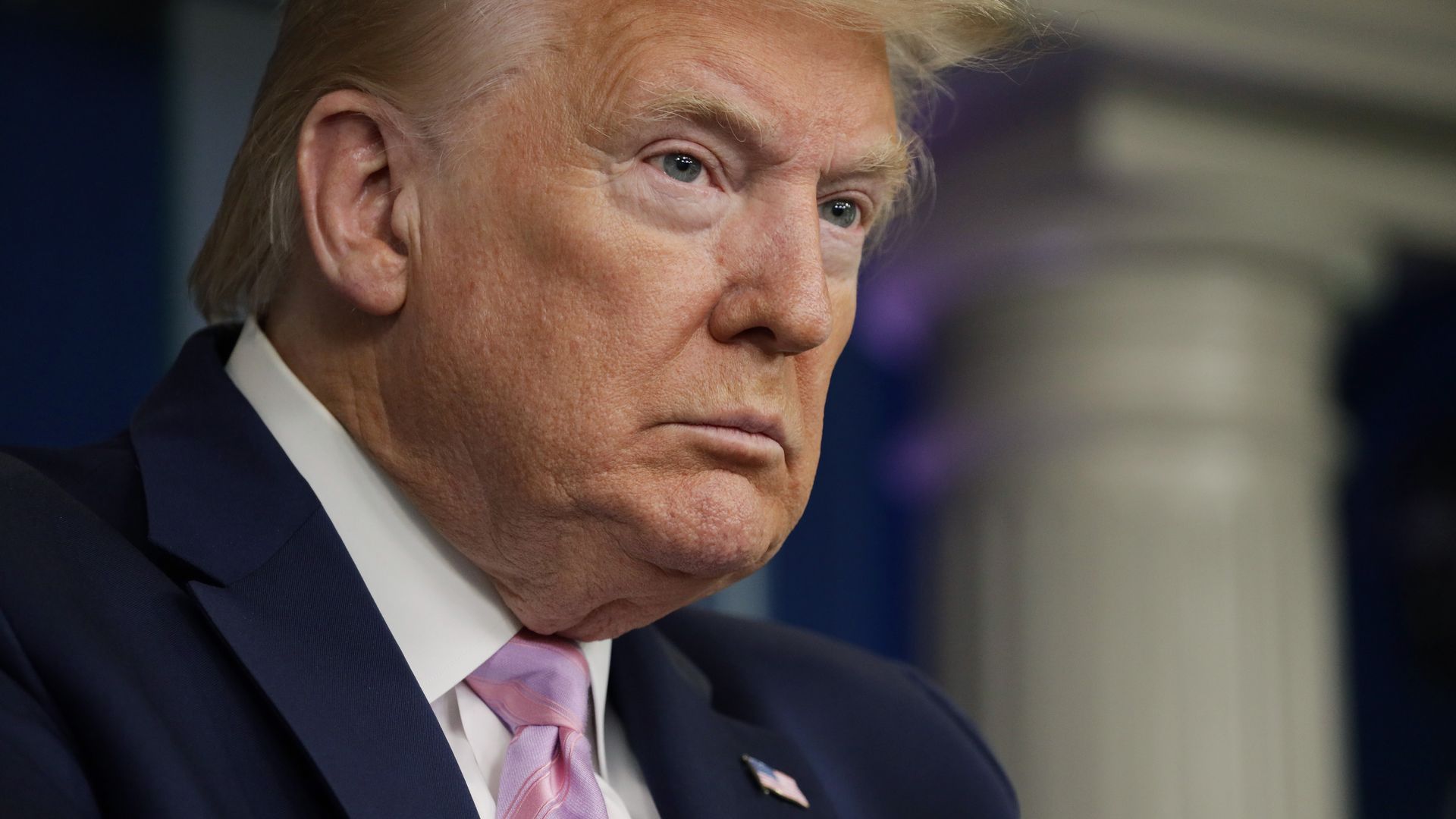
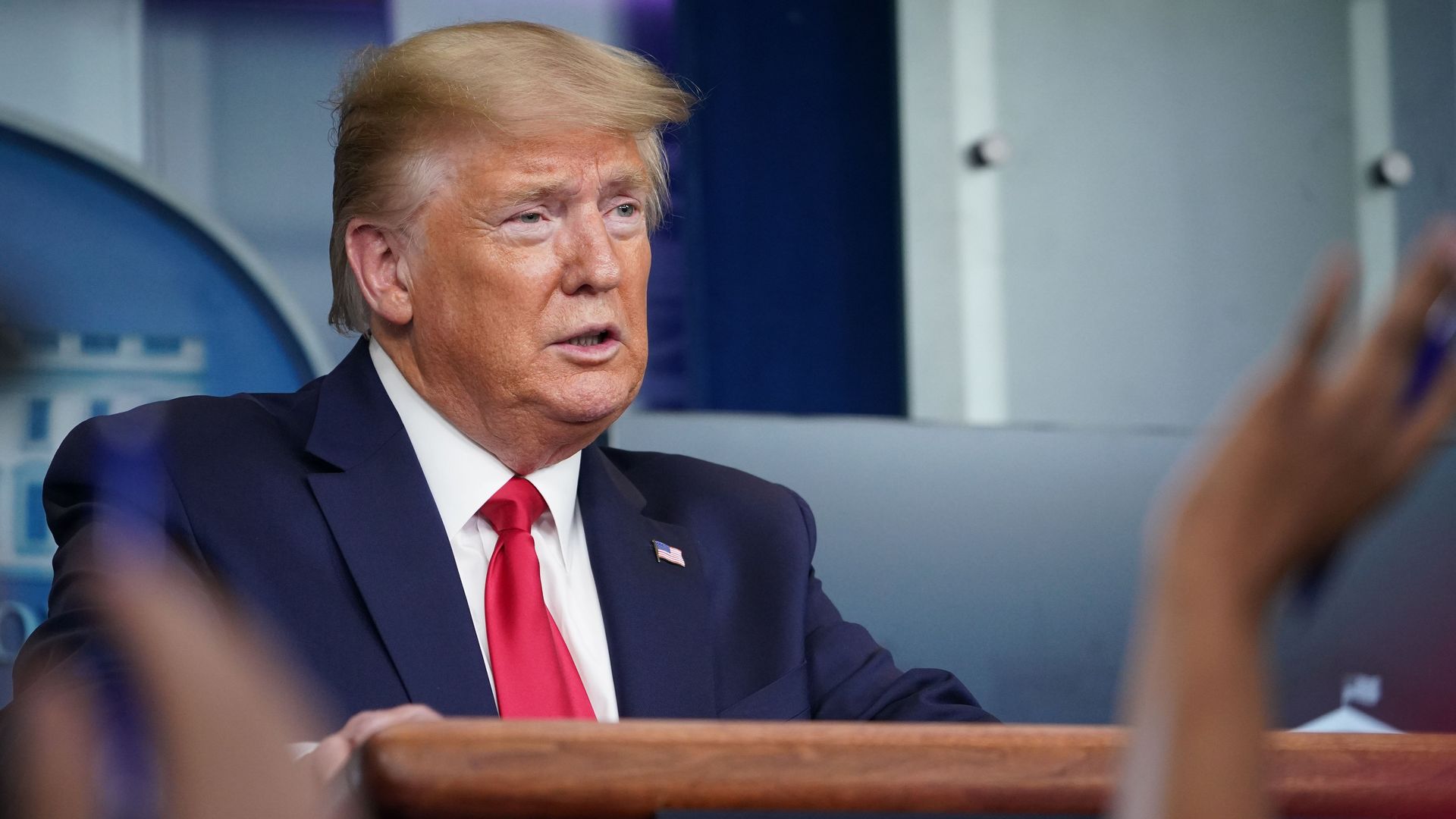
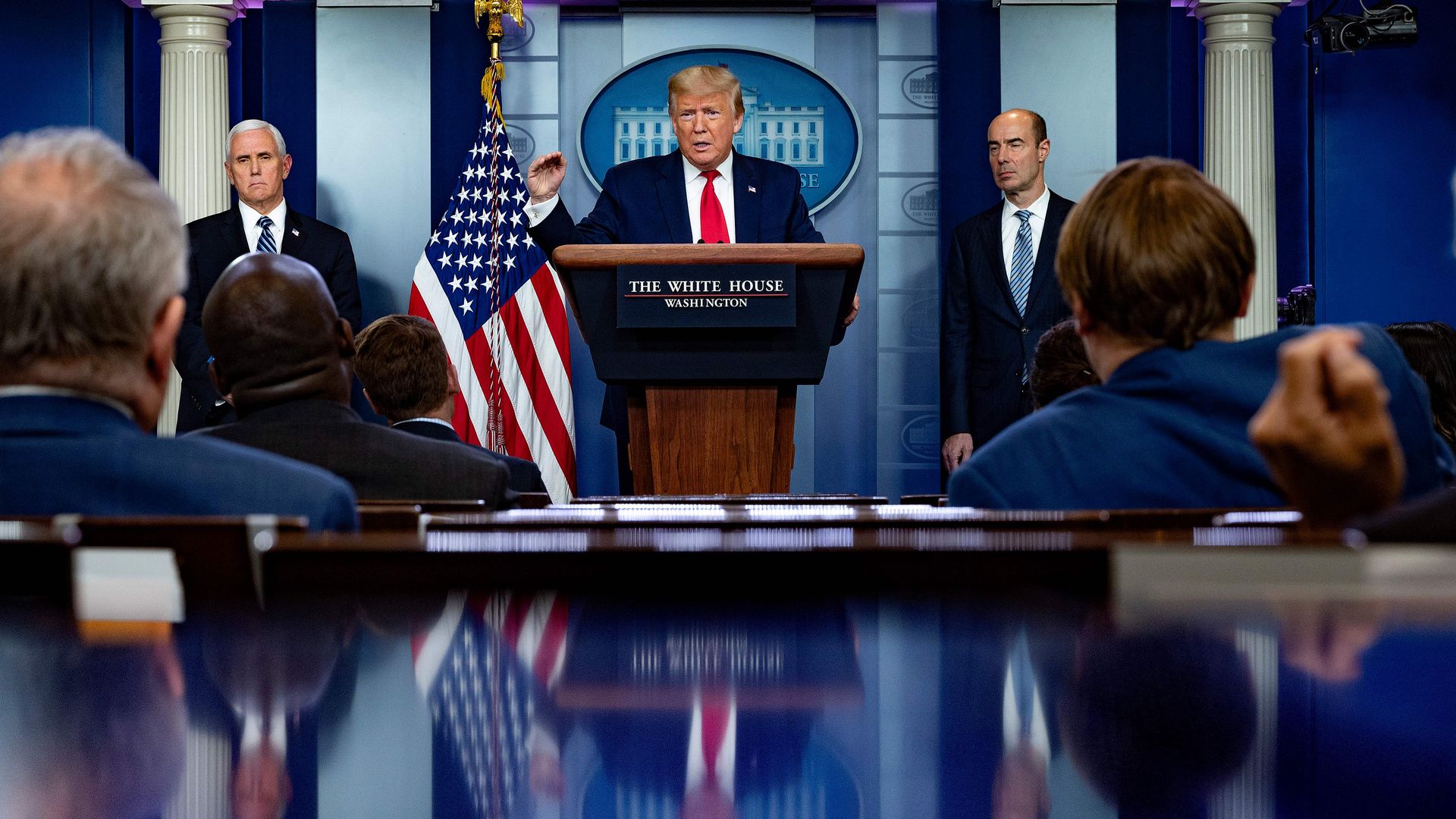
President Trump was informed in late January of a memo from White House economic adviser Peter Navarro that warned the novel coronavirus could kill up to half a million Americans and cost trillions of dollars, the New York Times reports.
Why it matters: Trump has repeatedlydenied seeing January and February memos that Navarro sent, while insisting he did "more or less" what his adviser suggested by banning non-U.S. citizens from traveling from China effective Feb. 2.
The Pentagon plans to award $133 million to companies to ramp up domestic production of more than 39 million N95 face masks, the Department of Defense announced Saturday.
Why it matters: The federal government began the process of deploying 90% of its stockpiled medical equipment this week to fight the coronavirus pandemic — which isn't enough to meet current state demands.
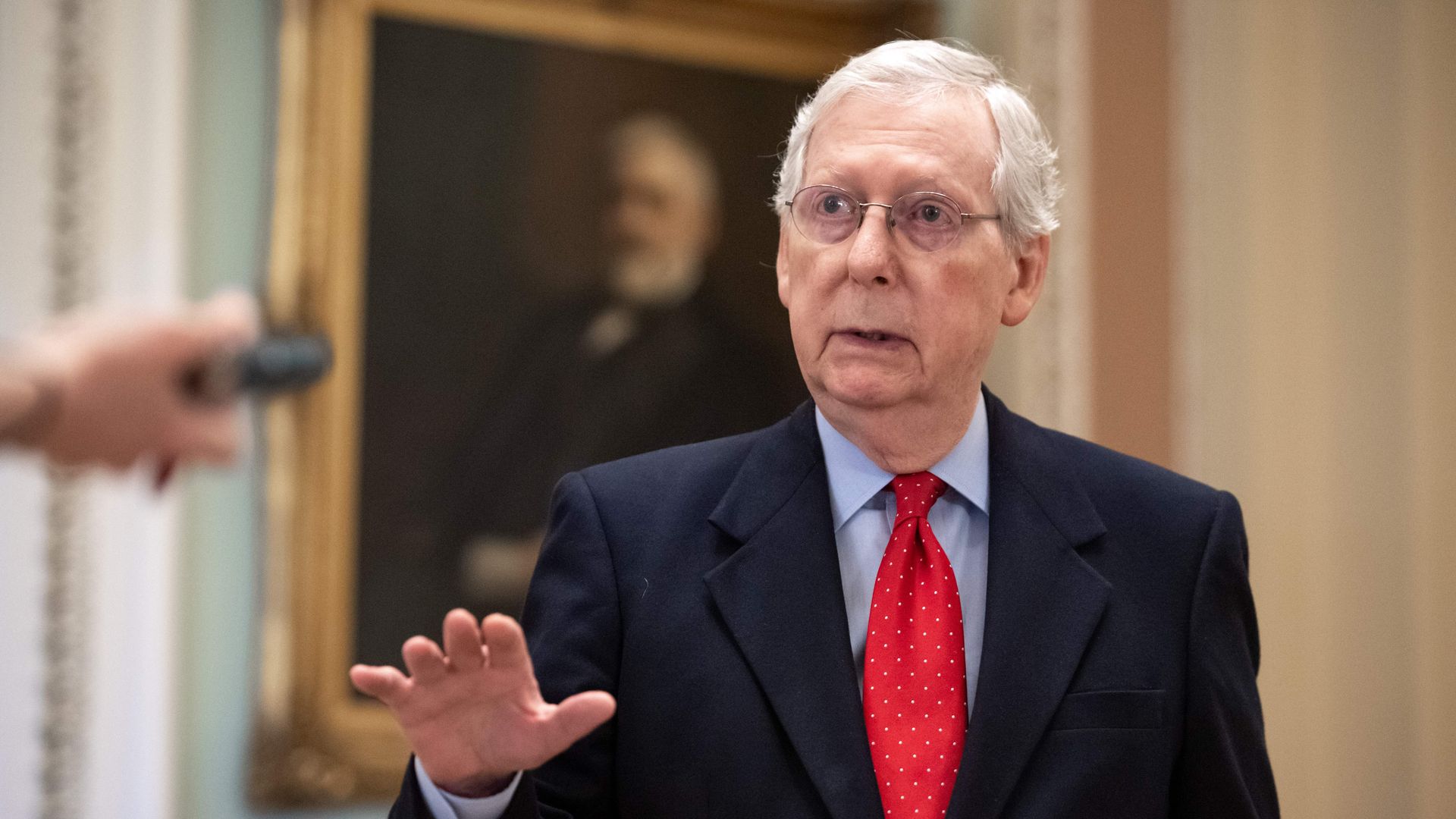
Senate Majority Leader Mitch McConnell (R-Ky.) and House Minority Leader Kevin McCarthy (R-Calif.) released a joint statement Saturday indicating they will not negotiate with Democrats after their proposal to add $250 billion to the Paycheck Protection Program failed Thursday.
What they're saying: "Republicans did not ask to change any policy details that were negotiated by both parties and passed unanimously. All we want to do is put more money into a popular job-saving policy which both parties designed together."
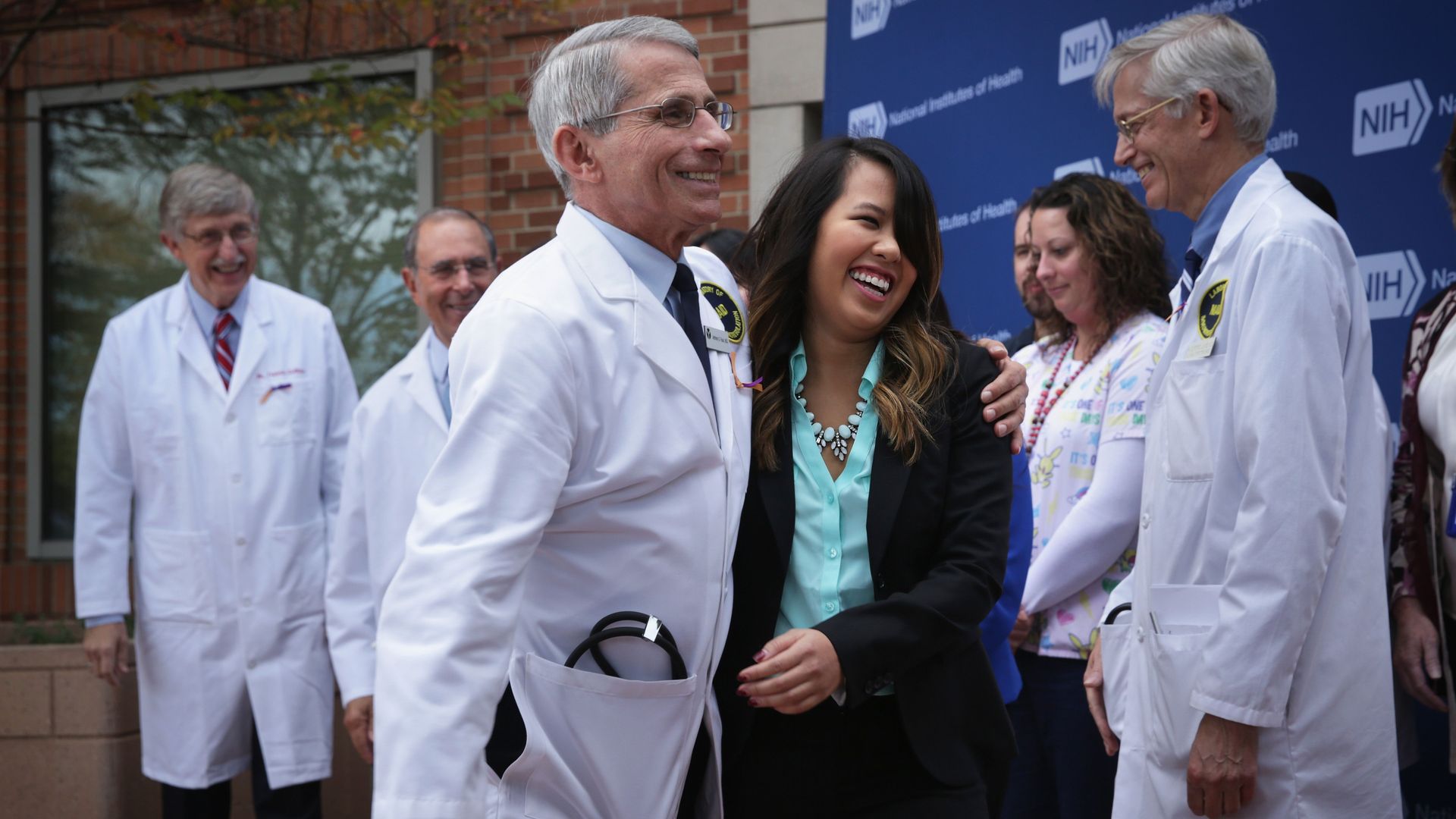
Dr. Anthony Fauci, director of the National Institute of Allergy and Infectious Diseases, has maintained his position through six administrations by emphasizing facts and candor in his conversations with politicians, the New Yorker's Michael Specter reports.
Why it matters: "Americans have come to rely on Fauci’s authoritative presence," Specter writes. "Perhaps not since the Vietnam era, when Walter Cronkite, the avuncular anchor of the 'CBS Evening News,' was routinely described as the most trusted man in America, has the country depended so completely on one person to deliver a daily dose of plain talk."
Police around the globe are taking extra efforts to enforce social distancing over Easter weekend.
Why it matters: Officials say that mitigation efforts like social distancing are beginning to flatten the coronavirus curve in crucial areas across U.S. and Europe, like New York and Lombardy in Italy. Large Easter Sunday gatherings would mean some of that crucial progress is squandered.
Gov. Gavin Newsom offered President Trump praise about the federal government's efforts in helping California combat the coronavirus pandemic.
What Newsom told CNN: "Every single direct request that [Trump] was capable of meeting, he has met. We have the USNS Mercy in California because of his direct intervention and support."
The coronavirus may be a defining experience for Generation Z that shapes its outlook for decades to come — disrupting its entry to adulthood and altering its earning potential, trust in institutions and views on family and sex.
The big picture: Demographers have observed lasting impacts from national crises — like the AIDS epidemic, 9/11 and the Great Recession —on the political, economic, health and societal aspects of Americans who came of age at the time.
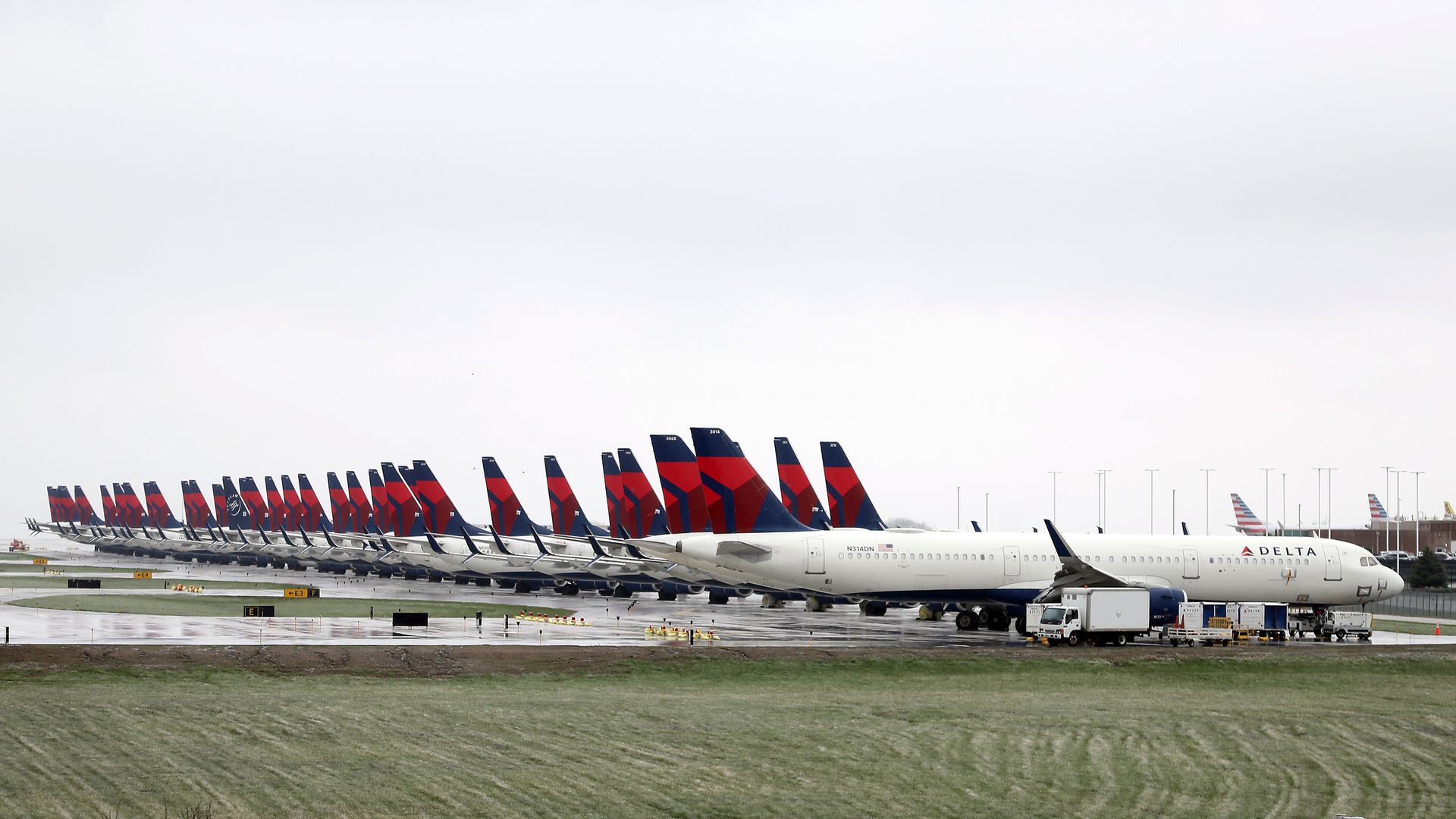
Small to medium airlines receiving bailouts of up to $100 million from the $2.2 trillion coronavirus rescue package will not have to provide the federal government with compensation or equity stakes, the Treasury Department announced Friday evening.
Why it matters: The airline industry got a $58 billion lifeline in the federal aid package, but the sector's operations and prospects will be forever changed by the global pandemic. Approximately 230 air carriers have applied for payroll assistance, the department said.
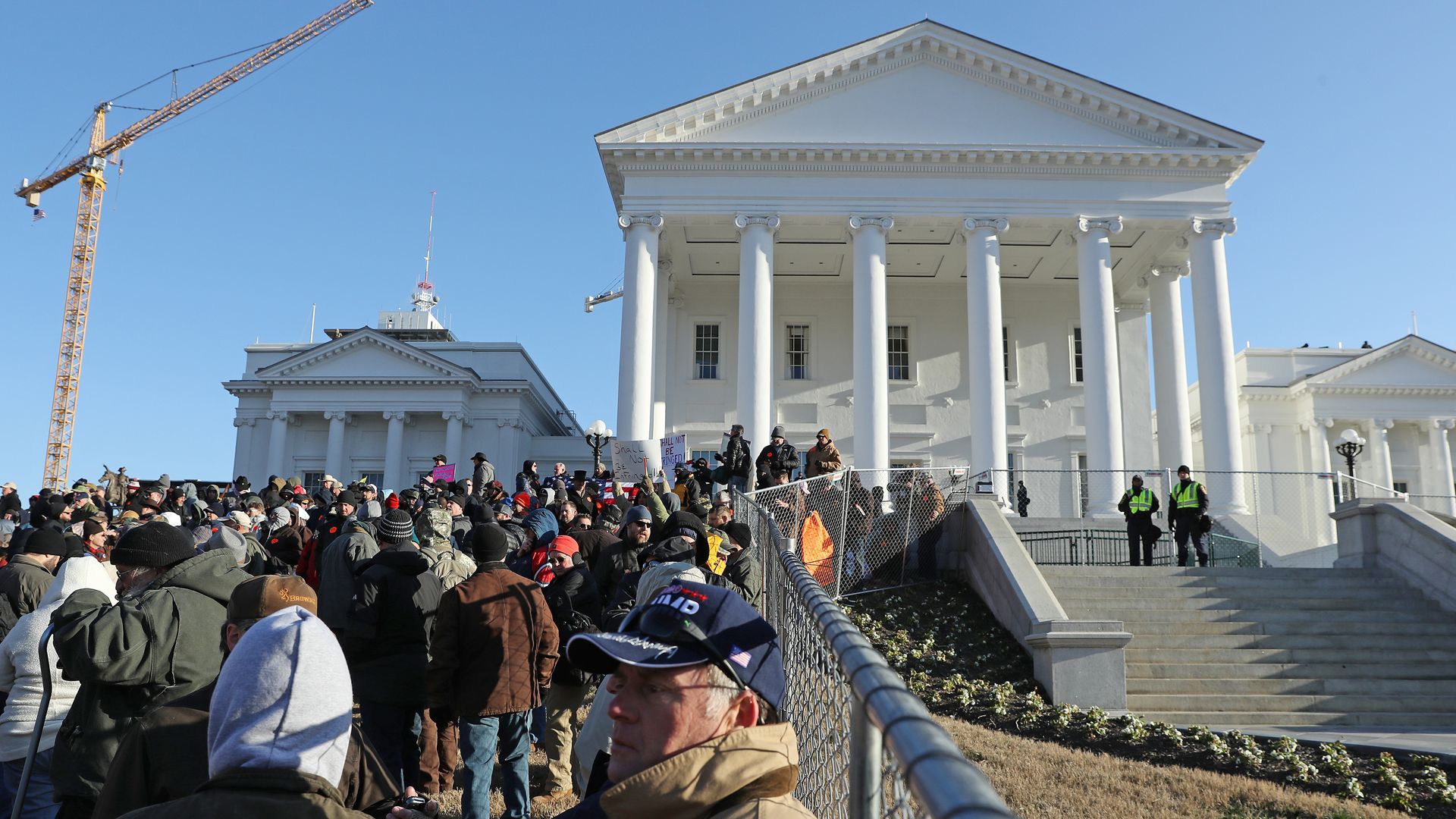
Virginia Gov. Ralph Northam (D) on Friday signed five gun control bills into law and repealed the state's 24-hour waiting period for individuals seeking abortions.
The Trump administration has decided to pause efforts to increase work requirements for some Americans receiving food stamps, due to the coronavirus pandemic, the New York Times reports.
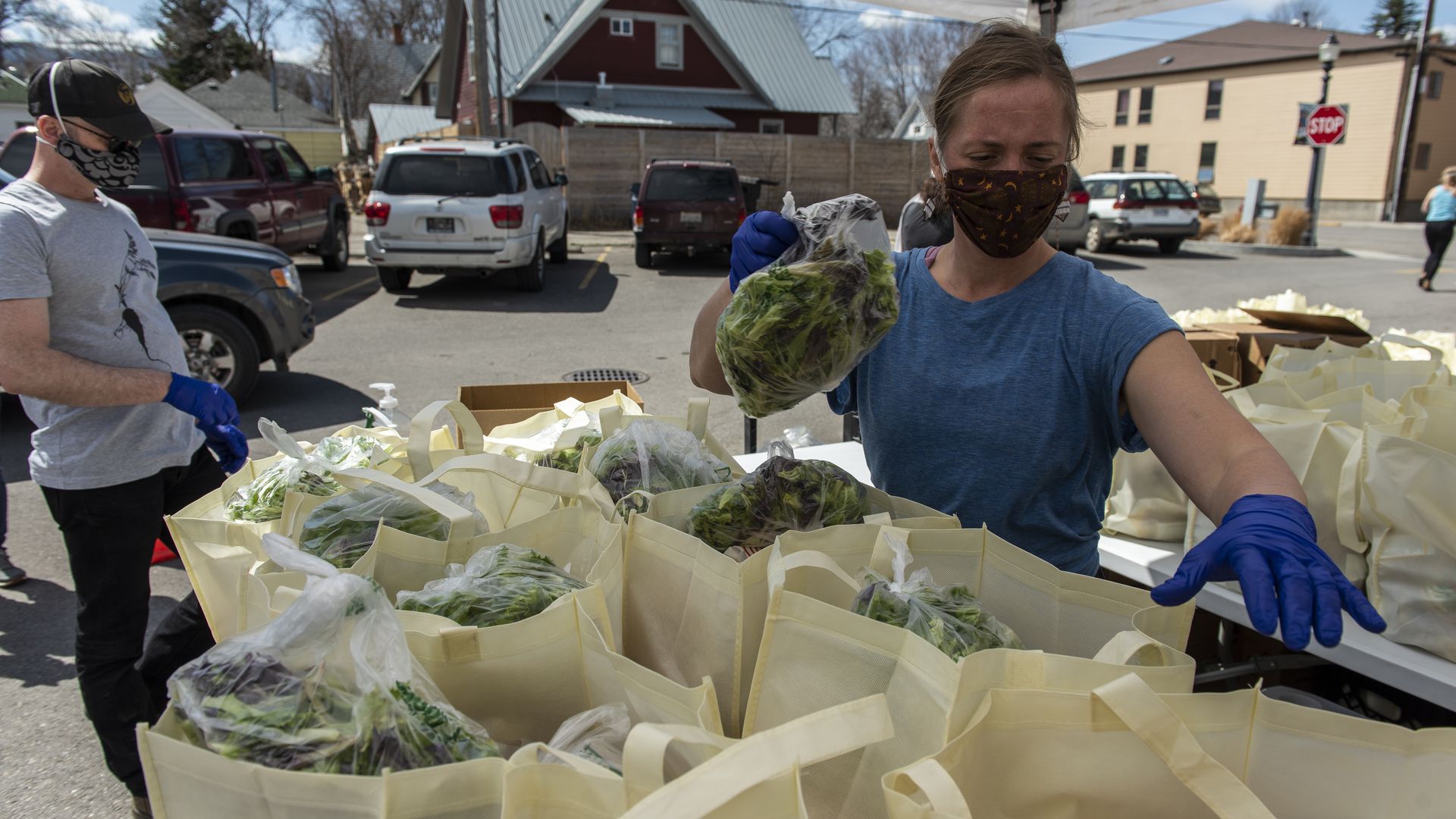
What's happening: Nearly 10 million Americans have filed for unemployment in recent weeks. Meanwhile, demand is surging for food banks across the U.S., as those who rely on food stamps to buy essentials are largely unable to stock up on food and medication amid the COVID-19 outbreak, the Washington Post reports.
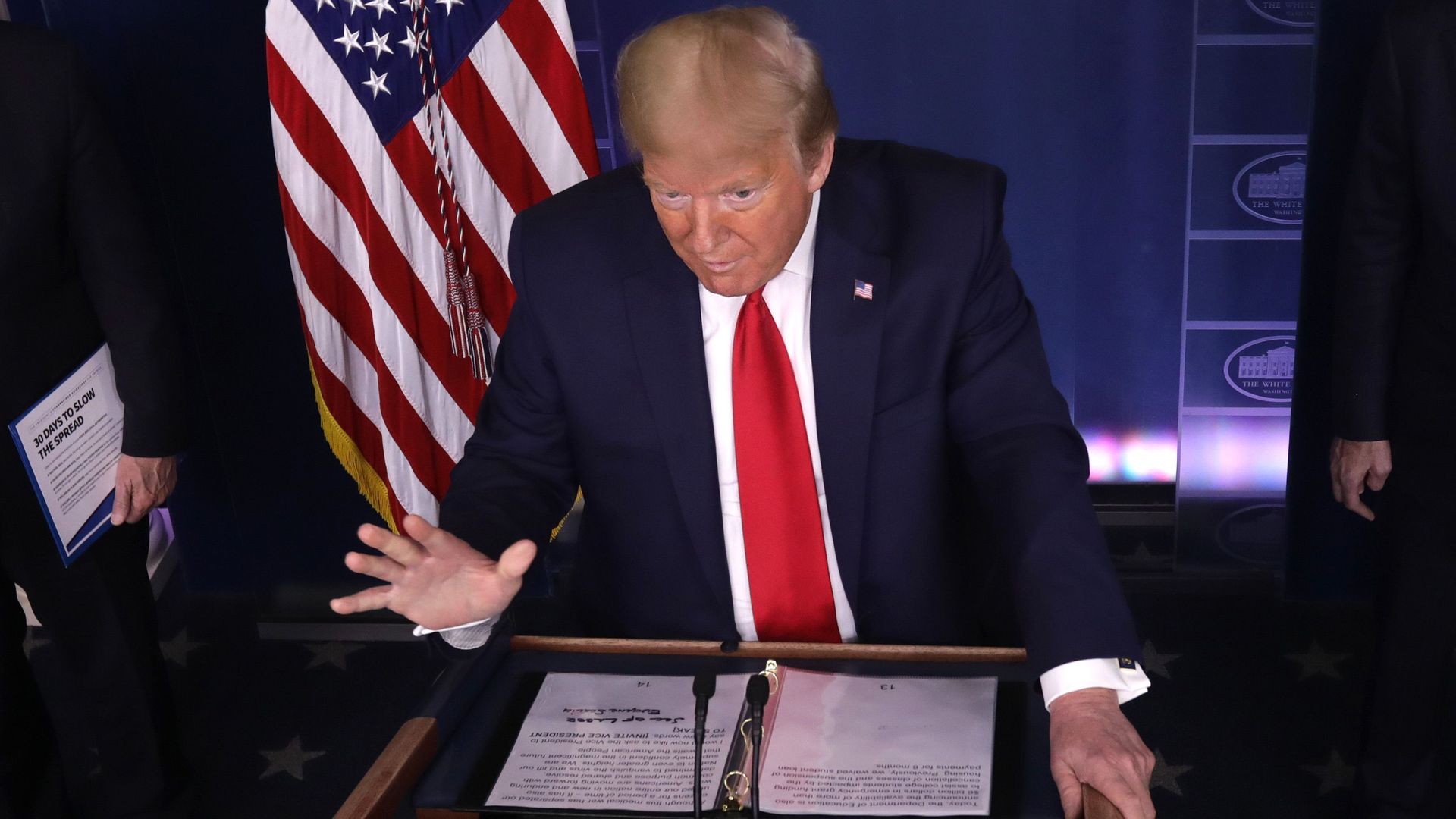
President Trump is preparing to launch a second coronavirus task force focused on reviving the U.S. economy, which has been battered by the coronavirus, two administration officials tell Axios.
Why it matters: There is growing energy within the West Wing to start easing people back to work by May 1. But some public health officials, including those on the coronavirus task force, have warned against doing so, raising concerns about reopening America too soon.
Republicans are increasingly concerned not only about President Trump’s daily briefings but also his broader plan to ease the nation out of the virus crisis and back to work. This concern is acute — and spreading.
Why it matters: Trump can easily address the briefing worries by doing fewer, but the lackluster bounce-back planning is what worries Republicans most.
There is growing concern among top conservative leaders that the Trump administration isn't addressing the long-term economic impact of the coronavirus, several sources tell Axios. One top adviser said if the recovery is bungled it could cost President Trump the election.
What we're hearing: "The next 4-8 weeks is really going to decide whether Trump gets reelected," Stephen Moore, Trump's former nominee for the Federal Reserve board, told Axios. If the administration mishandles its economic recovery efforts, he said, Trump is "in big trouble."