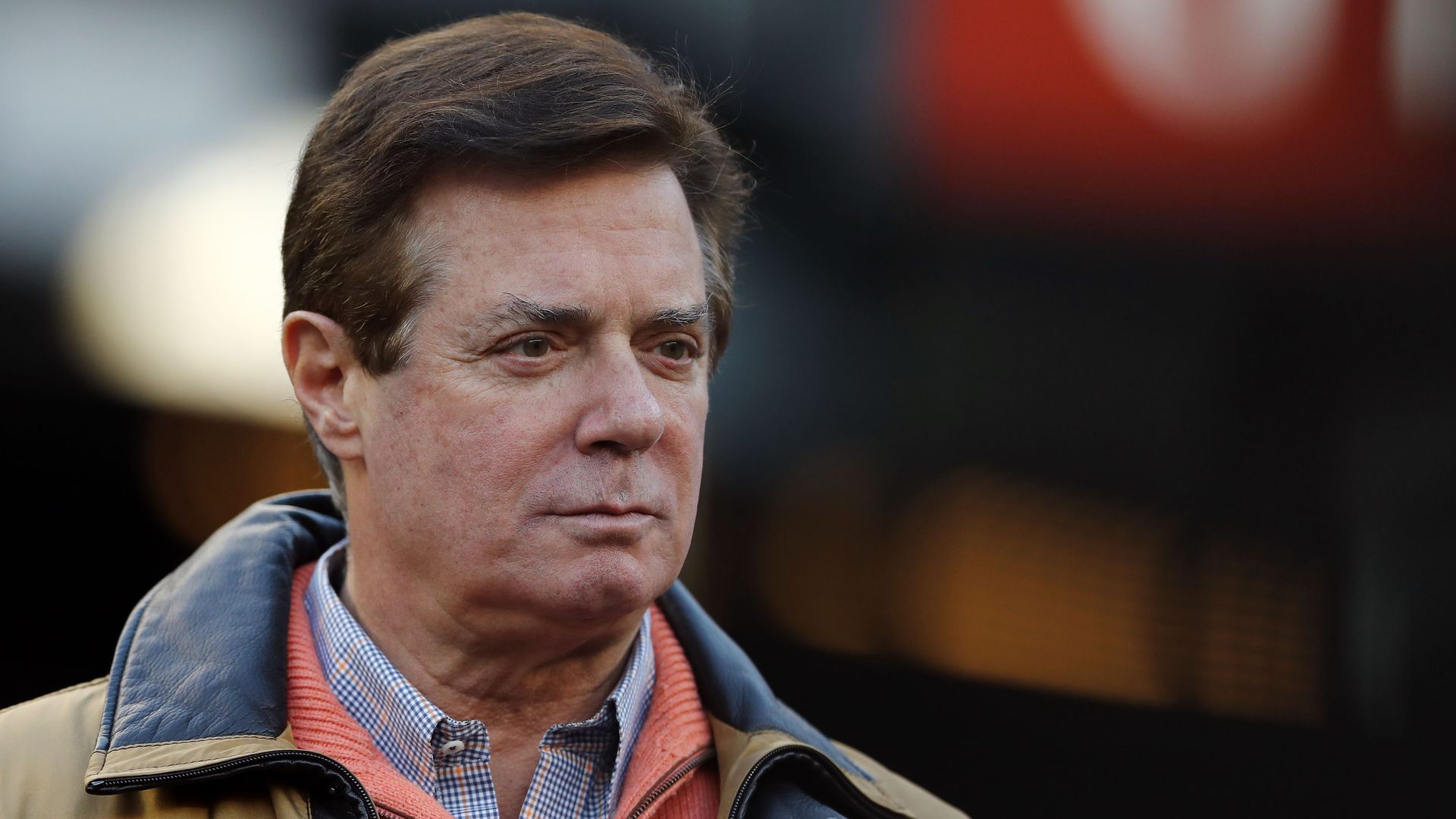
Rick Gates admitted in court on Monday that he stole from Paul Manafort, and at Manafort's direction reported overseas income as loans to lower their taxes in addition to keeping 15 unreported foreign accounts, according to reporters in the room.
Why it matters: Paul Manafort is the first person to go on trial as a result of Special Counsel Robert Mueller's investigation into Russia's election interference and the possibility of collusion with the Trump campaign. The fraud case has been steadily building over the past week against Manafort, and Gates was the key witness.
Private equity spent much of 2012 in an unwanted spotlight, thanks to Mitt Romney's presidential run, and there are (very) early indications that it could get blinded again in 2020.
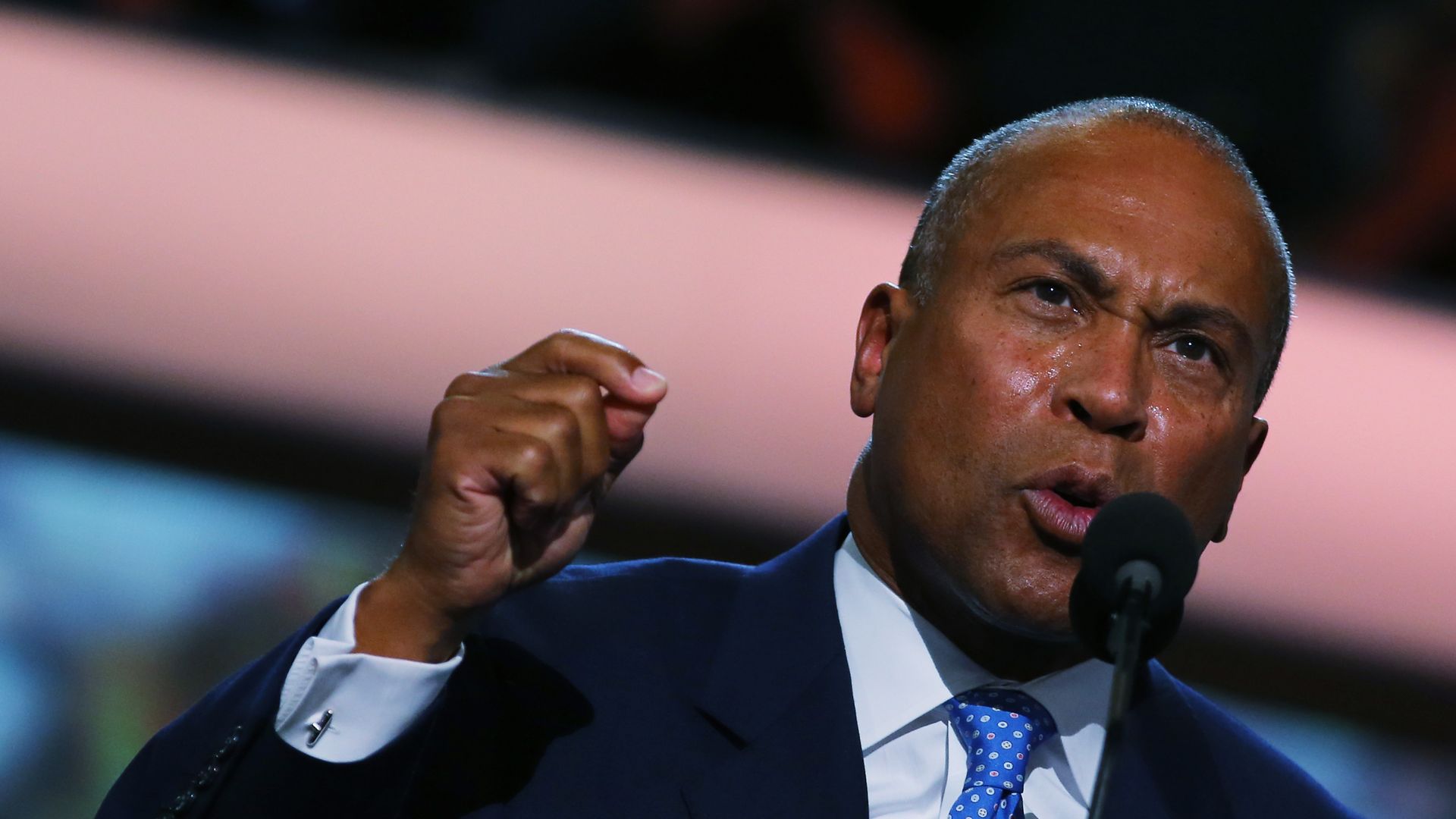
Bottom line: Former Mass. Gov. Deval Patrick is viewed as a possible Democratic Party contender, but his current job with Bain Capital could prove problematic.
President Trump tweeted his support Monday for Kansas gubernatorial candidate Kris Kobach, calling him a "fantastic guy who loves his State and our Country — he will be a GREAT Governor and has my full & total Endorsement!"
Why it matters: Senior Republican officials told Axios' Jonathan Swan that they were holding their breath, hoping Trump would not endorse hardliner Kobach in the Kansas primaries on Tuesday. "Kobach is as far right as a Republican gets on immigration and voting rights, and Democrats view his potential victory as an opportunity to steal centrist voters," Swan writes.
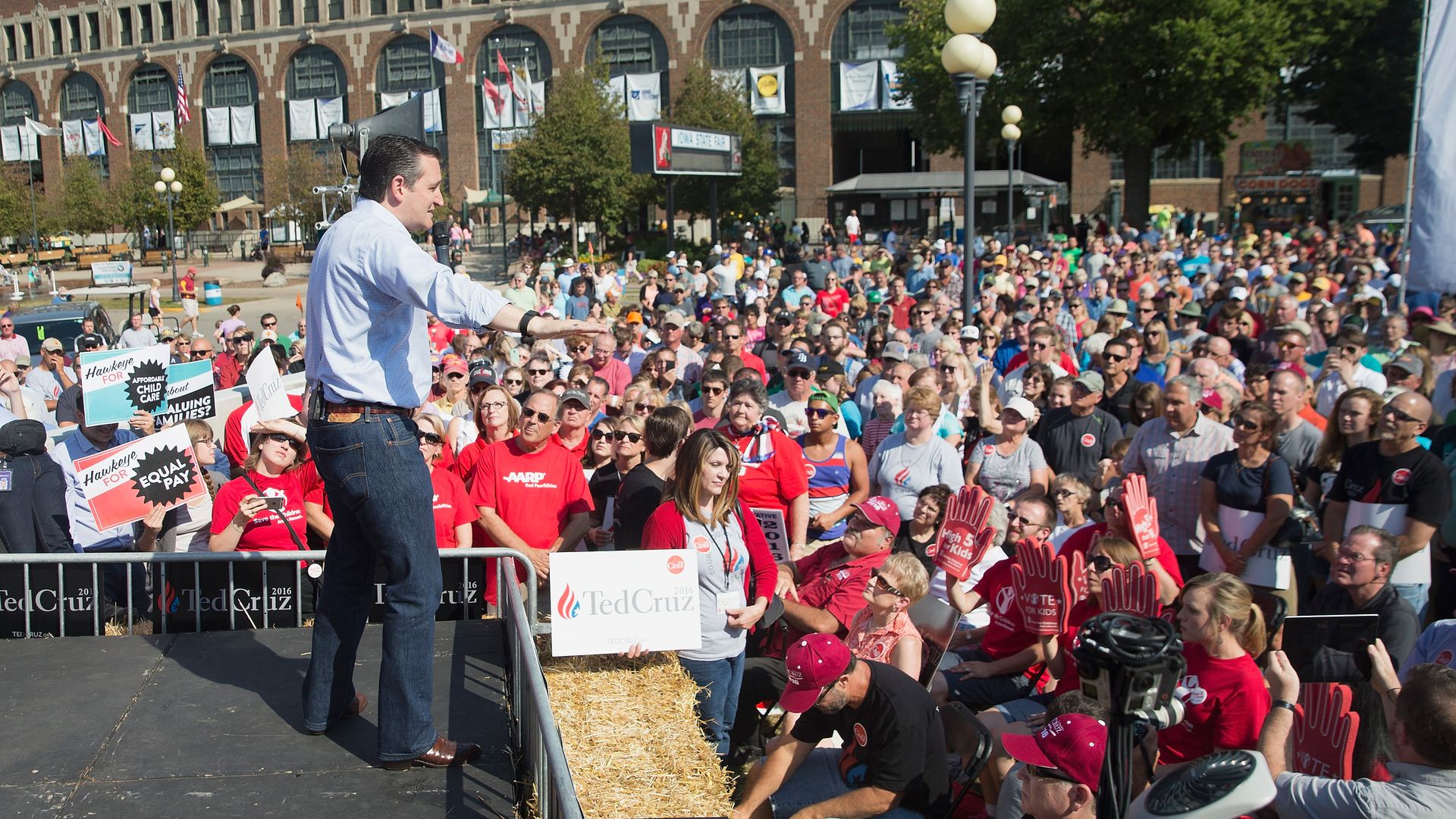
The Iowa State Fair opens Thursday, but top-tier 2020 prospects are largely steering clear of the leadoff presidential state, AP's Tom Beaumont reports: "Top party stars are largely focused on midterm elections ... Still, their absence surprises veteran Iowa activists and stokes ... perennial worries about the future of the small rural state’s early influence."
Why it matters: "For aspiring politicians, the place to make an impact this cycle is Georgia, which has a hot governor’s race and a sizable African-American population."
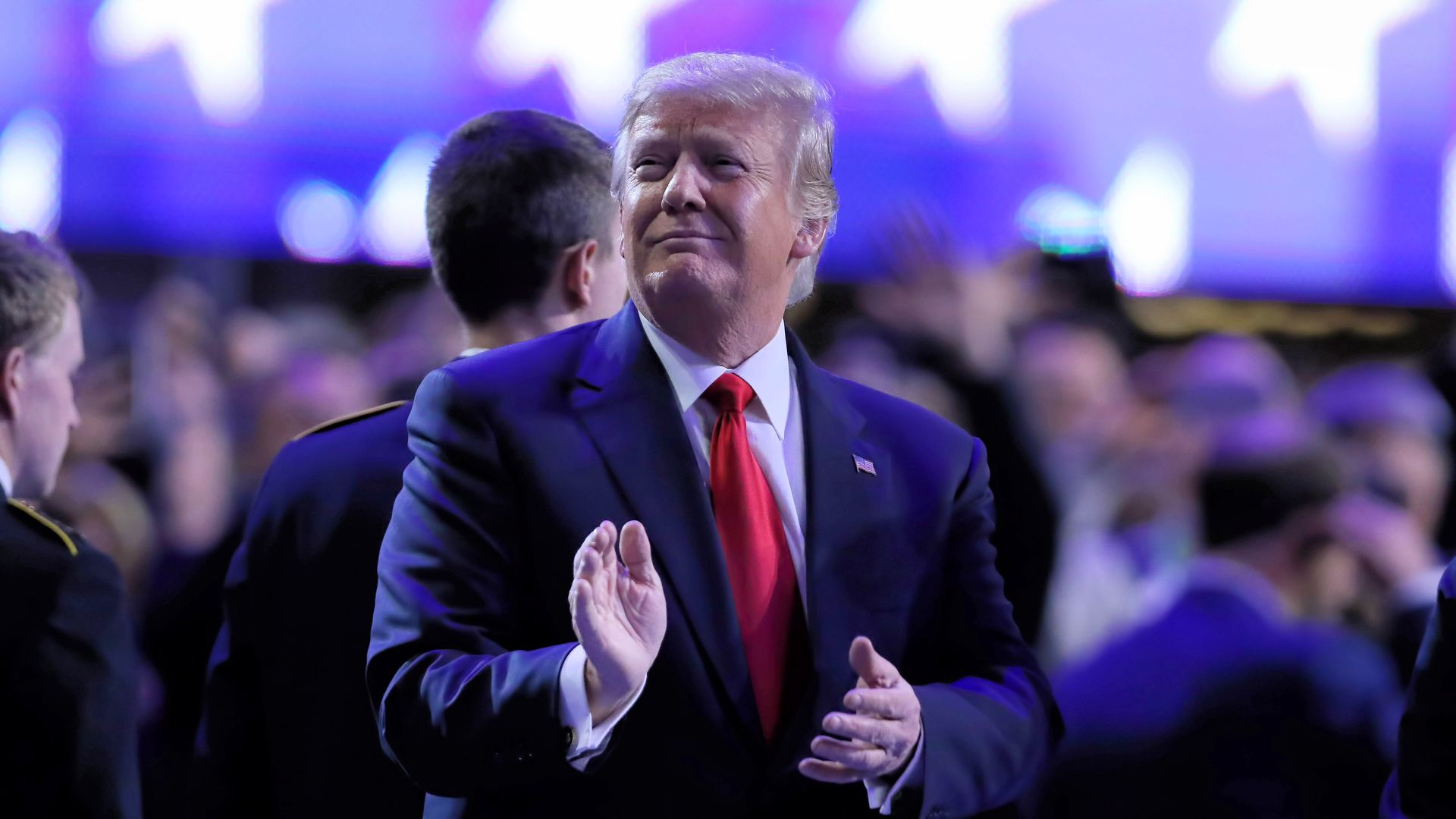
The President of the United States admitted, on the record, that he misled the American people about the infamous Russia meeting in Trump Tower.
The big picture: It’s one of the most striking public reversals in modern presidential history, even though he made a similar point before, and even though it was done casually via an early morning tweet. It involves Russia, Air Force One, a presidential son, shady operatives, allegations of collusion and a federal probe — all in one.
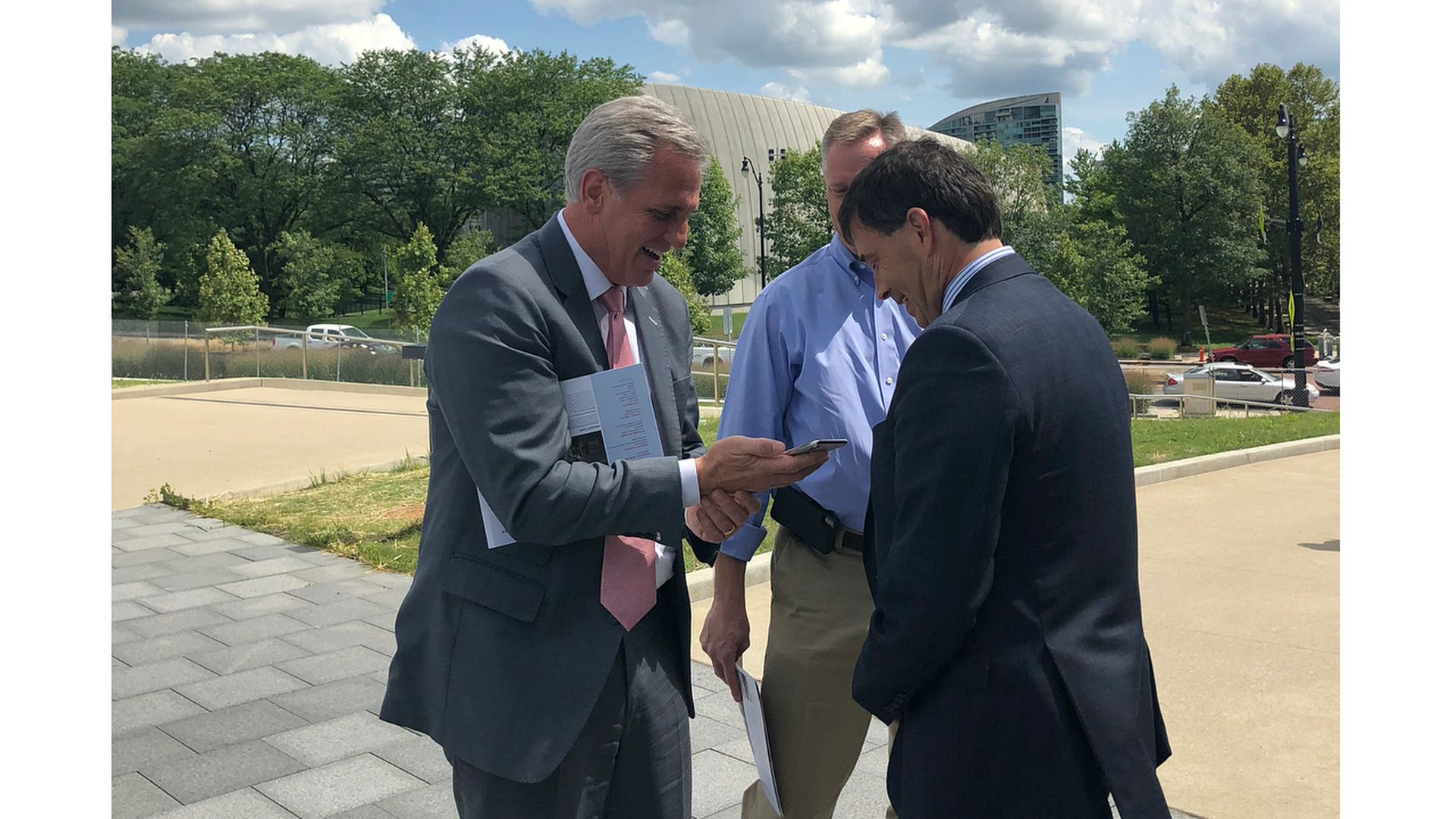
A little over a week ago, when Kevin McCarthy was in Ohio campaigning for Troy Balderson, his phone rang. It was President Trump. McCarthy quickly put Trump on speakerphone for a conversation with Balderson and the chair of the National Republican Congressional Committee, Rep. Steve Stivers.
Why this matters: What happened next highlights Trump’s freewheeling approach to electoral politics this year. Most presidents don’t get involved in primaries, but Trump — to the horror of some top Republican officials — relishes his role as party kingmaker. And while his political team gives him advice, they can’t control him.
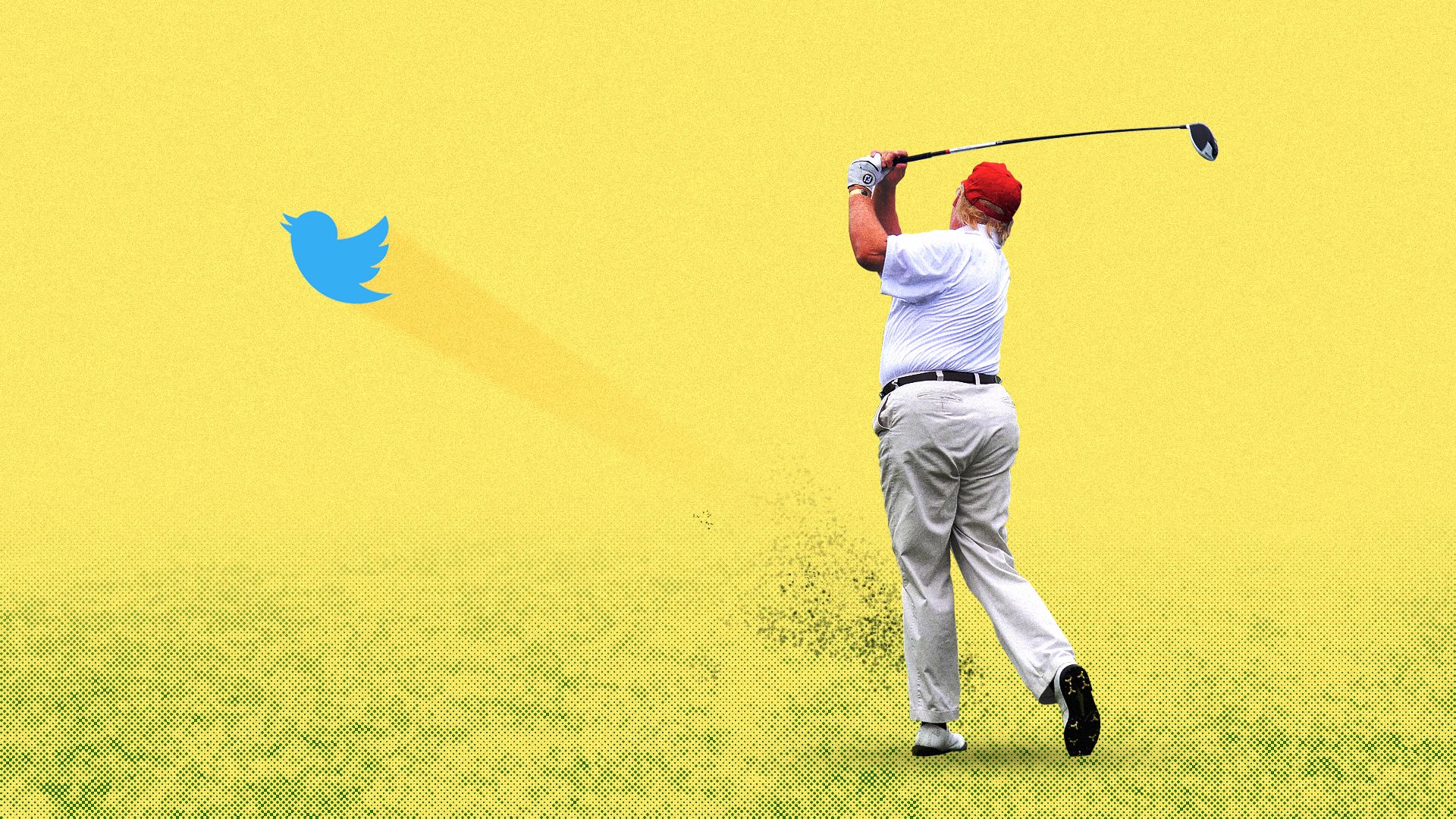
Since last summer, Trump's staff have changed their philosophy on his vacation. When Trump unwound last year at his Bedminster golf club or at his Mar-a-Lago estate, his senior staff often scrambled to fill his time — planning events and scheduling golf games with people who might engage him in productive conversation. They feared he would live-tweet his favorite TV shows, setting off national and geopolitical firestorms (remember the Obama wiretap classic?).
What's happening: But now his staff have largely given up on futile efforts to supervise him, leaving the president's schedule open and unstructured. He dines with friends and allies each evening and has a prison reform roundtable on Thursday. But besides that, for his week-plus stay at Bedminster, he will, unless things change, be on "Executive Time."
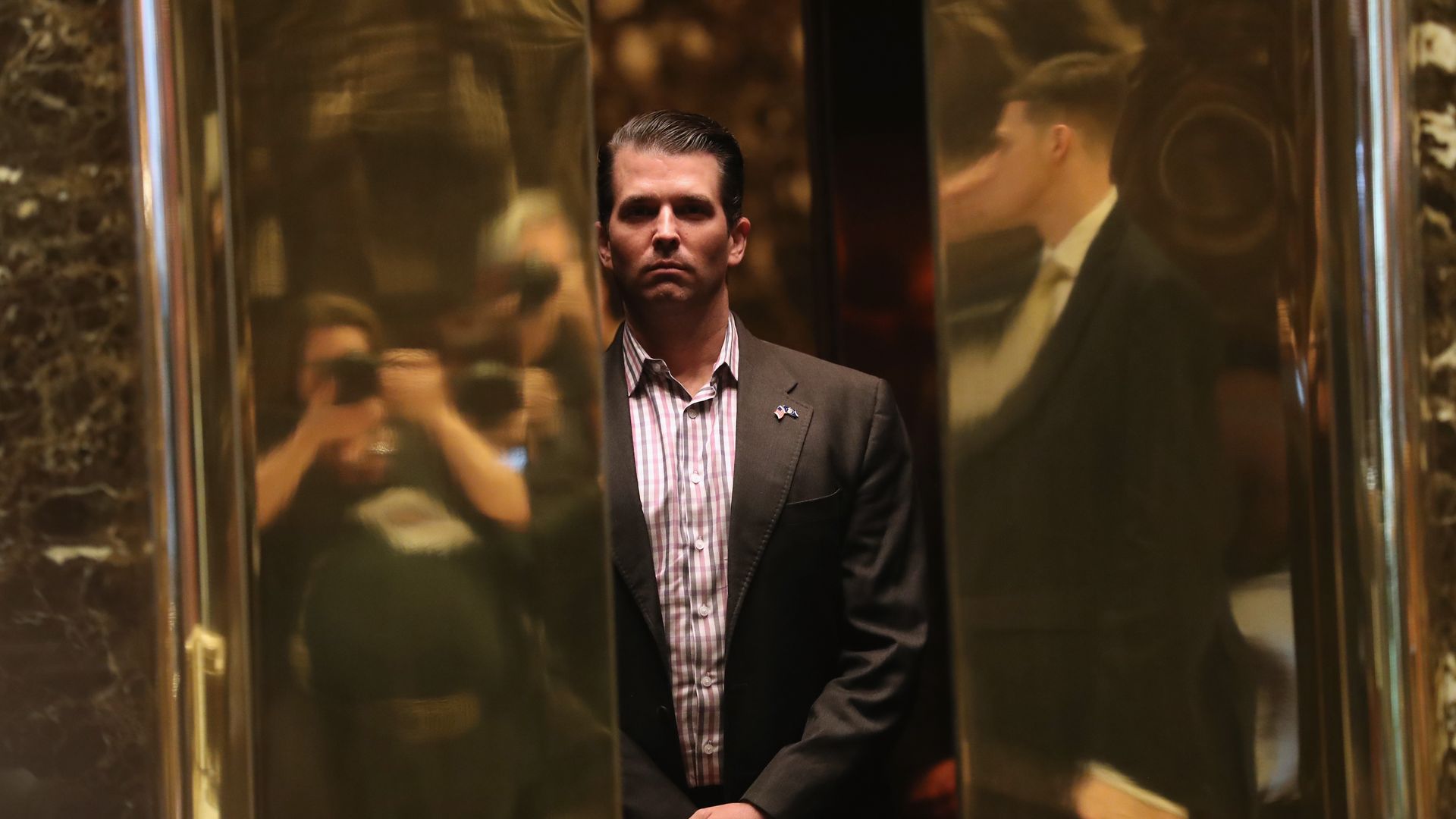
President Trump tweeted Sunday that the purpose of the 2016 Trump Tower meeting between Russians, Donald Trump Jr., and some of his top campaign officials was "to get information on an opponent."
Why it matters: The claim represents the latest in a series of shifting explanations from the Trump team about the true nature of the June 9, 2016 meeting, which was first described as a "short introductory meeting" about Russian adoptions last summer before culminating with the president's admission this morning.
President Trump tweeted Sunday morning about the now-infamous June 9, 2016 meeting at Trump Tower between Russians and Trump campaign officials, including his son, Donald Trump Jr.
"Fake News reporting, a complete fabrication, that I am concerned about the meeting my wonderful son, Donald, had in Trump Tower. This was a meeting to get information on an opponent, totally legal and done all the time in politics - and it went nowhere. I did not know about it!"
Why it matters: Trump and his son have repeatedly changed their stance on the purpose of the 2016 meeting. In a statement to The New York Times last July, which investigators now know was dictated by President Trump, Don Jr. said the meeting was primarily about Russian adoptions. Trump's former lawyer Michael Cohen has also claimed that the president approved the meeting ahead of time, contradicting continued denials by Trump and his legal team.