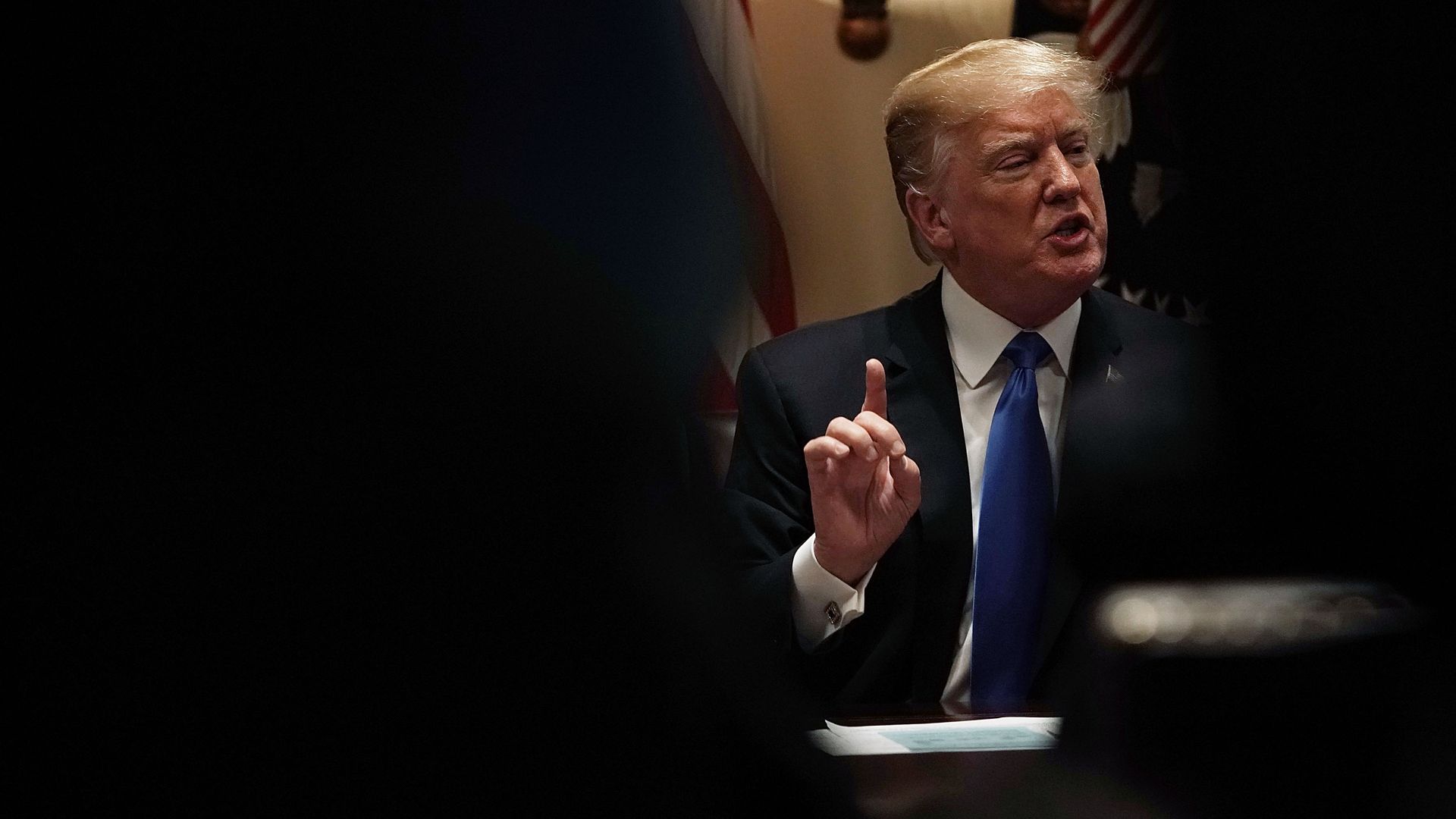
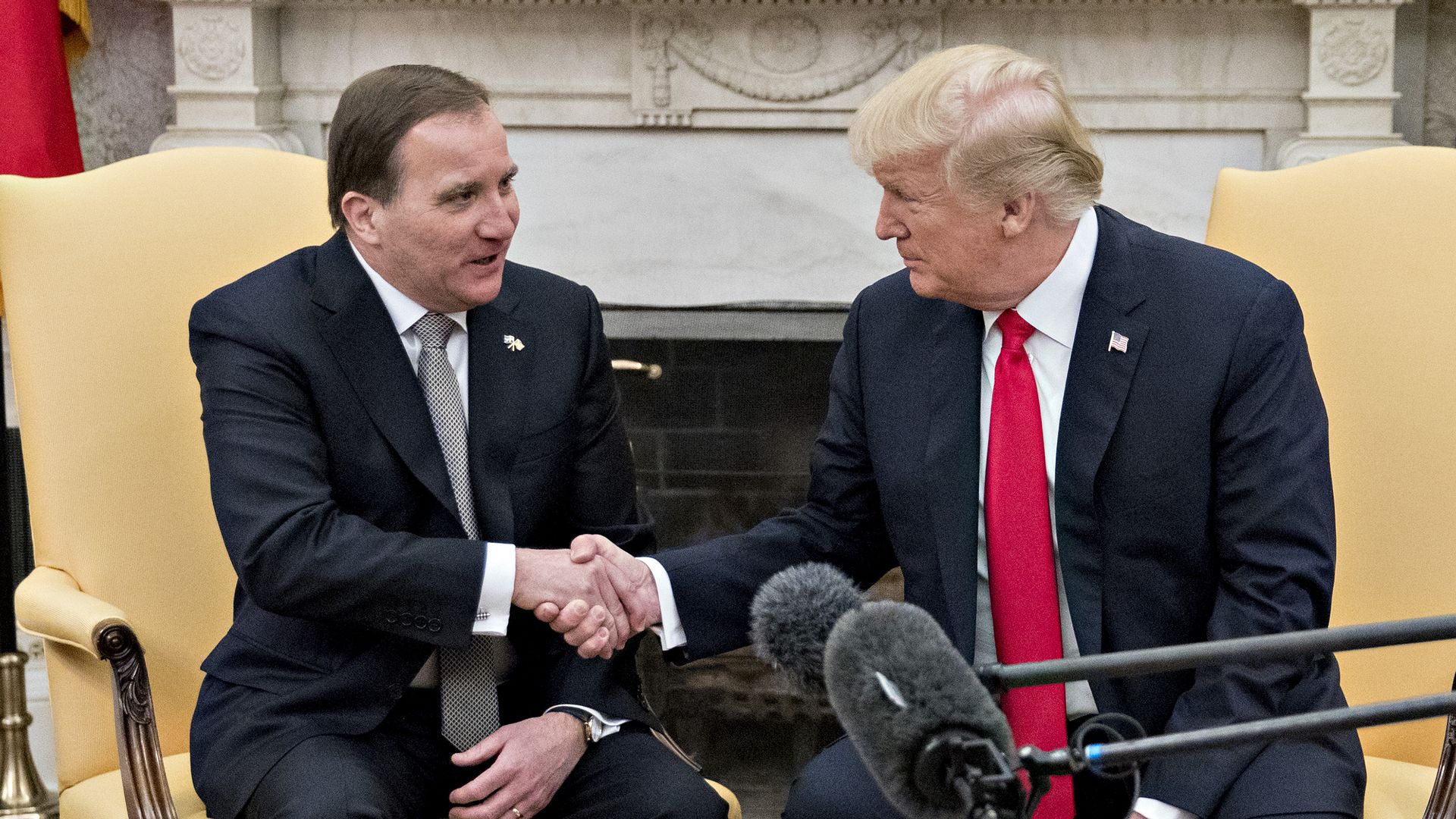
President Trump offered his own solution to prevent Russia meddling in the 2018 midterm elections saying, "it's called paper." He suggested a "paper backup system" for voting when asked about how to combat Russia's meddling at a joint press conference with Prime Minister Stefan Löfven of Sweden.
The reality: Trump isn't wrong that many states have a paper trail of votes — but not every state has a paper trail of votes right now. That means they are unable to verify with a 100% guarantee that the result of an election is exactly how voters cast their ballots. 5 states lack a paper trail in their voting systems and use solely electronic voting machines.
President Trump on Tuesday reaffirmed his plans to place tariffs on steel and aluminum, despite pushback from Republicans, industry leaders and threats of retaliation from European Union. He made the announcement during a White House press conference with Swedish Prime Minister Stefan Löfven.
What they said: Trump said the country has been taken advantage of and mistreated, and the European Union "makes it almost impossible" to do business with them. He later said, 'Trade wars aren't so bad." Meanwhile, Löfven warned that "increased tariffs will hurt all of us in the long run."
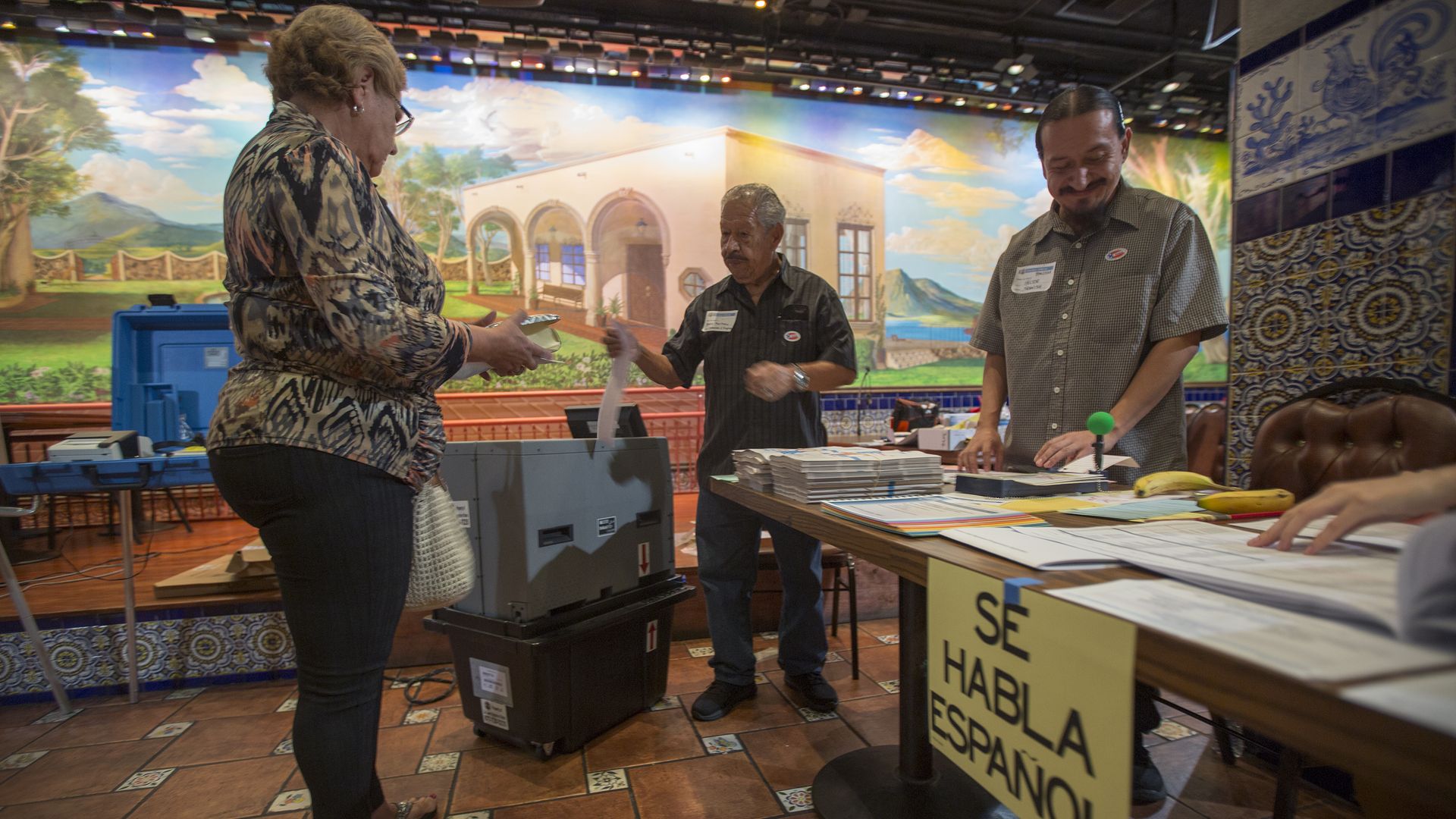
There's been record early voting turnout in Democratic primaries across Texas's 15 largest counties. The Cook Political Report's Dave Wasserman noted a 105% spike compared to the 2014 midterm election — while Republican turnout only increased by 15%.
Why it matters: Democrats haven't won a statewide election in Texas since 1994, and the state hasn't voted for a Democrat in a presidential election since Jimmy Carter in 1976. But things are shifting this year, as Democrats are running in all of Texas' 36 congressional districts for the first time in 25 years. Wasserman's numbers suggest an energy that could threaten Republicans' seats across the state.
From 2010 to 2016, the concentration of minorities in the U.S. increased in 411 out of 435 congressional districts, according to a CNN analysis of census data. In 171 districts, minorities now represent more than 40% of the population, and are expected to represent an even higher population by the next census in 2020.
Why it matters: CNN used Orange County, California, as a case study to analyze how demographic tides are threatening to upend House races across the country. It concluded that while Democrats still "face serious obstacles in converting growing diversity into improved electoral chances," a slight increase in the minority share of the vote could tip the scales in at least 10 Republican-held seats this fall.
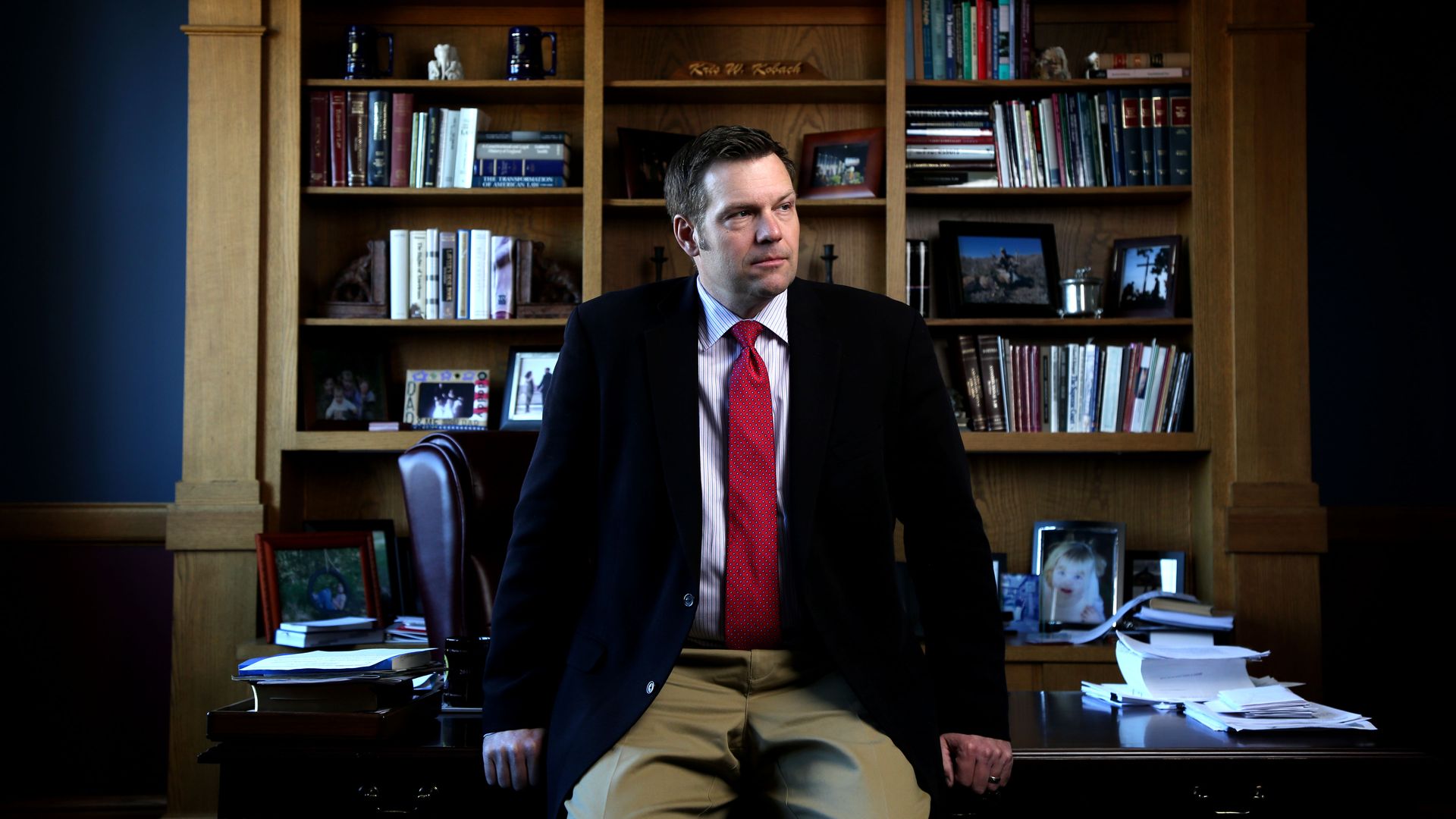
Kansas Secretary of State Kris Kobach, who led President Trump's now-disbanded voter fraud commission, will attend a federal trial starting Tuesday over a legal challenge to a law he championed that had blocked tens of thousands of voter registrations because it requires residents to provide proof of citizenship.
Why it matters: The trial, expected to last seven days, will be a major test to Kansas’ sweeping voter registration laws as well as Kobach, who helped fuel the president's unsubstantiated claims that millions of fraudulent votes had cost him the popular vote. He said the law was intended to curb voter fraud, but now has to prove that Kansas has that problem — a similar undertaking his commission had failed to provide concrete evidence of.
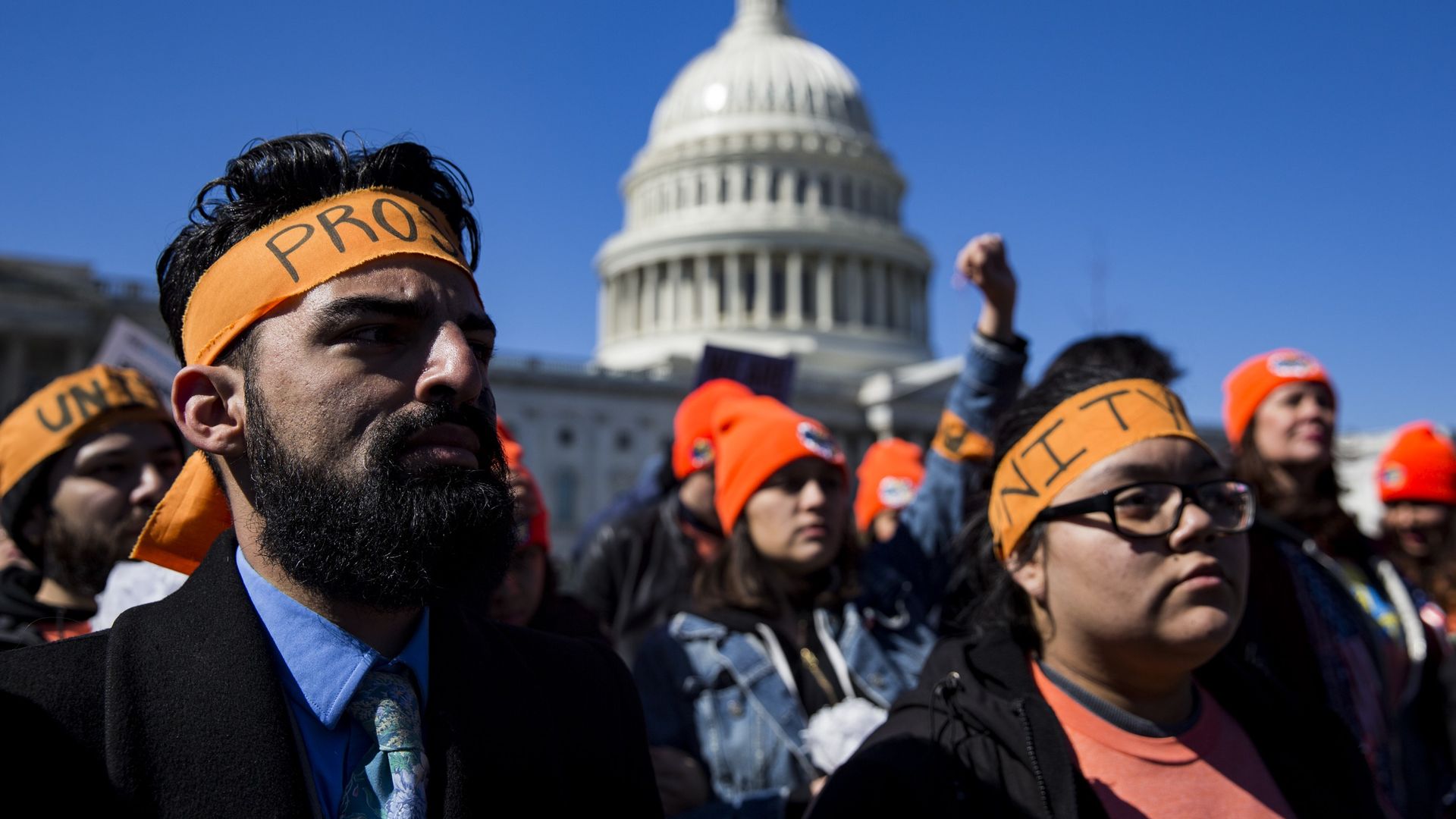
Monday evening, Maryland federal Judge Roger Titus ruled that President Trump was legally allowed to end DACA, even though the judge admitted he did not agree with the president's decision.
Why it matters: Two other injunctions halting the end of DACA are still in place, making yesterday's "deadline" meaningless. Those rulings maintained that Trump has the right to end DACA, but must provide more sound, legal reasons before doing so.
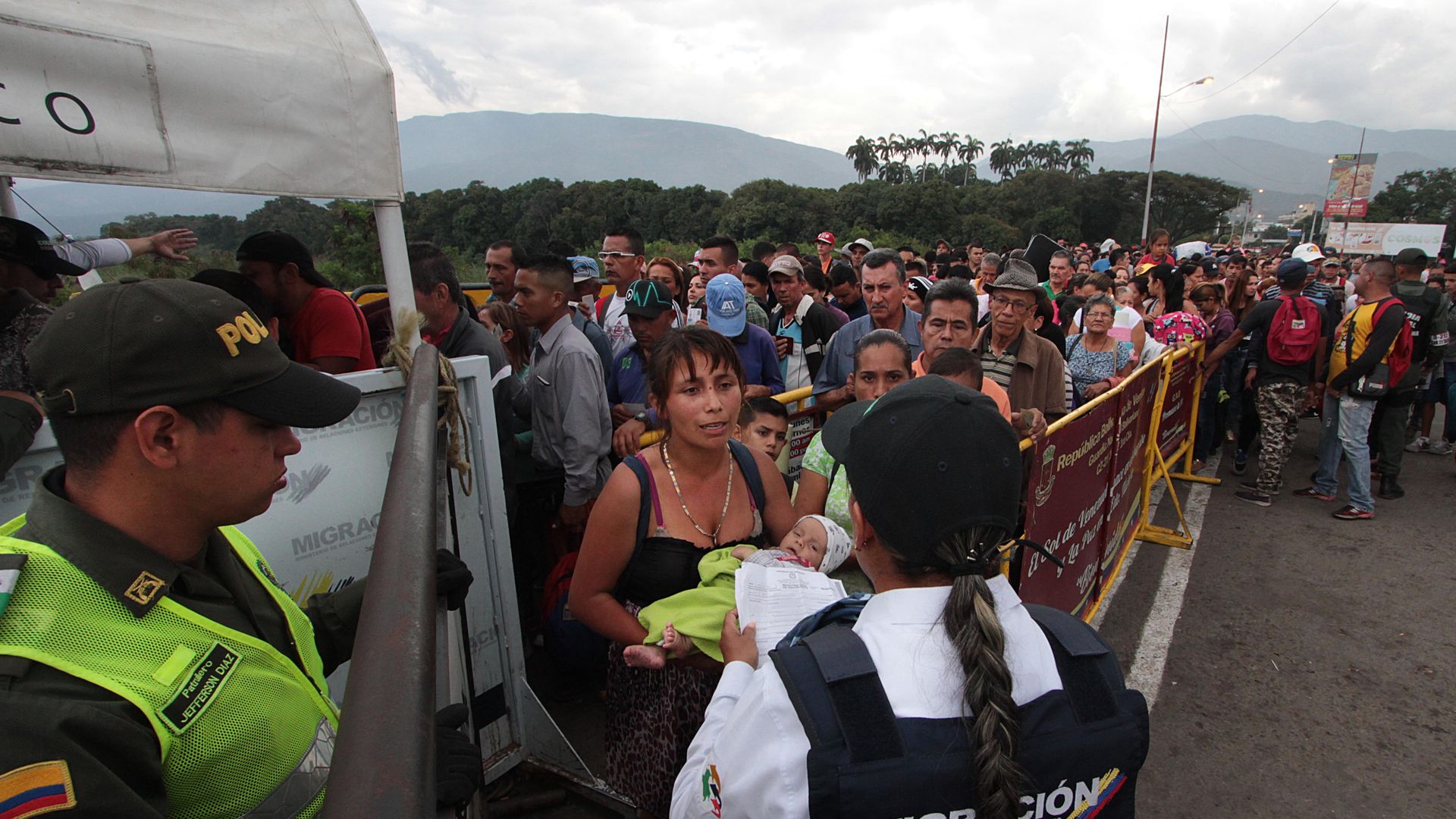
The Washington Post reports that the exodus from Venezuela during the current economic crisis is beginning to resemble the flow of Syrians into Europe in 2o15, and "just as in that crisis, countries overwhelmed by the flood of new arrivals are beginning to bar their doors."
President Trump blasted media reports of chaos in his administration due to multiple staff departures as "fake news" — and hinted at more departures to come because he is "always seeking perfection" — in a morning tweet:
The context: Trump's White House has had more first-year departures than any other president in at least 40 years.
In August 2016, John Bambenek, a former Republican state senate candidate in Illinois, launched his own clandestine investigation of Guccifer 2.0, the public face of the Russian cyber break-in at the Democratic National Committee. What Bambenek found was that the Guccifer 2.0 persona — believed to be a cover for Russia's military intelligence arm — reflected a more slapdash chapter in the operation to sow U.S. election chaos than usually presented.
Why it matters: In transcripts of Twitter messages that Bambenek shared with Axios, Guccifer 2.0 seemed to be either careless or indiscriminate, apparently failing to do even a cursory check on Bambenek, and with only a vague understanding of what he was sharing.