The U.S. economy grew faster than expected at a healthy 3% rate in the July-September quarter, per AP, despite political uncertainty and the impact of Hurricanes Harvey, Irma, and Maria. The 3% GDP figure came in above the estimated forecast of 2.6% and followed 3.1% growth in Q2.
Why it matters: The 3% sustained growth rate in both Q2 and Q3 signals that the economy is growing at a more robust pace than it has in more than two years. But economist Justin Wolfers points out that the "persistent part of growth — final sales to private domestic purchasers" grew at only 2.2%, and warned that advance numbers like today are often revised.
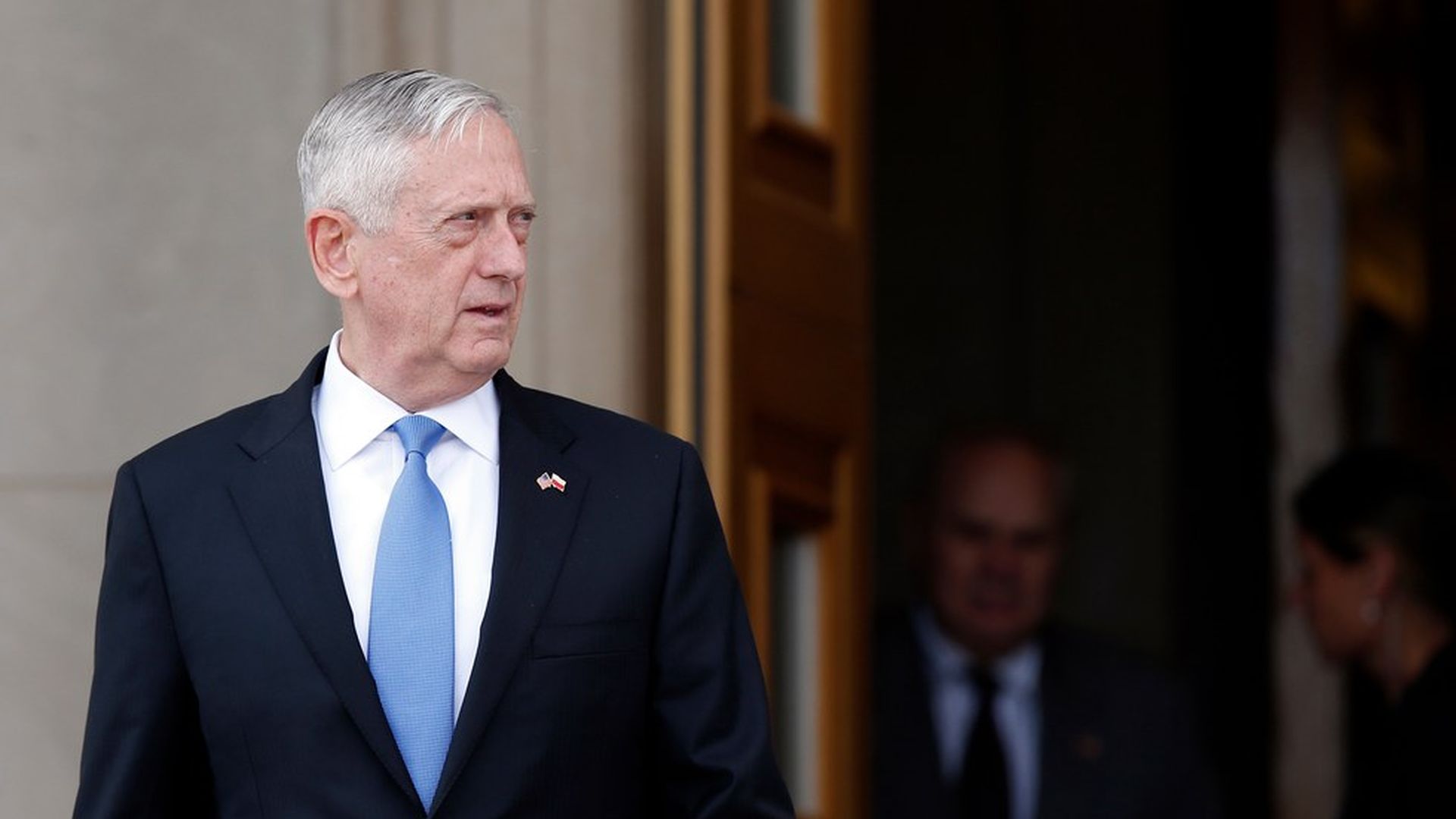
As Jim Mattis toured the Demilitarized Zone between North and South Korea, his South Korean counterpart pointed out the artillery in North Korea that puts Seoul in range of a nuclear bomb and said, "Defending against this many LRAs (long-range artillery) is infeasible in my opinion," Reuters reports.
Why it matters: It's a reminder that any attempts to use force to get North Korea to denuclearize, or any misstep, could immediately result in deadly fire and wrap the U.S. into conflict. And even if the U.S. and South Korea could take out the artillery in case of fire, North Korea could retaliate with chemical and biological weapons. Mattis notably emphasized diplomatic efforts on the visit, and neither he nor his counterpart were in military uniform to send a signal to the North, as South Korean media reported might happen.
For months, a threat to big tech has been building from the top, with numerous senators and congressmen proposing to regulate or give anti-trust scrutiny to Google, Facebook and Amazon. But now figures of both major parties say the unhappiness with the companies is also bubbling up from the bottom. The threat is dual, we are told: against the companies and the Washington establishment:
Why it matters: This bottom-up discontent is nascent, and polls show that big tech retains high public popularity. It is too early to say what shape the disgruntlement will assume, if and when it becomes more broadly visible.
Dana White, the Pentagon's Press Secretary, said Thursday she was pretty sure Secretary Mattis will be in "suit and tie" while visiting the Demilitarized Zone between North and South Korea on his upcoming visit.
White was answering a question about reports from South Korea that South Korea's Defense Minister, Song Young-moo, wanted Mattis, a retired Marine Corps general, to wear a military uniform to the DMZ to send a strong military message to the North. This is an implicit confirmation that Mattis will be visiting the DMZ.
The Trump administration will be apologizing to Tea Party groups that underwent extra IRS scrutiny when applying for tax-exempt status during the 2012 election, and the settlement will include a "very substantial" payout, according to a lawyer representing more than 400 groups in the class-action suit. The Department of Justice did not make reference to a payout.
Why it matters: The payout would go to the "conservative, anti-establishment movement that is something of a forerunner to Donald Trump's populist, America-first presidential campaign" and it "would close a chapter in a political scandal that dogged the Obama administration and remains a source of outrage for Republicans," AP's Sadie Gurman writes.
Tea Party Patriots co-founder Jenny Beth Martin told Axios that the GOP Senate primary in Mississippi could be heated this year, and warned that President Trump should "stay out of it" or risk angering grassroots voters.
Why it matters: Martin explained that when Trump does something Tea Party voters disagree with, they often "blame" Mitch McConnell and Paul Ryan for "influencing him," rather than faulting Trump himself (she pointed to Trump's backing of incumbent Luther Strange in the Alabama GOP primary). But despite their unwavering support for Trump, Martin suggested that voters may not be so forgiving in Mississippi if the president endorses incumbent Sen. Roger Wicker over state Sen. Chris McDaniel (should McDaniel choose to run).
The House passed the Senate's budget resolution by a vote of 216-212 this morning, paving the way for the GOP's tax plan over the coming weeks.
What's next: Paul Ryan has promised a blazing fast timeline for passing a Republican tax plan, hoping to get it done by Thanksgiving — but promising earlier this month that he'd keep the House in session through Christmas if necessary.
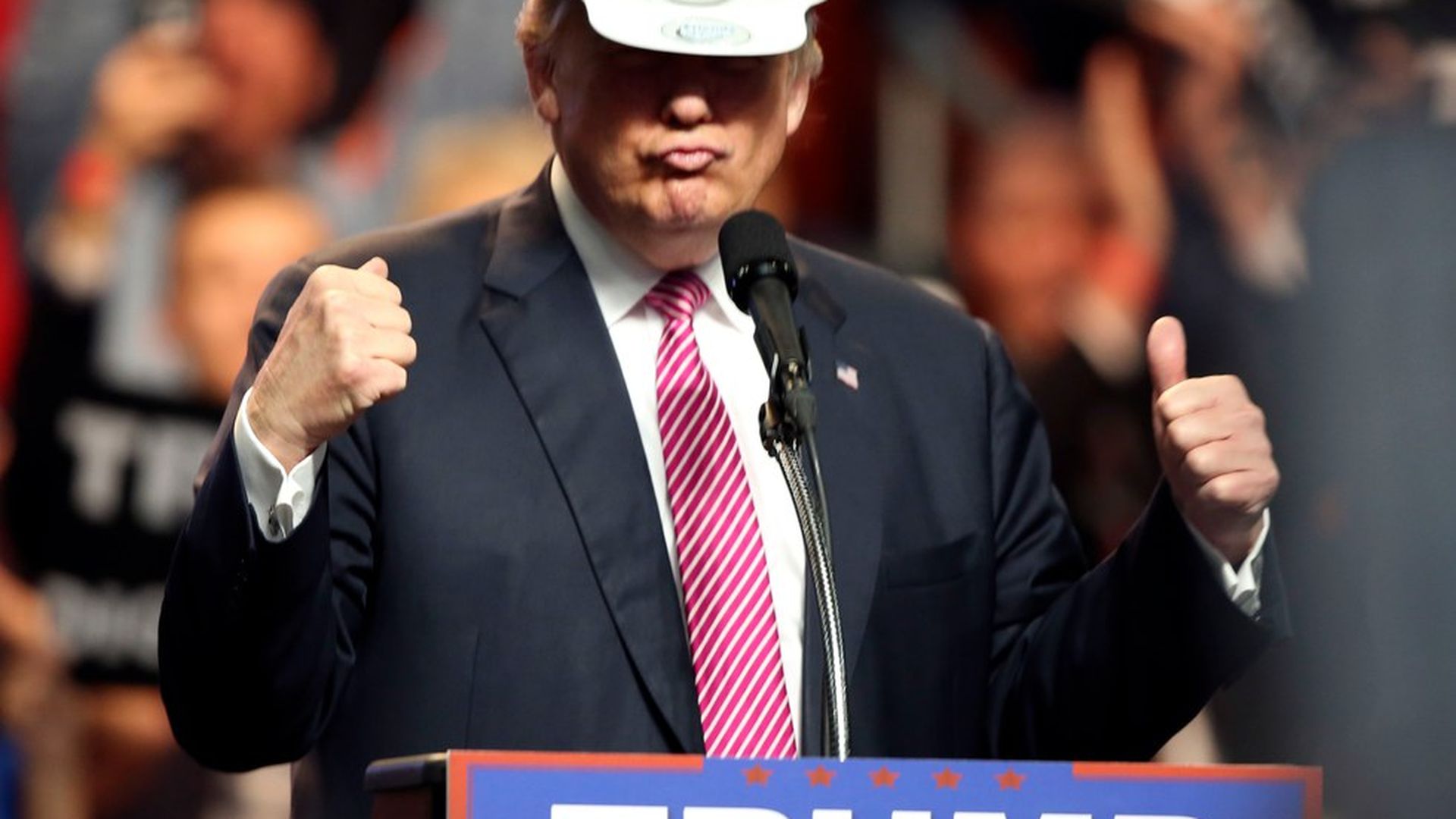
President Trump again waded into the Virginia gubernatorial race on Twitter this morning, attacking Democratic candidate Lt. Gov. Ralph Northam on the economy and crime while stating that GOP candidate Ed Gillespie "might even save our great statues/heritage!"
Fact check: Virginia's unemployment currently sits at 3.7% — below the national average of 4.2%. Of course, it's also worth noting that Virginia's population growth slowed in 2016 for the third straight year as more people left the state than moved in, especially in highly-skilled northern Virginia.
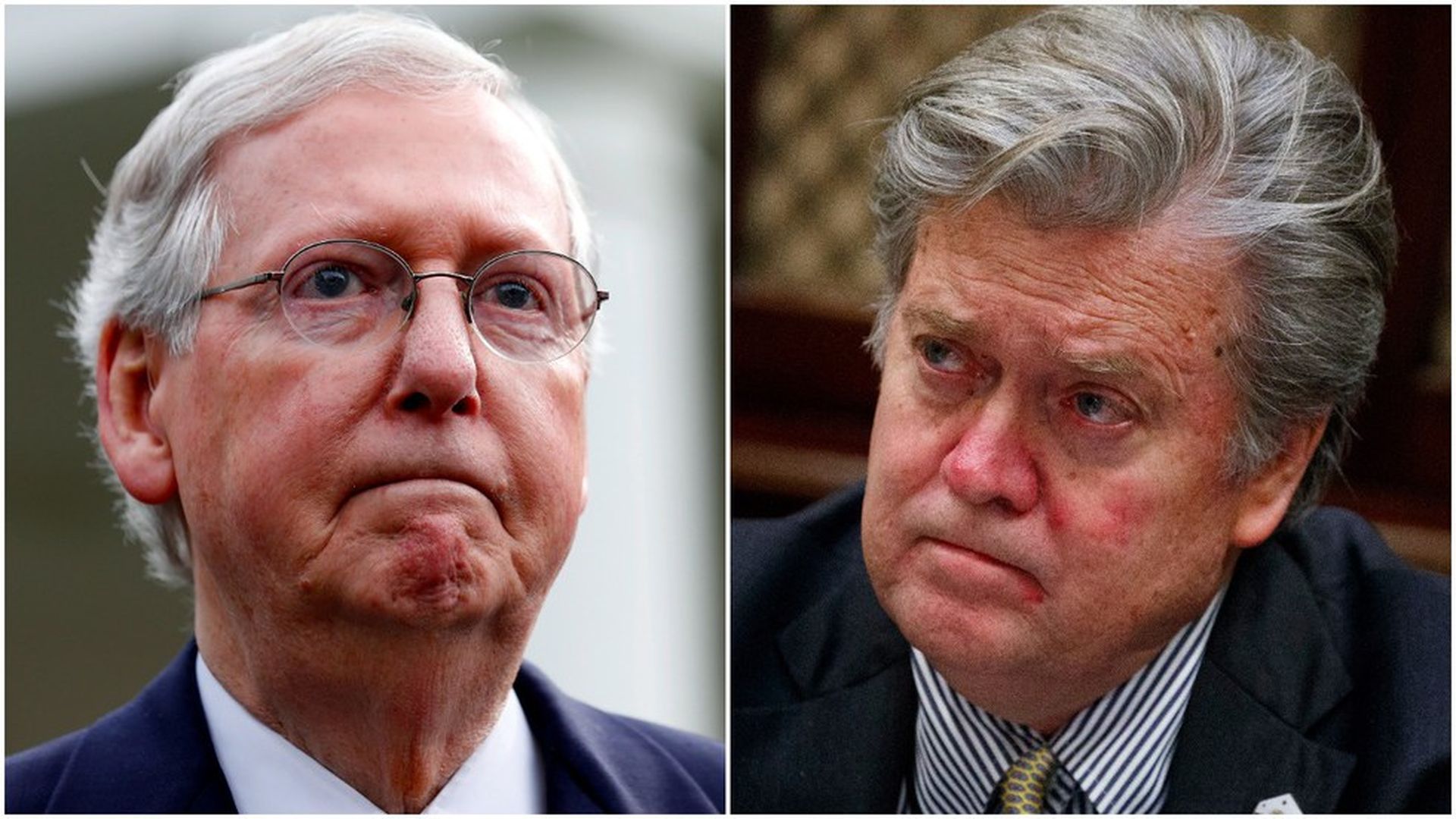
A super PAC aligned with Senate Majority Leader Mitch McConnell (the Senate Leadership Fund) revealed plans to attack Steve Bannon personally "as it works to protect GOP incumbents facing uphill primary fights," the Washington Post reports. The group plans to spend millions boosting candidates with traditional GOP profiles and excoriating those tied to Bannon, highlighting his hard-line populism and attempting "to link him to white nationalism to discredit him and the candidates he will support."
Why it matters: "The turbulence presents a danger to Republicans' narrow 52-seat majority in the Senate, with seasoned GOP lawmakers deciding against seeking reelection amid the political storm — and with many GOP voters cheering the rancor that Bannon has stoked."