Axios AM

October 16, 2023

1 big thing: Union power rising
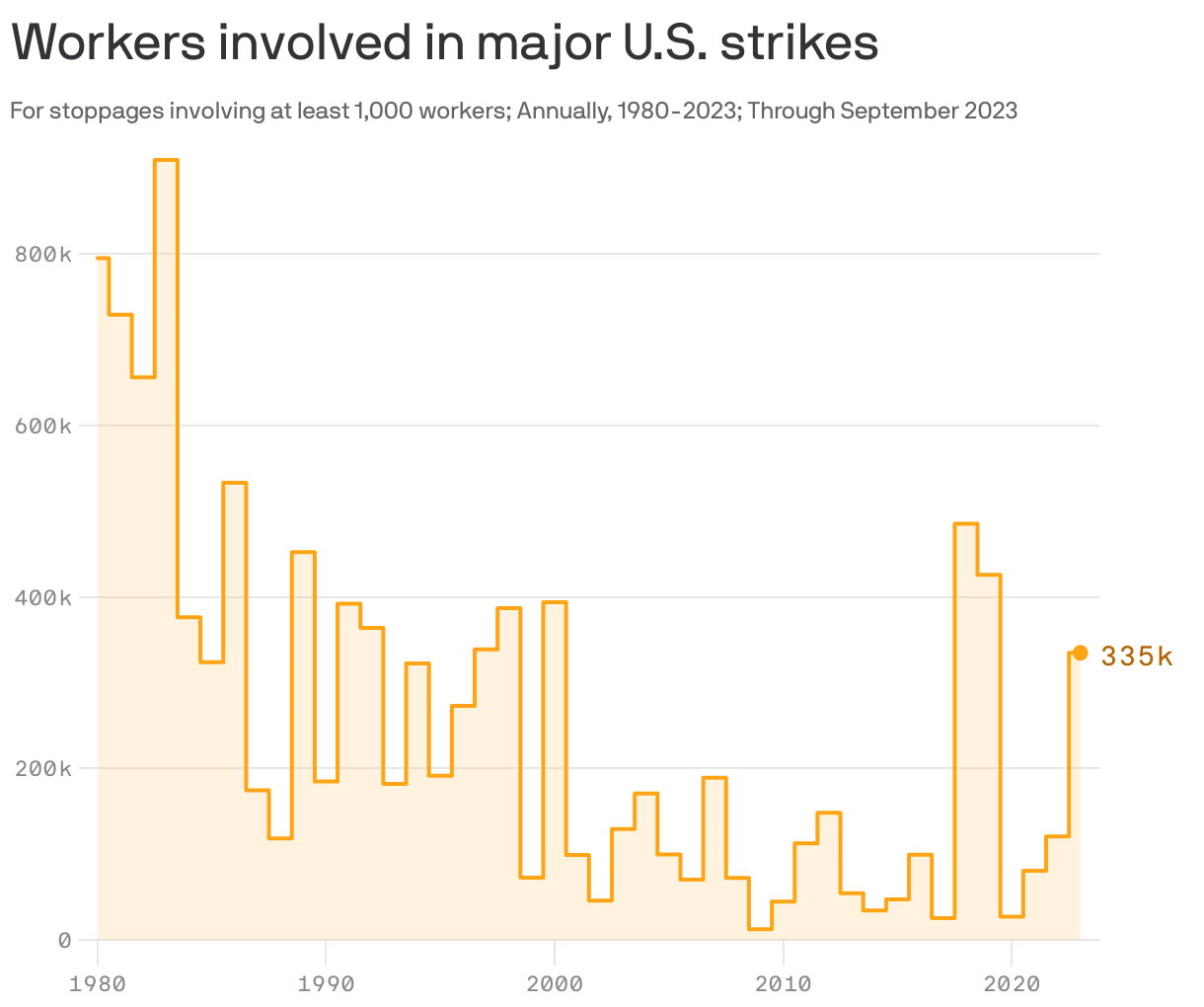
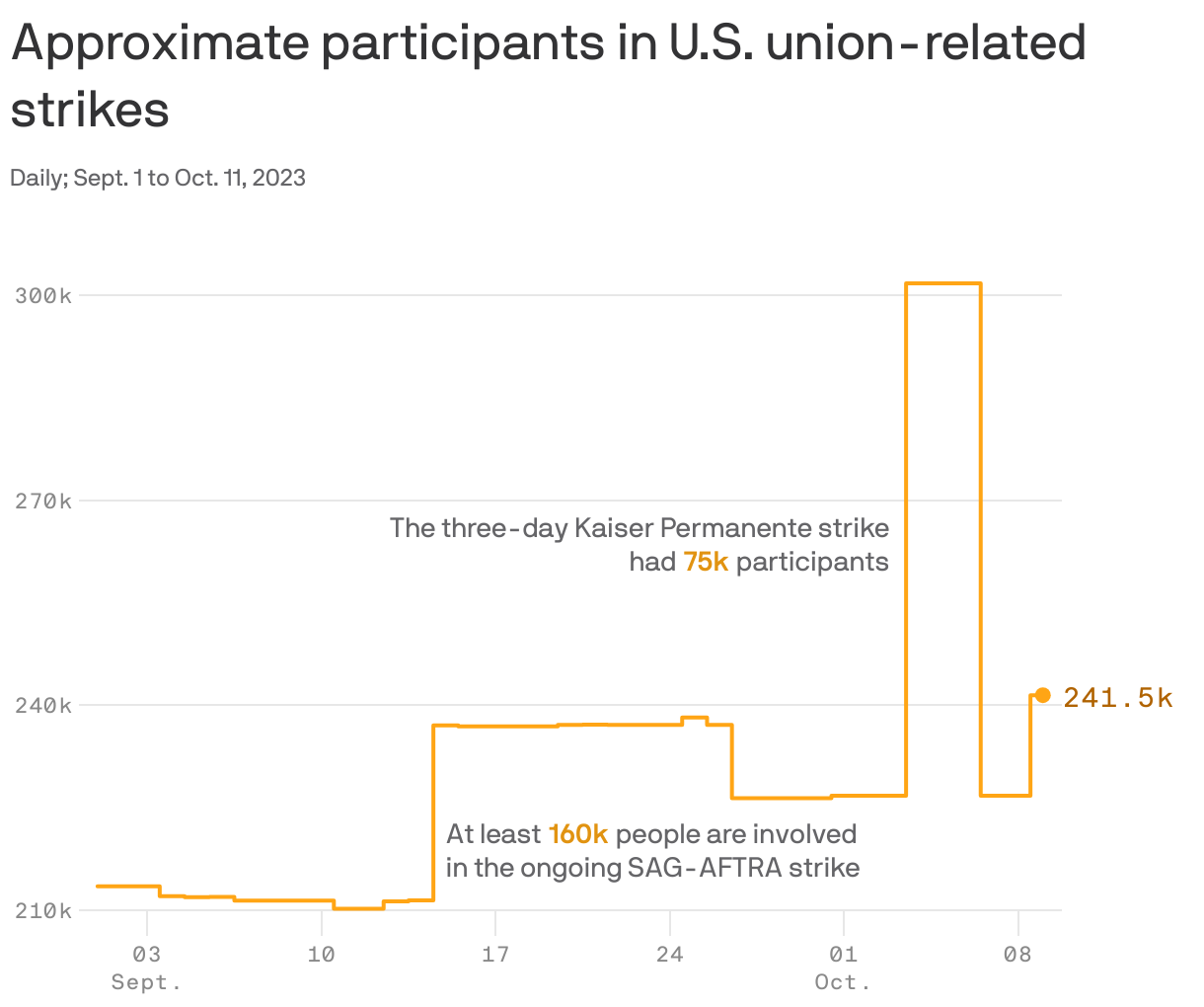
More than 330,000 American workers — from Hollywood actors to medical technicians — have been part of strikes since the start of September, Axios' April Rubin and Tory Lysik report from Cornell's labor tracker.
- Why it matters: Labor unions enjoying their highest approval ratings in generations are deploying hardball tactics in far-reaching sectors of the economy.
🧮 By the numbers: The number of workers on strike has increased nearly 10-fold since 2021, according to the Cornell data.
- Jan. 1 to Oct. 11, 2021: 188 strikes involving about 47,800 workers.
- Jan. 1 to Oct. 11, 2022: 345 strikes involving about 126,800 workers.
- Jan. 1 to Oct. 11, 2023: 318 strikes involving about 468,200 workers.
🖼️ The big picture: Before the 1980s, more than a million workers regularly went on strike annually.
- Between 2000 and 2017, the average number of workers on strike shrunk to about 100,000 per year.
Ongoing strikes: The United Auto Workers union said last week that it could expand the strike against Detroit's Big Three automakers "at any time" — a shift for the union, which had been announcing new locations on Fridays.
- UAW: Nearly 34,000 UAW members are participating in a strike against the Detroit Three automakers. The strike began on Sept. 15 with 13,000 workers.
- SAG-AFTRA: The actors guild, which represents 160,000 members, has been on strike since July. Actors and major studios suspended contract talks on Friday.
Recent strikes: Two large-scale strikes — screenwriters and health care workers — ended in the past month.
- Writers Guild of America: 11,500+ striking TV and film writers became eligible to work last month after a 148-day-long walkout.
- Kaiser Permanente: About 75,000 people who work for the nation's largest nonprofit health system went on strike for three days last week — the largest health worker strike in U.S. history. The unions and company said last week that they had reached a tentative labor agreement.
2. 📺 Biden warns Israel against occupying Gaza
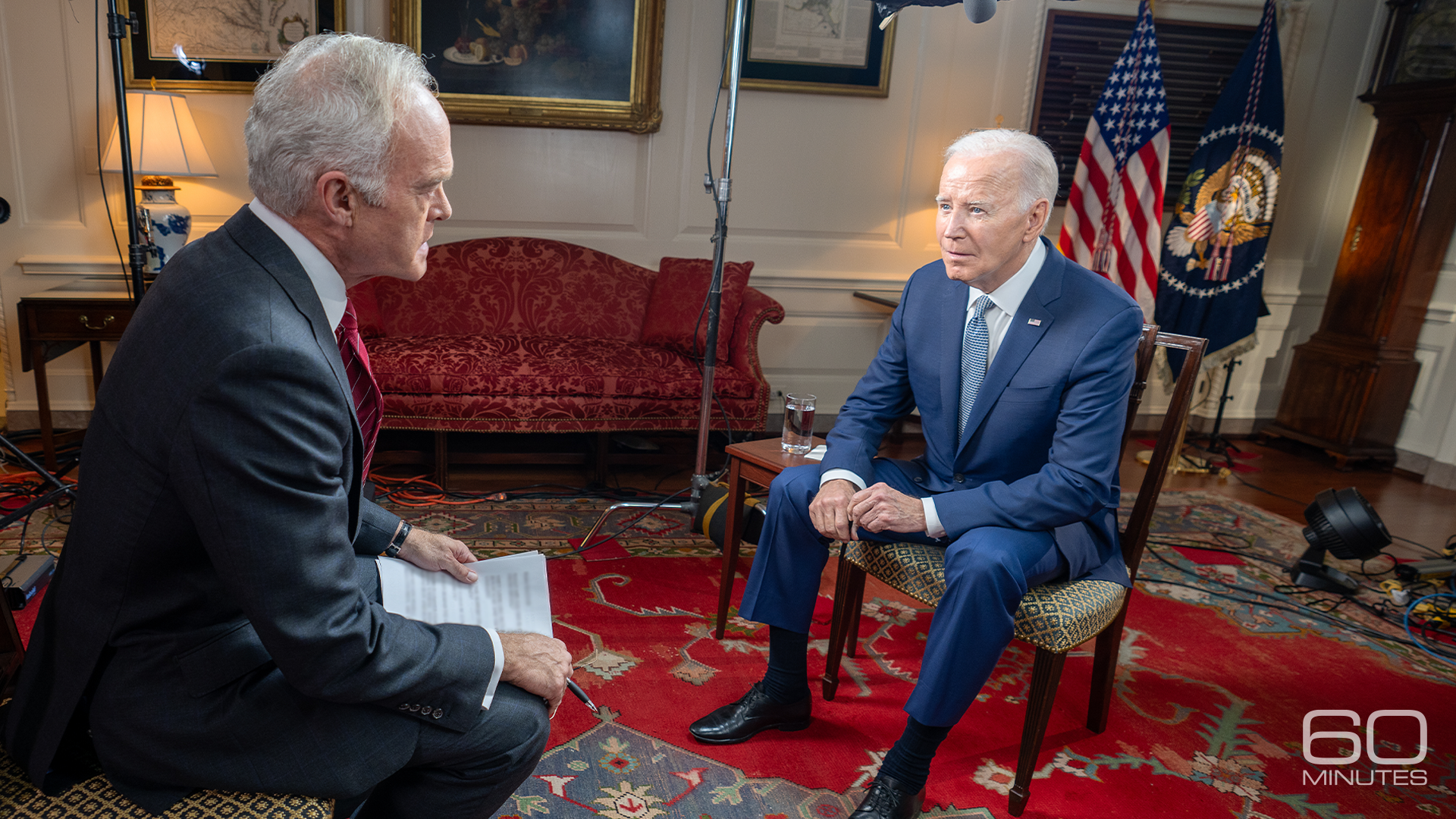
Hamas must be eliminated but an Israeli occupation of Gaza would be "a big mistake," President Biden told CBS' Scott Pelley in an interview broadcast last night on "60 Minutes."
- Why it matters: Israel is preparing an "air, sea and land" invasion of Gaza that's aimed at destroying Hamas after the terrorist attack of Oct. 7, with street-by-street fighting expected to produce massive casualties.
Biden said "there needs to be a path to a Palestinian state," and that "Hamas and the extreme elements of Hamas don't represent all the Palestinian people," Axios' Rebecca Falconer writes.
- He said that "taking out the extremists" is "a necessary requirement." But he called for a humanitarian corridor that allows some Gazans out of the region, and for humanitarian supplies to be brought in.
Michael Herzog, the Israeli ambassador to the U.S., told CNN's Jake Tapper on "State of the Union" yesterday: "We have no desire to occupy or reoccupy Gaza. We have no desire to rule over the lives of over 2 million Palestinians. And, certainly, we want people to go back to their homes."
Pelley asked Biden whether the threat of terrorism in the U.S. had increased because of the Middle East fighting.
- "Yes," Biden replied, saying he had just held a meeting in the Situation Room with FBI and homeland security officials to discuss how to "make sure that we prevent a lone wolf and/or any coordinated effort to try to do what was done in synagogues before — do what was done to Jews in the street. We're making a major effort to make sure that doesn't happen."
Read the transcript ... Watch the video ... Share this story.

Above: Drone's-eye view of an Israel Solidarity March yesterday at the Simon Wiesenthal Center's Museum of Tolerance in Los Angeles.
- 👉 Latest from Axios' Barak Ravid: U.S. and Israeli officials discuss possible Biden visit to Israel this week.
3. 💡 Axios explains: How Israel's Iron Dome works


Israel's Iron Dome missile defense system in the past 10 days has likely intercepted thousands of rockets and missiles launched from Gaza, Axios' Jacob Knutson writes.
- Why it matters: For over a decade, the multibillion-dollar system has been crucial in defending Israeli cities and preventing numerous casualties.
The all-weather mobile system was designed to destroy short-ranged projectiles — rockets, missiles and artillery — launched primarily from Hamas and other militant groups in Gaza and Hezbollah in Lebanon.
- It works through a combination of radar to detect incoming threats and batteries that launch interceptor missiles carrying proximity warheads.
- The batteries can neutralize threats launched from up to 43 miles away.
Israel has at least 10 batteries placed around the country to protect civilians and critical infrastructure, with each battery able to defend up to nearly 60 square miles of land.
- A complete battery costs an estimated $100 million.
4. Mapped: Highest gun death rates are in South
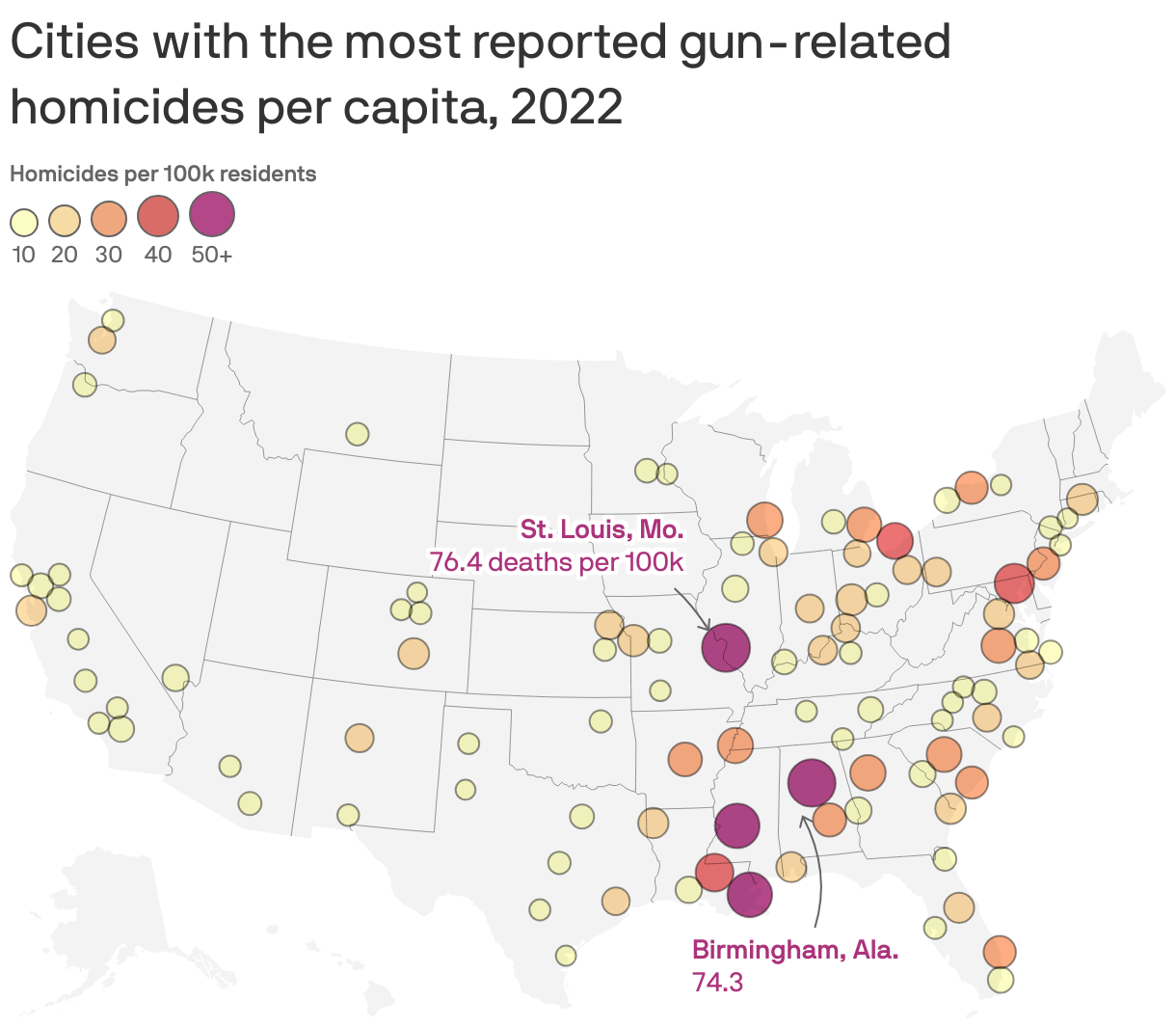
The cities with the highest firearm homicide rates are clustered in the South, generally in red states with less restrictive gun laws, Axios' Caitlin Owens writes from an analysis by the left-leaning Center for American Progress that was provided exclusively to Axios.
- Why it matters: The report argues that the findings refute Republican narratives that progressive policies stoke more crime in cities.
🧮 By the numbers: The average gun homicide rate in blue-state cities was 7.2 per 100,000 residents from 2015 to 2022, the analysis found. In red-state cities, it was 11.1 deaths per 100,000.
Reality check: Gun homicide rates were higher overall in blue cities — as defined by the mayor's party affiliation — than in red ones.
- St. Louis had America's highest gun homicide rate in 2022, followed by Birmingham, Ala.; New Orleans; Jackson, Miss.; and Baltimore.
5. 🏠 Nepo-homebuyers: 38% of young buyers use family money

Illustration: Sarah Grillo/Axios
6. 💊 Rite Aid files for bankruptcy
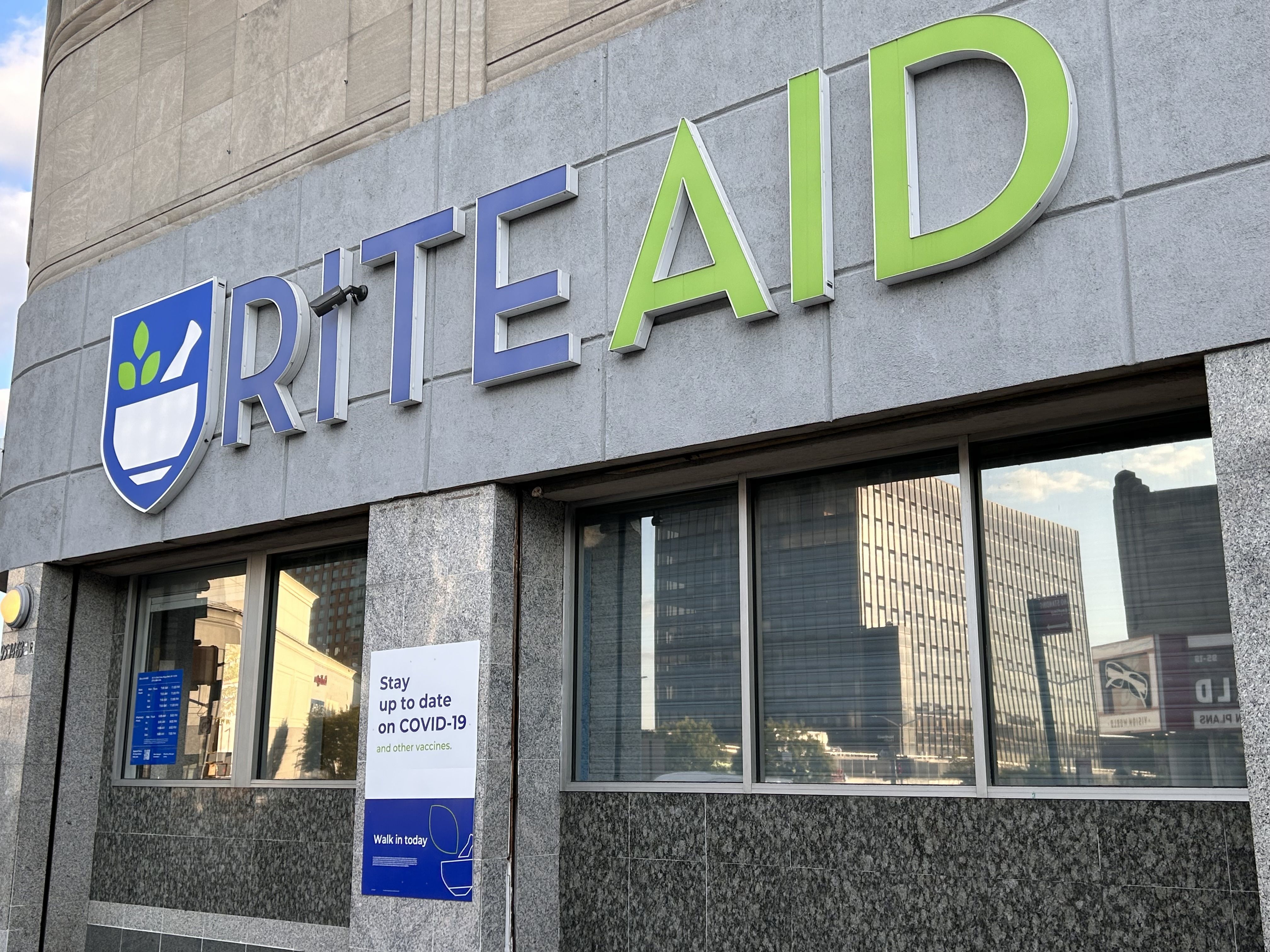
Rite Aid filed for Chapter 11 bankruptcy protection yesterday and said it plans to close "underperforming stores" while coping with falling sales and opioid-related lawsuits, Axios' Kelly Tyko writes.
- Why it matters: The Philadelphia-based drugstore chain's bankruptcy filing comes as it faces federal, state and other lawsuits tied to allegedly filling unlawful prescriptions for controlled substances, including opioids.
Rite Aid named restructuring specialist Jeffrey Stein as the new CEO.
- The company employs 6,100 pharmacists and operates more than 2,100 retail pharmacies across 17 states.
7. 📚 Book: Oprah pondered run with Mitt

Sen. Mitt Romney (R-Utah) tells the author of a forthcoming book that Oprah Winfrey suggested he join her on a unity presidential ticket in 2020 to stop then-President Trump's reelection.
- In "Romney: A Reckoning," out a week from tomorrow, McKay Coppins writes that Romney told him Winfrey, a Democrat, made a pitch to run together "to save the country," according to a source familiar with the manuscript.
Why it matters: The book is based on dozens of hours of interviews with Romney, along with his diaries and journals — rare access to the real-time communications of a sitting officeholder.
Romney tells Coppins he dismissed the idea, believing that such a campaign would inadvertently help Trump.
Reality check: A source familiar with Winfrey's thinking said she was never serious about running — although some close to her thought she should.
8. 🍽️ Top "food-forward" cities


San Francisco is the country's most "food-forward" city, according to a new analysis by food consultancy Datassential.
- That doesn't necessarily mean the city has the best food — just that it has the greatest diversity of cuisines, lots of "emerging" foods, and residents who seek out gustatory novelty, Axios' Jennifer A. Kingson writes.
Why it matters: Cities derive economic strength and attract residents based partly on culinary chops.
- So rankings like this can drive investment and draw talented chefs.
Axios AM

Catch up with the most important news of the day