Brandon Johnson launches reelection bid for Chicago mayor

Add Axios as your preferred source to
see more of our stories on Google.
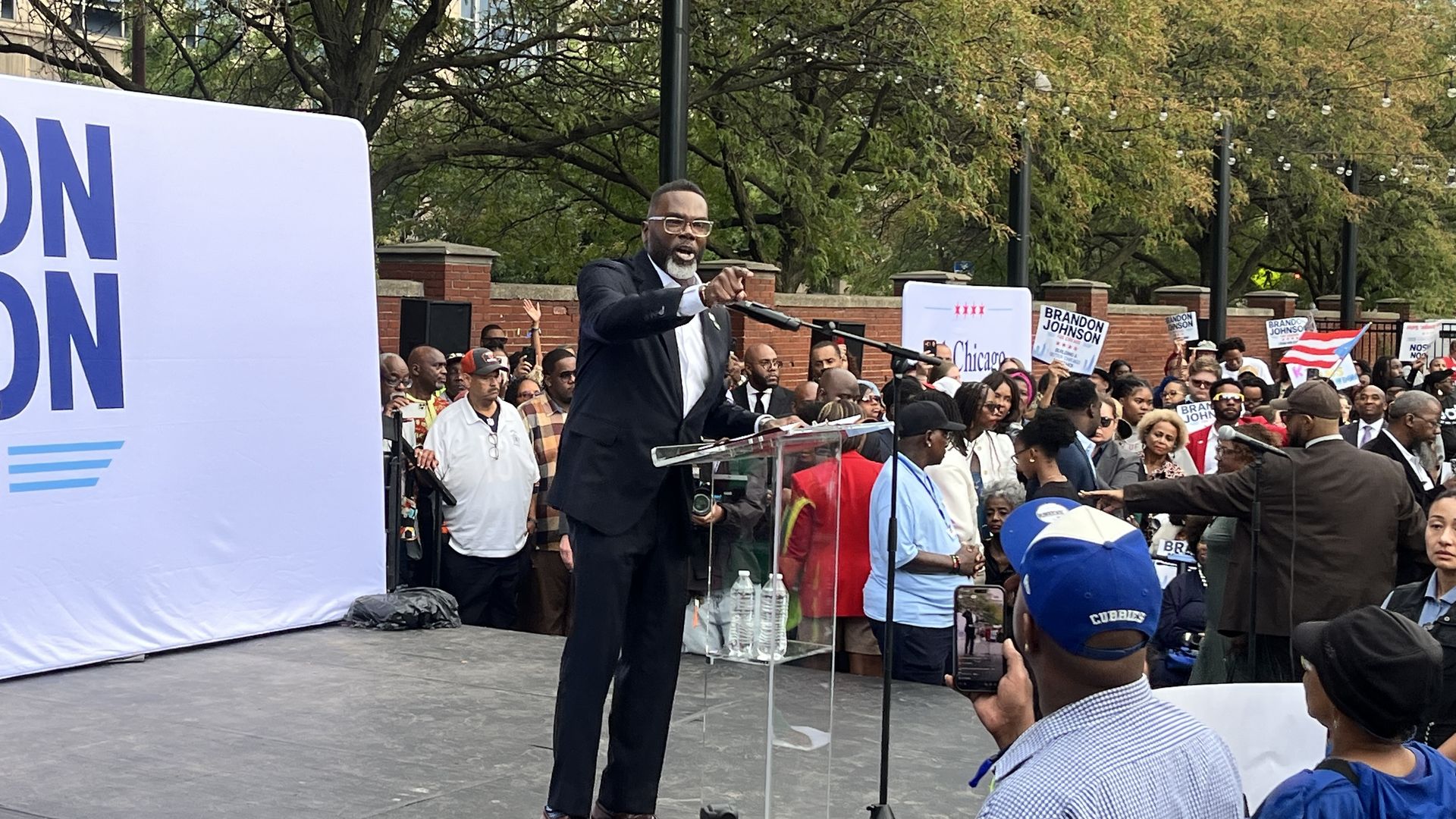
Mayor Brandon Johnson speaking at his reelection campaign kickoff at the DuSable Museum on Sept. 13. Photo: Carrie Shepherd/Axios
Mayor Brandon Johnson will seek a second term leading Chicago, he announced Sunday on social media ahead of an official event on the city's South Side.
Why it matters: Johnson's entry officially kicks the crowded 2027 race into gear as he asks Chicagoans for four more years.
The latest: Supporters gathered at the DuSable Black History Museum in Washington Park on a rainy Sunday afternoon, including U.S. Rep. Danny Davis, Chicago Teachers Union and Illinois Federation of Teachers leader Stacy Davis-Gates, several alders and Chicago historian Shermann "Dilla" Thomas.
What they're saying: "We most certainly have more work to do, and while it's our responsibility to recommit to the work of building the safest, most affordable, most climate-resilient big city in America, it's important to acknowledge that progress has been made," Johnson told the crowd after more than a dozen elected officials, faith leaders and activists led supporters in calls for "four more years."
Zoom in: The mayor and others touted the city's historic low homicide numbers during his tenure, as well as investments in community violence intervention programs, expanded mental health services, youth jobs and worker-friendly policies like expanded paid time off.
- Johnson called out President Trump's continued attacks on Chicago and the ways he stood up to Trump. "As the federal government has turned its power against immigrant communities and working families … Chicago made a different choice. We used every tool available to us: executive action, the courts, and the power of local government to protect our people and challenge federal overreach."
Context: The mayor reminded Sunday's crowd multiple times that Chicago is a sanctuary city.
Friction point: While some progressive alders spoke in support of Johnson on Sunday, the mayor's fraught relationship with the entire City Council will be a vulnerability during the mayor's race.
- Alders have slowed some of his plans, such as increasing the subminimum wage, or stopped them altogether, such as his proposal to implement a corporate head tax in the 2026 budget.
State of play: Illinois Secretary of State Alexi Giannoulias, Illinois Comptroller Susana Mendoza, U.S. Rep. Mike Quigley, Cook County Board of Review Commissioner George Cardenas and businessman Willie Wilson are challenging the mayor.
- Entrepreneur Joe Holberg, lobbyist John Kelly and Chicago Flips Red's Danielle Carter-Walters have also declared they're running.
Reality check: Giannoulias, Quigley and Cardenas are also seeking reelection to their current offices.
By the numbers: Johnson reported about $631,000 in his mayoral campaign fund for the filing period that ended in June, while Giannoulias declared nearly $22 million during that same period, according to the Illinois Board of Elections.
- Mendoza had about $1.6 million on hand and Quigley's fund sat at a little more than $375,000.
Giannoulias and Mendoza, both of whom have held multiple statewide offices, will likely jump on Johnson's weak relationship with Springfield, even as the city is relying on $150 million in state funding for Chicago Public Schools.
What we're watching: The future of Bally's permanent casino, a project Johnson inherited from his predecessor, Lori Lightfoot, which has faced a series of stops and starts during its construction in River West.
- Gov. Pritzker may hold most of the power in determining the future home of the Chicago Bears, but it won't look good for Johnson if they leave the city under his watch, despite his public push to keep the team on the lakefront.
What's next: Chicago's mayoral election is slated for Feb. 23, 2027.
- Candidates began circulating nominating petitions this summer and must file them with the Chicago Board of Elections by Oct. 26.
- If no candidate gets a majority of the vote on Feb. 23, the top two finishers in the race will face off in a runoff election on April 6, 2027.