Bally's faces off with Chicago over video gambling

Add Axios as your preferred source to
see more of our stories on Google.
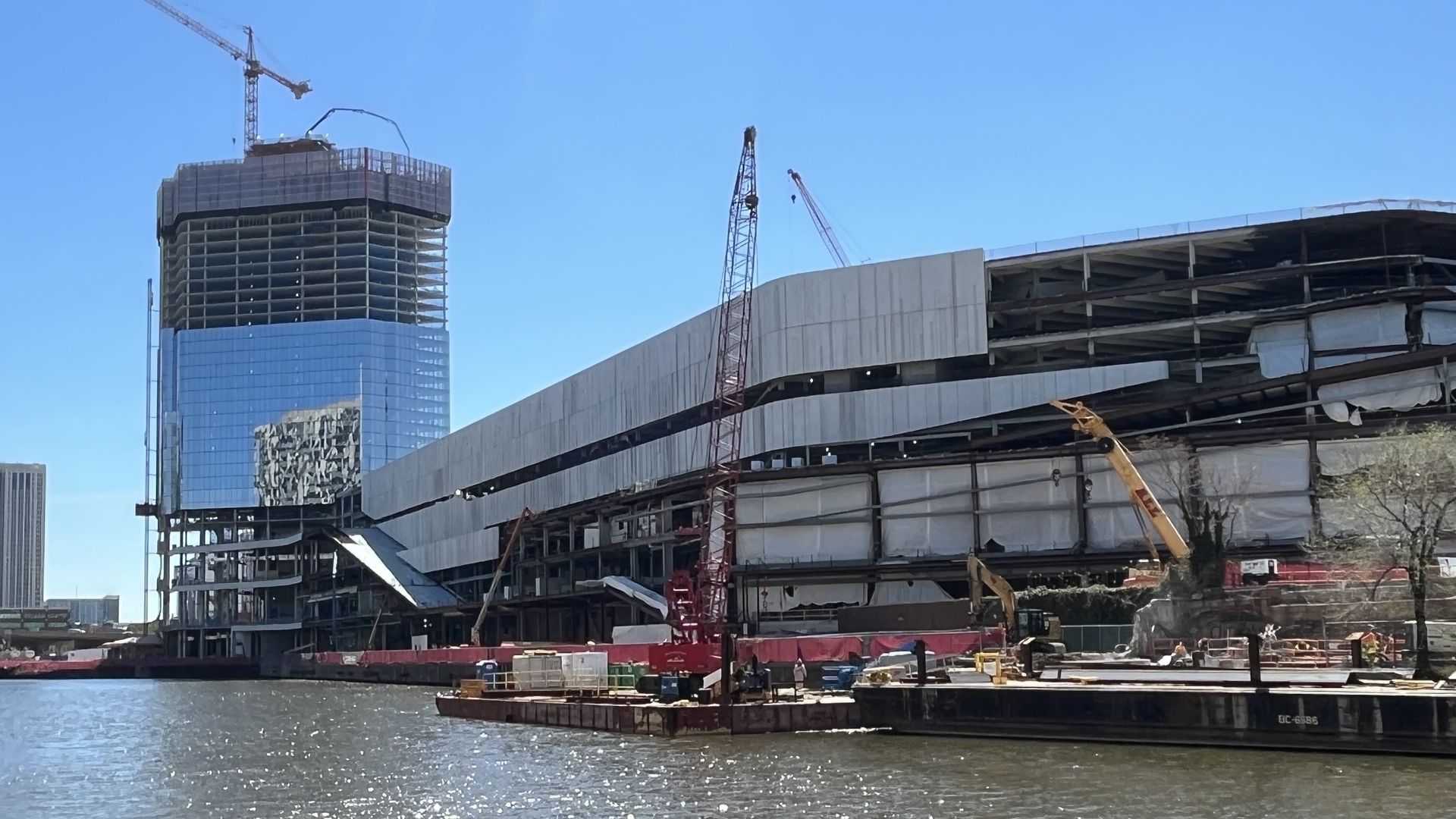
Bally's construction last April. Photo: Carrie Shepherd/Axios
Bally's Chicago is pausing construction on non-gaming amenities at its $1.7 billion casino, hotel and entertainment complex as it enters a standoff with the city over video gambling.
Why it matters: Bally's promises to open its casino next year, but this latest impasse raises questions about the future of full project already under construction in River West.
Driving the news: Bally's informed the Chicago Community Builders Collective last weekend that it's pausing some construction, arguing Chicago's legalization of video gambling terminals violates the casino operator's 2022 Host Community Agreement with the city.
- "Initial opening of the permanent Casino remains unchanged for early 2027 and Bally’s Chicago intends to fully honor its commitments under the Host Community Agreement," the company said in a statement.
Catch up quick: Last December, City Council passed a budget that relied on $6.8 million in revenue from video gambling, despite Mayor Brandon Johnson's objections.
- The budget points to nearly 20,000 potential video gambling terminals across the city.
- Ald. Anthony Beale, a major proponent of legalization, along with leaders of the hospitality industry, argue the gaming machines will give bars and restaurants a much-needed infusion of cash.
- "Legalized video gaming won't turn restaurants and bars into casinos. It will simply give residents an additional entertainment option that doesn't require them to cross the border," Illinois Restaurant Association president Sam Toia said at a City Council subject matter hearing in June.
The other side: "The potential for an uncontrolled proliferation of video gambling terminals (VGTs) is in breach of the City’s commitment not to expand gaming in the Host Community Agreement (HCA) and creates uncertainty that could be harmful for Bally’s Chicago prospects," a spokesperson told Axios in a statement.
- At the often-heated June hearing, Bally's Christopher Jewett warned that the alleged breach of contract could make Chicago appear unwelcome to new investment.
- "I can assure you that other corporations around the country and world are watching the treatment of our relationship and will take note when determining to bring business and jobs here," Jewett said.
State of play: "I've made this very clear that I'm prepared and willing to work with City Council members along with Balley's to make sure that this development and the revenue from this development, that is designed to help support and provide some relief from longstanding responsibilities in terms of our pension, that those resources are not threatened," Johnson said at a news conference Tuesday.
How it works: Licensees must hold an active liquor license when applying for an operator license from the Illinois Gaming Board.
- Once the IGB affirms that an establishment is eligible for a license, Chicago must also issue a location license.
Friction point: The city hasn't issued any licenses.
Zoom in: At July's meeting, the Illinois Gaming Board approved dozens of licenses for Chicago businesses, including Babe's on Milwaukee, Cookie's Cocktail Lounge, D'Agostino's, Green Apple Pancake House and Miller's Pub, in addition to six restaurants and bars that were approved in June.
Context: Bally's license at its Medinah Temple temporary casino was set to expire next month until the state legislature passed an extension in the spring.
- The temporary casino has continued to underperform on revenue.
What's next? A Bally’s spokesperson would only say the casino will "continue to assess our options, which we hope will include more productive discussions with the Mayor’s Office and City Council,” when Axios asked if they plan to sue over their allegations that VGTs violate its agreement with the city.
- Yes, but: In a letter to City Council earlier this summer, Bally's was much more forthright, writing, "Absent urgent action by the City Council, however, we will have no choice but to pursue all available legal remedies.”