Chicago's crime decline weakens Trump's argument for federal takeover

Add Axios as your preferred source to
see more of our stories on Google.
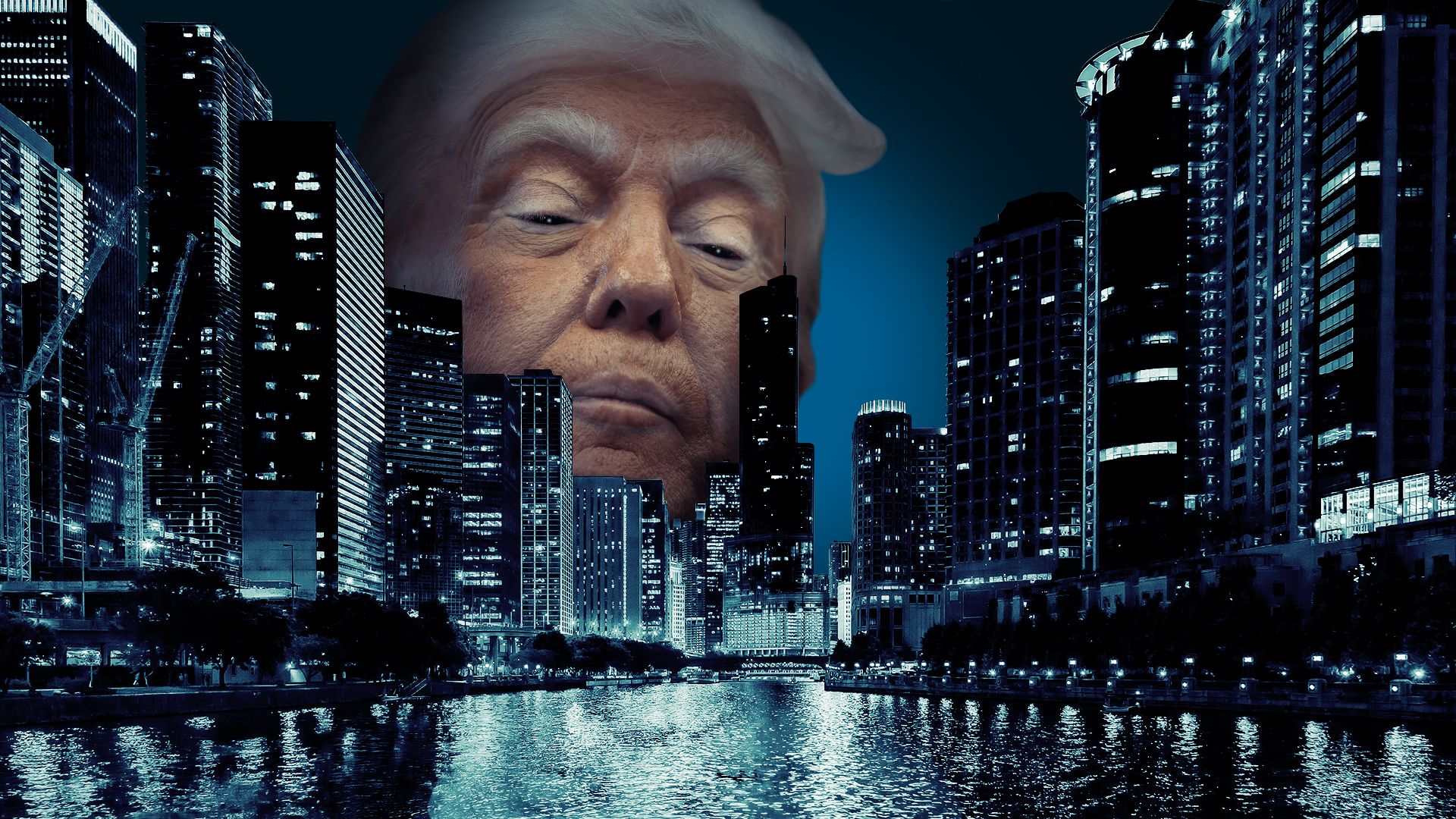
Photo illustration: Aïda Amer/Axios. Photo: Anna Moneymaker/Getty Images
Crime in Chicago continues to decline, strengthening local leaders' narrative that President Trump is politically targeting the city with the federalization of the National Guard.
Why it matters: Declining crime could have an impact on the U.S. Supreme Court's decision on whether the National Guard can be deployed in Chicago. The court has yet to issue a ruling.
The latest: October statistics show the city's crime rates declining across the board, which reflects the low numbers nationally.
By the numbers: Chicago led the nation with a 22.1% drop in overall violent crime during the first nine months of 2025, according to an Axios review of crime data.
- This year, there have been 359 homicides through October, which is down from 497 last year during the same time.
What they're saying: "We are driving violence down in this city, and we're using every single resource that's available to us," Mayor Brandon Johnson said at a recent press conference.
Yes, but: While data continues to show unprecedented drops in violent crimes, political rhetoric from Republicans in Washington, D.C., and in Illinois about how unsafe the city is persists.
Case in point: Just a couple of weeks ago, 14 people were shot over a weekend in Chicago. Even one is too many, but for long-time city residents, that number is a far cry from some much bloodier past weekends, which were sometimes closer to 100 shootings.
- That didn't stop Trump and local Republicans from calling out the 14 shootings as evidence that the city was out of control and needed federal intervention.
- GOP Republican Senate candidate Don Tracy and GOP gubernatorial candidate Darren Bailey also echoed that sentiment.
- "This is the predictable result of years of pro-criminal, anti-law enforcement policies pushed by Chicago Democrats like JB Pritzker, Brandon Johnson and Kim Foxx," Tracy said in a statement.
Friction point: While Tracy's statement will undoubtedly be red meat for downstate Republicans, using the former Cook County State's Attorney Foxx's name seems deliberately misleading in Chicago. Foxx has been out of the office since last year.
Reality check: Crime is a sore subject for Chicagoans. Yes, violent crime is declining and most residents are quick to push back against the Trump administration's narrative that the city is a "hellhole" or "dangerous."
- But locals also know that gun violence has been an unresolved issue for decades.
State of play: Trust between police and communities, especially of color, is at the heart of Johnson's plan to curb violent crime in Chicago. He, along with many other criminologists, points to trust as the main factor in building relationships to help end systemic violence.
The intrigue: Johnson has pushed back on federalizing National Guard troops, saying the data prove that his plan is working and needs more funding.
- Johnson has said repeatedly that if Trump wants to help with the cause, he should send federal funding for additional police officers, anti-violence community initiatives, and other anti-poverty measures.
Zoom out: Federal immigration raids seem to be eroding trust, not bolstering it — 911 calls have acutely dropped in Little Village since "Operation Midway Blitz" began.
- Advocates say residents consider any police to be immigration enforcement and don't feel safe calling for help.
The other side: The Trump administration has signaled it isn't interested in working with Democratic local leaders on crime prevention, instead pushing for a federal takeover and military intervention.
The bottom line: It's easy for Trump to cherry-pick crime statistics for a national audience, but it may be tougher for local GOP politicians to spin that same narrative, especially as anti-crime measures in Chicago seem to be working.