Mayor Brandon Johnson reflects on 3rd year

Add Axios as your preferred source to
see more of our stories on Google.
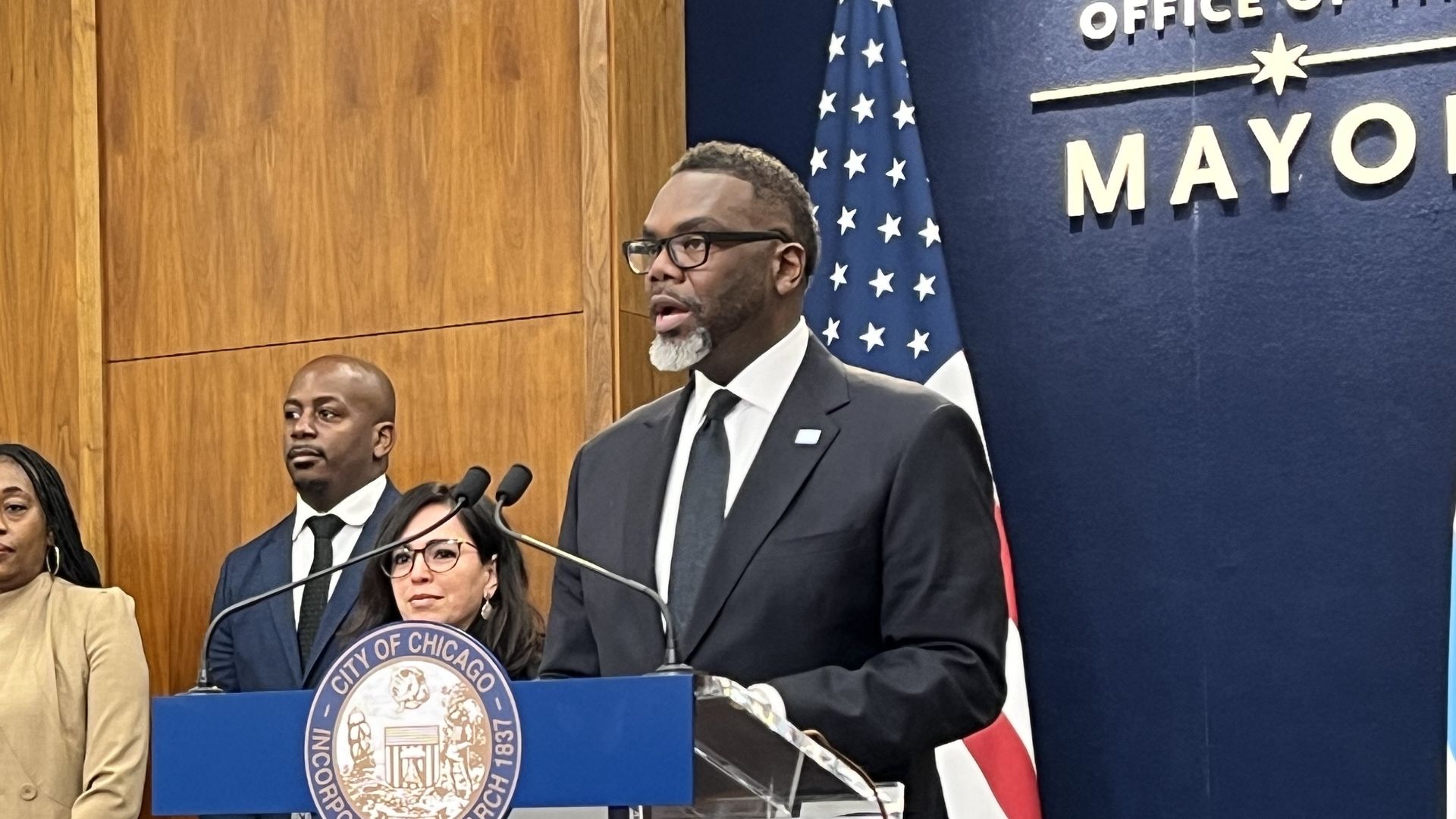
Mayor Brandon Johnson. Photo: Monica Eng/Axios
As he marks three years as mayor this week, Brandon Johnson told Axios he thinks there's a path to keeping the Bears— while sidestepping questions about re-election and closing low-enrollment CPS schools to save teacher jobs.
State of play: Johnson, who recently turned 50, is facing the final year of a tough term, one that will likely include:
- A re-election fight against a growing field of challengers, including Illinois Secretary of State Alexi Giannoulias.
- Another bruising budget season with an increasingly oppositional City Council.
- The possibility of the Bears announcing plans to leave the city.
Below is an excerpt from Axios' conversation with Johnson Tuesday afternoon, edited for clarity.
The Bears
Gov. JB Pritzker said this week that you have no real plan to keep the Bears in Chicago. Why do you think the team would choose a publicly owned stadium in Chicago over Arlington Heights?
- "They spent $20 million [on a plan] to do just that, and we didn't get any cooperation from the state of Illinois. ... There's no plan for Arlington Heights, and now you have surrounding mayors that have said the same thing."
If the Bears tell the NFL they are only considering Arlington or Hammond, which would you support?
- "I think I've been very clear: My preference is that they remain in Chicago."
CPS budget
CPS faces a massive budget deficit and potential teacher layoffs while dozens of schools remain underenrolled. Would you consider consolidating schools to preserve classroom jobs?
- "I think the real focus has to be on revenue from the state of Illinois. ... I think the choice right now is between working people and the ultra-rich. ... We're either going to stand up for working people or protect the people that Donald Trump just cut another tax break for."
Reflection
What has been the toughest challenge of your first three years?
- "Disinvestment has been the prevailing form of governance for decades, and trying to move at the speed of the demand has been a challenge. The needs are great, and transforming this city in three years after 30 years of historic disinvestment, that is a challenge."
CTA
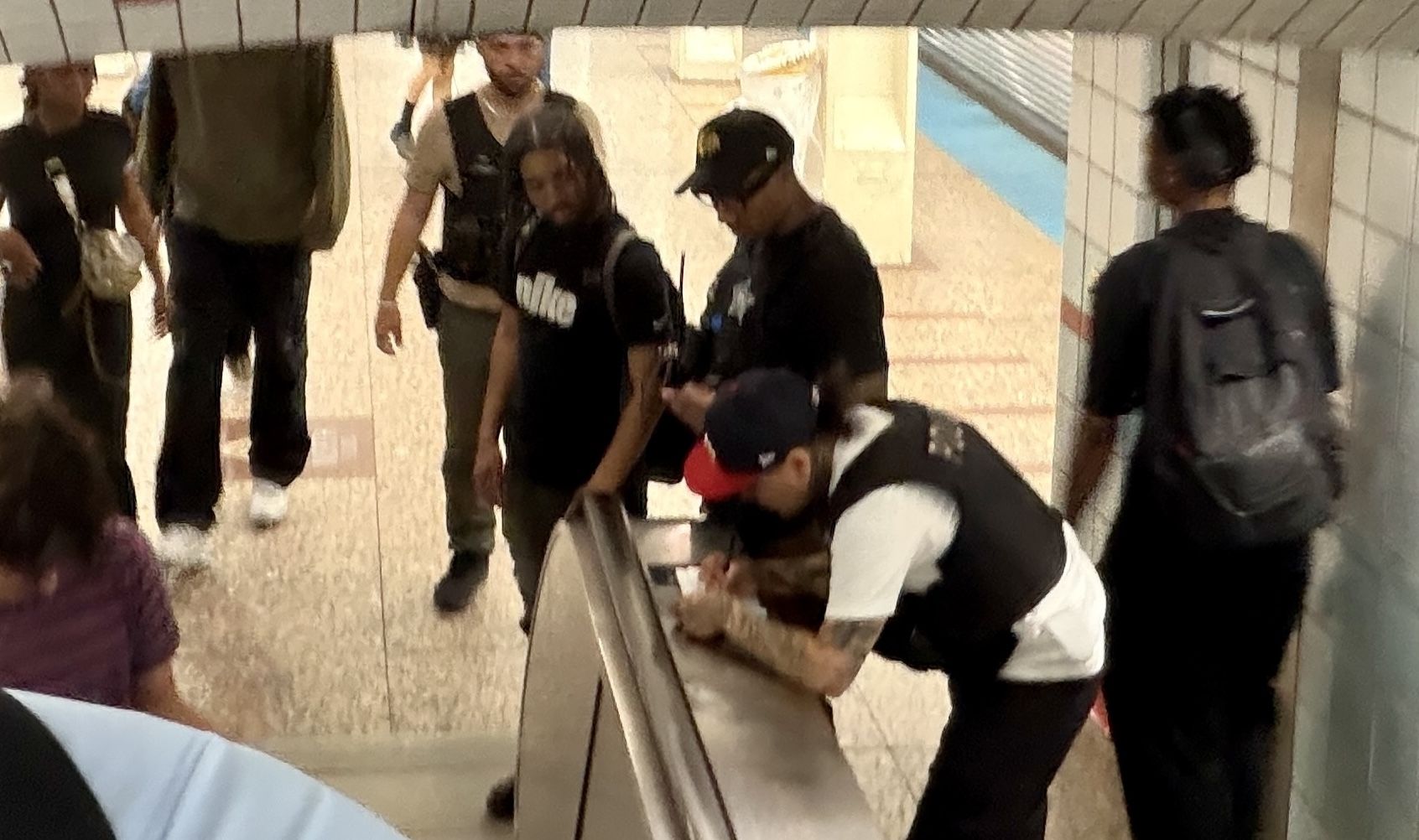
CTA riders still complain about smoking, dirty cars and people in crisis on trains. Does the city need to do more?
- "Yeah, absolutely. We have the best transportation system anywhere in the country ... but one act of violence is one too many. We're not going to fix 30 years-plus of historic disinvestment in three years, but our ridership is up, ... so we're moving in the right direction."
This week, the Cook County State's Attorney, Sheriff, and CTA announced a new task force to tackle crime on CTA with more aggressive arrests and prosecutions. Do you support that approach?
- "Community safety is the top responsibility ... but it has to be inclusive. It also has to be balanced, so that also ensures we have invested more for community-based organizations to provide support for families who are unhoused or dealing with mental illness, so it can't just be policing."
Social workers at libraries
Library workers tell me they are being asked to do more with less, including serving as de facto social service workers for people who need professional help. Would you ever consider putting a social worker in libraries?
- "On the West Side of Chicago, the Legler [Regional] Library is also a place where people can get food. ... I expanded the Crisis Assistance Response and Engagement (CARE) program so that if there's a mental health crisis, no matter where you are in the city, a paid behavioral mental health crisis professional can show up to support those families."
Electronic monitoring
After two recent high-profile attacks involving people accused of violating electronic monitoring, do you think the system needs fixing?
- "These tragedies are absolutely horrific. ... And if we believe that the only approach towards transforming our criminal system is just simply looking at one area, then there are blind spots. ... I support a comprehensive response to make sure that we are maximizing all of our tools as government to keep people safe."
The Pope
What do you want to achieve with your visit to Pope Leo next week?
- "I think it's going to be important that he hears directly from his city about how proud we are of him and his moral clarity, and that the executive orders that I put forward to protect Chicago, that right now 10% of the country is currently living under that model."
Regrets?
What regrets do you have from your first three years?
- "I wish we would have been able to see more progressive revenue proposals actually make it into our coffers. We passed the first of its kind, Social Media Amusement Tax on the ultra-rich and big corporations anywhere in the United States. The governor is following my lead, and ... I wish we were able to do more there, but that work is going to continue."
Budget strategies
What lessons are you taking from the last two bruising budget seasons and bringing to this budget season?
- "Look, there's going to be fights, right? I would rather have a louder city council in progress than a quiet city council in chaos, because that's what we've seen in the past. You've had rubber-stamp councils that have led to the type of financial despair that you were speaking about earlier in our conversation; it has proven to be ineffective. "
Re-election challengers
Out of the cast of thousands lining up to challenge you for mayor, who do you consider your toughest opponent if you run again?
- "Here's what my focus is on: building safe and affordable communities. There's no need to speculate. If people decide that they want to run for office, they get to do that, but in the meantime, I'm going to make sure that I go all over this city to protect working people. ... When that time comes, I'll make that decision."
Legacy
If you don't get a second term, how would you like to be remembered?
- "I'm not out writing a memoir. ... That sounds like a little hubris. ... What I'm reflecting on right now is, how over these past three years, how we have seen historic lows in violence. How do we continue to see that type of progress take place. We're on pace to build 10,000 affordable units, but as you know, we need more than that. That's what I'm reflecting on."