The Food and Drug Administration on Thursday selected nine drugs for expedited reviews intended to speed up the approval process.
Why it matters: The awarding of the new priority review vouchers is a key focus of FDA commissioner Marty Makary, who has called for shaking up how the agency handles drug approvals that can take up to a year.
The White House on Thursday announced measures aimed at expanding access to in vitro fertilization, including a new "most-favored nation" pricing deal with the manufacturer of a leading fertility drug.
Why it matters: The effort combines two Trump priorities: lowering drug prices and making IVF treatment more affordable.
WeightWatchers is emerging from bankruptcy with a plan to "radically evolve," new CEO Tara Comonte tells Axios.
Why it matters: The company, long synonymous with its calorie-counting points system, is fighting to stay trusted — and profitable — in an era of telehealth startups, buzzy weight-loss meds and women's health innovation.
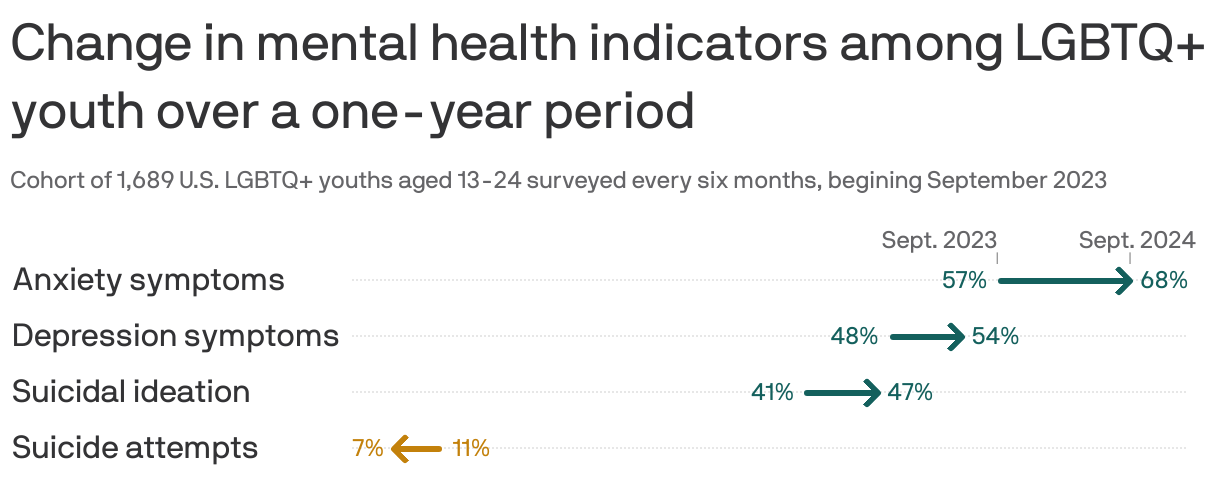
LGBTQ+ youth anxiety and depression symptoms, as well as suicidal ideation, rose over the course of a year, according to a Trevor Project report published Thursday.
Why it matters: The survey charted youth well-being before, during and after the presidential election, as President Trump has targeted LGBTQ+ rights since his inauguration.
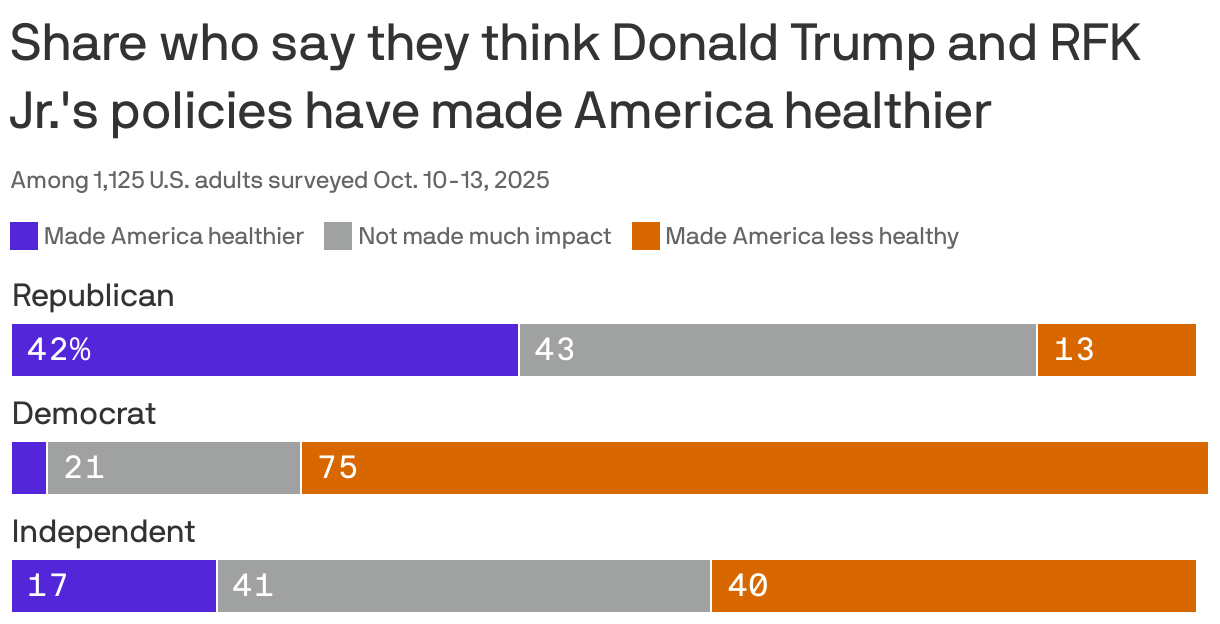
Americans who say the U.S. is less healthy under the leadership of President Trump and Health Secretary Robert F. Kennedy Jr. now outnumber believers 2-to-1, per the latest Axios-Ipsos American Health Index.
The big picture: Skepticism over child vaccine requirements has ticked up since Trump took office in January, while Americans' trust in the Centers for Disease Control and Prevention, National Institutes of Health and Food and Drug Administration is declining.
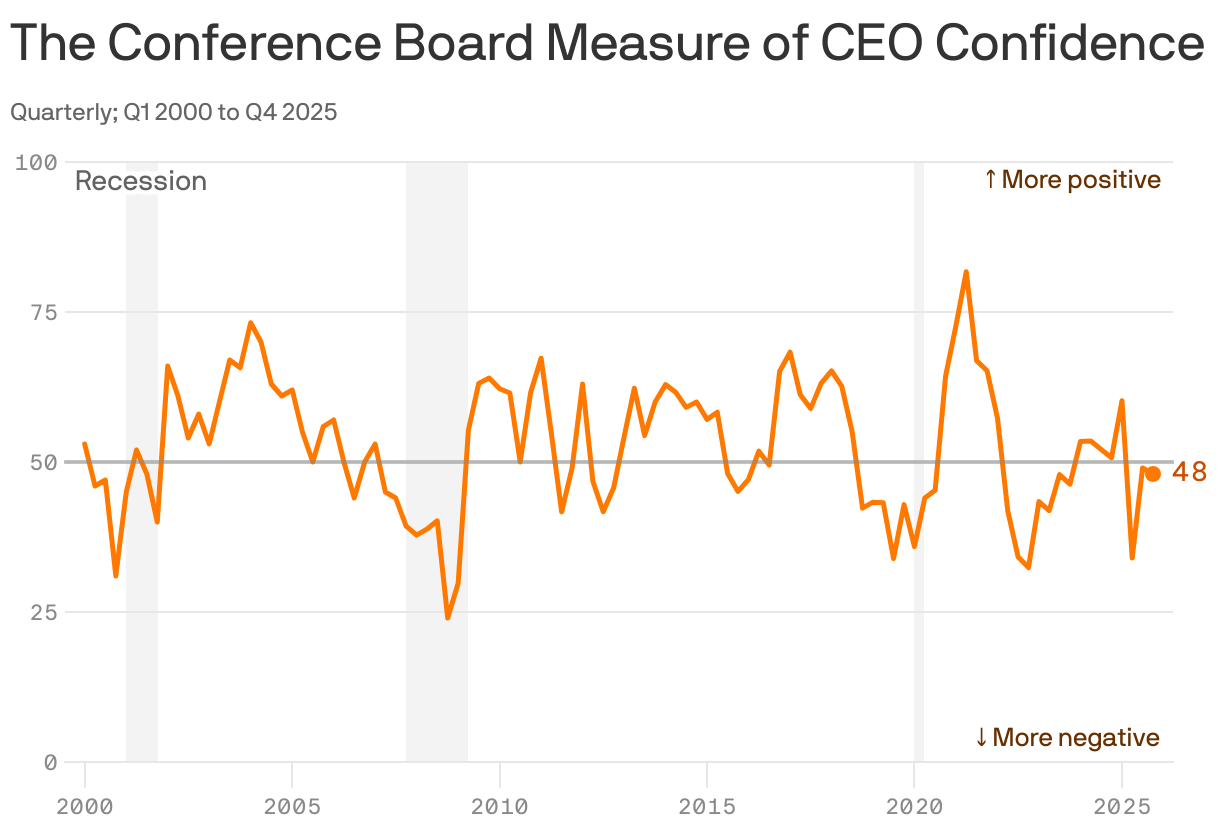
Data: The Conference Board and The Business Council; Chart: Axios Visuals
A key measure of CEO confidence dipped slightly lower into negative territory, according to a survey of executives out Thursday morning.
About two-thirds said they expect stagflation over the next year and a half.
Why it matters: It's a sign of the uncertain business environment — as leaders grapple with a constantly changing policy landscape, particularly around tariffs.
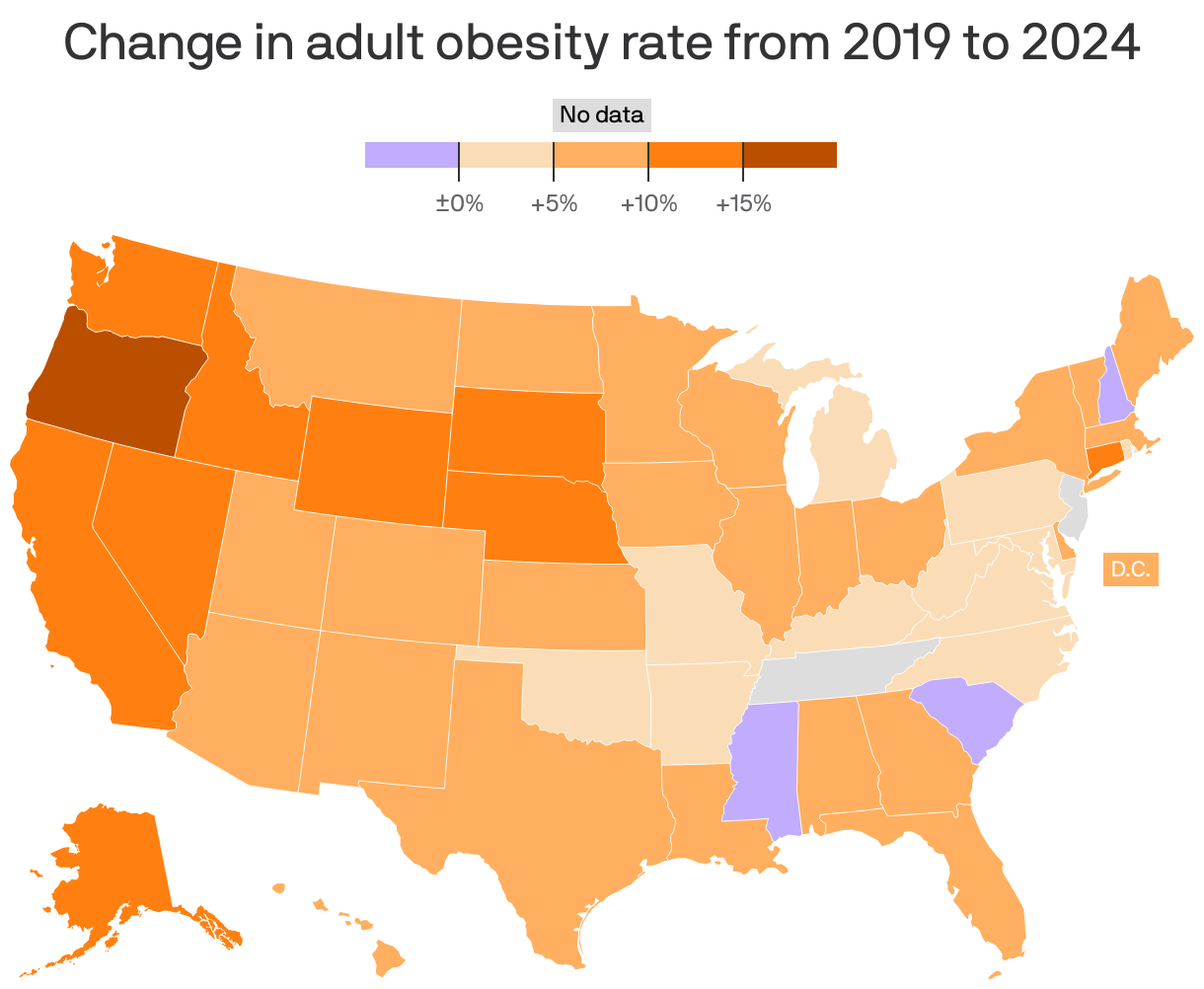
Data: Trust for America's Health / CDC; Map: Alex Fitzpatrick/Axios
The number of U.S. states with adult obesity rates at or above 35% dropped slightly in 2024 compared to a year prior, a new report finds, yet remains far higher than just a decade ago.
Why it matters: Obesity is tied to several health problems, including diabetes, heart disease, COVID-19 complications and more.
President Trump said Wednesday he authorized the CIA to secretly conduct operations in Venezuela, including possible strikes against drug cartels.
Why it matters: The announcement follows rising tensions with Venezuela's authoritarian leader, Nicolás Maduro, as the U.S. military targets boats allegedly carrying drugs.
The Trump administration on Wednesday continued to call back some of the federal health workers it fired last week, including those responsible for planning a key national survey that tracks obesity, chronic health ailments, environmental exposures and other metrics.
Why it matters: Firing those employees could have undercut Health Secretary Robert F. Kennedy Jr.'s efforts to overhaul the food supply and address chronic disease prevalence, former staff told Axios before the layoffs were rescinded.
The job of tracking the ravages of the opioid crisis may come down to a bare-bones team of about 150 Centers for Disease Control and Prevention workers whose overdose division survived a mass firing that took out much of the National Center for Injury Prevention and Control last week.
Why it matters: The injury center is a microcosm of the fractured landscape at the CDC, which has lost about a quarter of its employees this year through successive Trump administration force reductions.
Premium increases are starting to hit home for millions of Americans as state-run Affordable Care Act marketplaces begin posting rates for next year that are based on the assumption Congress won't renew expiring financial assistance.
Why it matters: Sticker shock could lead many Americans to conclude health coverage is out of reach while the government remains in a shutdown that centers on the fate of enhanced ACA subsidies that will sunset at year's end.
Driving the news: "Window shopping," when ACA enrollees can preview their premiums for next year, is already underway in a half dozen states and begins Wednesday in California, Kentucky, Maine, New Mexico, Oregon and Vermont.
In Idaho, the actual enrollment for 2026 coverage begins Wednesday. Signs-ups begin November 1 for the rest of the country.
Democrats are already seizing on early examples of premium increases to prod Republicans to extend the subsidies. Sen. Raphael Warnock (D-Ga.) posted on X a potential premium increase, sent to him by a constituent, from $307 per month to $964 per month. The post has 6.5 million views.
On average, premiums for roughly 22 million ACA enrollees will more than double without a subsidy extension, per KFF.
What they're saying: Brad Woodhouse, president of the Democratic-aligned group Protect Our Care, said the group has created a toolkit to allow lawmakers to post examples similar to Warnock's and drive home the point that the pain has arrived.
"I think after tomorrow when this window shopping starts to open, and you start to see this data trickle out, I think it's going to put Republicans in a tremendous bind," Woodhouse said Tuesday.
The other side: Republicans say they are open to talks about extending the enhanced ACA subsidies in a modified form, but not as a precondition for reopening the government, as Democrats insist it should be.
Asked if premium increases put pressure on Congress, Sen. Roger Marshall (R-Kan.), said "I'm more than happy, when the government gets open, I'll sit down with the Democrats" to talk about solutions.
"It was supposed to be related to COVID and it's become a boondoggle; it's a subsidy for insurance companies," Speaker Mike Johnson said of the enhanced tax credits on Monday.
"If indeed the subsidy's going to be continued, it needs real reform," he added, saying the clean temporary government funding measure would allow time for those talks to happen over several weeks.
Potential changes include income caps on eligibility, or a minimum premium payment to eliminate $0 premium plans that Republicans say fuel fraud.
Between the lines: Democrats say that there is no time to wait, pointing to the November 1 start of ACA open enrollment.
The office of Sen. Maria Cantwell (D-Wash.) highlighted window shopping data from neighboring Idaho to warn of premium hikes to come. For example, a single mom making $41,000 in Boise would see monthly premiums go from $69 to $215 without the enhanced subsidy.
Red states are heavily represented in ACA enrollment, with Florida and Texas the top states for enrollees this year. Some Republicans in close reelection races next year have already come out in favor of a short-term extension of the subsidies.
The bottom line: Sen. Ron Wyden (Ore.), the top Democrat on the Senate Finance Committee, told Axios "no question about it" more knowledge of premium increases among Americans will put pressure on Republicans.
"People are coming to see that they have a health cost locomotive coming at them and it's going to crush them," Wyden said.