Why it matters: The sweeping law locks in Trump-era tax cuts and rolls out a fresh set of deductions, including tax breaks for tips, overtime pay, car loan interest and seniors.
Health plans on the Affordable Care Act marketplaces are requesting their biggest premium hikes since 2018,in some cases over 30%, according to a new analysis from KFF.
The big picture: The growing cost of care combined with the anticipated expiration of enhanced ACA premium subsidies and tariffs are driving the increase, according to insurers' preliminary filings with state regulators for 2026.
An Food and Drug Administration expert panel on Thursday endorsed removing the "black box" warning on hormone treatments for menopause that critics say have discouraged women for decades from using the pills and creams.
Why it matters: The meeting highlighted an area of particular interest for FDA commissioner Marty Makary, who cited warnings about hormone therapy in his book "Blind Spots" as an example of medical groupthink that caused unnecessary harm.
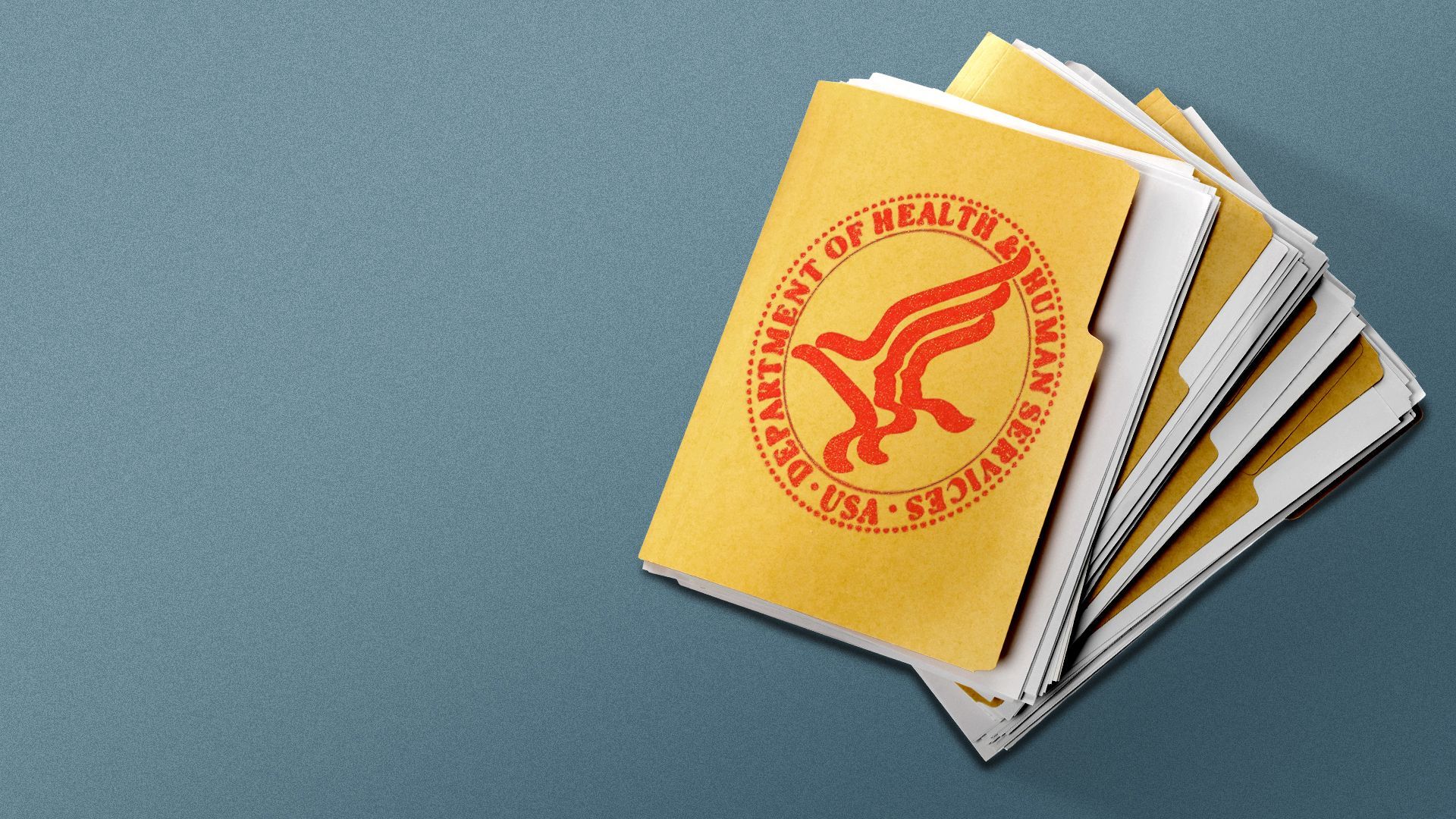
The federal health department is sharing Medicaid recipients' personal data with the Homeland Security Department, HHS confirmed to Axios.
The big picture: The arrangement raises privacy and security concerns for critics — including around whether the information is being used to deport undocumented immigrants.
President Trump was diagnosed with chronic venous insufficiency during a recent medical exam, the White House announced Thursday.
The big picture: Trump, 79, has been reluctant to release medical records demonstrating his physical and cognitive well-being during the 2024 election, though an April exam found him in "excellent health."
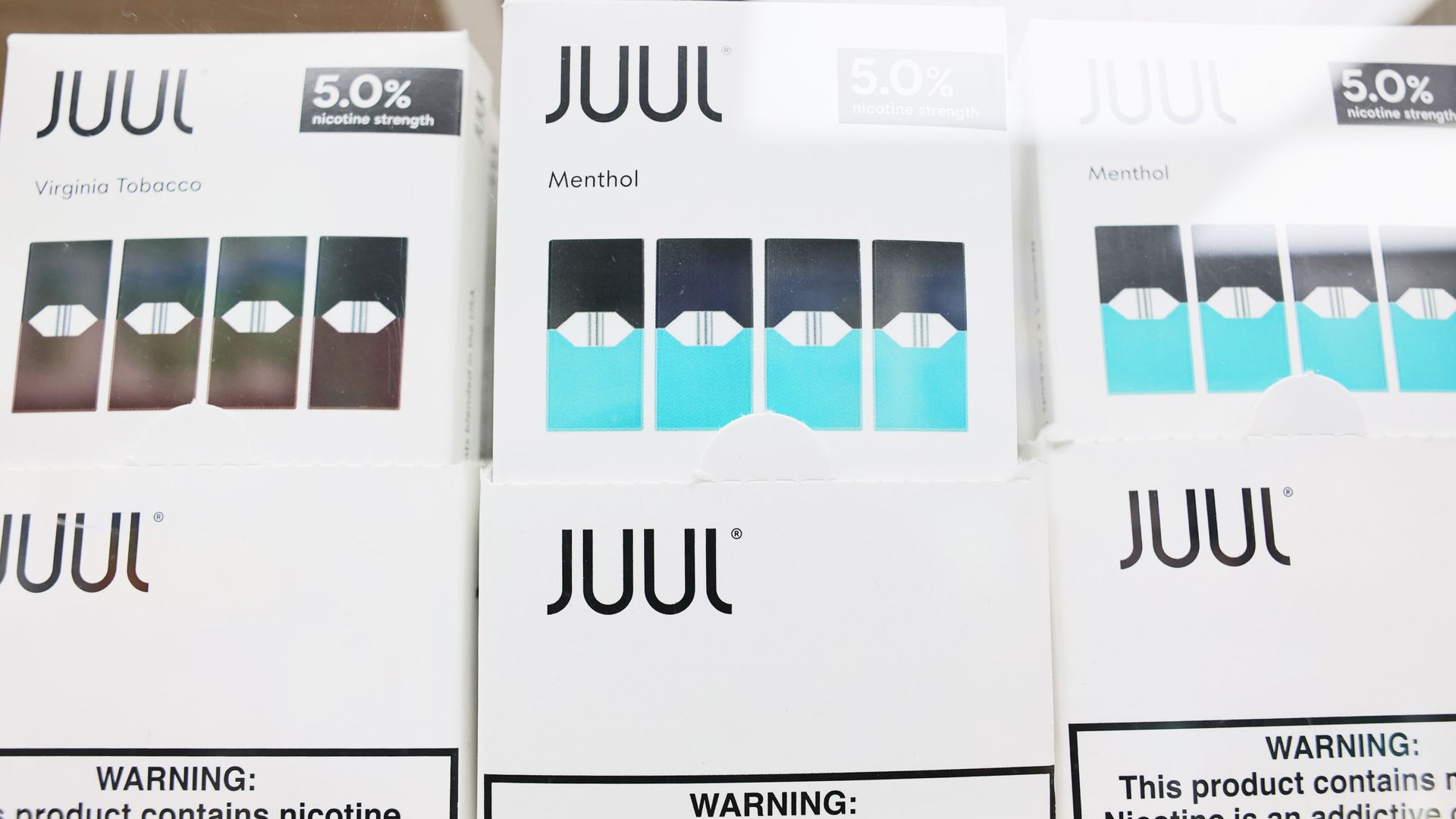
Juul Labs has won the government's authorization to keep its signature e-cigarettes on the U.S. market.
Why it matters: The vaping company was once facing a federal ban under the Biden administration — which was quickly suspended, and later rescinded, but nonetheless put its future in doubt.
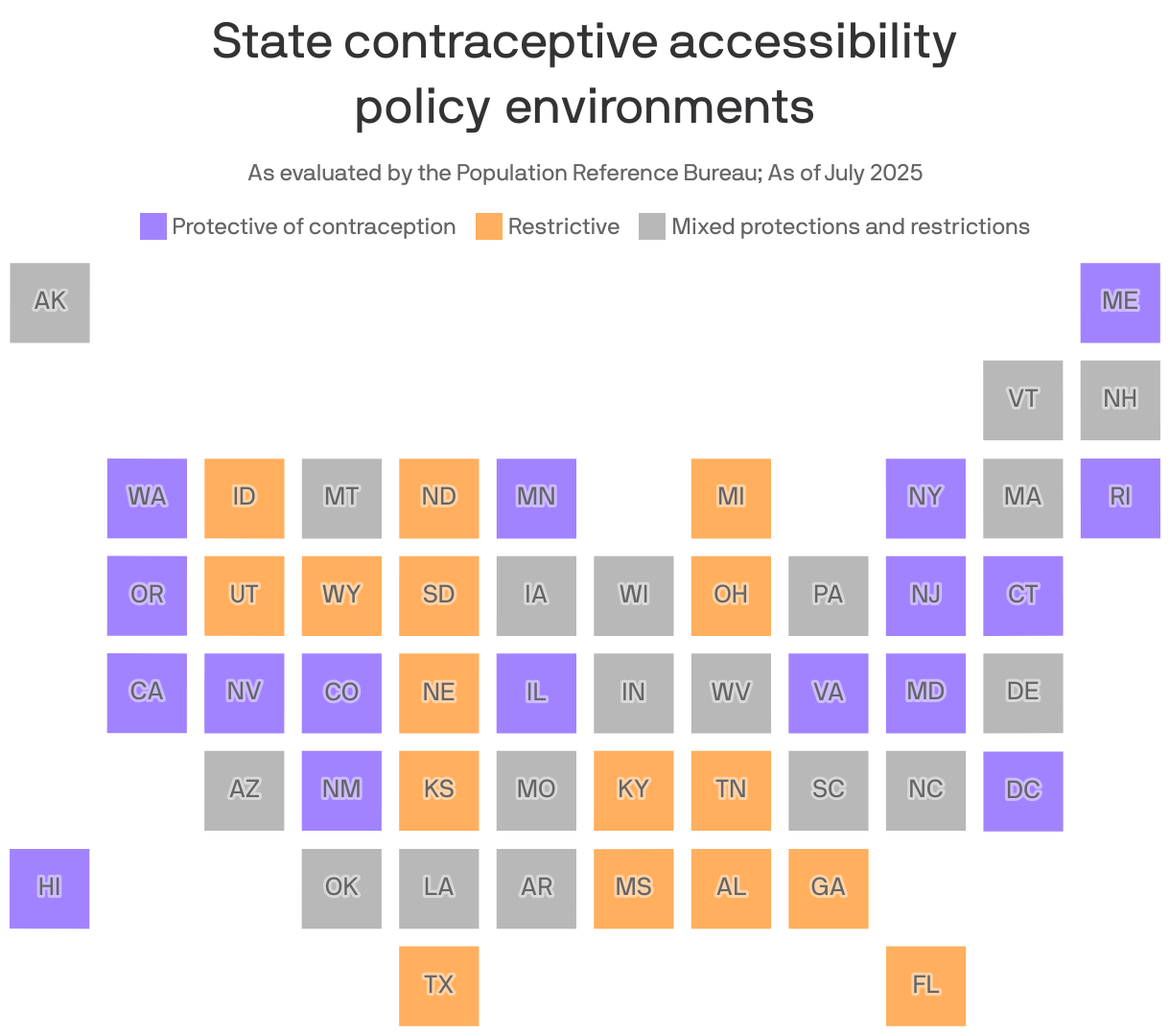
Data: The Population Reference Bureau; Map: Erin Davis/Axios Visuals
State laws regulating birth control remain a patchwork, with wide variations in access and restrictions in some locales requiring parental consent or allowing providers to opt out of dispensing contraception, a new scorecard from the Population Reference Bureau shows.
Why it matters: Contraception access has become a political flashpoint since the Supreme Court ended Roe v. Wade, with Democrats unsuccessfully pressing to codify nationwide contraceptive access and some patients concerned that conservative state legislatures could enact new curbs.
Millions of low-income Americans already face the prospect of losing their health insurance, and now they're looking at another worry: lower credit scores.
Why it matters: Poor credit scores not only make it harder to borrow money, but also to accomplish such basic things as land a job or rent an apartment.
LGBTQ+ youth who call the national 988 suicide prevention hotline will lose access to counselors specifically trained to serve their needs starting Thursday.
Why it matters: Nearly 40% of LGBTQ+ youth seriously considered attempting suicide in 2023, according to the Trevor Project, and 988's specialized services for LGBTQ+ youth were considered a lifeline for young people who were struggling.
Community health centers are in a legal bind following the Trump administration's directive to restrict undocumented immigrants' access to their services.
Why it matters: The federally funded clinics are supposed to serve everyone — but now, only if they fulfill a citizenship requirement.
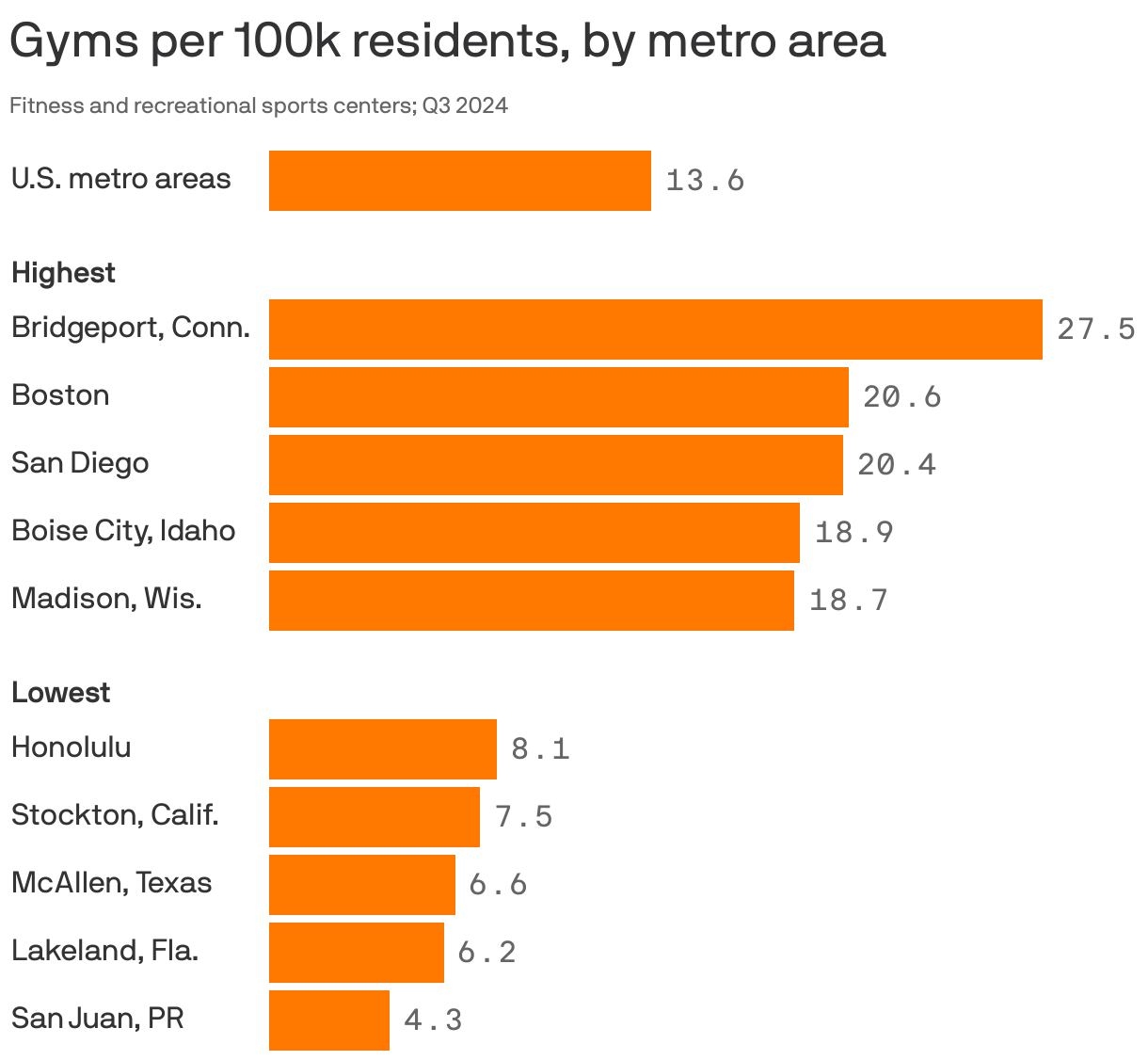
Data: Bureau of Labor Statistics; Note: Among metro areas with at least 500,000 residents and sufficient data; Chart: Axios Visuals
Bridgeport, Connecticut; Boston; and San Diego have the most gyms per 100,000 residents among big U.S. metro areas, per government data.
Why it matters: Gyms offer city dwellers a way to get and stay healthy, and can serve as excellent "third places" — a spot to hang out and connect outside home or work.