121 million live in states restricting contraceptive access

Add Axios as your preferred source to
see more of our stories on Google.
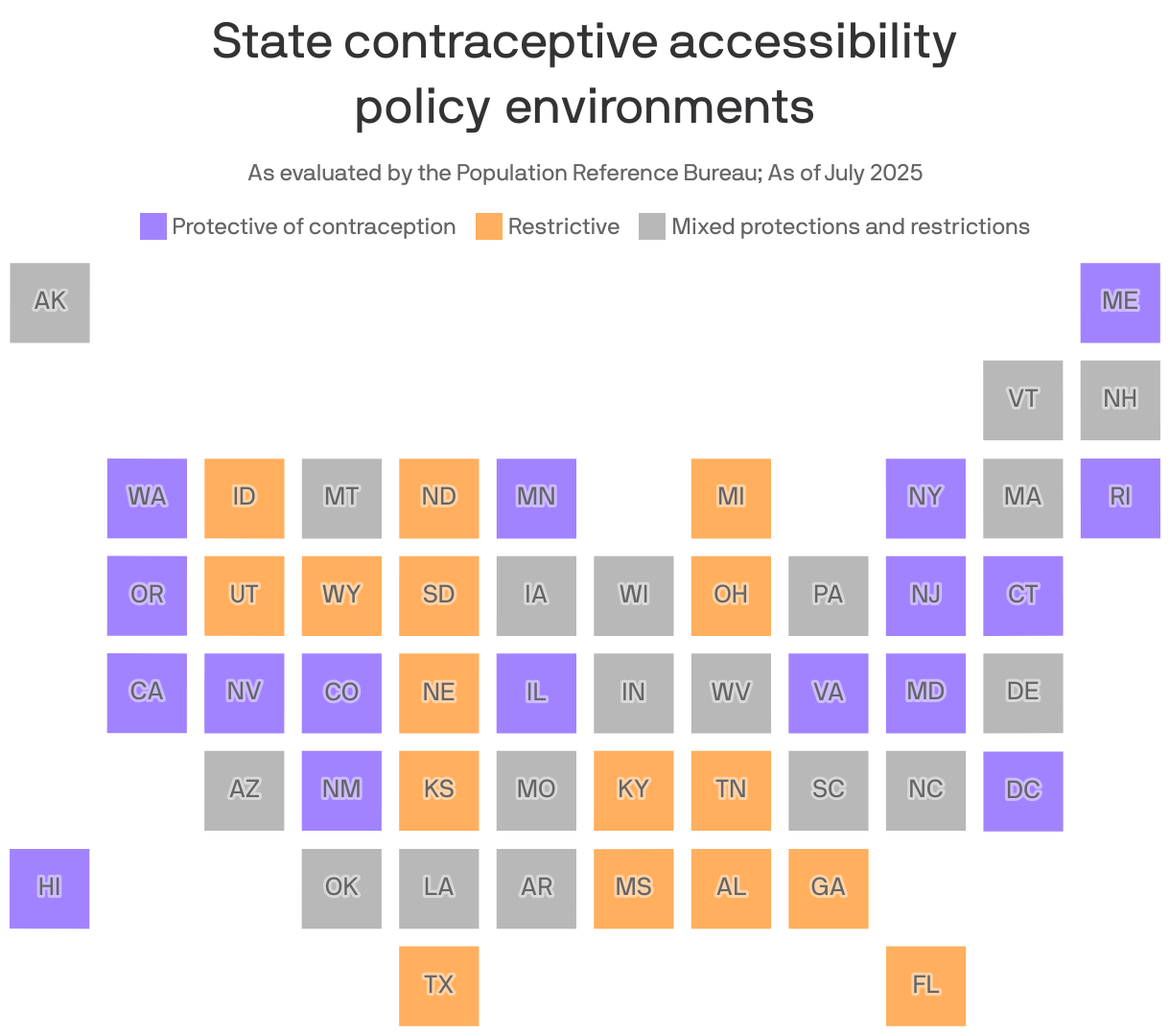
State laws regulating birth control remain a patchwork, with wide variations in access and restrictions in some locales requiring parental consent or allowing providers to opt out of dispensing contraception, a new scorecard from the Population Reference Bureau shows.
Why it matters: Contraception access has become a political flashpoint since the Supreme Court ended Roe v. Wade, with Democrats unsuccessfully pressing to codify nationwide contraceptive access and some patients concerned that conservative state legislatures could enact new curbs.
What they found: States on both coasts generally had policies aimed at ensuring access, such as requiring insurers to offer no-cost coverage and allowing nurse practitioners or pharmacists to prescribe birth control.
- Nearly 35% of Americans, or 121 million people, currently live in a state that actively restricts access.
- Of the 16 states the group identified in that cohort, the most restrictive including Kansas, Mississippi, Florida, Alabama and Wyoming.
- The most protective included California, Washington, Connecticut, New York, New Mexico, Maryland and Oregon.
- Another 18 states were considered a mix between the two.
"Reproductive health care access depends on where you live," said Cathryn Streifel, senior program director at PRB and co-author of the scorecard.
- "State policies are more important than ever in shaping the reality of contraceptive access on the ground," she said.
- Recent federal proposals to impose work requirements on Medicaid beneficiaries would further threaten access,
The bottom line: As federal safeguards weaken, state laws have become the front line in determining whether people can access contraceptives.
