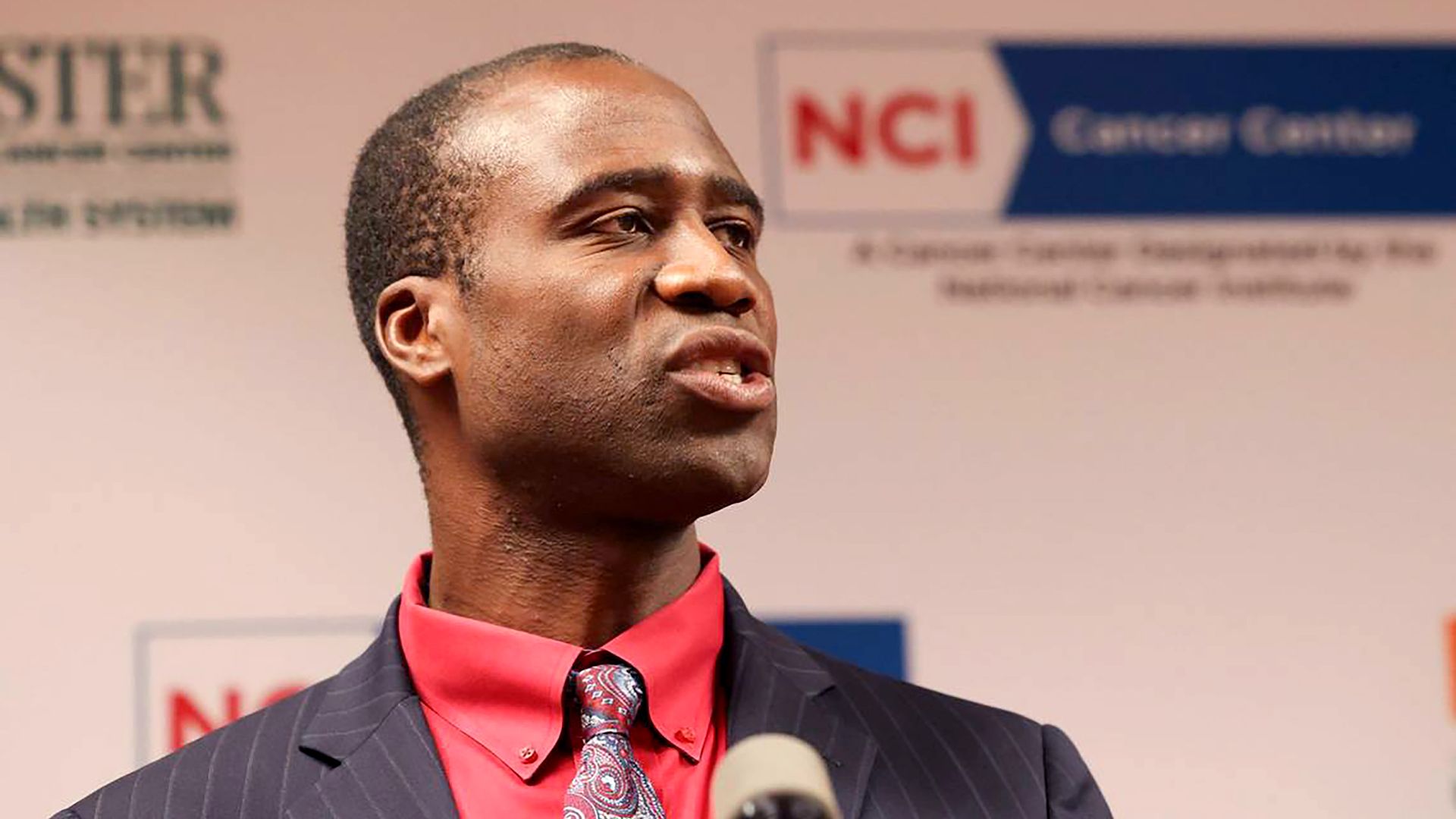
Florida Surgeon General Joseph Ladapo contradicted federal health guidelines on measles this week by not urging parents to vaccinate their children against one of the world's most contagious viruses.
Why it matters: Ladapo's apathy toward measles vaccinations comes as a Florida elementary school is attempting to contain an outbreak and as measles cases have remerged across the U.S.
Patients across the country have been unable to get their prescriptions filled as health tech company Change Healthcare responds to a cyberattack.
Why it matters: It's still unclear when Change Healthcare will return to normal operations, and until then, local pharmacies that rely on the company to process payments through patients' insurance say they're facing outages and delays in filling prescriptions.
The idea that a full moon drives strange behavior is so deeply ingrained in our culture that some superstitious hospitals even bulk up on staffing when one is coming.
Why it matters: New data from hospital safety company Canopy suggests, well, they might be onto something.
Job openings in health care and social services last year hit the second highest rate since data began to be collected in 2001, and the employment picture remained strong in January, especially in ambulatory care settings and hospitals.
Why it matters: The findings from Altarum reinforce just how much the health industry is fueling a robust labor market, even as it's beset by churn and high levels of worker burnout.
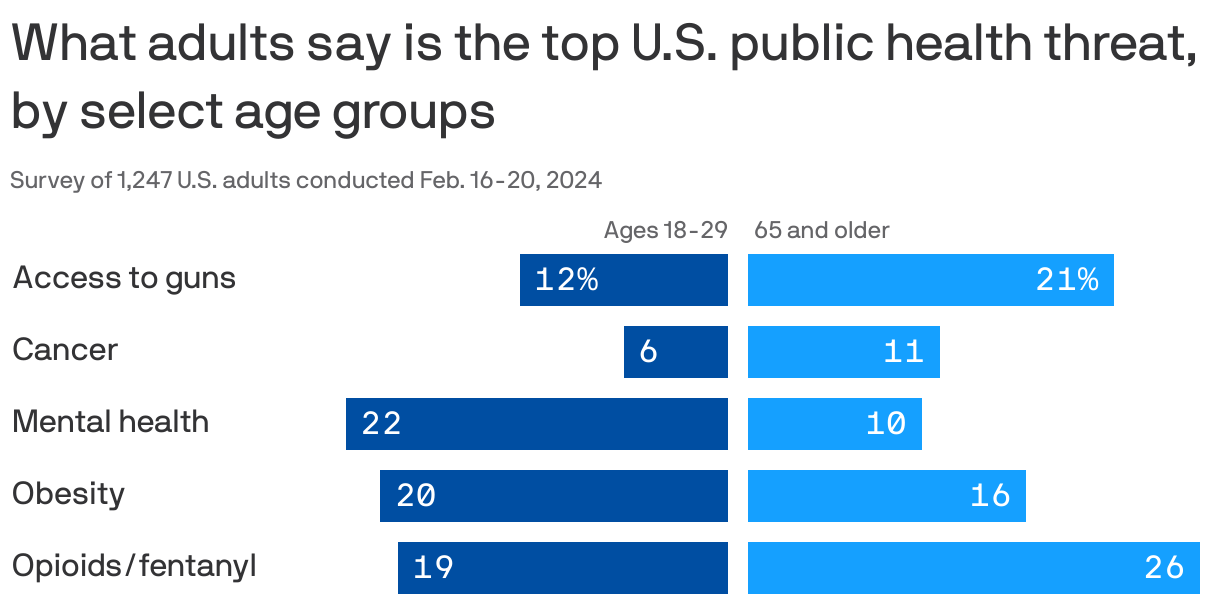
Americans see poor mental health as one of the biggest threats to public health, ranking just behind obesity and the long-running opioid epidemic, according to the latest Axios-Ipsos American Health Index.
The big picture: Almost 9 out of 10 people say their own emotional wellbeing is very or somewhat good, but they view mental health issues as a serious societal threat that now outranks access to firearms, cancer or COVID-19.
Health care's big burnout problem is significantly worse for women working in the field than men, according to a new comprehensive review of research on health care worker wellbeing.
Why it matters: Burnout pushes some exhausted health care workers out of the industry, and it can also increase the risk of medical errors that put patients in danger.
More than 4 in 10 Americans personally know someone who has died of an overdose, and an estimated 13% of the population have had their lives disrupted as a result, according to a new study in the American Journal of Public Health.
Why it matters: With more than 100,000 people dying from overdoses a year, America's drug crisis has undeniably altered millions of lives. But the study suggests that the epidemic's reach into American life has, if anything, been underestimated.
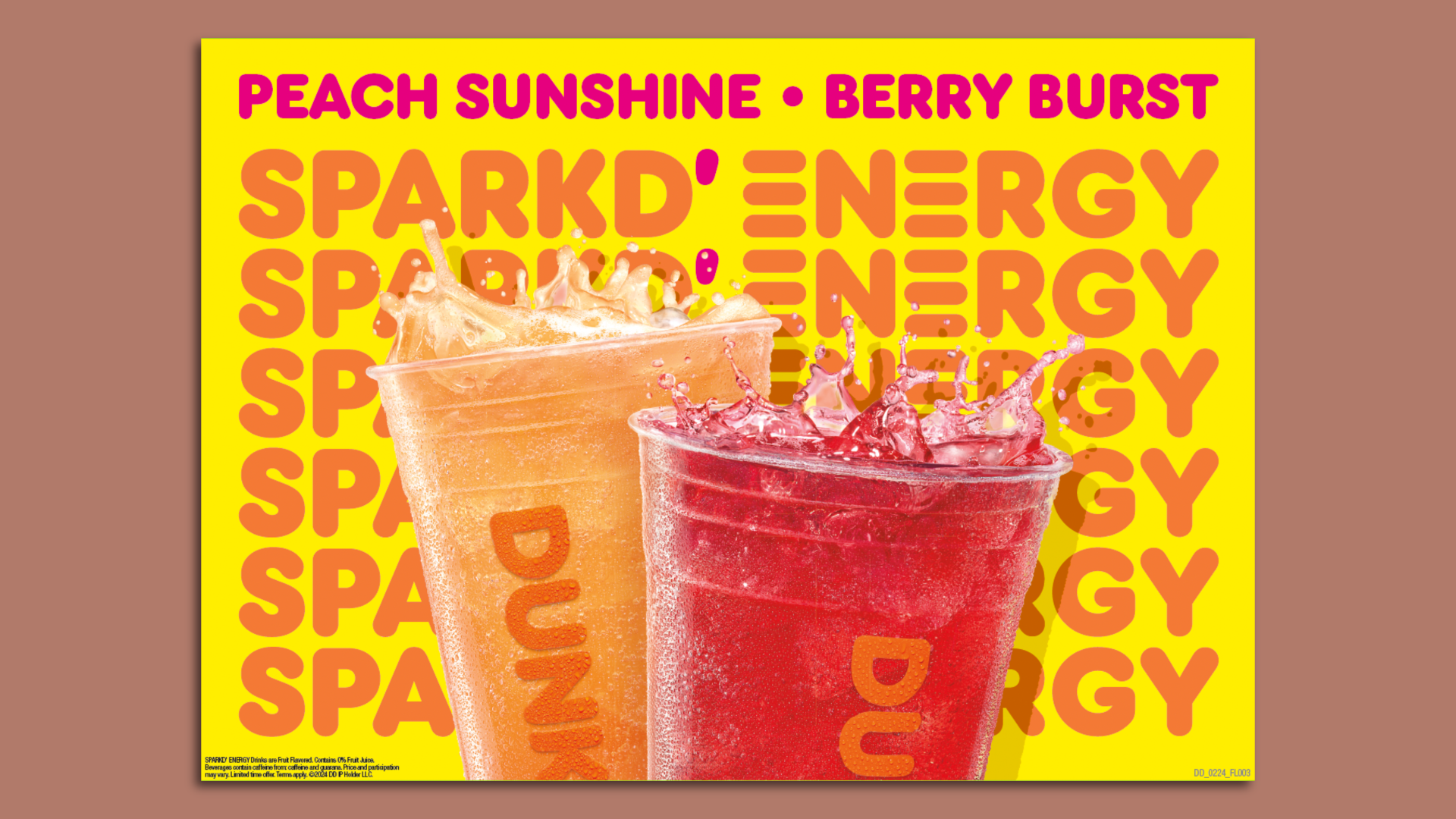
Dunkin' has introduced new fruit-flavored energy drinks that contain slightly less caffeine than Panera Bread's Charged Lemonades, which led to lawsuits over customer deaths.
Why it matters: Heavily caffeinated beverages like energy drinks are growing in popularity but can carry health risks.