Doctors and patientsare alreadyrethinking fertility treatments after the Alabama Supreme Court ruled last week that frozen embryos should receive legal protections as "unborn life."
Driving the news: The University of Alabama at Birmingham paused in vitro fertilization treatments, citing "the potential that our patients and our physicians could be prosecuted criminally or face punitive damages for following the standard of care."
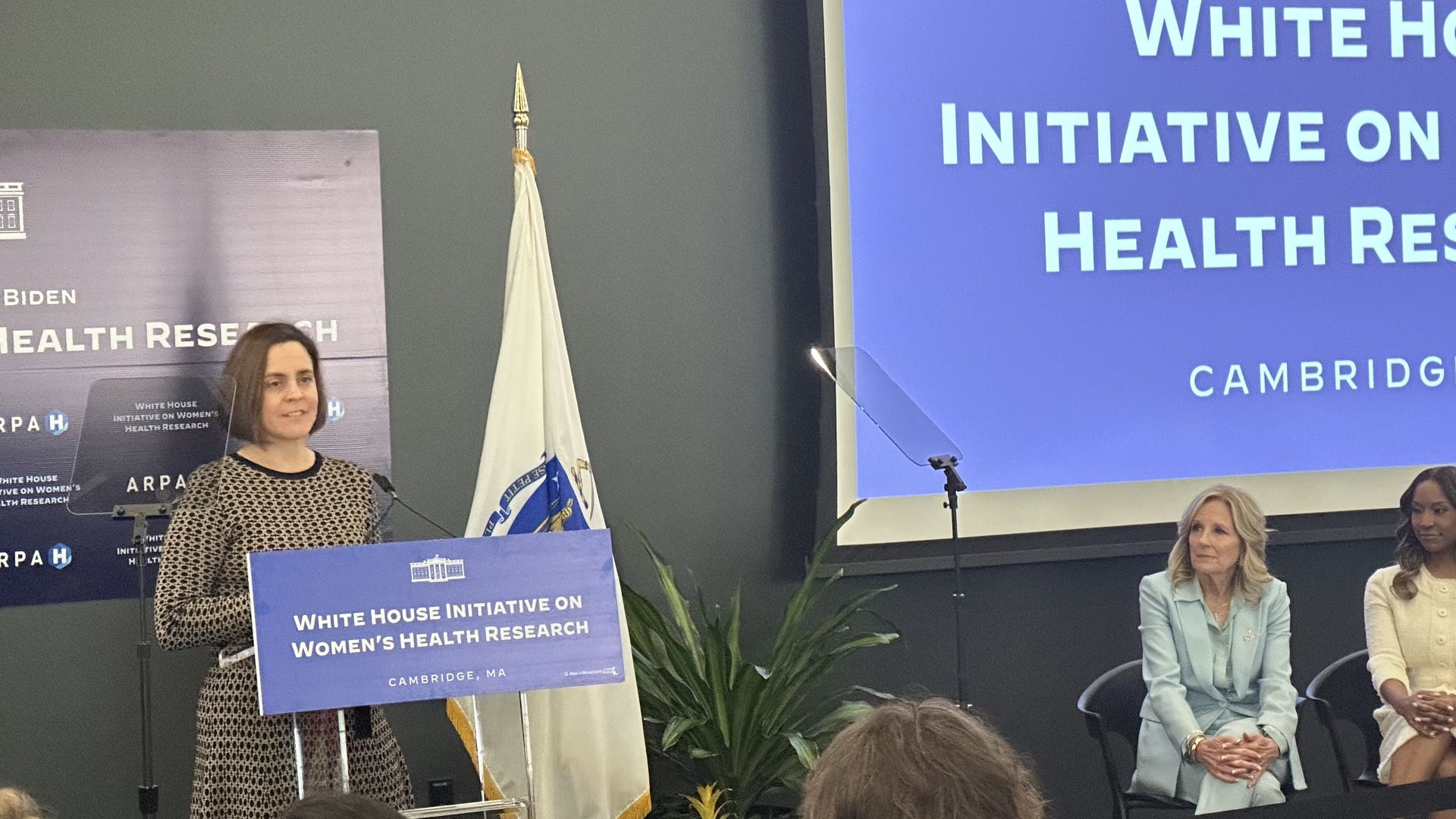
The Biden administration pledged to invest $100 million for women's health research, First Lady Jill Biden announced Wednesday.
Why it matters: The investment is part of federal efforts to close gender gaps in research, which supporters say have led to insufficient funding for endometriosis, MS and other conditions that disproportionately affect women.
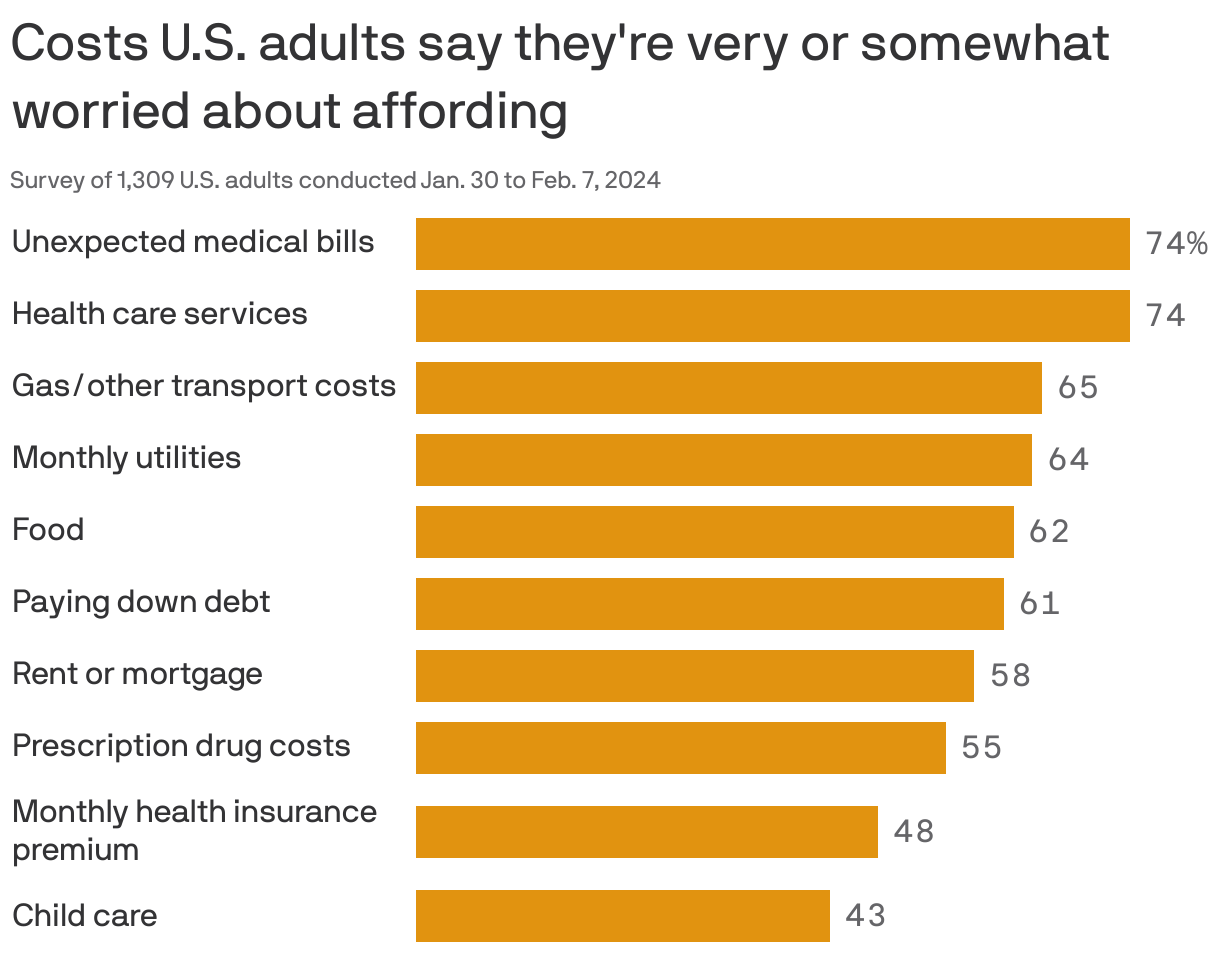
Data: KFF; Note: A subset of 1,175 respondents with health insurance were asked about their worries with affording monthly health insurance premium; Chart: Axios Visuals
The ability to cover an unexpected medical bill or the cost of health care services tops U.S. adults' financial concerns, outranking worries over routine costs.
The big picture: That's according to a new KFF poll that also finds about half of voters say health care costs are a major reason for their negative view of the economy, though bigger factors were everyday expenses, inflation and housing costs.
A new class of cancer treatmentsthat harness the body's immune system to fight tumors is being hailed as the biggest thing in oncology since CAR-T revealed the promise of cell therapy more than a decade ago.
But with price tags of hundreds of thousands of dollars, the drugs raise familiar concerns about affordability and access.
Millions of childhood asthma attacks would be avoided and hundreds of infant lives saved by 2050 if the U.S. transitioned entirely to electric vehicles (EVs) powered by renewable energy, according to new research from the American Lung Association (ALA).
Why it matters: Children are especially vulnerable to air pollution and the effects of climate change because their bodies are still developing and they typically spend more time outdoors than adults, according to the ALA.
The amount of in-network care patients received across different specialties and settings jumped significantly as surprise billing protections took effect, according to a FAIR Health analysis shared first with Axios.
Why it matters: The federal No Surprises Act, which shields insured patients from large unexpected medical bills from out-of-network providers, and similar efforts may have also resulted in more providers becoming part of insurers' networks, the data suggests.
Why it matters: The virus is considered the second leading cause of death worldwide during the first year of a child's life. The data suggests demand was strong despite broader vaccine skepticism and the potential for confusion over more childhood immunization options.
A year after former President Carter entered hospice care at home, his experience has shined a spotlight on lengthy stays in the end-of-life treatment option.
The big picture: Hospice care is linked to increased patient and family satisfaction, and there's even evidence it canextend life expectancy. But long stays have also been associated with fraud.
Alabama's Supreme Court threw a new wrinkle into the post-Roe reproductive health landscape, ruling late last week that frozen embryos created through in vitro fertilization are children under state law.
Why it matters: How states define unborn human beings could determine access to assisted reproductive care and has big implications for IVF clinics, which could be held liable for discarding surplus embryos.