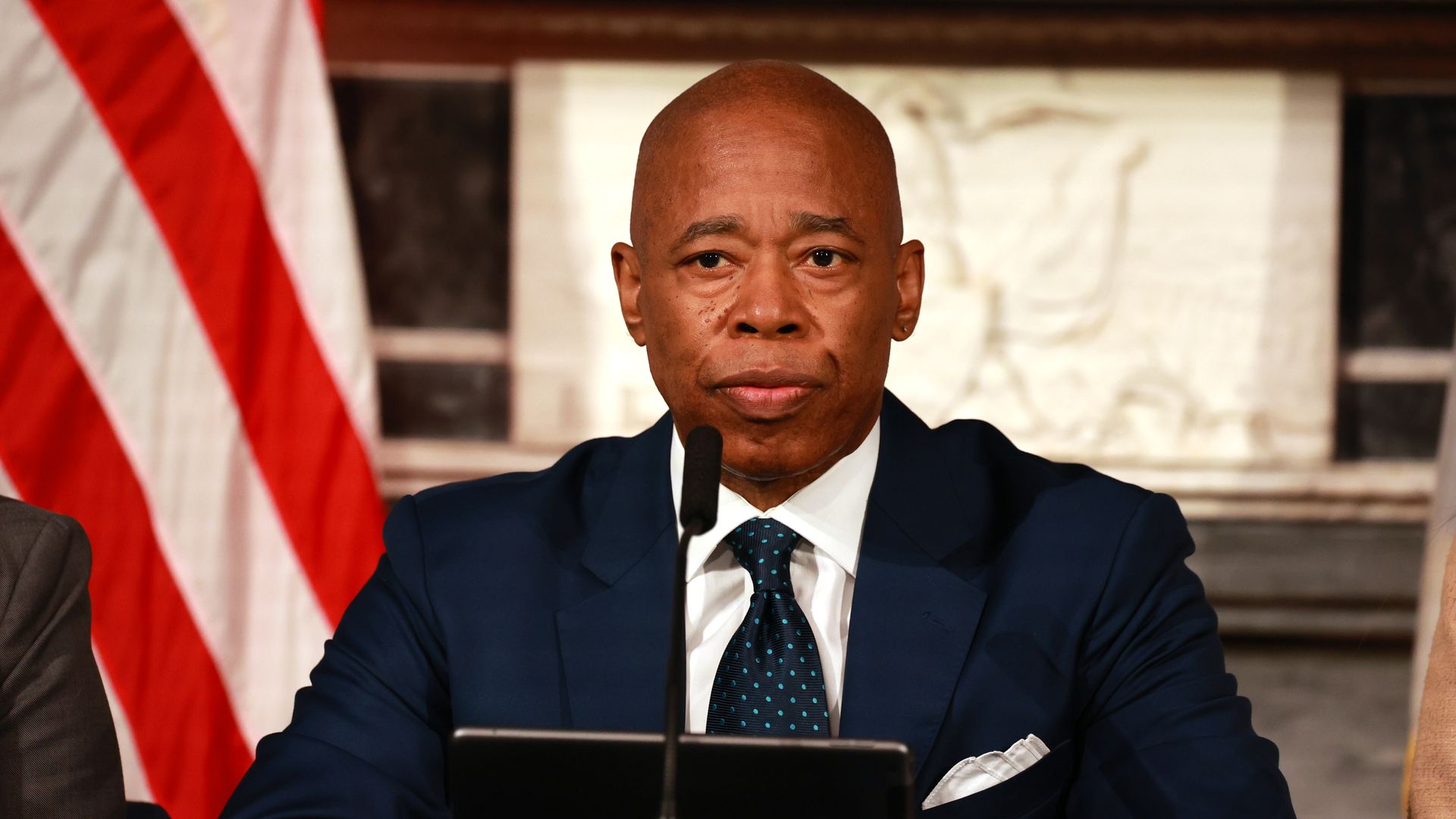
New York City declared Wednesday that it's the first city to issue an advisory officially designating social media as an environmental toxin.
Driving the news: In response to the danger social media poses to the mental health of young people, the city's Department of Health and Mental Hygiene issued an advisory identifying unrestricted access to and use of social media as a public health hazard.
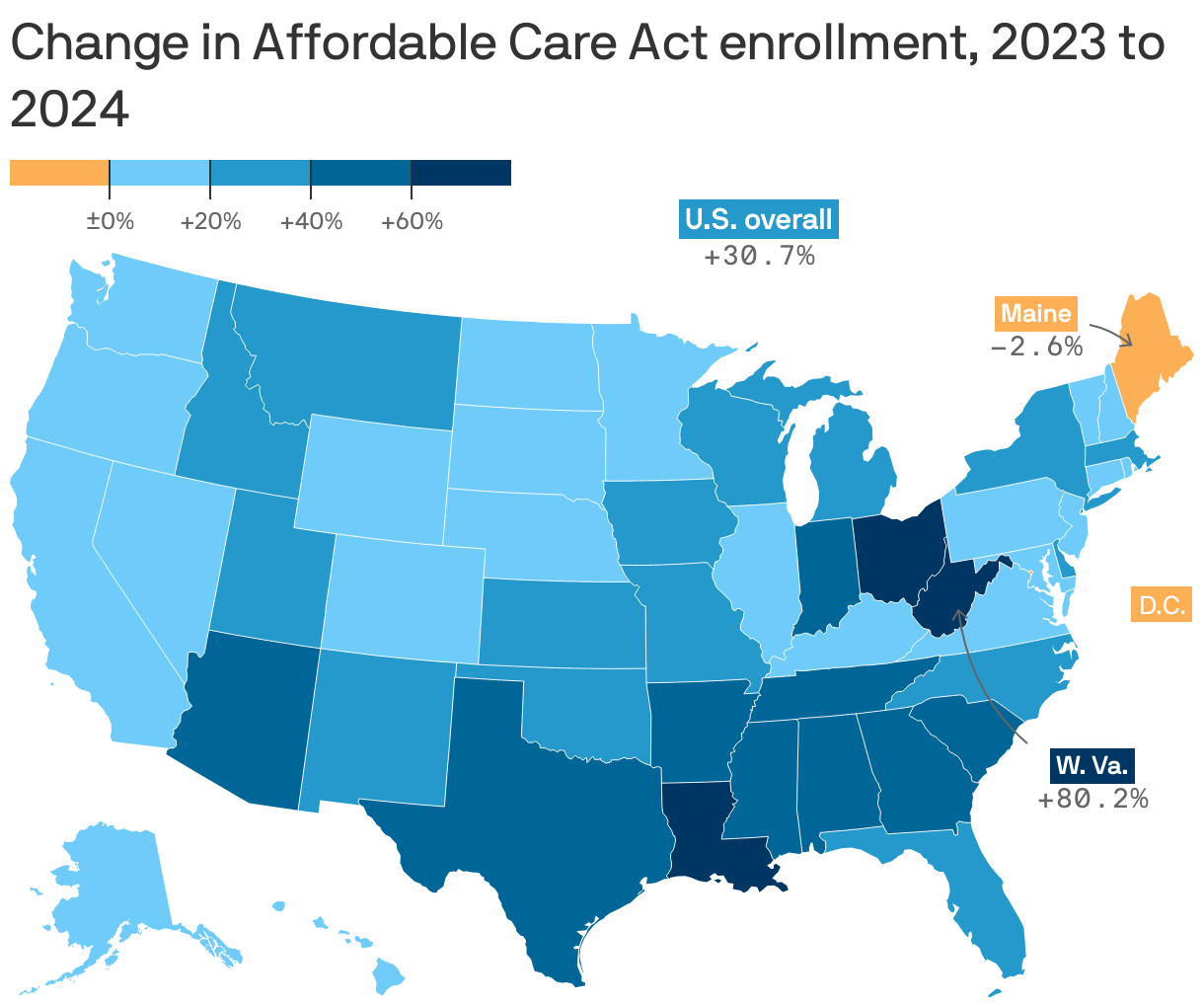
Data: Centers for Medicare and Medicaid Services; Map: Axios Visuals
A record 21.3 million people signed up for health insurance on the Affordable Care Act marketplaces this year, with the largest enrollment increases tallied in red states.
Why it matters: The 30.7% annual increase in ACA sign-ups comes as former President Trump's renewed calls for repeal have again raised doubts about the law's future.
More than 64,500 pregnancies have resulted from rape in the 14 states that banned abortion since Roe v. Wade was overturned, with the vast majority occurring in states that don't make exceptions for rape, researchers estimated today in a leading medical journal.
The big picture: The projection in JAMA Internal Medicine aims to shed light on the frequency of these pregnancies at a time when exceptions for rape loom large in abortion debates.
Republican-controlled states are making a fresh push to tie employment to Medicaid eligibility ahead of a presidential election that could usher in a new administration receptive to the idea.
Why it matters: Rules requiring some low-income adults to work, attend school or volunteer as a condition of coverage could force more people off the Medicaid rolls at a time when millions have been dropped from the program following the expiration of pandemic-era coverage protections.
Nearly 80% of health care providers say it's important for their hospital to minimize its environmental impact, according to a large new Commonwealth Fund survey of clinicians.
Why it matters: Health care accounts for 8.5% of U.S. greenhouse gas emissions, with hospitals responsible for the largest portion of those emissions.
Most patients on a new class of anti-obesity medications kept at least some of the weight off up to a year after they stopped taking the medication, according to new data from Epic Research.
Why it matters: This appears to contradict previous studies that have indicated patients on drugs known as GLP-1 agonists need to stay on themto keep the weight off.
The surge of health care dealmaking continued Tuesday as Sanofi announced it would buy the San Diego-based biotech Inhibrx and spin off most of its assets into a new company in a transaction worth as much as $2.2 billion.
Why it matters: Stabilizing interest rates, patent cliffs and the need to replenish pipelines have created an environment for more drugmaker consolidation.
The Biden administration told the U.S. Supreme Court Tuesday that a lower court's decision to curtail the widely used abortion pill mifepristone would have "disruptive consequences" for women and the FDA if it's allowed to stand.
The big picture: The Supreme Court has agreed to review the New Orleans-based federal appeals court's ruling — setting the stage for another significant abortion case following its June 2022 decision to end federal abortion protections and overturn Roe v. Wade.
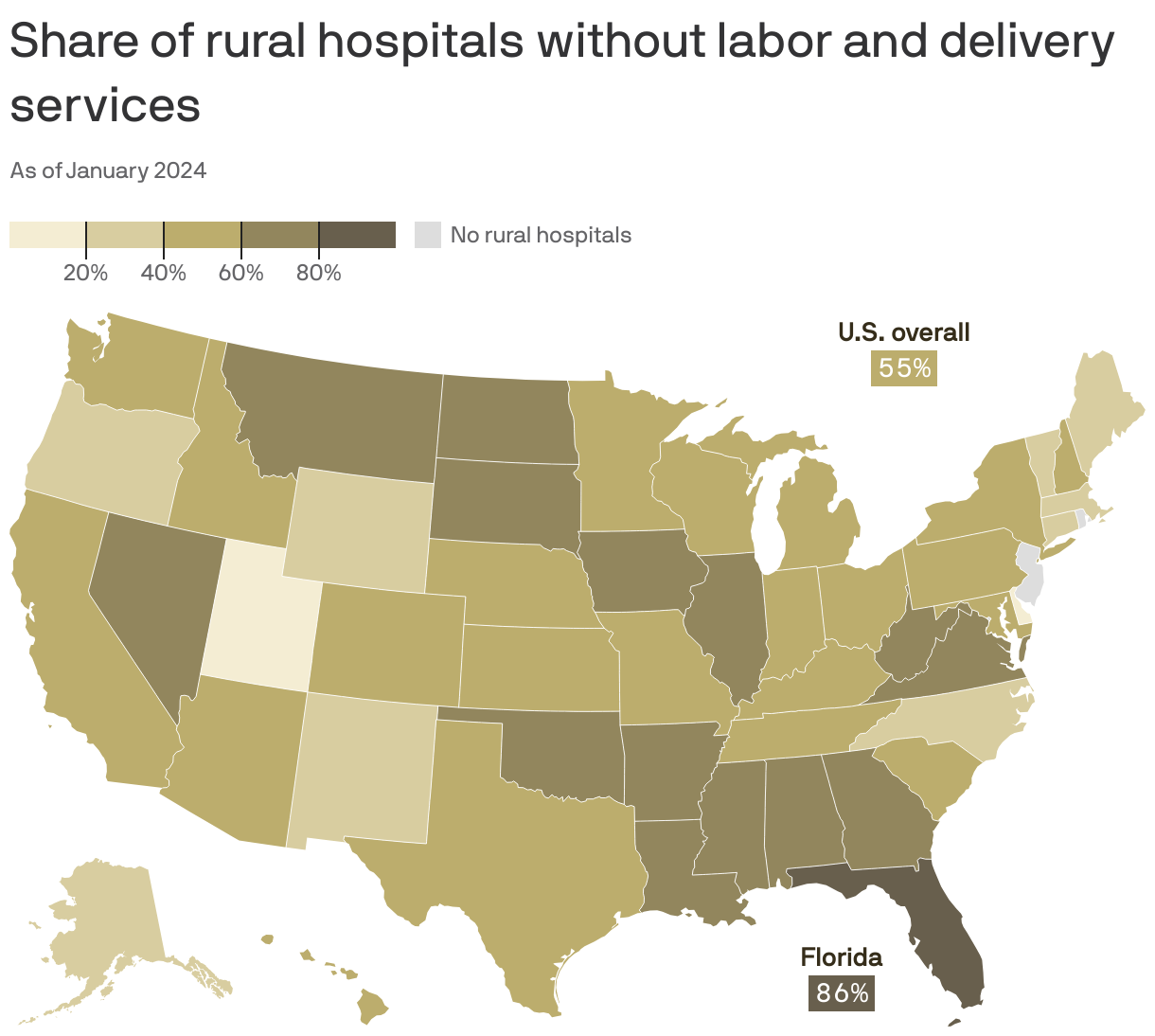
Data: Center for Healthcare Quality and Payment Reform; Map: Axios Visuals
More than half (55%) of the nation's rural hospitals don't offer maternity care, as challenging economics and labor shortages force more rural facilities to stop providing labor and delivery services.
The big picture: Hospitals have been increasingly scaling back or cutting maternity services for financial reasons — while demand for obstetrics care rises as more states ban abortion.
A New York City plan to buy up medical debt for up to a half-million low- and middle-income residents could erase over $2 billion in medical bills, city officials said.
Why it matters: It marks the largest municipal effort yet to wipe out medical debt, a leading cause of personal bankruptcy and a threat to people's health.
Details: New York is investing $18 million over three years in a partnership with the nonprofit RIP Medical Debt, which buys up medical debt in bulk on the cheap.
There's no application process — residents will be told if their debt has been paid off.
The big picture: Thefederal government has taken steps to erase medical debt from credit scores, while states have sought other measures to ease the financial burden.
But a growing number of cities and counties are simply wiping the slate clean for some residents struggling with medical bills.
Among those that have leveraged federal pandemic relief funds to erase medical debt are Illinois' Cook County (which has eliminated $281 million for nearly 160,000 people), New Orleans and St. Paul.
Los Angeles County, the nation's most populated, is weighing a plan to eliminate over $2 billion in medical debt.
A county report last summer found that about 810,000 residents have medical debt, with disproportionate impacts on lower-income and minority residents.
An unusual bipartisan coalition of lawmakers is teaming up on drug pricing legislation, proving the issue may defy election-year partisanship as health care costs remain a top voter concern.
Why it matters: The effort highlights the increased scrutiny some influential Republicans are giving an industry the GOP has long allied itself with.