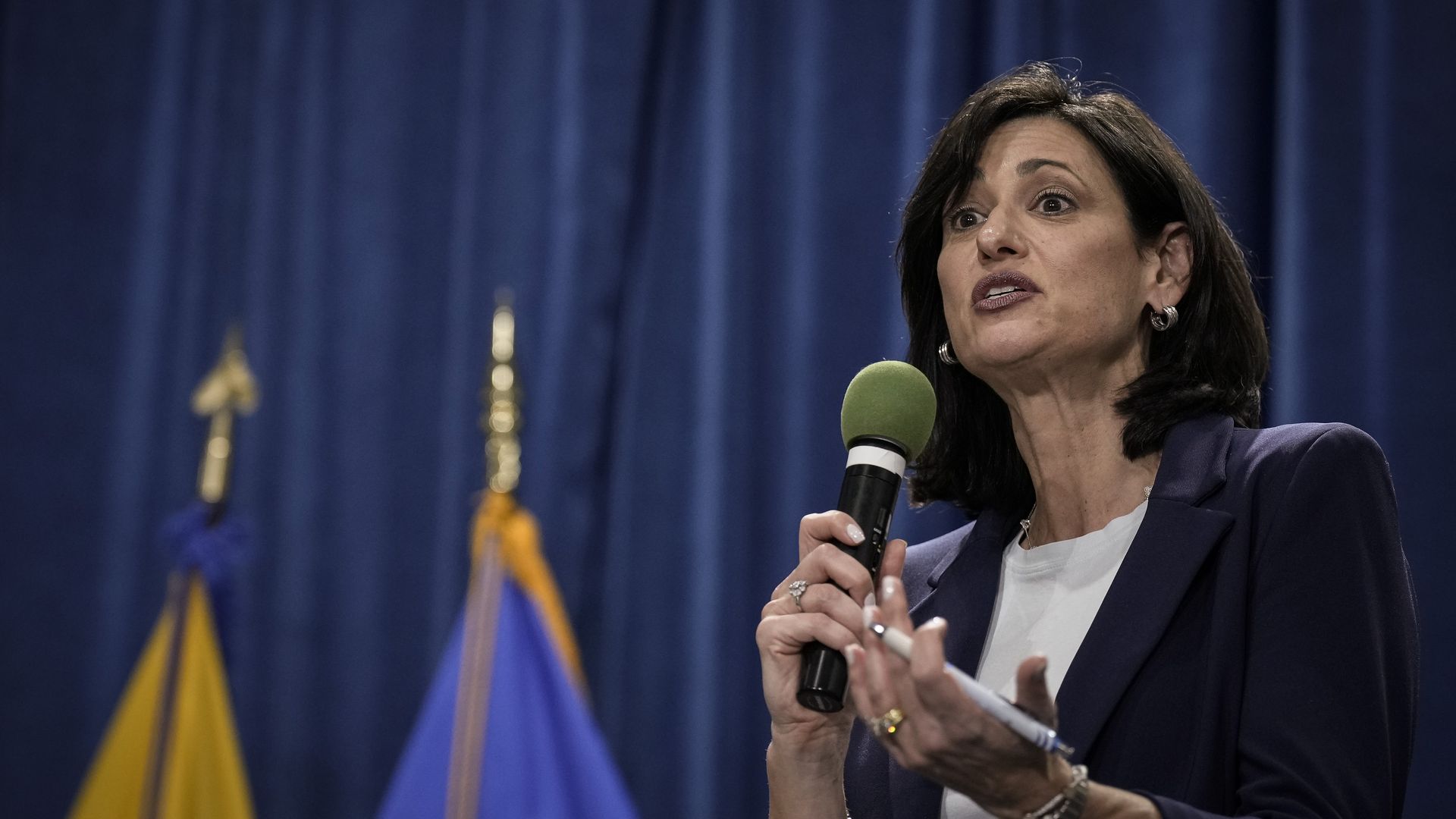
Six months into an overhaul of the Centers for Disease Control, director Rochelle Walensky said Thursday the agency has made strides releasing timely data and retraining staff to ensure a nimble response to future crises.
Why it matters: The CDC drew fire for its disjointed response and messaging missteps during the pandemic. Walensky owned up to some shortcomings — including issues with the agency's culture — but said Congress also needs to give the agency more authority in areas like compelling data sharing from states.
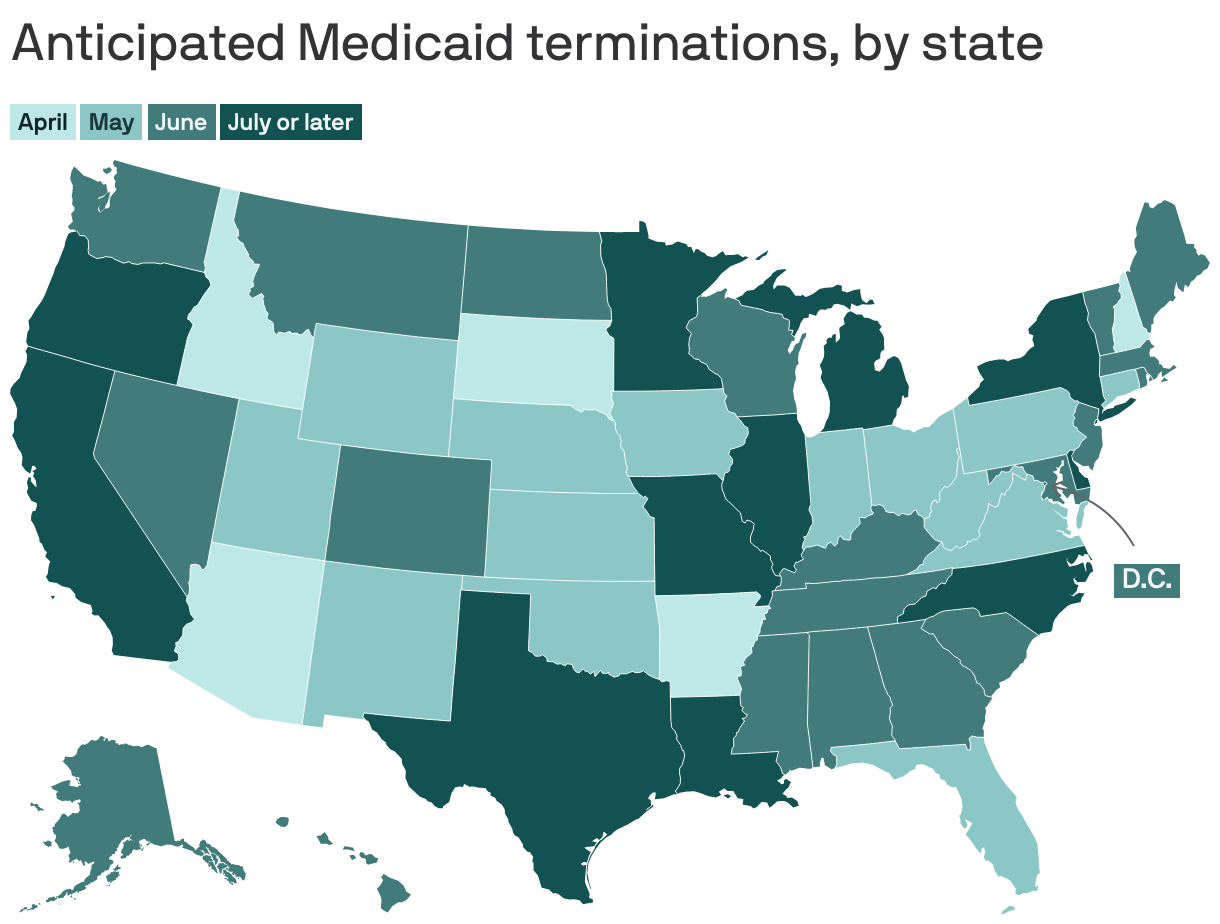
Data: Center for Medicare and Medicaid Services; Chart: Tory Lysik/Axios Visuals
Thousands of Pacific Islanders who went years without promised Medicaid coverage before Congress made amends during the pandemic could lose those benefits this spring in the first wave of eligibility redeterminations.
Why it matters: States are culling their Medicaid rolls with the end of the COVID-19 emergency, removing guarantees of continuous coverage that reduced health inequities in ways obvious and not-so-obvious.
The Food and Drug Administration's attempts to manage the overdose crisis by reining in on the use of narcotics are weighing on patients with chronic pain, who say the result has been harder-to-fill prescriptions and heightened withdrawal and suicide risks.
The big picture: The FDA for years grappled with criticism it helped fuel the opioid epidemic by approving products like OxyContin and a tablet 1,000 times more powerful than morphine.
Now, patient groups are concerned the agency is proposing a large study of opioids' long-term effectiveness in treating chronic pain without enough of their input.
Addiction experts say its clinical trialdesign could be tilted toward benefitingmanufacturers.
Driving the news: FDA outside advisers this week slammed the agency's proposal and, without a vote, recommended the agency reconsider pursuing the study.
Pain care specialists criticized how the plan wouldn't address addiction potential or improve care for the millions of Americans managing chronic pain.
The National Council of Independent Living, a disability rights organization, also noted that these decisions are being made and discussed without patients involved.
The nine-hour meeting on Wednesday came a week after the FDA announced it's now requiring both instant and extended-release opioid pain medicines to carry warnings about overdose risk and potential for increased sensitivity to pain.
Details: The study’s design would have participants shifted from prescription opioids to extended-release morphine while a randomly selected group would be switched to a placebo without being told.
There would then be an eight-week period where the placebo group would be weaned off opioids — a factor agency officials acknowledged could result in high dropout rates and challenges in recruitment.
Diana Zuckerman, president of the National Center for Health Research, questioned the ethics behind the FDA's proposal during public comment, saying that, "In addition to withdrawal, won't that potentially make them even more desperate and more reliant on opioids?"
Andrew Kolodny, medical director of the Opioid Policy Research Collaborative, asked why administering non-opioid alternatives wasn't considered.
"Wasn't it the practice of switching patients from [instant release] opioids to [extended release] opioids what got us into this mess in the first place?"
Between the lines: A crackdown on opioid prescribing hasn't stopped overdoses from rising in recent years as the epidemic becomes defined more by fentanyl-laced counterfeit pills than painkillers prescribed in clinical settings.
But some chronic pain patients say the agency's latest moves have made physicians more likely to deny needed pain relief out of fear of regulatory scrutiny.
In an online public comment, Earenya Chapman wrote that "this has left patients with no alternative but to suffer in silence."
The policies to limit prescribing have also led to "life-altering harms" including overdose, unemployment and death, said Theo Braddy, executive director of the National Council of Independent Living.
Some studies have found chronic patients may have an elevated suicide risk following discontinuation of opioid therapy.
The bottom line: The U.S. continues to grapple with how to slow the addiction crisis while helping millions of Americans with conditions causing chronic pain, leaving both public health issues at risk of getting worse.
The UN children's agency is raising the alarm on what it says are worrying signs in the global effort to vaccinate every child.
The big picture: Public perception of the importance of childhood vaccines declined during the pandemic in more than 50 countries, including the United States, UNICEF said in a report published on Wednesday.
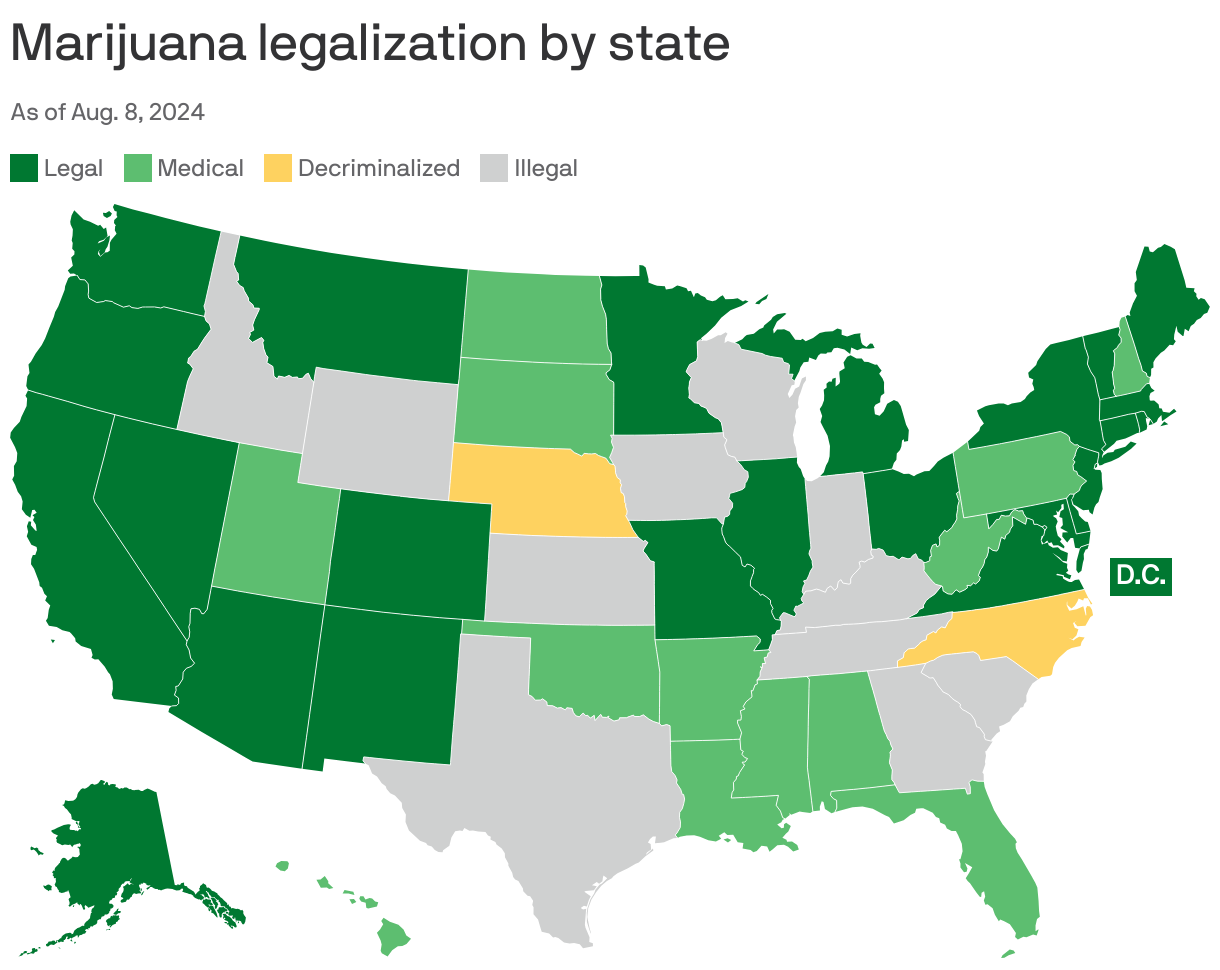
Note: Some states categorized as illegal permit CBD for medical use. Data: DISA; Chart: Axios Visuals
Cannabis aficionados in 20-plus states and Washington, D.C., will be able to buy marijuana legally for Thursday's high-flying informal holiday known as 4/20. Medicinal use is legal in 38 states.
Why it matters: The legalized marijuana market is worth $64 billion, nearly tripling over the last three years as legalization efforts swept the nation, a Coresight Research report found.
Pharmaceutical companies that fought drug pricing reforms Congress passed as part of the Inflation Reduction Act are now weighing a legal challenge as the Biden administration sets about implementing the policy.
"I don't think we've made any decisions at this time, but it's certainly something we're looking into," Lori Reilly, the Pharmaceutical Research and Manufacturers of America's chief operating officer, said during a Wednesday meeting with reporters.
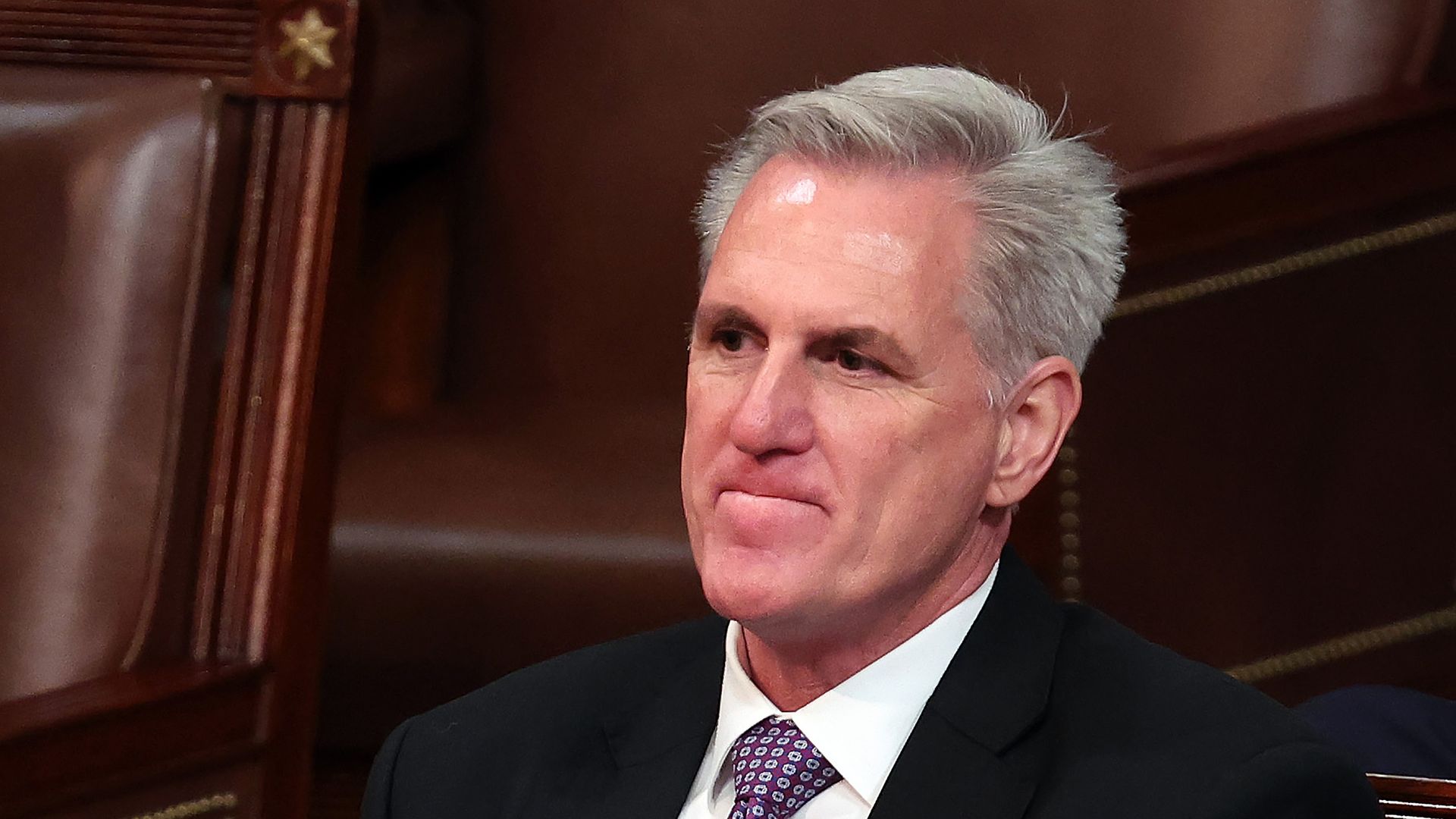
House Speaker Kevin McCarthy released a long-awaited plan for raising the debt ceiling Wednesday, and it includes Medicaid work requirements.
The measure would require Medicaid recipients to work 80 hours per month. There are a number of exceptions, though, including for people with dependent children, those under age 19 or 56 or over, or individuals enrolled in an educational program.
More red states are moving to decriminalize test strips used to detect fentanyl in illicit orcounterfeit drugs as the substance becomes a leading killer of adults under 50.
Why it matters: The paper strips can reducefatal overdoses, especially in instances when people unknowingly consume fentanyl-laced pills that look like prescription drugs.