When is it acceptable for a hospital to send debt collectors after low-income patients? The answer should be "never," argues a new article published in JAMA Health Forum.
Why it matters: Health systems around the country — particularly nonprofits — have come under fire in recent years for aggressively pursuing debt collections, and even suing, patients who can't pay their bills.
Health industries' spending on federal lobbying rose 70% from 2000 to 2020, largely driven by drug and device makers and activities surrounding the Affordable Care Act, according to new research in JAMA Health Forum.
Why it matters: A small number of firms spent disproportionate sums on lobbying, which researchers said could lead to some constituencies being underrepresented in policymaking.
Hospitals are pleading with Congress to postpone looming Medicare pay cuts, citing what they say has been an extraordinarily difficult year. But that unified message belies the fact that hospitals' financial situations vary significantly, and experts say some facilities would be just fine without lawmakers' help.
Why it matters: The industry has not been scrutinized as much as other health groups, despite being the primary driver of rising medical costs. But if Congress does play hardball in the coming months, it could deal a crippling blow to some facilities or create warped financial incentives for others.
Arizona's near total ban on abortions won't be enforced until at least 2023 after the state's attorney general reached an agreement with abortion rights groups, allowing for abortions to resume in the state Thursday, per Bloomberg Law.
Driving the news: Brittany Fonteno, who heads Planned Parenthood Arizona, said at a news conference that abortion services would restart at the group's clinics across the state following the agreement in response to an appeals court ruling earlier this month blocking the enforcement of a 158-year-old abortion ban
Why it matters: You already know workforce retention and burnout have been a huge problem across every segment of health care — particularly amid the great resignation and the stressors of the pandemic.
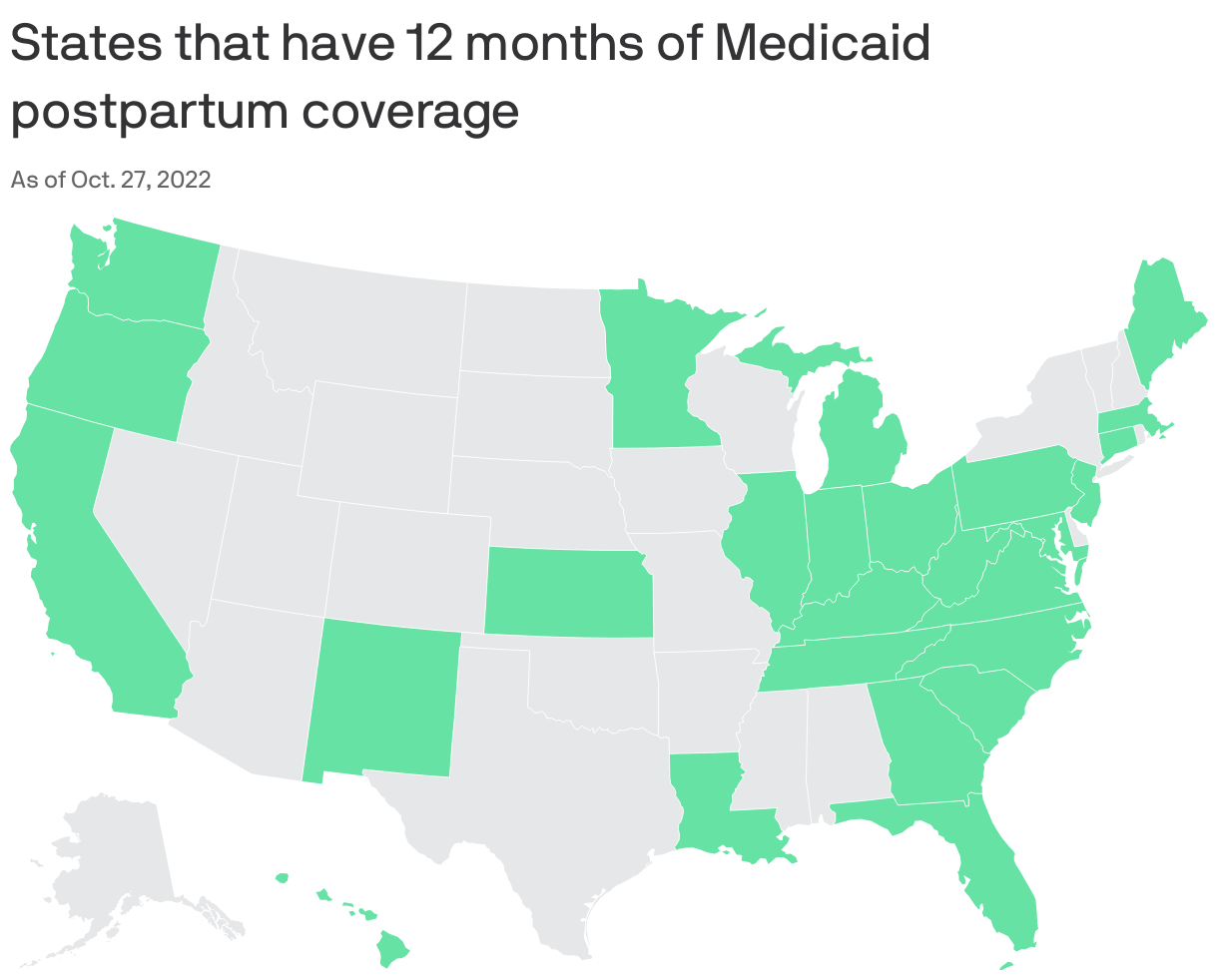
Data: U.S. Department of Health and Human Services; Map: Madison Dong
More than half of the states have now expanded their Medicaid postpartum coverage from the federally mandated 60 days to one year, the Department of Health and Human Services confirmed to Axios.
If you want to understand why lowering retail drug prices can be so difficult, look no further than billionaire investor Mark Cuban's online pharmacy.
What's happening: Cost Plus Drugs launched in January in a bid to offer transparent, lower drug prices. Cost Plus' direct-to-consumer model marks up drugs from cost by 15%, plus a $3 pharmacy fee, cutting wholesalers, PBMs, pharmacies and insurers out of the equation.
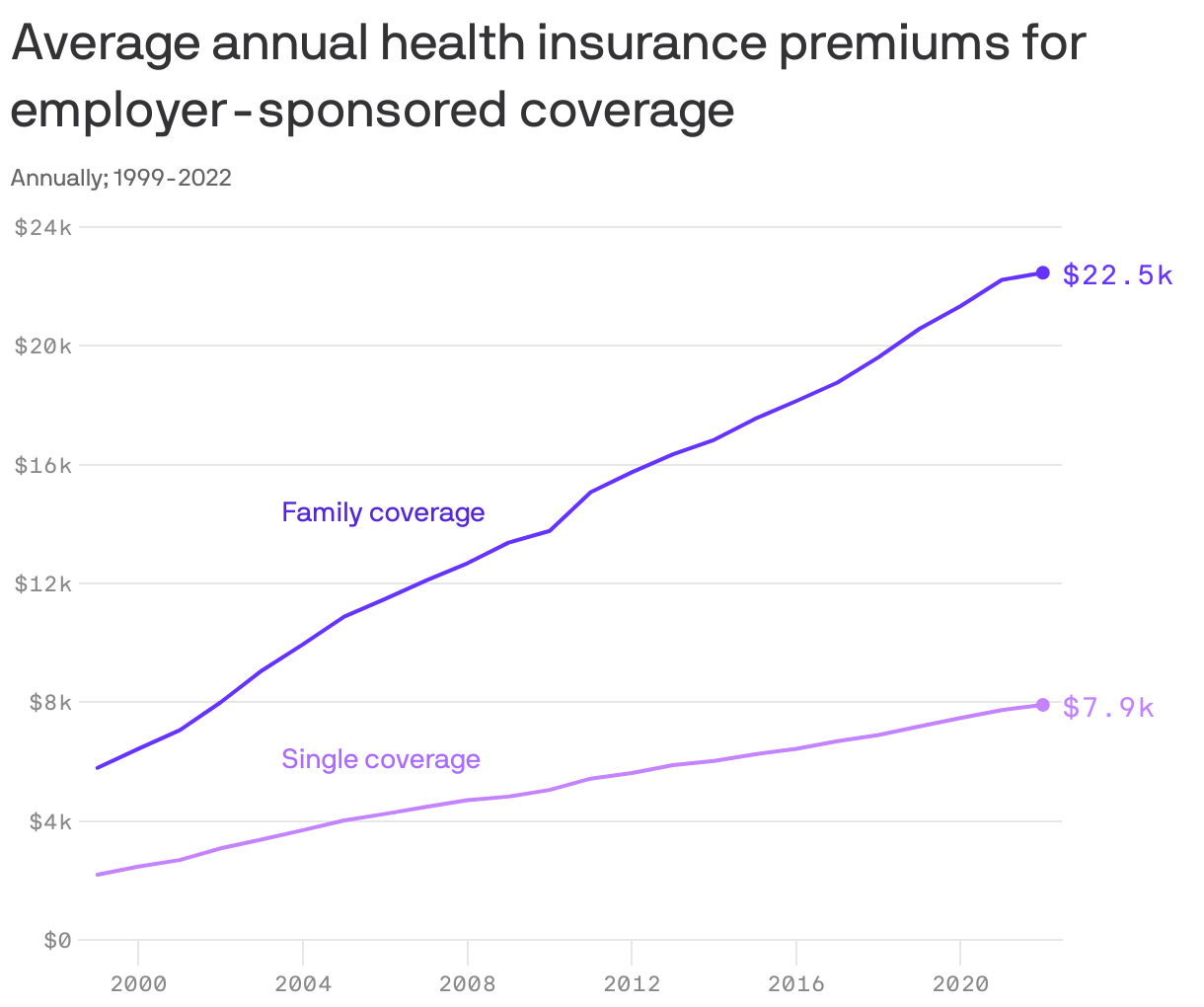
Data: Kaiser Family Foundation; Chart: Erin Davis/Axios Visuals
It cost an average of $22,463 to cover a family through employer-sponsored health insurance in 2022, according to an annual benefits survey from the Kaiser Family Foundation that found premiums remained relatively flat year-to-year while wages and inflation surged.
Why it matters: Nearly 159 million Americans get health coverage through work, and coverage costs and benefits have become a critical factor in a tight labor market.