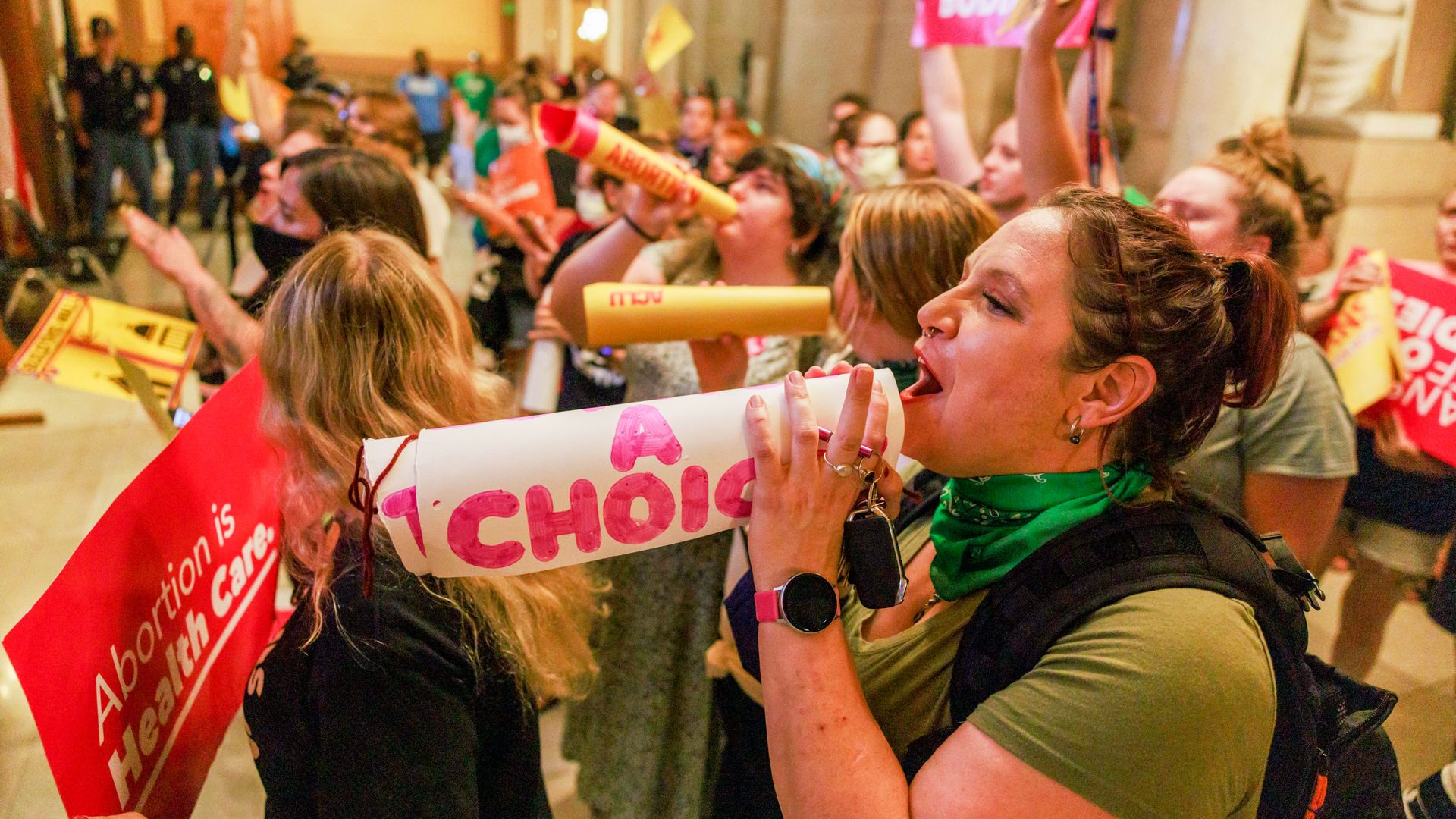
The Indiana Supreme Court on Wednesday issued an order that keeps the state's near-total abortion ban blocked while it considers the constitutionality of the law.
Why it matters: An appeals court temporarily blocked the law in September, after health providers in the state filed a lawsuit arguing that the ban violated both the Indiana Constitution's right to privacy and equal privileges protections.
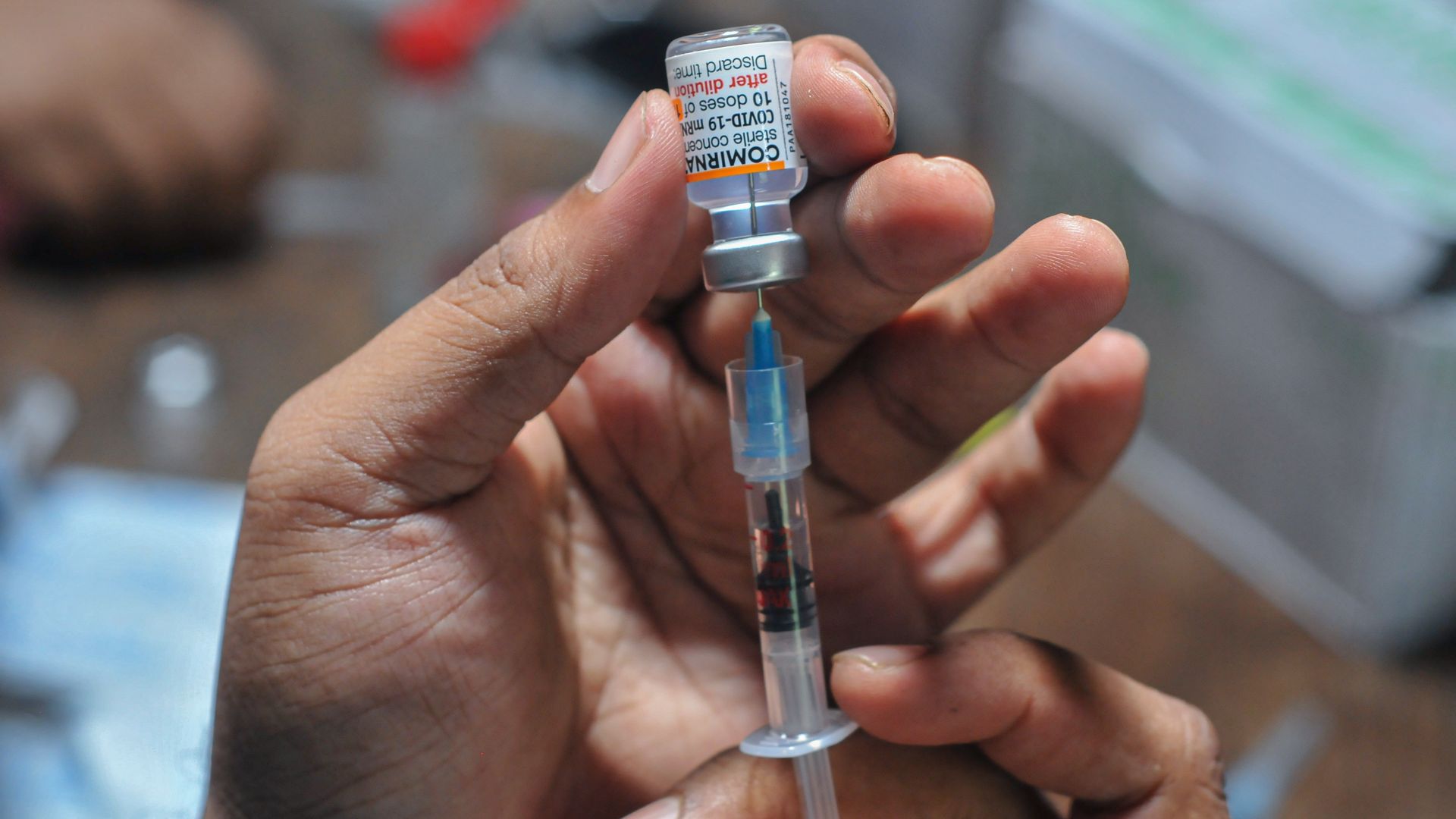
The Centers for Disease Control and Prevention on Wednesday recommended a COVID-19 vaccine booster shot for children as young as 5, aimed at the Omicron variant, hours after the Food and Drug Administration authorized the shot.
The big picture: The announcement comes as the White House continues to monitor a rise in the COVID-19 subvariants emerging and evolving throughout the world.
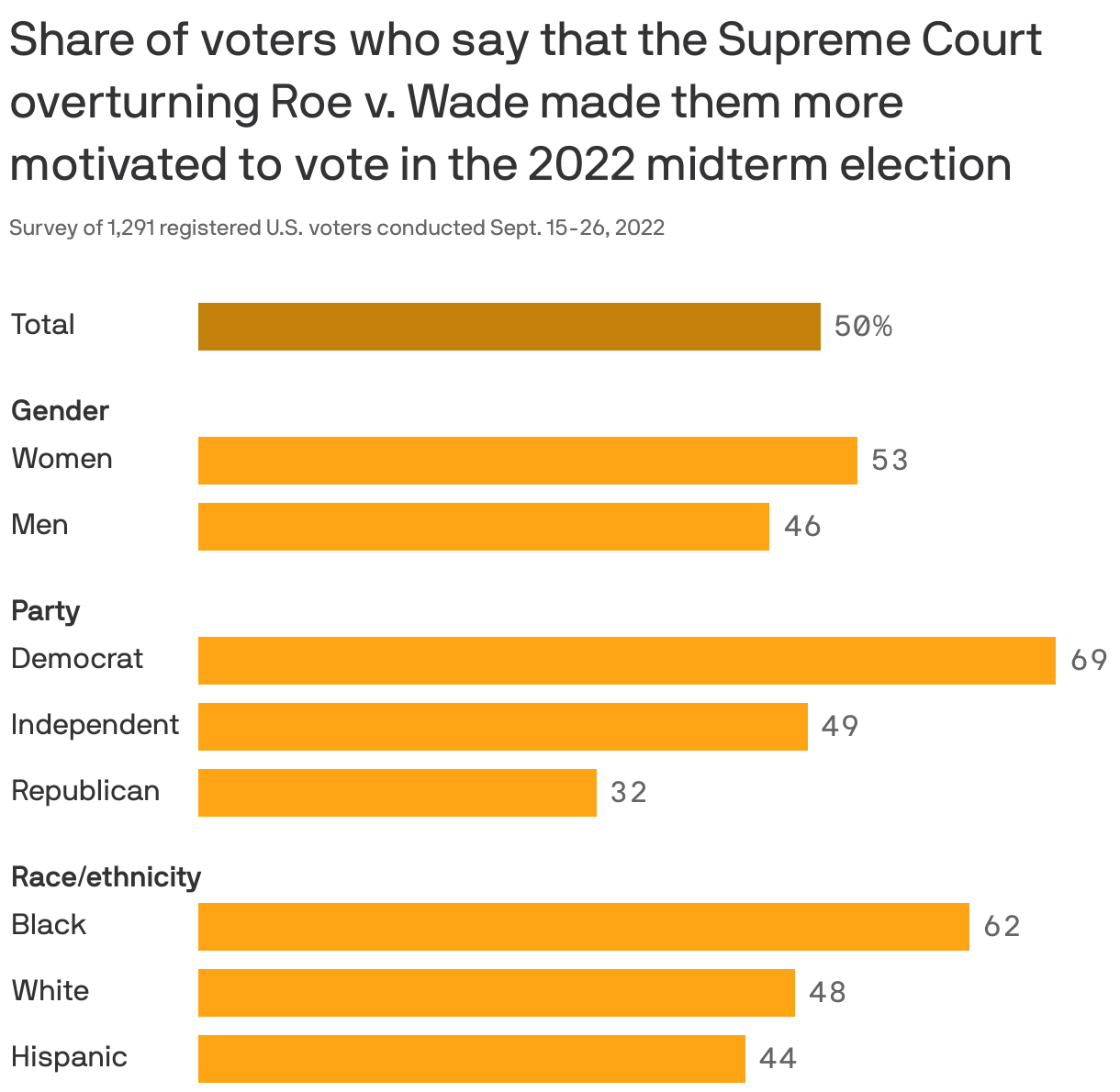
Data: KFF Health Tracking Poll; Chart: Simran Parwani/Axios
Half of all voters say that they are more motivated to cast a ballot in the midterms because of the Supreme Court's decision to overturn Roe v. Wade, according to a new Kaiser Family Foundation poll released Wednesday.
Why it matters: Three-quarters of those who say the decision is motivating them say they intend to back candidates who support abortion rights, compared to 17% who plan to vote for candidates who want to limit access.
Three disabled Medicare beneficiaries and two organizations are suing Health and Human Services Secretary Xavier Becerra, alleging he restricted the availability of home health services for individuals who need aides for short periods of time.
Why it matters: The lawsuit in U.S. District Court for the District of Columbia comes as home health agencies face looming Medicare payment cuts that the providers say will reduce the number of visits for some patients, or result in the loss of care entirely.
Employers grappling with surging health care costs are embracing new tech-driven care arrangements and alternative payment models to cushion the financial blow to their workers.
The big picture: Companies anticipate a median 7% increase in medical costs for next year but know passing that on to employees could be disastrous in a tight labor market, experts said.
The midlife crisis is real, new research tells us.
People in their 40s and 50s, in rich countries, are prone to a rise in suicidal thoughts, job stress, depression and alcohol dependence, according to a new paper from the National Bureau of Economic Research.
In fact, age 45 is when people reach their "maximum level of work stress," per the study.
A national task force on Tuesday recommended that children as young as eight years old be screened for anxiety, even if they don't have symptoms.
Why it matters: The panel's recommendation cited the 2018-2019 National Survey of Children's Health, which found that 7.8% of children aged 3-17 had an anxiety disorder. However, the percentage is likely to be higher after the pandemic, which has exacerbated mental health issues among children.
COVID-19 response coordinator Ashish Jha said Tuesday that the White House is monitoring "the rise of several subvariants."
Driving the news: "We are carefully monitoring the rise of several subvariants that are evolving rapidly and emerging around the world, including ones that evade some of our treatments," Jha said at a White House press briefing.
Latinos in many communities in the Southwest live in "pulmonology deserts" and have to drive up to 14 hours to access care, a new study found.
The big picture: Hispanics are more likely to develop chronic obstructive pulmonary disease (COPD) at younger ages than their non-Hispanic peers and to be diagnosed with asthma.
Private equity's reputationwhen it comes to nursing home ownership is on par with bed bugs, with President Biden even devoting a few withering lines of his most recent State of the Union address to chastise the relationship.
Why it matters: PE firms soon may be cane-deep in a bidding war for Brookdale Senior Living, one of the nation's largest overseers of senior living communities, with the ability to serve more than 60,000 residents via 674 facilities in 41 states.
This deal, if consummated, could become a new political flashpoint.
A growing number of employers are expanding health coverage to in-vitro fertilization, surrogacy and other sometimes pricey fertility services in order to compete in the tight labor market amid heightened awareness of women's health.
Why it matters: An estimated 1.1 million women left the workforce during the pandemic, accounting for more than 63% of jobs lost, per Harvard Business Review. And the overturning of Roe v. Wade has scrambled the calculus for job-based reproductive health coverage.



/2022/10/10/1665419786650.gif?w=3840)