A national task force on Tuesday recommended that children as young as eight years old be screened for anxiety, even if they don't have symptoms.
Why it matters: The panel's recommendation cited the 2018-2019 National Survey of Children's Health, which found that 7.8% of children aged 3-17 had an anxiety disorder. However, the percentage is likely to be higher after the pandemic, which has exacerbated mental health issues among children.
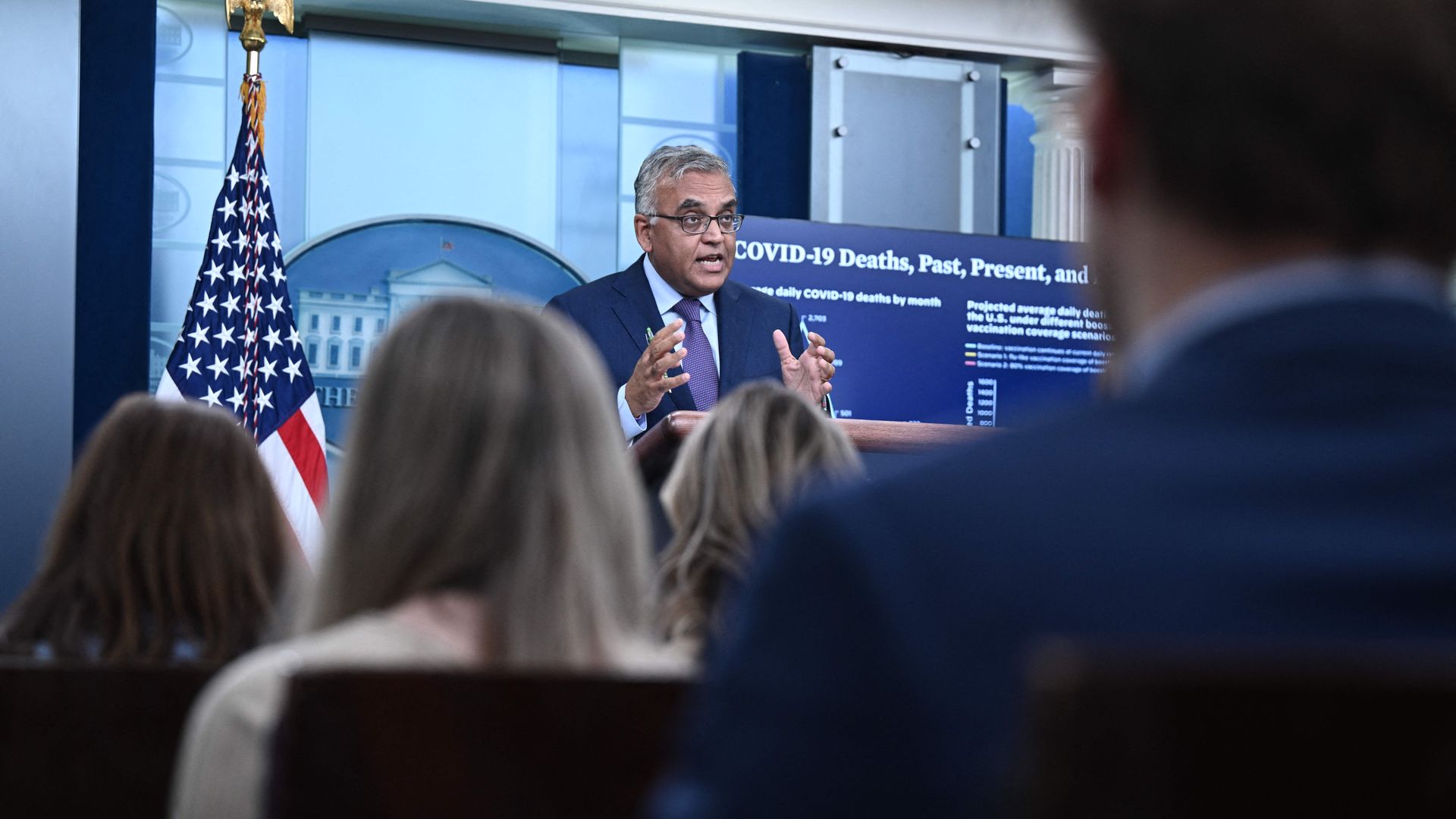
COVID-19 response coordinator Ashish Jha said Tuesday that the White House is monitoring "the rise of several subvariants."
Driving the news: "We are carefully monitoring the rise of several subvariants that are evolving rapidly and emerging around the world, including ones that evade some of our treatments," Jha said at a White House press briefing.
Latinos in many communities in the Southwest live in "pulmonology deserts" and have to drive up to 14 hours to access care, a new study found.
The big picture: Hispanics are more likely to develop chronic obstructive pulmonary disease (COPD) at younger ages than their non-Hispanic peers and to be diagnosed with asthma.
Private equity's reputationwhen it comes to nursing home ownership is on par with bed bugs, with President Biden even devoting a few withering lines of his most recent State of the Union address to chastise the relationship.
Why it matters: PE firms soon may be cane-deep in a bidding war for Brookdale Senior Living, one of the nation's largest overseers of senior living communities, with the ability to serve more than 60,000 residents via 674 facilities in 41 states.
This deal, if consummated, could become a new political flashpoint.
A growing number of employers are expanding health coverage to in-vitro fertilization, surrogacy and other sometimes pricey fertility services in order to compete in the tight labor market amid heightened awareness of women's health.
Why it matters: An estimated 1.1 million women left the workforce during the pandemic, accounting for more than 63% of jobs lost, per Harvard Business Review. And the overturning of Roe v. Wade has scrambled the calculus for job-based reproductive health coverage.