Public health messaging on both COVID and monkeypox has been too disjointed, confusing Americans on what steps they need to take to mitigate their risks.
Between the lines: Viruses often have multiple routes of transmission, and educating the public on the likeliest route to infection can be a balancing act for officials who want to cover all their bases and have to account for unknowns and public mistrust, several experts tell Axios.
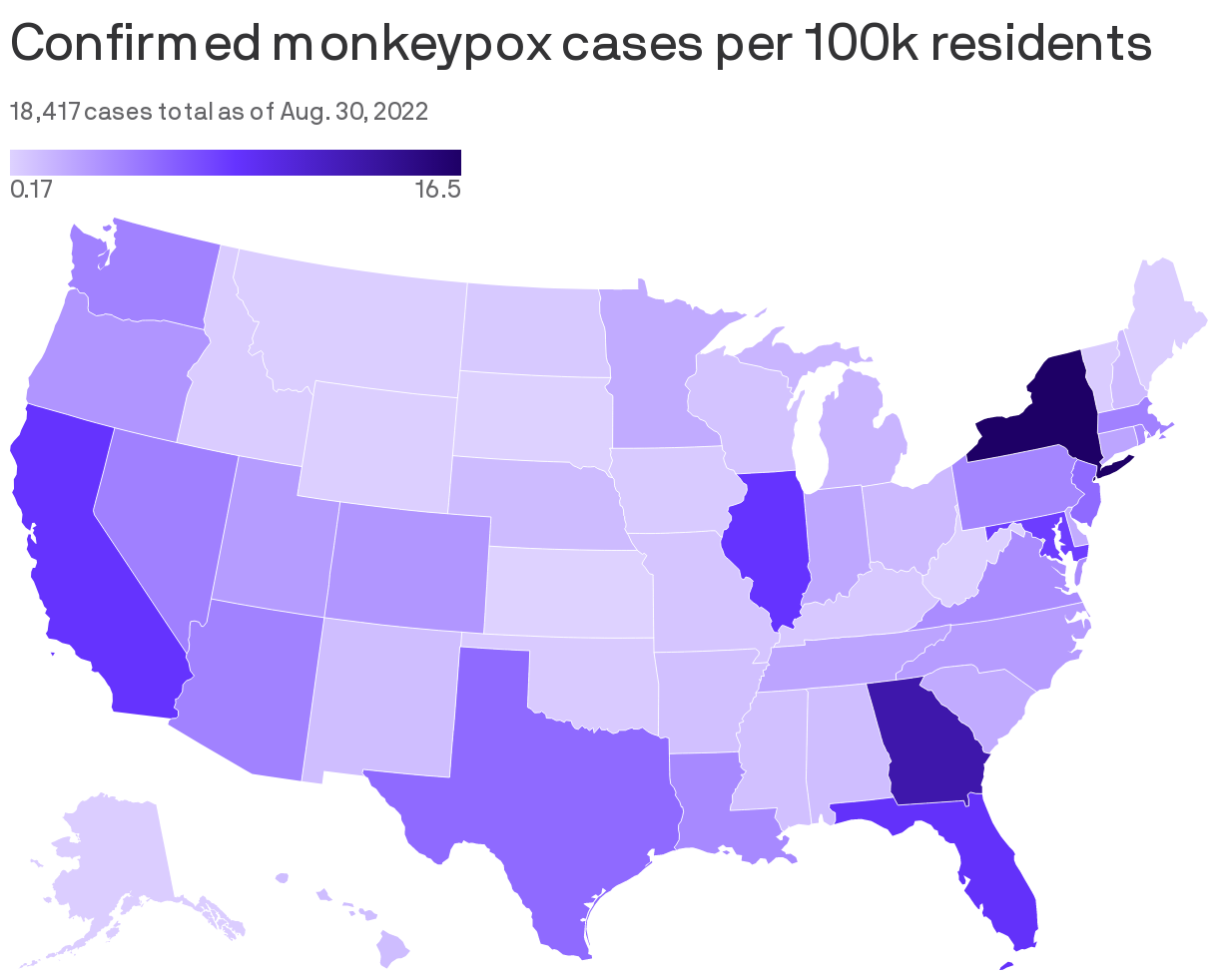
Data: CDC, U.S. Census; Chart: Erin Davis/Axios Visuals
Public health messaging around how monkeypox is and can be transmitted needs to greatly improve so that individuals can assess their own risks, several experts tell Axios.
Why it matters: There are multiple transmission routes for a virus that's now in every state and has become a public health emergency. These include close body contact, air and surfaces — but the primary route currently appears to be personal, often skin-to-skin contact.
As many as 4.1 million people may remain out of work due to long COVID symptoms, according to a new estimate from Katie Bach, a nonresident senior fellow at the Brookings Institution.
Why it matters: That figure, which incorporates four new questions about long COVID from the Census Household Pulse Survey, is more than twice an earlier estimate and could help explain the lingering labor shortages in America.
Novartis on Thursday announced plans to spin off its Sandoz generic drugs unit into a standalone company whose shares would trade in both Switzerland and the U.S.
Why it matters: This would create Europe's largest generics company by sales, and comes just a few years after Novartis spun off its Alcon eye care business (now valued at over $34 billion).
Worldwide cases of monkeypox have dropped 21% over the past week, the World Health Organization said in a report released Thursday.
Why it matters: Although the results would need to be confirmed, the latest figures could be an early signal that cases in Europe are beginning to decline, reversing weeks of rising infections, according to the report.
States that have enacted abortion restrictions or bans also have "systemic" barriers in place that impede "the health and economic security of pregnant and birthing people and their families," according to a new report from the nonpartisan and nonprofit National Partnership for Women & Families first shared with Axios.
Driving the news: The report, which comes as three states are poised to enact trigger bans, shows that gaps in policies remain.
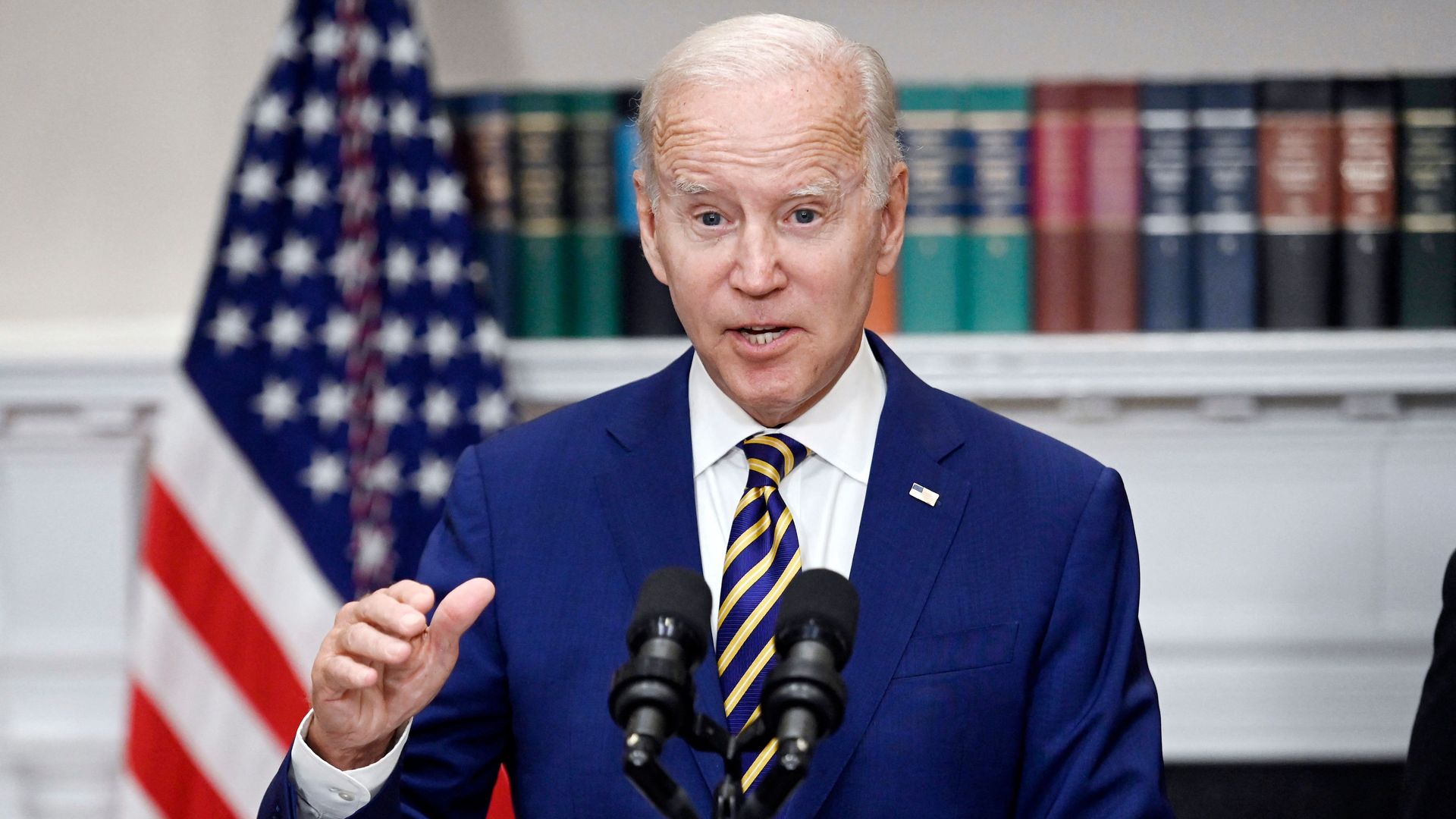
President Biden's student loan forgiveness may help medical students chip away at the mountains of debt they accumulate, especially if they still owe from their undergraduate studies.
Why it matters: Almost three quarters of all medical school students had education debt when they graduated in 2021, most of it usually tied to federal loans.
Health care prices overall may be lagging inflation, but there's a widening divergence between what's being paid in Medicare and the private sector, according to a new Altarum analysis.
Why it matters: Privately-insured Americans are about to pay more for their health care, if they aren't already.
Some of the biggest hospital chains are seeing business rebound to pre-pandemic levels, but the industry as a whole is pressing for more federal relief before year's end, citing inflation, labor and supply cost pressures.
Why it matters: Hospitals are the biggest driver of U.S. health care spending, and the pandemic has tested Washington's willingness to take on the powerful industry.