The key ingredient in magic mushrooms combined with psychotherapy resulted in "robust decreases" in heavy drinking by adults diagnosed with alcohol dependence, according to a study published in JAMA Psychiatry.
Why it matters: It's a promising development for the understanding and treatment of alcohol abuse, which has few effective medication options, as well as addiction more generally.
First lady Jill Biden on Wednesday tested positive for a rebound case of COVID-19, but is experiencing "no reemergence of symptoms," according to a statement from her office.
Cancer care has become the top driver of large employers' health care costs due to an increase in late-stage diagnoses, according to a new survey from the Business Group on Health.
Why it matters: It's one of the early signs of how deferred care during the pandemic is resulting in more complex and resource-intensive cases.
The Trump White House coordinated a pressure campaign for the FDA to authorize the antimalarial drug hydroxychloroquine to fight COVID-19 after it was shown to be ineffective and potentially dangerous, a new House investigative report charges.
Why it matters: The Select Subcommittee on the Coronavirus Response report, citing newly released documents and interviews with officials including ex-FDA Commissioner Stephen Hahn, offers more evidence of political tactics targeting the coronavirus response, including blocking guidance on vaccines and the role of Trump's economic adviser Peter Navarro.
What they found: Navarro and Steven Hatfill, an outside advisor on the COVID response, coordinated with representatives at the Henry Ford Health System on a July 2020 request from the health system to reauthorize hydroxychloroquine while obscuring the White House’s involvement. The FDA denied the request.
Navarro and Hatfill courted outside groups and Sen. Ron Johnson (R-Wis.) to apply pressure on FDA officials while coordinating with officials including White House Chief Strategist Steve Bannon and conducting official business on private email accounts.
Hatfill advocated for launching federal investigations into public health officials who opposed hydroxychloroquine.
Trump political officials also blocked FDA COVID vaccine guidance that called for at least two months of surveillance data, because of concerns it would keep the FDA from authorizing a vaccine before the presidential election. The FDA subsequently released informal briefing materials instead.
The pressure also included President Trump expressing dismay over “roadblocks” to the FDA’s authorizing of convalescent plasma as a treatment, after NIH officials raised concerns about insufficient efficacy data.
Henry Ford Health System said in a statement it would launch an investigation after reviewing the report. "Like other health systems, we participated in a number of studies and clinical trials, including for hydroxychloroquine, during a time when there were no known treatments for COVID-19," the statement said, adding the study and use of the drug were suspended when it was deemed an ineffective treatment.
A spokesperson for Johnson said in a statement the findings were an attempt to smear the senator's "good faith attempts to promote early treatment" and "another example of how the COVID cartel is doing everything it can to absolve themselves of accountability for the lives lost and destroyed."
Flashback: Axios first chronicled the fight within the White House over hydroxychloroquine that pitted Navarro against infectious disease expert Anthony Fauci.
Former President Trump’s enthusiasm for hydroxycholoroquine sparked a run on the drug, but repeated trials showed it had little or no effect preventing illness, hospitalization, or death from COVID-19.
What we're watching: As Democrats chronicle how the Trump administration put politics over science, congressional Republicans are laying the groundwork for their own probes of the coronavirus response if they flip control of one or both houses of Congress.
Sen. Roger Marshall (R-Kan.) on Tuesday called on HHS Secretary Xavier Becerra to preserve all records and information related to NIAID Director Anthony Fauci and former NIH Director Francis Collins.
Democrats' new drug pricing law will likely deliver a financial blow to one of the fastest-growing and most lucrative segments of the pharmaceutical industry: cancer drugs.
Why it matters: The drug industry argues that the new law will keep oncology treatments from reaching some patients who need them. But experts say the current system lets companies profit from developing drugs that yield only incremental advances — and that cancer drugs will still be valuable enough for companies to pursue.
Rep. Matt Gaetz (R-Fla.) will face Democratic challenger Rebekah Jones, a fired Florida Health Department data scientist who rose to national prominence early in the pandemic, in the state's 1st Congressional District race in November, per AP.
Driving the news: Gaetz saw off two Republican primary challengers, while Jones defeated Peggy Schiller in the Democrats' race on Tuesday — one day after a Florida appeals court reversed a lower court's ruling that she was ineligible to run because she hadn't been a registered Democrat for the required period.
Moderna announced Tuesday that it has requested emergency approval for its updated COVID-19 vaccine from the Food and Drug Administration.
Why it matters: Doses of the updated vaccine, which better target new coronavirus variants, will be ready to ship next month if the FDA grants clearance, according to a Moderna news release.
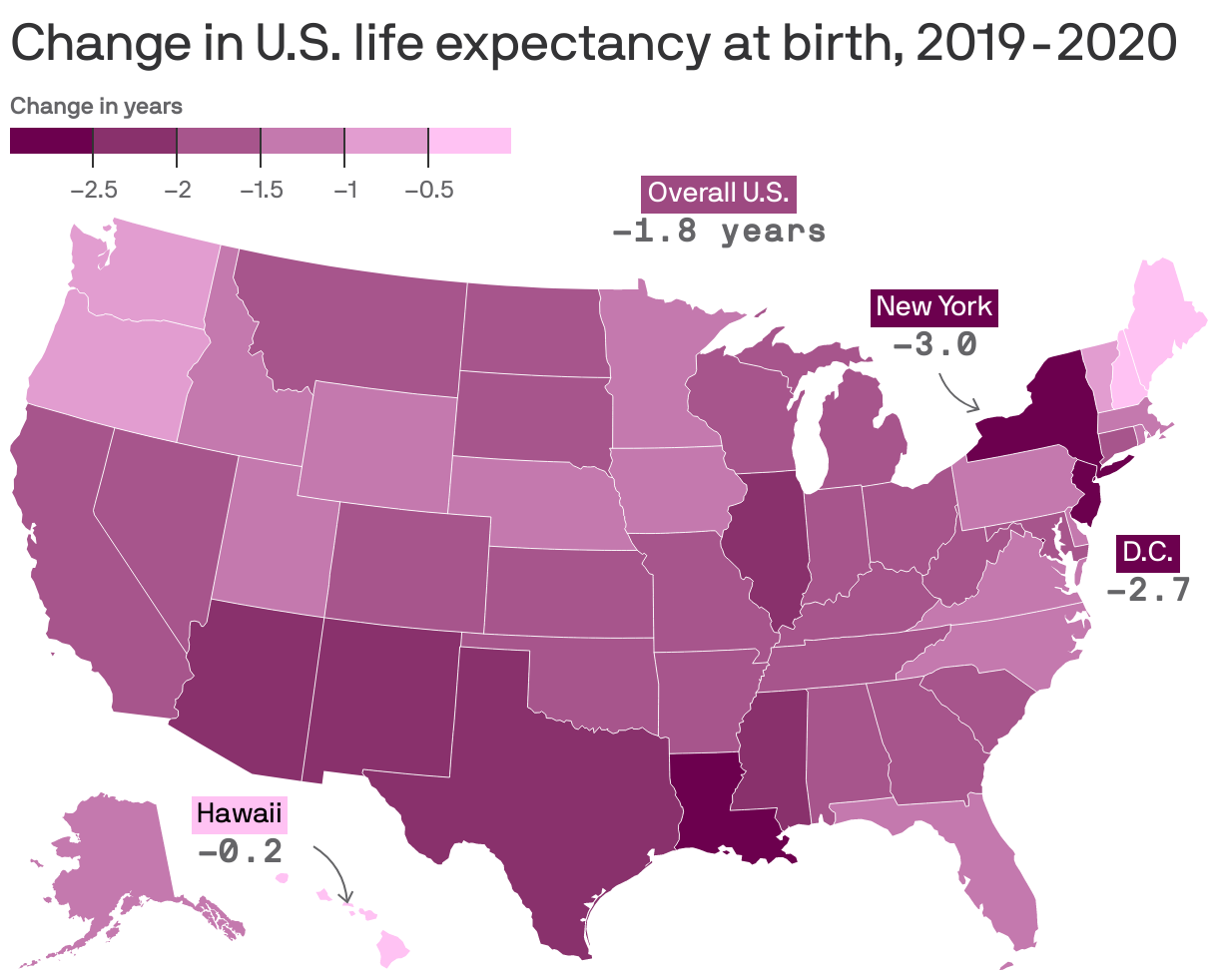
Data: Arias, et al., 2022, "U.S. State Life Tables, 2020"; Map: Simran Parwani/Axios
Life expectancy in the U.S. fell in all 50 states and the District of Columbia from 2019 to 2020 and fell nationally by 1.8 years, according to new Centers for Disease Control and Prevention data published Tuesday.
The big picture: The decline nationally and in states was mostly due to the COVID-19 pandemic and increases in unintentional injuries, specifically drug overdose deaths.
The U.S. Preventative Services Task Force reaffirmed guidance that doctors prescribe statins to prevent cardiovascular events like heart attacks and stroke.
Why it matters: The new guidelines, published Tuesday in JAMA, reinforce a task force recommendation from 2016.
They come after the expert panel commissioned a review of additional evidence on the benefits of statins in preventing events like a first heart attack versus the risks posed by heart disease.
The task force's recommendations influence how primary and preventive care is delivered, along with which services are covered by insurance.
What they're saying: Doctors should continue prescribing a statin toadults ages 40- to 75-years-old who have at least one cardiovascular risk factor such as diabetes, hypertension or smoking, as well as an estimated 10-year cardiovascular disease risk of 10% or greater.
Doctors may selectively prescribe statins to adults ages 40 to 75 years who have at least one cardiovascular risk factor but who have an estimated 10-year CVD risk of 7.5% to less than 10%.
People who are older than 75 years old are not included in the task force's recommendation, due to a lack of sufficient evidence.
The big picture: This recommendation comes just more than a month after new risk thresholds dramatically reduced eligibility for statin use in low-risk countries, Medscape reported.
Yes, but: Some clinicians believe the U.S. recommendations aren't broad enough to cover everyone who could benefit from taking the medication.
They argue that the 10-year guidelines that the task force recommends using will actually keep some people who might benefit from receiving the prescription.
"Waiting for a person to reach an age when their 10-year predicted (cardiovascular disease) risk exceeds a certain arbitrary threshold before recommending a statin allows atherosclerosis to proceed unchecked for decades," University of Texas Southwestern Medical Center researchers Ann Marie Navar and Eric Peterson wrote in a JAMA editorial.
The recommendations, Navar and Peterson write, are based on clinical consensus instead of the clinical trial results reviewed by the task force.
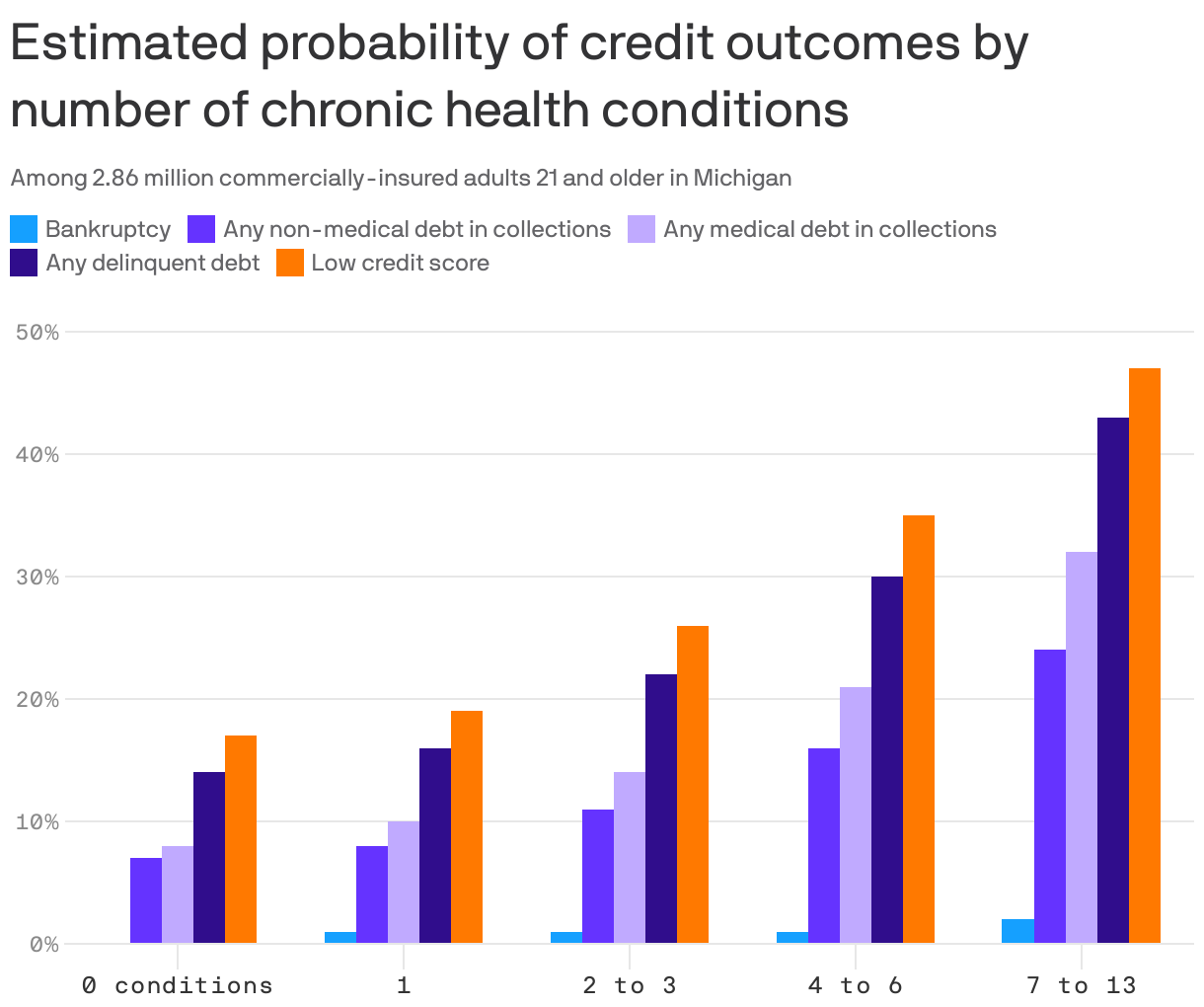
Data: Becker, et al., 2022, "Association of Chronic Disease With Patient Financial Outcomes Among Commercially Insured Adults"; Note: The study analyzed insurance claims data from January 2019 to January 2021 and commercial credit data in January 2021; Chart: Axios Visuals
Individuals with a higher number of chronic conditions have a higher chance of encountering financial hardship like medical debt, according to a study published in JAMA Internal Medicine.
Why it matters: It further cements the connection between well-being and financial stability.
Pfizer and BioNTech announced on Tuesday that new data showed their COVID-19 vaccine to be 73.2% effective against the virus in children aged 6 months to 4 years old.
Why it matters: Coming two months after shots for children under 5 were approved, the results back up earlier data that showed the Pfizer shot to be safe and effective for that age group.
NIAID director Anthony Fauci's time in the spotlight likely won't end with his retirement: Republicans plan to investigate his role in the COVID pandemic if they take control of the House or Senate next year.
The intrigue: Although the GOP could always subpoena Fauci as a civilian, they may not need to.
NIAID director Anthony Fauci's retirement will leave a gaping hole in the nation's flagship biomedical research agency and tee up a test of whether his successor will be an equally public figure — and as controversial.
Why it matters: Fauci's consistent presence as the public face of the pandemic response over the last two and a half years has been a source of comfort for some Americans while enraging others. What happens in his absence will reveal whether such deep polarization stems more from Fauci or is a function oftoday's political environment.
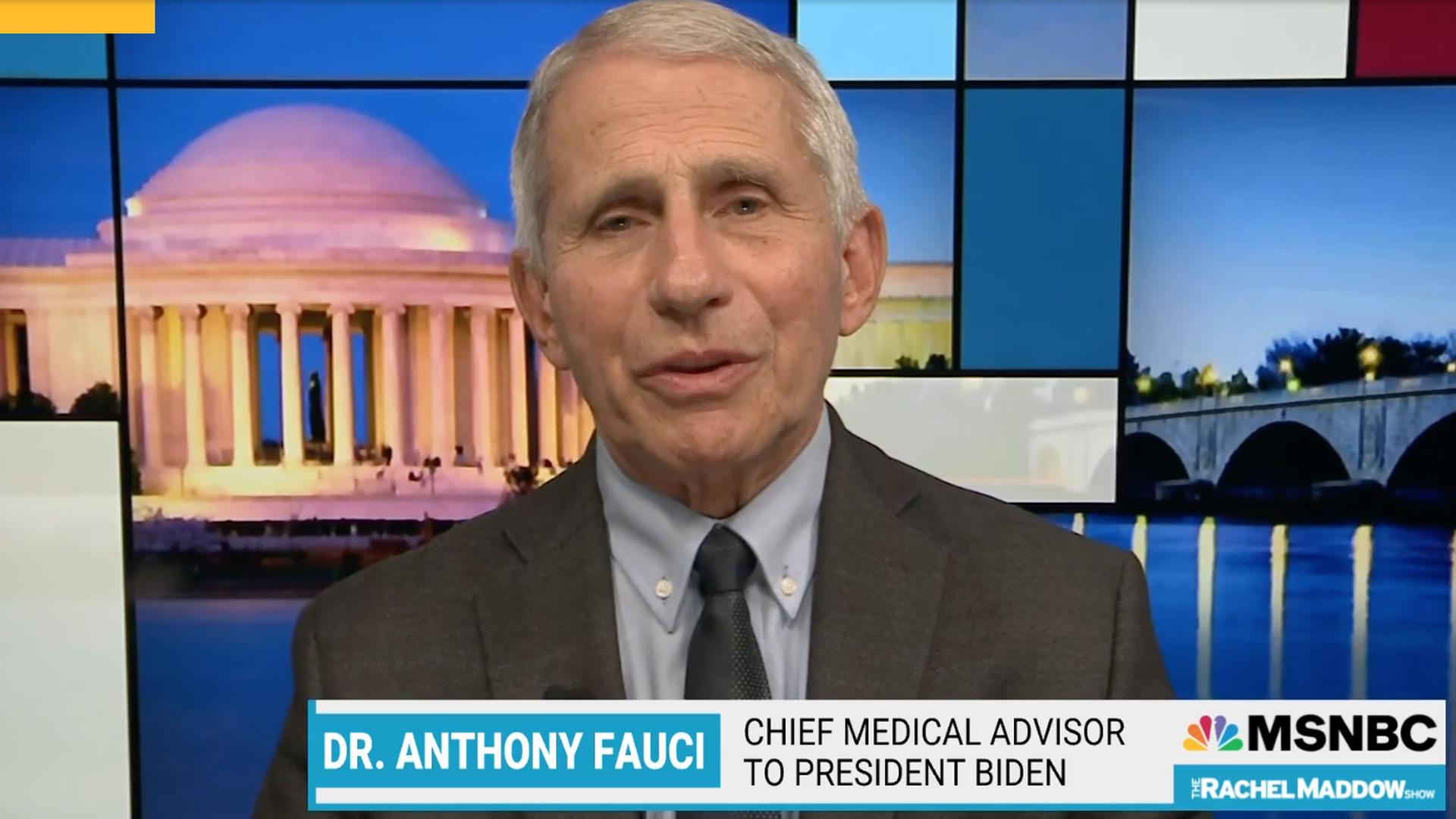
Anthony Fauci, who's stepping down from his roles as NIAID director and President Biden's chief medical adviser in December, opened up on being the target of pandemic conspiracy theories during an interview on MSNBC on Monday evening.
What he's saying: "What we're dealing with now is just a distortion of reality, conspiracy theories which don't make any sense at all pushing back on sound public health measures, making it look like trying to save lives is encroaching on people's freedom," Fauci said on MSNBC's "The Rachel Maddow Show."