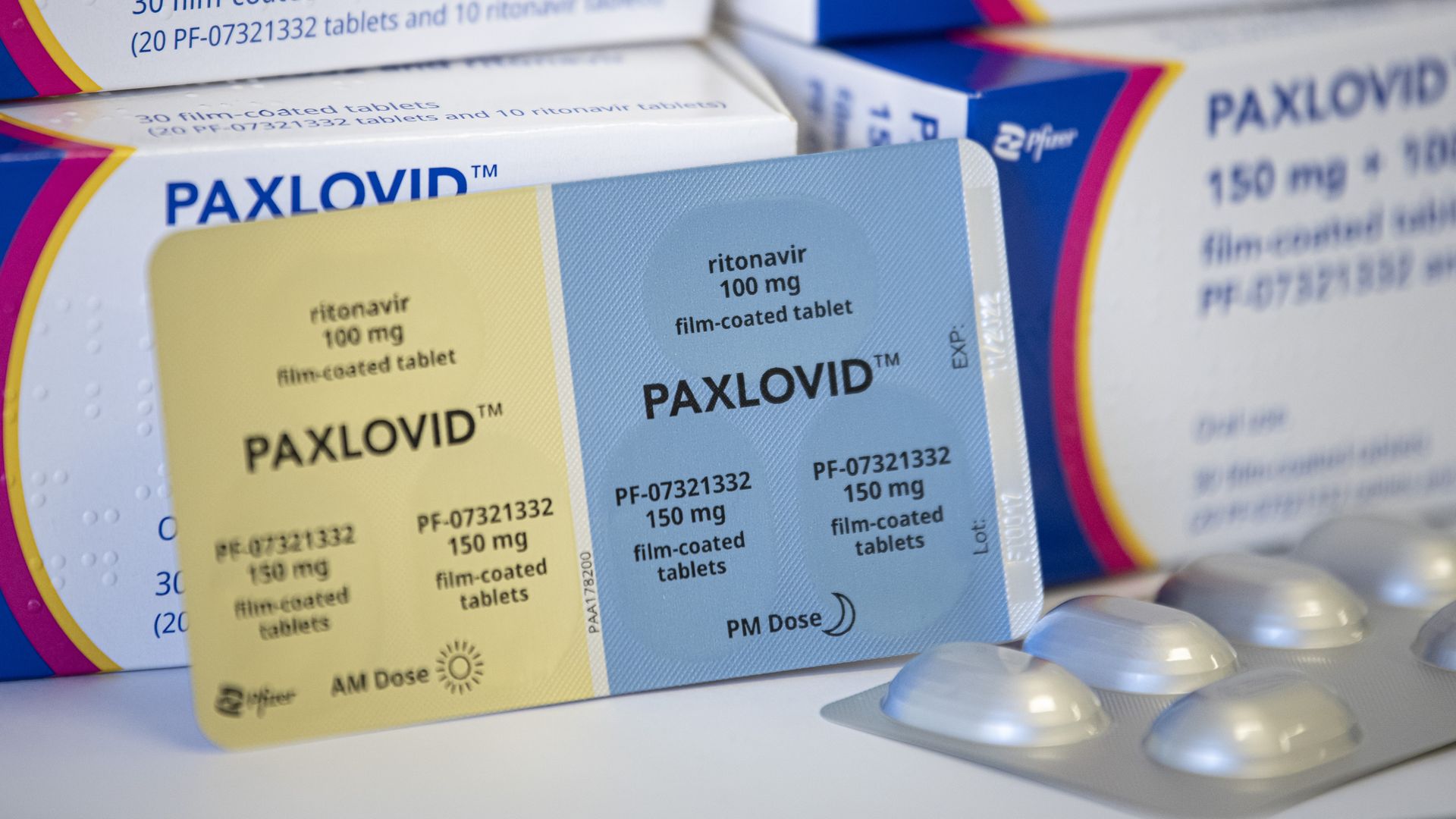
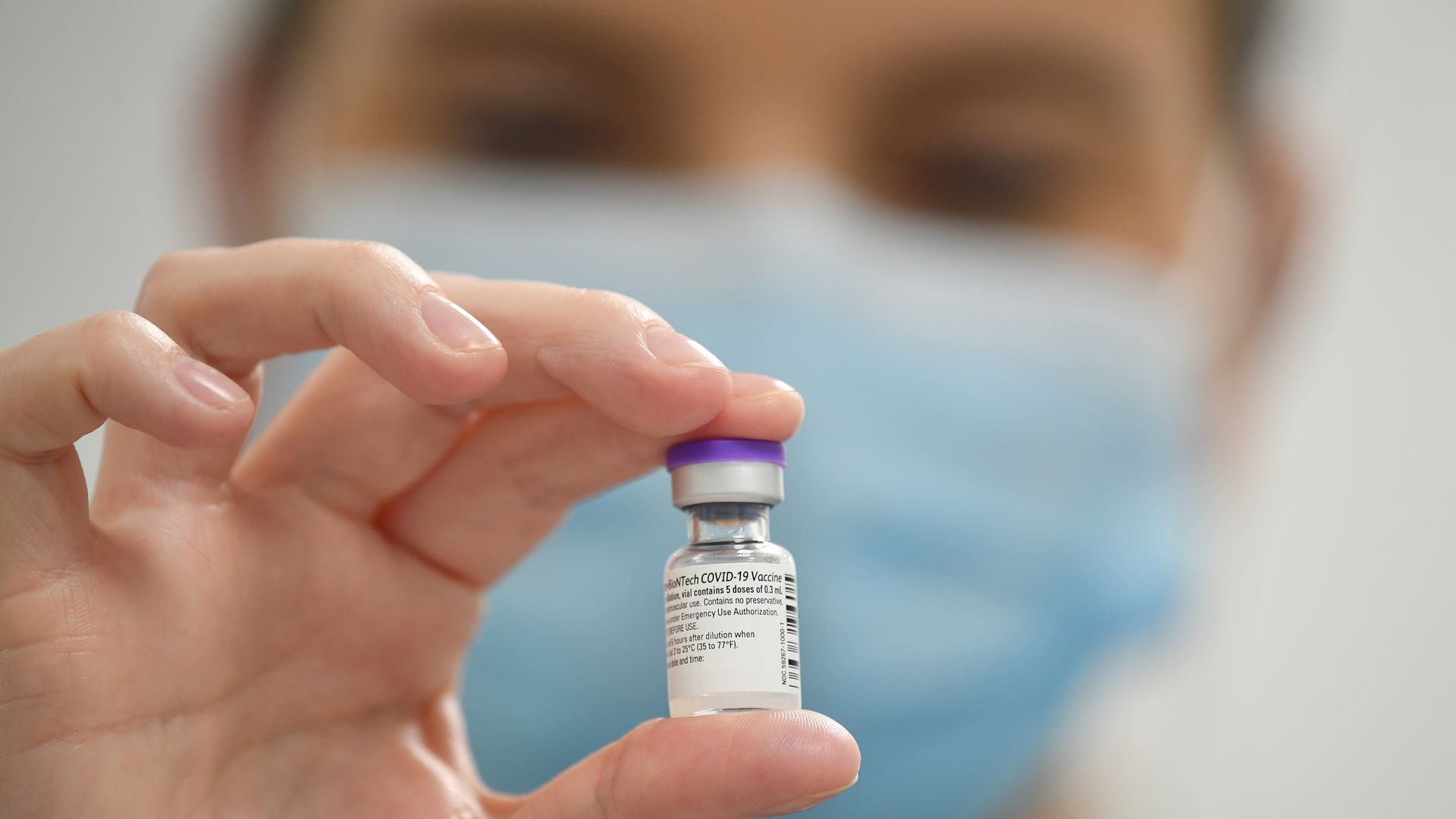
Pfizer on Tuesday said a study showed its COVID-19 pill Paxlovid didn't significantly reduce the risk of hospitalization or death in people with a standard risk of developing severe infections.
Why it matters: The results could mean the antiviral could be largely limited to high-risk patient populations, where it's been shown to be effective.
Driving the news:Pfizer said it was halting enrollment in the study of standard-risk patients after Paxlovid showed a 51% risk reduction, which the company called "non-significant."
The results will be rolled into an application for full FDA approval of the drug in high-risk patients.
Pfizer said the findings won't affect its full-year 2022 revenue forecast.
Where it stands: The FDA in December authorized Paxlovid for the treatment of individuals at high risk of severe illness from COVID.
The Biden administration this spring committed to buying 20 million courses of the drug from Pfizer and laid out a roadmap for distributing them to states, community health centers and other providers.
A recent study from Israel found Paxlovid lowered hospitalizations for older patients but wasn't as effective for younger groups.
A key FDA advisory committee on Tuesday voted to recommend Moderna's COVID vaccine receive emergency use authorization for kids six and older.
Why it matters: If Moderna ultimately receives emergency use authorization and a CDC recommendation, it would create a second option for a COVID-19 vaccine for older children in the U.S.
The World Health Organization said Tuesday it will rename the monkeypox virus after concern that it could stoke racism and stigma.
Why it matters: The current name for the virus, which has infected over 1,600 people in 39 countries this year and was first reported in Africa, does not adhere to WHO guidelines that discourage the use of geographic regions or animals, Bloomberg reports.
A lack of testing is keeping public health officials in the dark about how widespread monkeypox is in the United States and posing new uncertainties for the medical system.
Why it matters: The lack of robust disease-tracking harks back to the troubled early response to COVID-19 and could bode ill for local health systems still grappling with the virus, its aftereffects and the impending flu season.
Details: The team looked at the outcomes of 483 patients treated with the five-day oral regimen of nirmatrelvir and ritonavir, which are marketed together as Paxlovid to treat early-stage COVID.
The dry bible of the psychiatry world — the Diagnostic and Statistical Manual of Mental Disorders, or DSM — has become a surprise bestseller amid surging popular interest in mental health.
Why it matters: A record shortage of mental health providers, combined with unprecedented demand for psychological support, has led to a surge in self-diagnosis, doctors say.
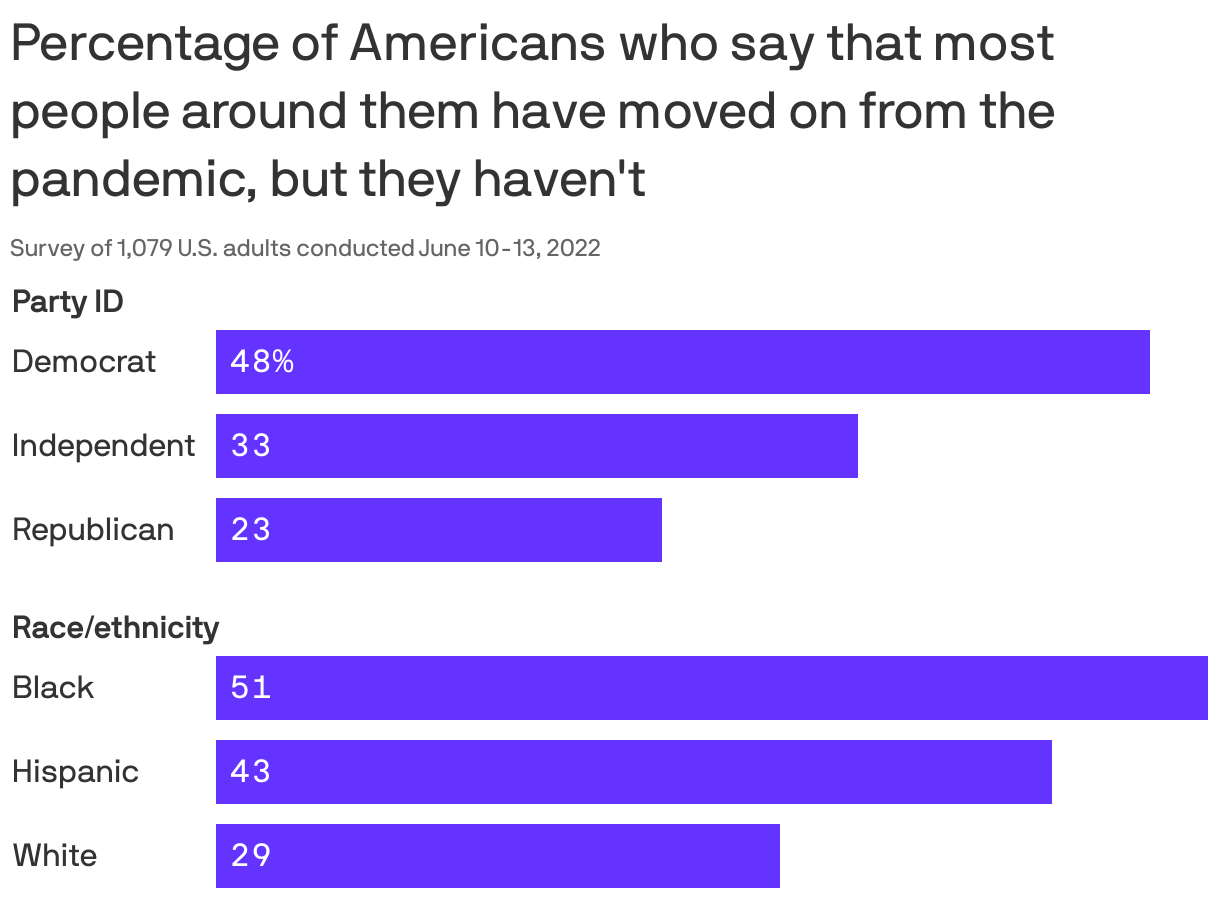
One-third of Americans say most everyone they know except themselves seems to be moving past the pandemic, according to the latest installment of the Axios/Ipsos Coronavirus Index.
Why it matters: Black, Democratic and urban respondents are the most likely to express this dichotomy. It's the latest measure of U.S. society fracturing over how to deal with rising case rates and hospitalizations in a post-mandate world.
New York Gov. Kathy Hochul (D) signed into law a series of abortion bills Monday that protect providers, as well as patients coming from out-of-state seeking to access the procedure, following strict restrictions enacted by some red states.
Driving the news: "My friends the sky is literally on the verge of falling in the next week or two and that’s why we are here today," Hochul said before signing the bills, referring to the upcoming Supreme Court decision that might overturn Roe v. Wade and other precedents that protect abortion access on the federal level.
Middle-aged women with higher concentrations of synthetic substances known as "forever chemicals" in their blood were at greater risk of developing high blood pressure, according to a study that tracked them for nearly two decades and was published in Hypertension.
Why it matters: The per- and polyfluoroalkyl substances (PFAS) are used in everyday household items, such as certain shampoos, dental floss, cosmetics, non-stick cookware, food packaging and fabrics — and are basically everywhere.
COVID shots may be days away from becoming available to infants and toddlers with expert panels set to evaluate both Pfizer-BioNTech and Moderna pediatric vaccines this week. But it's unclear how much the number of vaccinated kids will move.
Why it matters: For anxious parents of America's littlest kids, this is a big moment. Children younger than 5 are the last group without access to the shots.
Food and Drug Administration scientists found the Pfizer-BioNTech COVID-19 vaccine is safe and effective for children younger than 5, according to a review published Sunday.
Why it matters: The FDA scientists' briefing document comes ahead of Wednesday's scheduled meeting of the agency's independent experts, when they will consider Pfizer and BioNTech's request for emergency use authorization of the vaccine for young children.