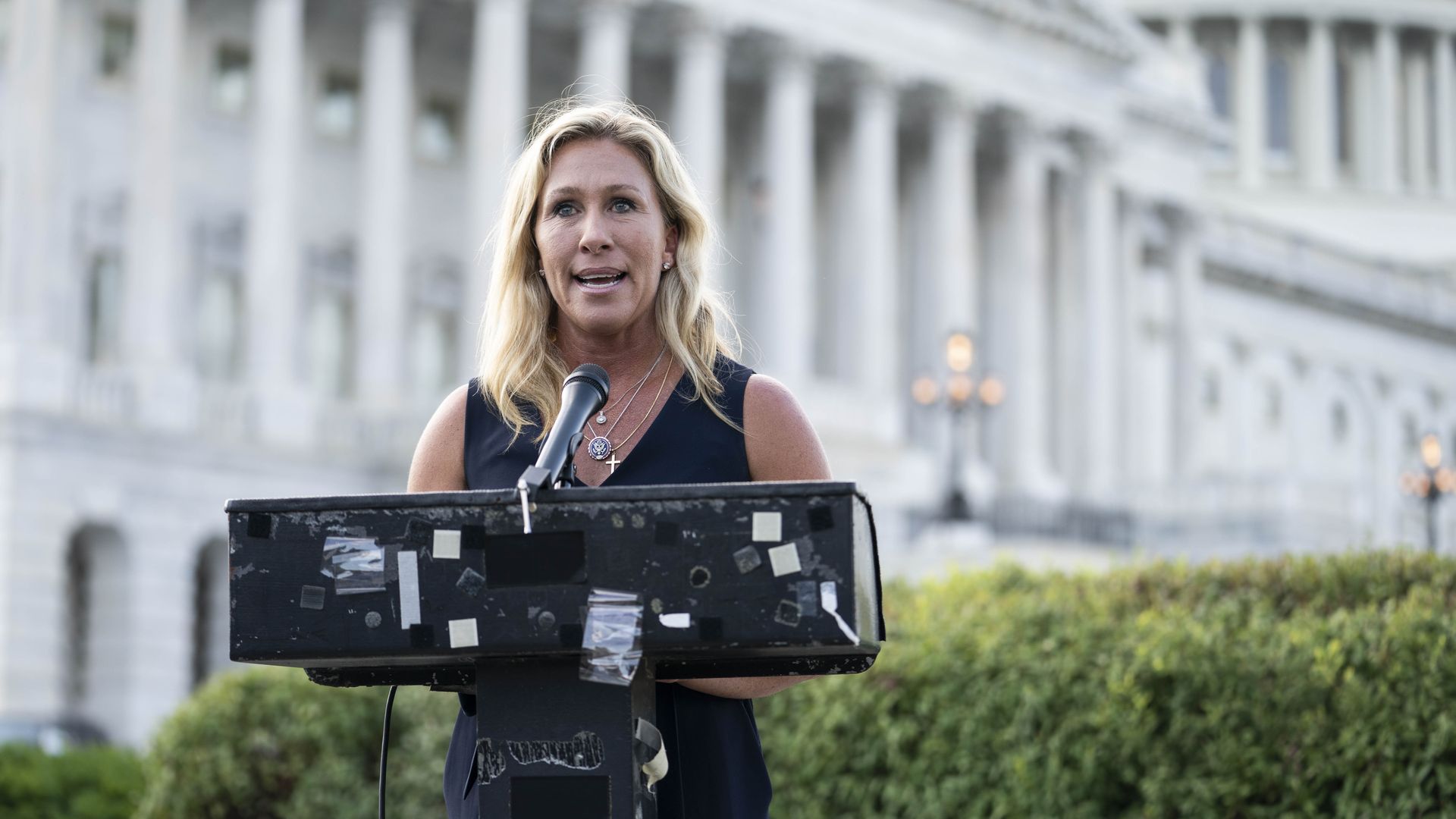
Rep. Marjorie Taylor Greene (R-Ga.) apologized on Monday for her earlier comments comparing mask mandates in the House to the Holocaust.
Why it matters: Her Holocaust remarks drew widespread condemnation from lawmakers, including other Republicans, as well as Jewish groups and the Anti-Defamation League.
The U.S. Centers for Disease Control and Prevention announced Monday that it will temporarily halt the importation of dogs from 113 countries over rabies concerns.
Why it matters: The CDC said the "temporary action is necessary to ensure the health and safety of dogs imported into the United States and to protect the public’s health against the reintroduction of canine rabies virus variant into the United States," per Reuters. The ban will take effect July 14.
The CEOs of 178 health care companies collectively made $3.2 billion during the coronavirus pandemic, which was 31% more than 2019, according to an Axios analysis of financial filings.
The big picture: Health care executives took home more than ever because a vast majority of their pay still comes in the form of stock. So while the coronavirus ravaged people's lives, the health care system and the broader economy, the soaring stock market immunized executives' pay.
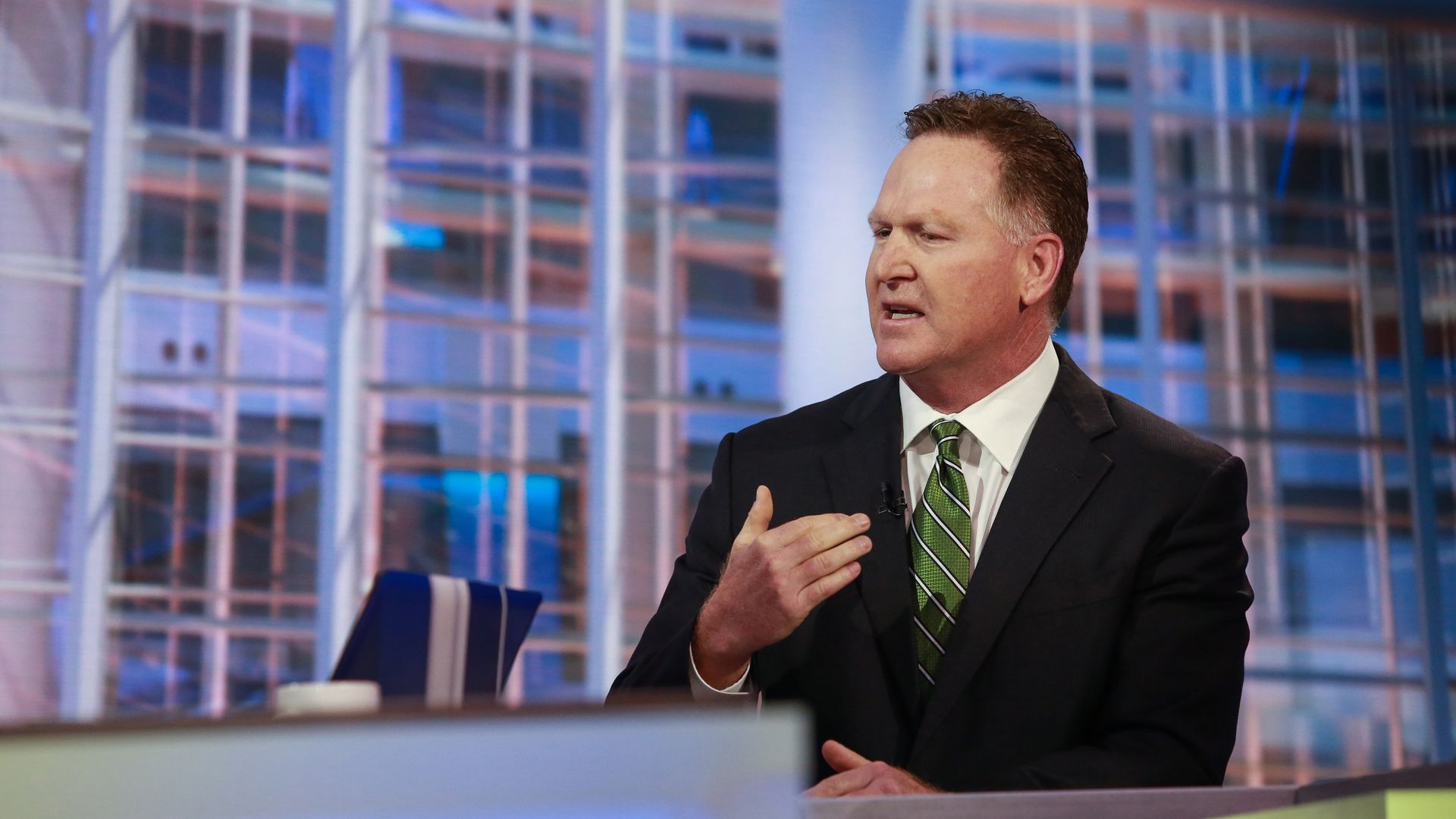
Last year, drug company Mallinckrodt paid its top five executives nearly $33 million, including $15 million to CEO Mark Trudeau.
Why it matters: Last year, Mallinckrodt filed for bankruptcy, faced numerous opioid lawsuits, and shelled out $640 million in underpaid rebates to the federal government — all problems that have come under the watch of executives receiving these lavish pay packages.
Hispanic Americans between the ages of 20 and 54 were 8.5 times more likely than white Americans in the same age group to die of COVID-19, according to a recent study of California deaths.
Why it matters: Hispanic Americans experienced higher rates of COVID-19 infections than any other racial or ethnic group, per the New York Times. The study of California deaths, published this month, found that Hispanic Americans were also younger when they died, often in their prime of life.
President Biden claimed at the conclusion of the G7 summit on Sunday that his plan to buy 500 million Pfizer doses to share with the world had “generated a commitment by the rest of our colleagues in the G7 that they would provide another half billion.”
Why it matters: The 1 billion-dose pledge was the headline announcement from the summit — a signal that the U.S. return to the global table was producing results. But the numbers don’t add up.
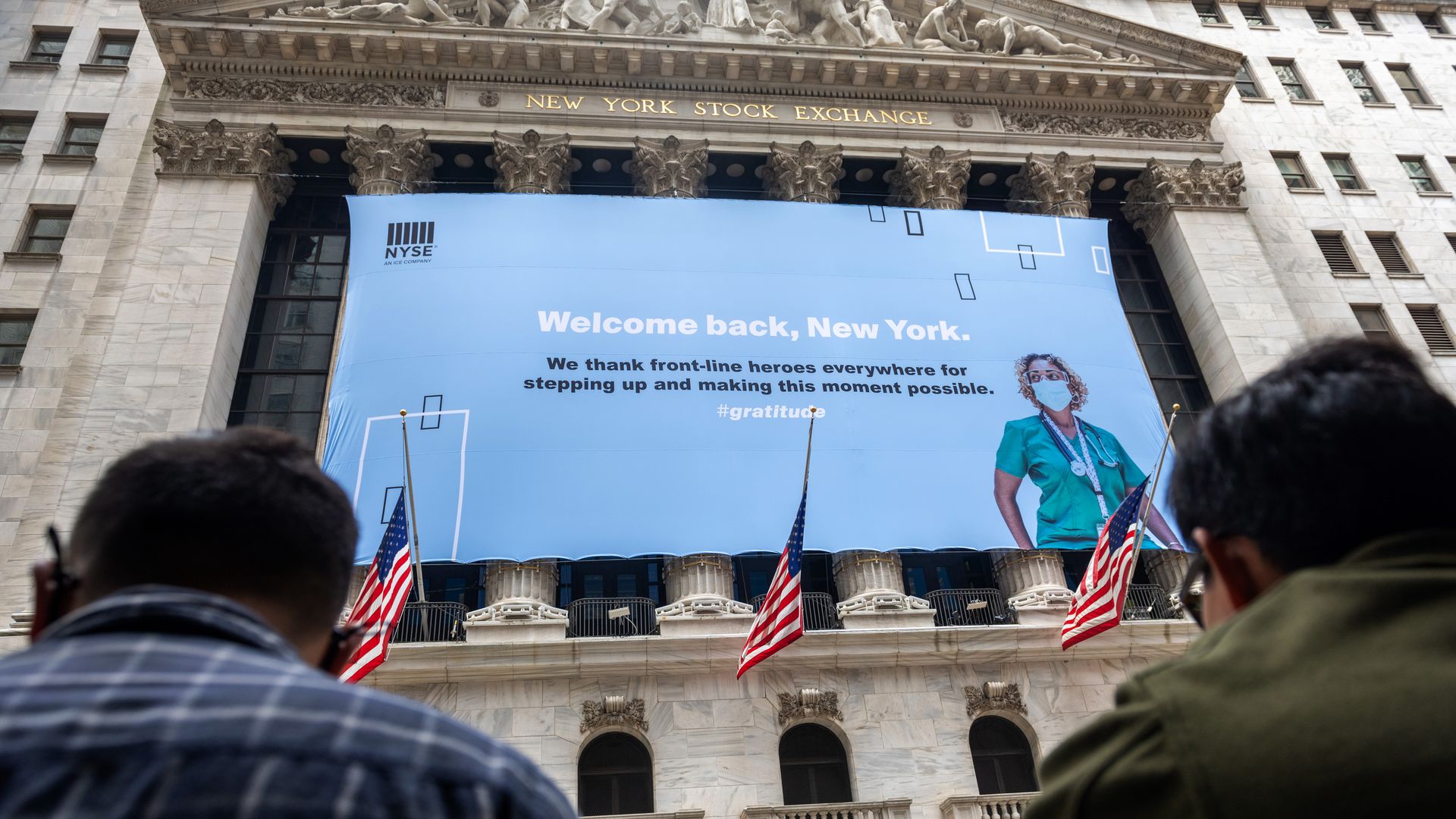
New York City Mayor Bill de Blasio announced Monday that the city will host a ticker tape parade on July 7 to honor health care workers, first responders, and essential workers.
Why it matters: It will be the city's first official parade since the start of the coronavirus pandemic, de Blasio said. The announcement comes as the city prepares to fully reopen on July 1.
British Prime Minister Boris Johnson on Monday delayed "freedom day", when the U.K. was set end pandemic-related restrictions, to July 19 instead of June 21, as the delta COVID-19 variant continues to spread, the Washington Post reports.
The big picture: The delay is likely an attempt to get more people vaccinated, especially with their second dose, before reopening fully, writes the Post. Restrictions on sporting events, bars, nightclubs and movie theaters will stay in place, and people will be asked to continue working from home if possible.
Novavax, a Maryland biotechnology company, announced Monday that its COVID-19 vaccine was 90.4% effective in its Phase 3 trial, including against coronavirus variants.
Why it matters: The study of 29,960 participants in the U.S. and Mexico found the shot was safe and highly effective, paving the way for the FDA to clear a 4th vaccine for emergency use by the end of the year.
Hospitals sued patients much less often in 2020 than in the previous two years, and there are signs that this may signify change that lasts beyond the pandemic, according to new research by Johns Hopkins University provided exclusively to Axios.
Between the lines: Some hospitals that received a lot of negative publicity over their billing practices stopped suing patients altogether.
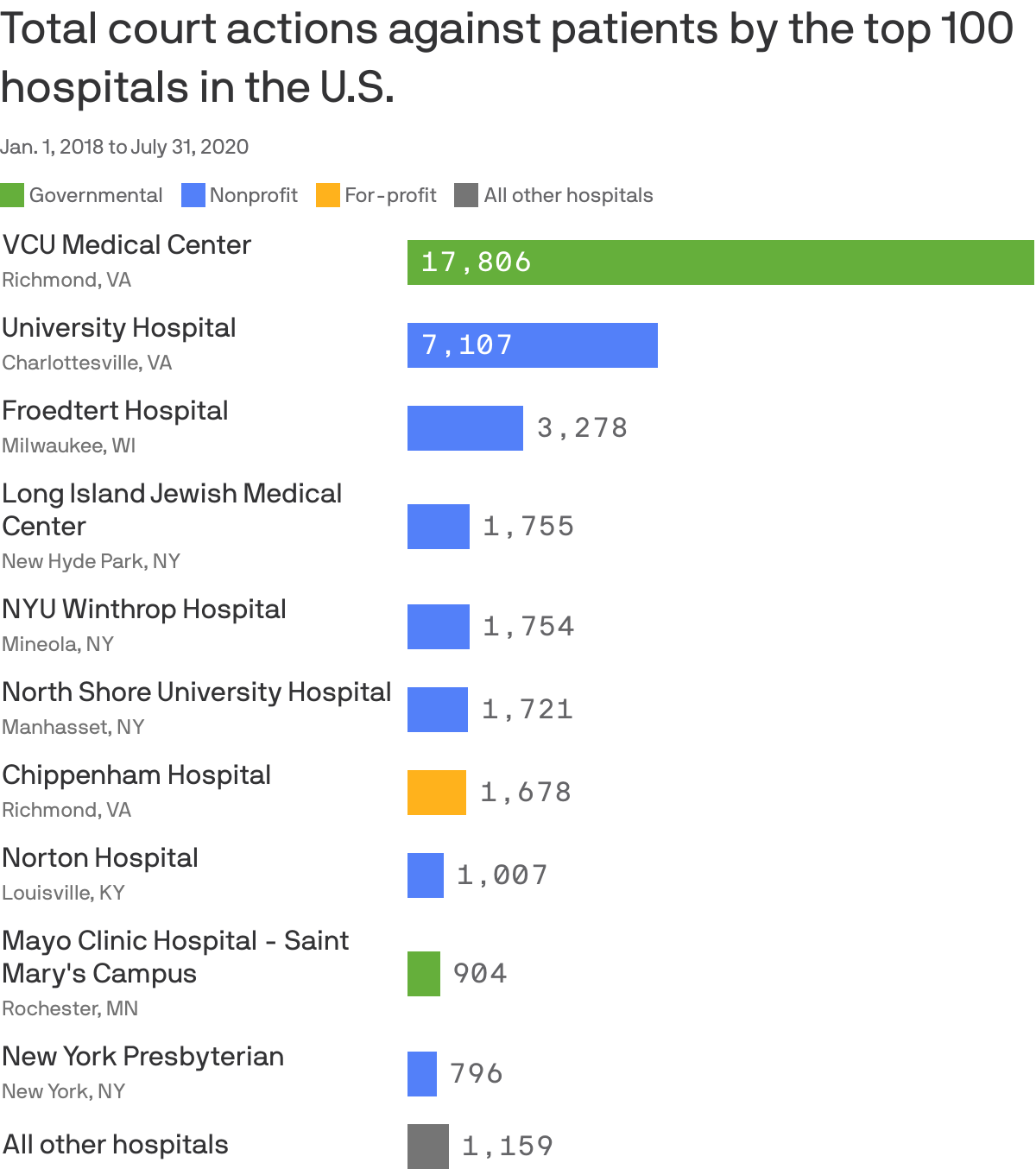
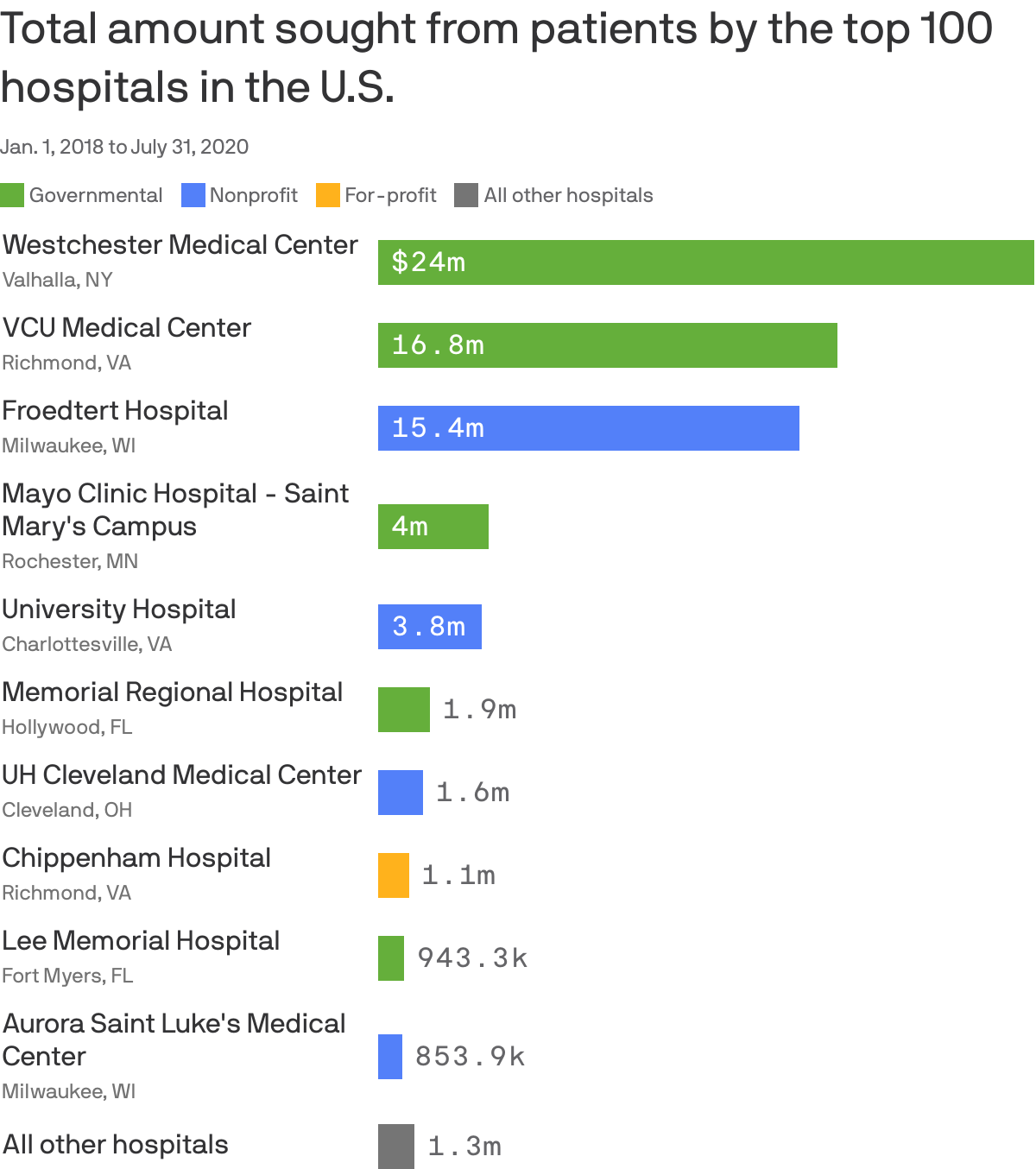
More than a quarter of the 100 U.S. hospitals with the highest revenue sued patients over unpaid medical bills between 2018 and mid-2020, according to new research by Johns Hopkins University provided exclusively to Axios.
Why it matters: The report suggests that, rather than being an anomaly, patient lawsuits are relatively common across the country and among the largest providers.
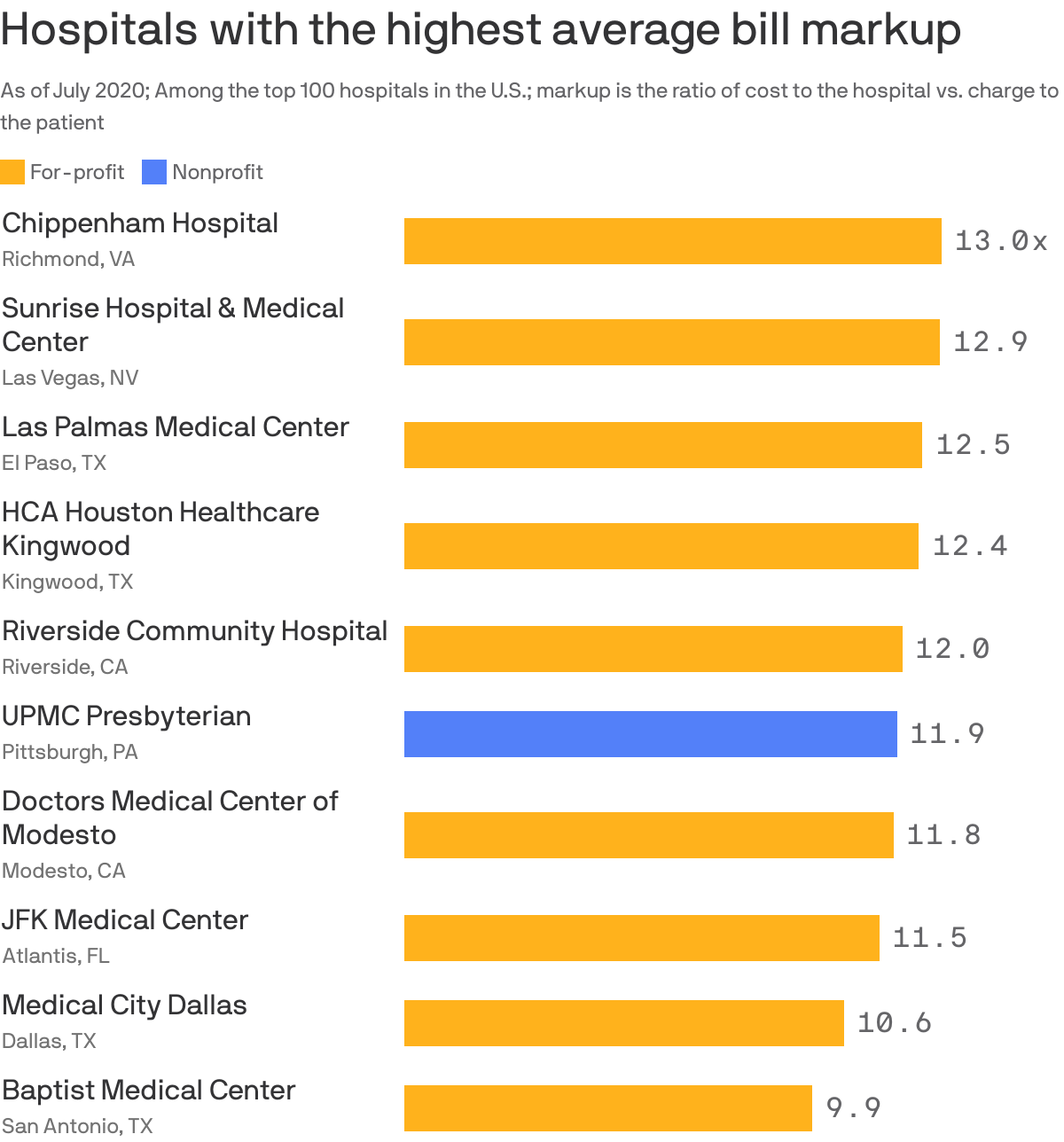
Some of the hospitals with the highest revenue in the country also have some of the highest prices, charging an average of 10 times more than the actual cost of the care they deliver, according to new research by Johns Hopkins University provided exclusively to Axios.
Why it matters: Hospitals each determine their own charges, or list prices. While few patients ever pay those prices, due to negotiated insurance rates, they do affect the uninsured and, experts say, ultimately influence the overall price we all pay.
Among large hospitals thatsue their patients, those in one state stand out: New York.
What they're saying: “New York was the most aggressive region in the country in predatory billing,” said Marty Makary, a Johns Hopkins professor and lead researcher on a new study detailing the billing practices of the 100 largest hospitals in the U.S.
Froedtert Hospital in Milwaukee has taken plenty of court actions in pursuit of getting paid for medical services provided. But in the last year, those efforts have taken the form of hospital liens.
Why it matters: Froedtert offers a look at the different legal avenues large hospital systems use to collects on patient debt.