Three investment firms with deep health care investing experience are forming a new SPAC that will seek to buy a diagnostics company and take it public, Axios has learned.
Between the lines: New SPAC formation has slowed, due to a glut of offerings and new SEC scrutiny, but plenty of veteran investors are continuing to jump into the arena.
Starting July 1, UnitedHealthcare says it plans to reduce coverage of — or stop paying for — non-emergency trips to the ER.
Why it matters: Unnecessary emergency room visits are a major source of wasted spending in U.S. health care. But critics say this policy from the nation's largest health insurer could hurt patients who mistakenly believe they'll be covered.
The FDA has approved Biogen's Alzheimer's drug, aducanumab, which will be marketed as Aduhelm. Biogen is charging $56,000 per year for the drug.
Why it matters: Aduhelm is the first federally approved Alzheimer's treatment in roughly 18 years, but there is no conclusive evidence the drug slows the decline of memory and brain function.
India's Prime Minister Narendra Modi announced Monday that the government would offer free COVID-19 vaccines to all adults later this month, Reuters reports.
Why it matters: Previously, India had only provided free vaccines to elderly adults and front-line workers — meaning most people within the 18–45 age group would have to pay a fee in order to be vaccinated.
A leader of the global vaccination effort tells "Axios on HBO" that leaders of rich countries who "ignore the rest of the world" during pandemics are failing at their jobs.
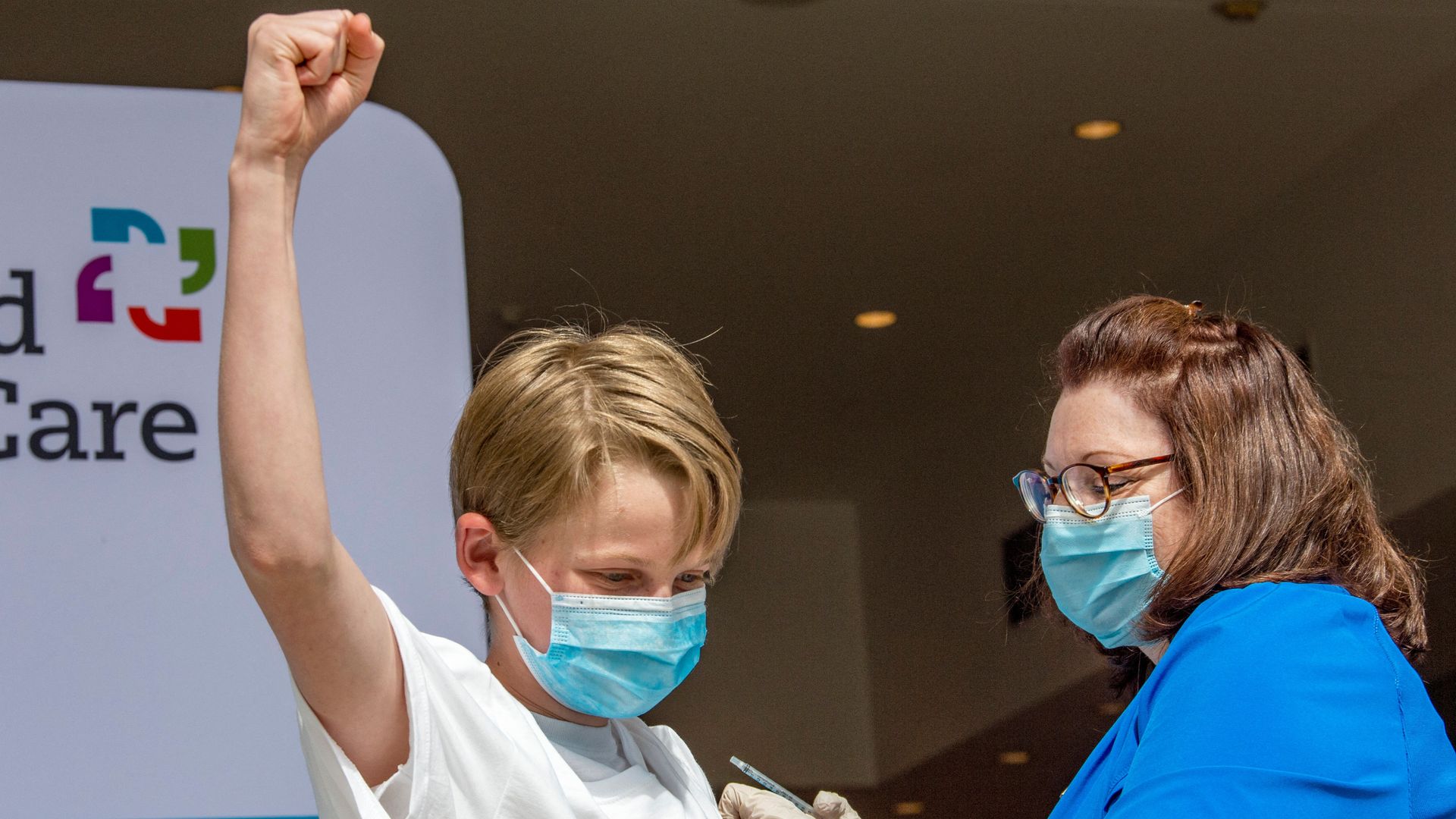
The big picture: Countries like the U.S. have moved on to vaccinating children while health care workers in many countries still don't have enough doses to be fully vaccinated.
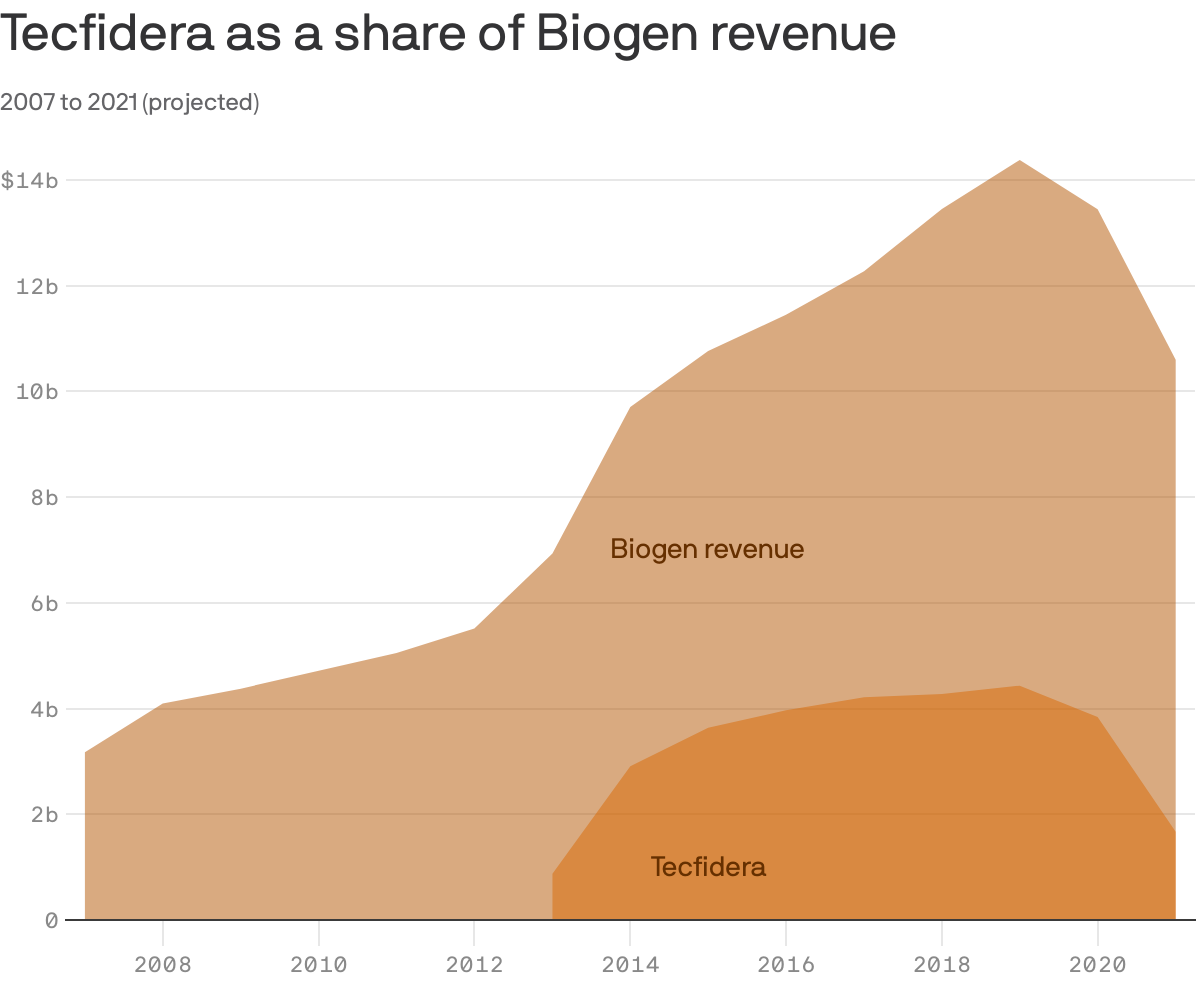
Data: Company filings; Chart: Danielle Alberti/Axios
Multiple sclerosis drug Tecfidera has propped up Biogen for the past eight years, representing more than a third of the company's sales. But that revenue wave is coming to an end after generic versions of the pill entered the U.S. market last year.
Between the lines: Biogen is banking on federal approval of its Alzheimer's drug, aducanumab, to boost its financial future and offset the decline of Tecfidera.
Turns out that wearing a mask and social distancing really weren't a waste of time.
Driving the news: Exclusive polling data from our Axios-Ipsos Coronavirus Index, which started in March 2020, shows that the respondents who reported never wearing masks were twice as likely to test positive for COVID as those who said they wore masks all the time.
Influenza cases and other common viruses have been at historically low numbers for the past year due to the safety precautions taken by the public to stifle the spread of COVID-19. But that could change soon.
Driving the news: Experts say the last year and a half, we've largely gone without "boosts" to our adaptive immunity from exposure to viruses, as STAT News reported recently. And if flu cases start to rise in the fall, buckle up.
What they're saying: If the U.S. starts seeing the uptick in flu cases in October or November, "that would be a sign that we’re going to be in for ... a strong flu season," said Andy Pekosz, professor of Molecular Microbiology and Immunology at the Johns Hopkins Bloomberg School of Public Health.
A typical flu season begins in late December, early January.
"You’ve lost one pathway to immunity, which is natural infection," last flu season, said Ryan Langlois, associate professor in the microbiology and immunology department at the University of Minnesota. "We’ve never been in this situation."
State of play: Already, cases of respiratory syncytial virus, or RSV, have surged across the country in recent weeks for the first time since the pandemic started as the country started to open back up.
What to watch: Last year's flu vaccination rates were the highest seen in years. If we see an early flu season, the public health guidance to get the flu vaccine will be that much more important and, in some cases, it may make sense to ask individuals who are high-risk to wear masks, Langlois said.
More than 300 million COVID-19 vaccine doses have now been administered in the U.S., the Centers for Disease Control and Prevention confirmed Sunday.
Why it matters: The latest CDC figures show that 41.9% of the U.S. population has been fully vaccinated against the coronavirus and 51.5% has received at least one dose.