New York City and 21 New York counties on Tuesday sued McKinsey & Company, alleging the global consulting firm contributed to the opioid crisis by helping drug companies increase prescription drug sales, AP reports.
Why it matters: The company earlier this year reached deals with all 50 states to pay more than $600 million in settlements for its role in advising OxyContin maker Purdue Pharma.
Abbott on Tuesday cut its profit guidance for the rest of this year after the medical device and diagnostics company projected lower demand for its coronavirus tests. Abbott's stock plunged 9%.
The big picture: COVID-19 cases have dropped heavily in the U.S. and other high-income countries due to mass vaccination campaigns. That's good for society, but now means less money for Abbott and other test makers that have profited from the pandemic's testing.
The Equal Employment Opportunity Commission on Friday announced that U.S. employers are allowed under federal law to require that workers get coronavirus vaccinations.
Axios Re:Cap goes deeper with Carol Miaskoff, the EEOC's acting legal counsel, to learn more about the new guidance, how it interacts with state laws against such requirements and whether further guidance could be coming.
The World Health Organization said Tuesday it has approved the Sinovac COVID-19 vaccine for emergency use for adults over 18, making it the second Chinese-developed shot given the green light.
Why it matters: The approval will allow Sinovac to join COVAX and distribute its vaccines to developing countries. The global vaccine distribution initiative currently faces "major supply problems" due to restrictions on Indian exports, Reuters reports.
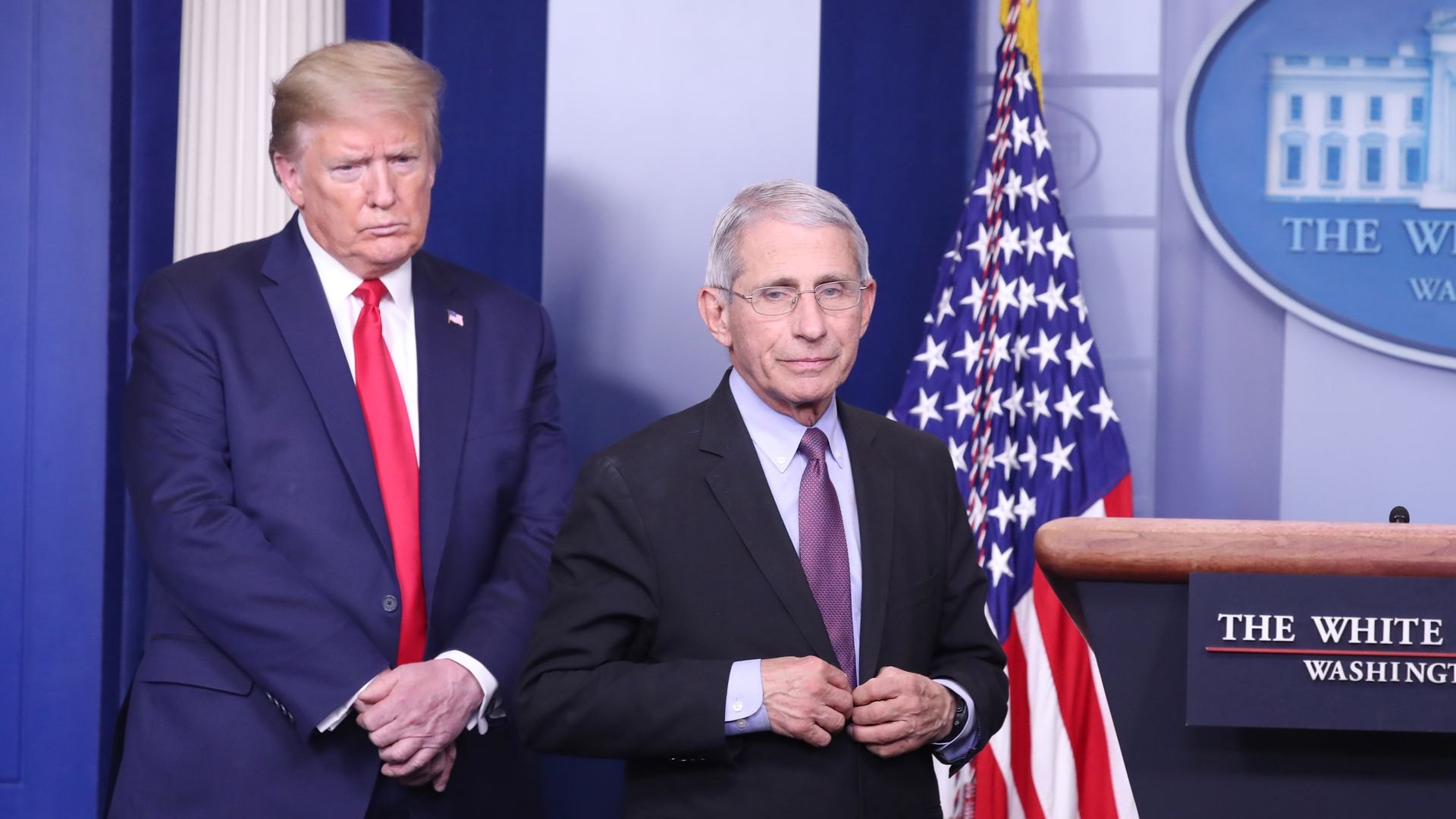
The Washington Post obtained 866 pages of Anthony Fauci's emails from March and April 2020 via the Freedom of Information Act, revealing what it was like for the government's top infectious-disease expert to navigate the chaotic early weeks of the pandemic under the Trump administration.
Why it matters: Fauci has been one of the most prominent public faces of the U.S. government's coronavirus response, opening him up to both widespread admiration and criticism. U.S. officials were eventually forced to assign Fauci a full-time security detail.
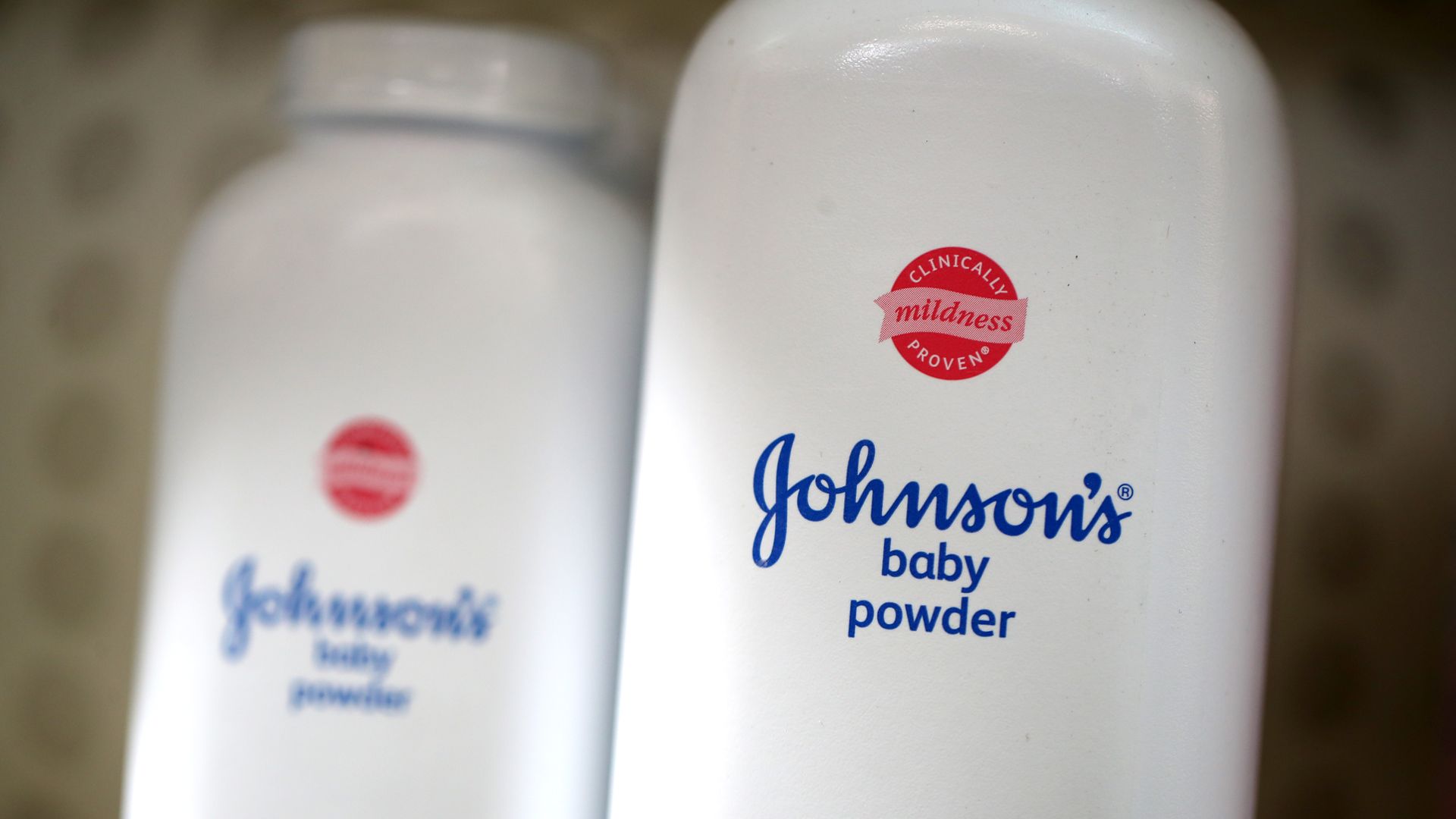
The Supreme Court on Tuesday declined to consider Johnson & Johnson's appeal of a 2018 verdict that awarded $2.1 billion to 22 plaintiffs who claimed the company's talcum baby powder caused ovarian cancer.
Why it matters: J&J still faces over 25,000 lawsuits claiming its baby powder causes cancer, after the 2018 suit awarded a total of $4.7 billion to the plaintiffs, per Bloomberg Law. The company removed talcum baby powder from shelves in the U.S. and Canada in 2020 and has denied the allegations.
Johnson & Johnson had argued that the lower court proceedings in St. Louis violated the Constitution’s due process clause by combining claims from 22 plaintiffs from 12 different states.
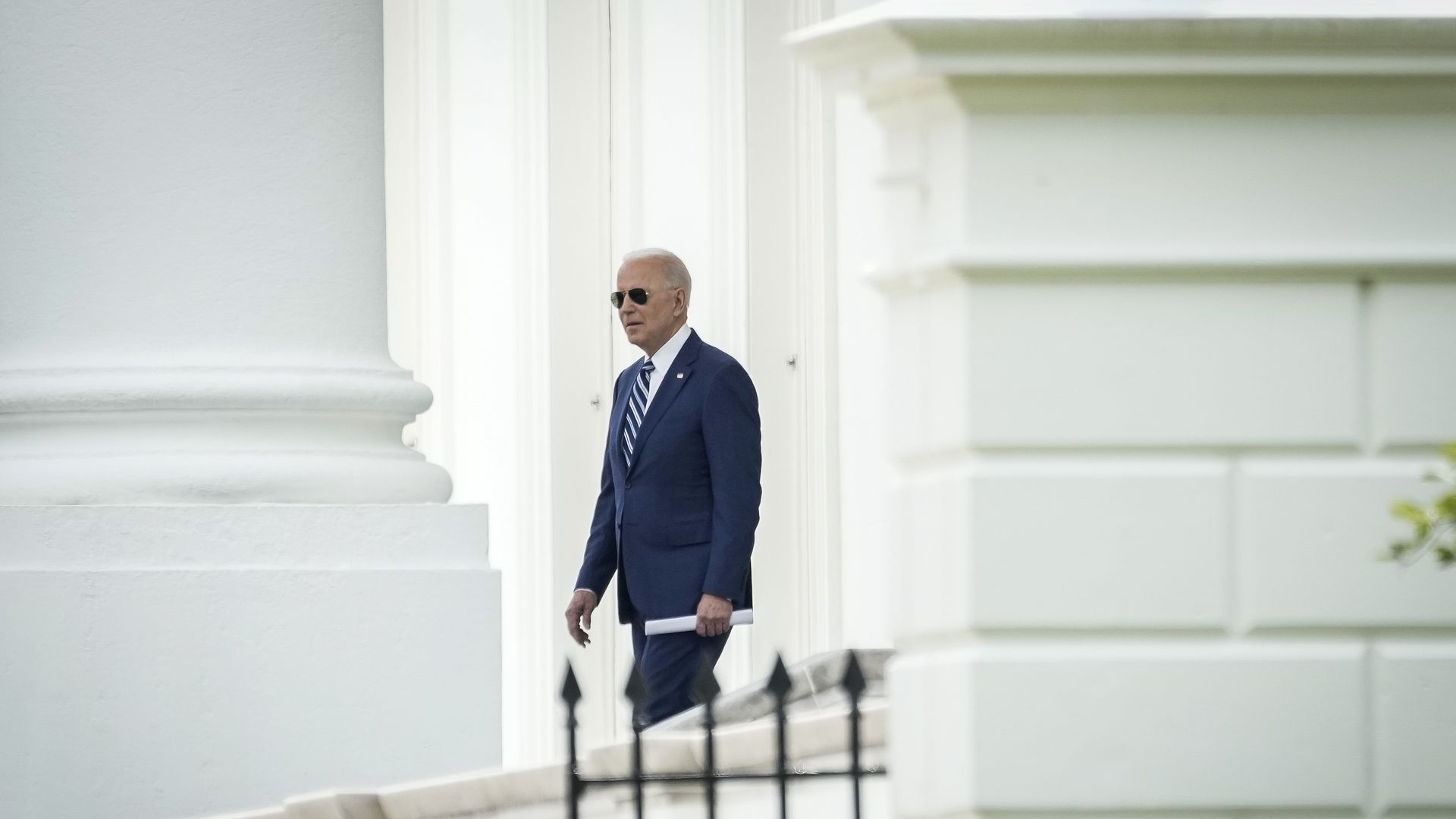
The White House will invite all employees back to work in July, signaling an end to pandemic protocols for remote work for President Biden’s core team.
Driving the news: In a memo sent to the White House Office and Office of the Vice President, employees are advised that they "will transition to full time on campus work during the window of July 6 to July 23," according to a copy obtained by Axios.
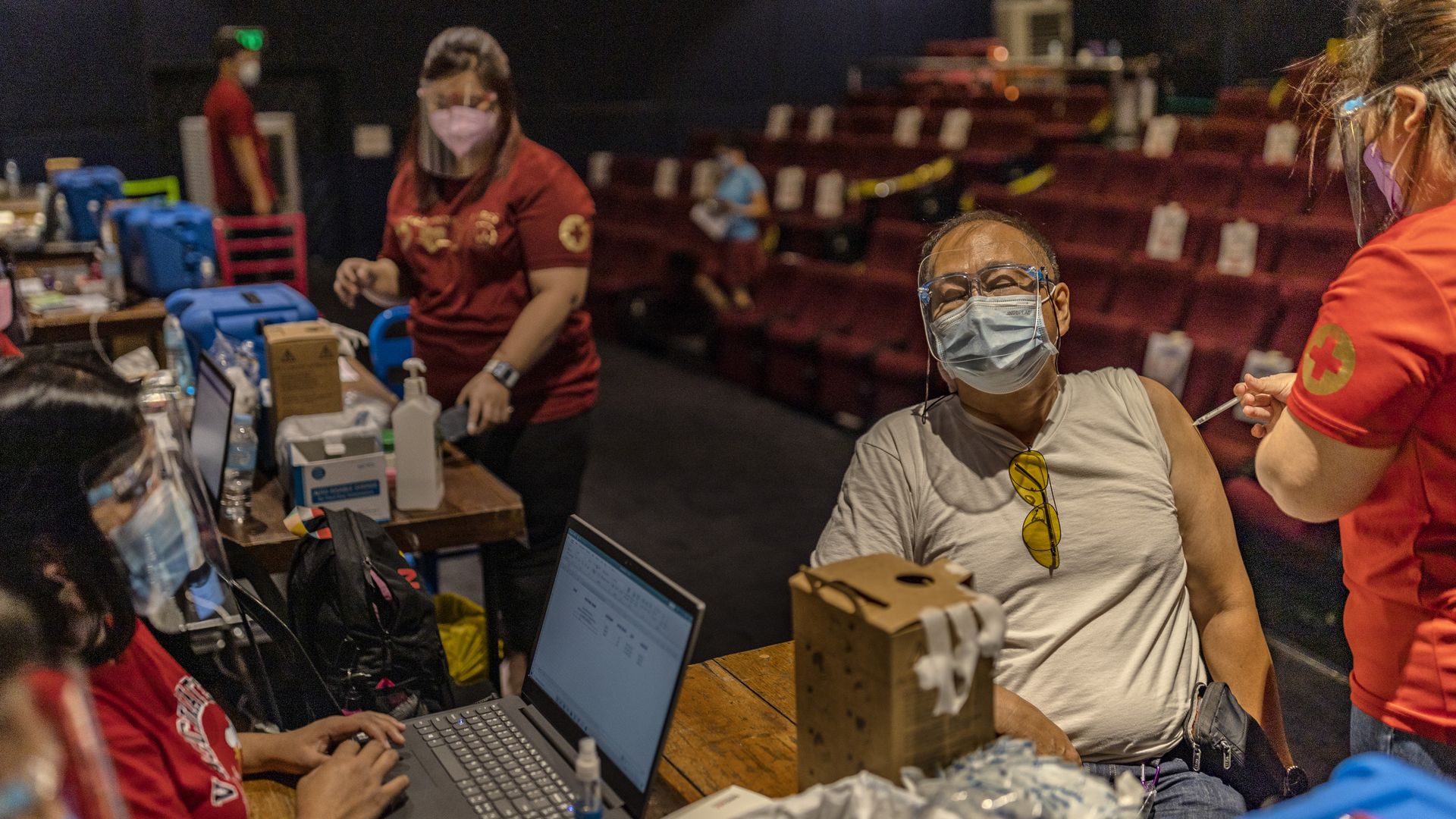
Moderna is seeking full approval from the Food and Drug Administration for its coronavirus vaccine, the company announced Tuesday.
The big picture: Obtaining a Biologics License Application (BLA) from the FDA requires at least six months of data, unlike the two months of data required for emergency use authorization from the agency.
New science is breathing fresh life into the idea of a vaccine that works against all coronaviruses, including ones that could cause future pandemics.
Why it matters: No one wants to do the last year over again. But the road to a universal coronavirus vaccine is filled with hurdles, and there's no guarantee that coronaviruses would cause the next global pandemic.
The U.S. is about to pivot from hoarding vaccines to sharing them globally, and countries around the world are trying to secure their places in line.
Why it matters: President Biden has promised to donate 80 million doses by the end of June. With domestic demand waning, he’ll soon be able to offer far more. But the White House hasn't said how it will distribute the initial 80 million, or when it will feel comfortable truly opening its supply to the world.
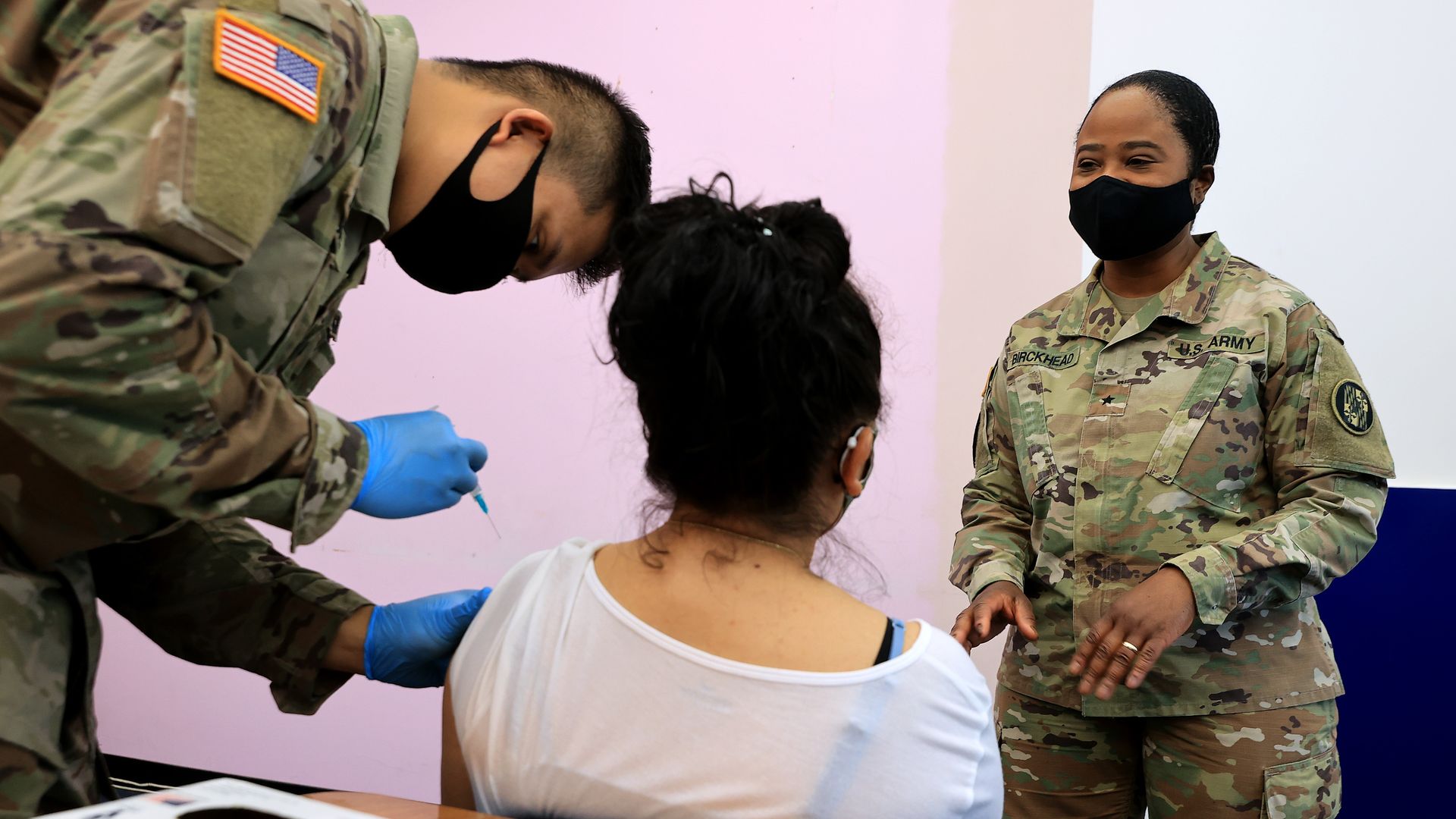
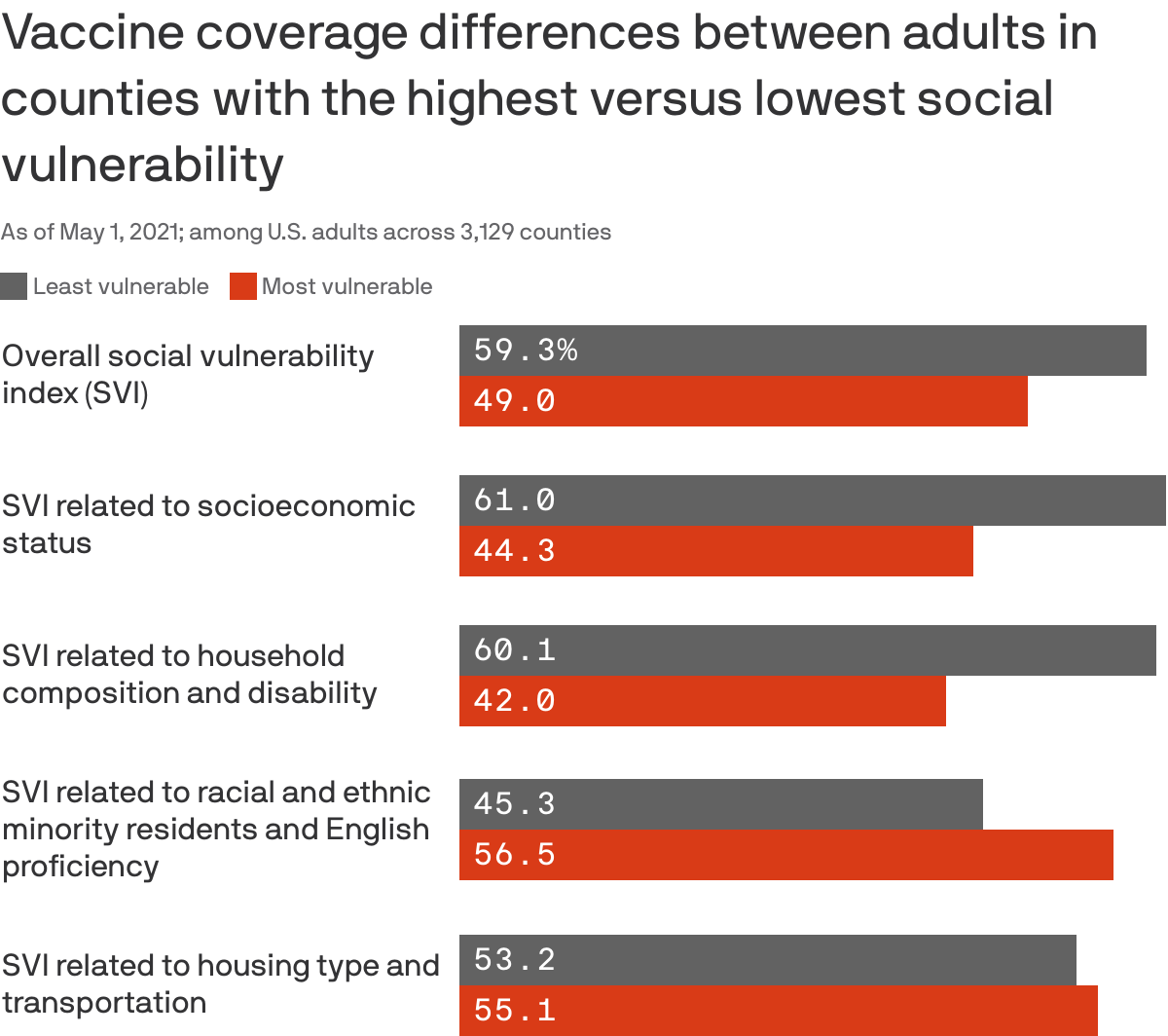
Income and other socioeconomic factors seem to be driving bigger disparities in coronavirus vaccinations than race, according to CDC data released Friday.
The big picture: In counties with the highest social vulnerability, only about 50% of residents have been vaccinated — compared to 60% in the least vulnerable counties.
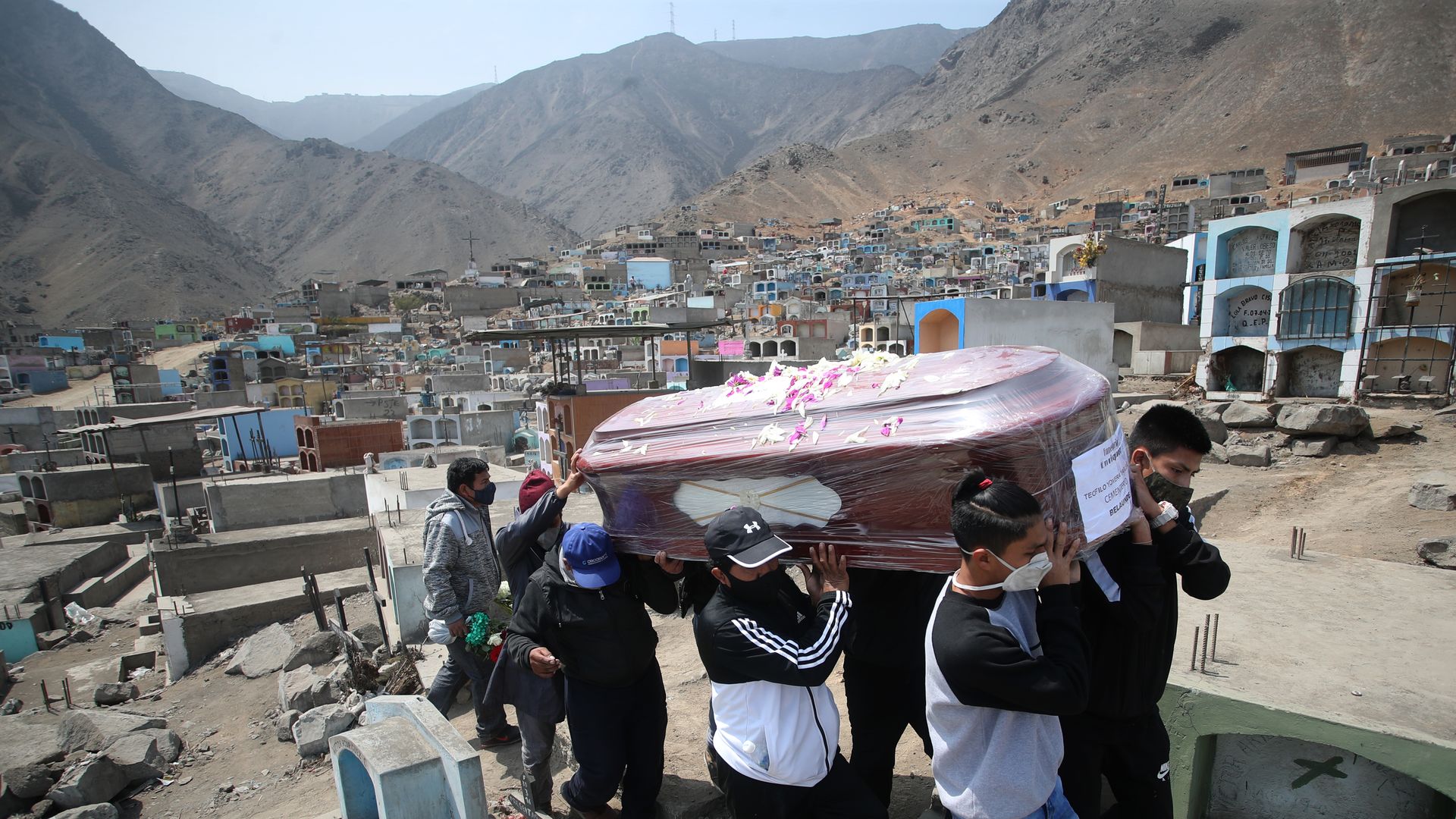
Peru officials revised the country's COVID-19 death toll Monday from 69,342 to 180,764 after a review.
Why it matters: The almost tripling of the number listed Sunday means the country has the worst pandemic death rate per capita, according to Johns Hopkins University data.
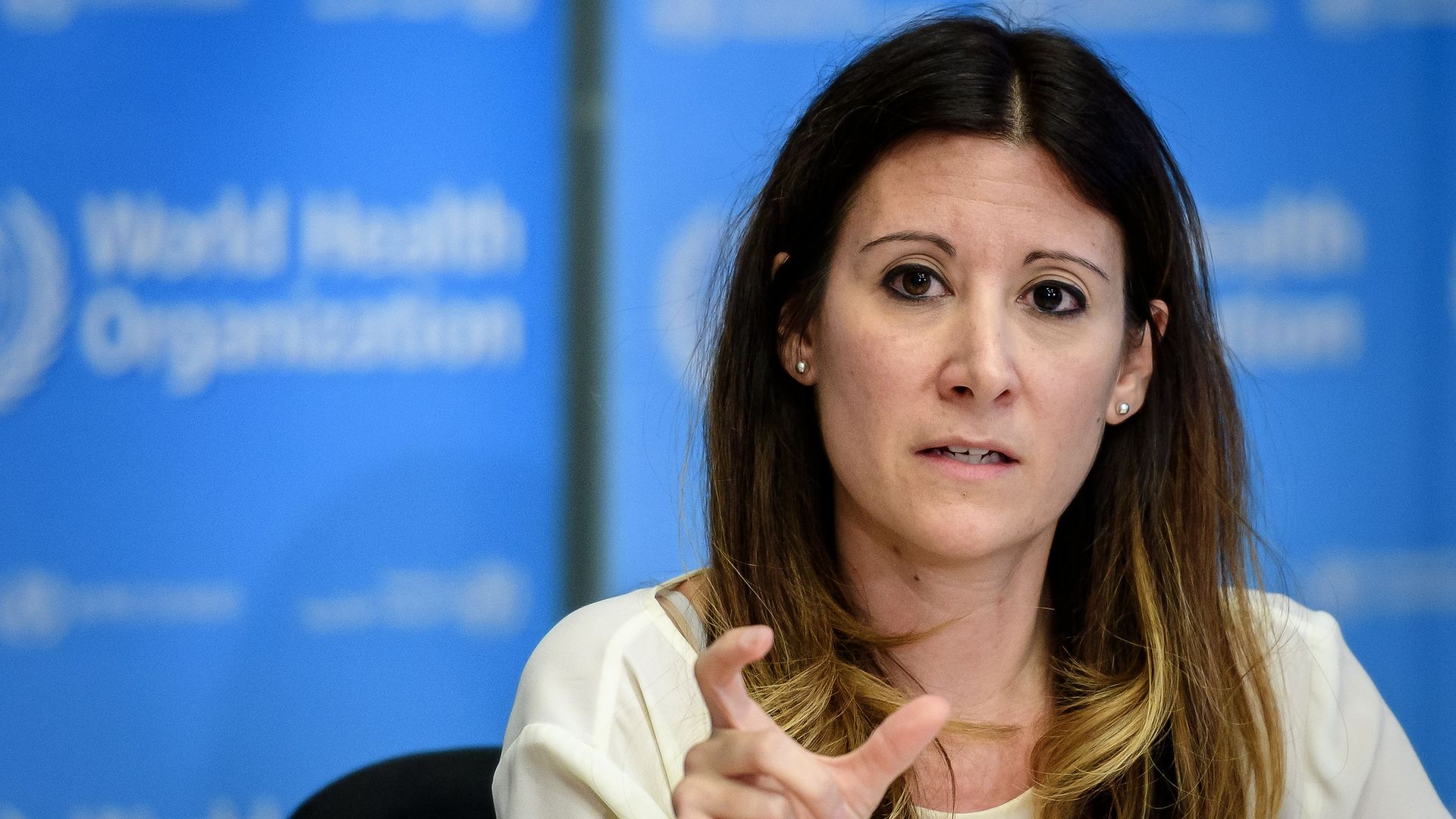
The World Health Organization announced Monday a new naming system for COVID-19 variants that uses letters from the Greek alphabet.
Why it matters: Health officials have been concerned that the strains' scientific names, comprising numbers and letters, are leading people to refer to them by the place they were detected, such as the "U.K. variant" for B.1.1.7, which the WHO notes in a Twitter post "is stigmatizing & discriminatory."