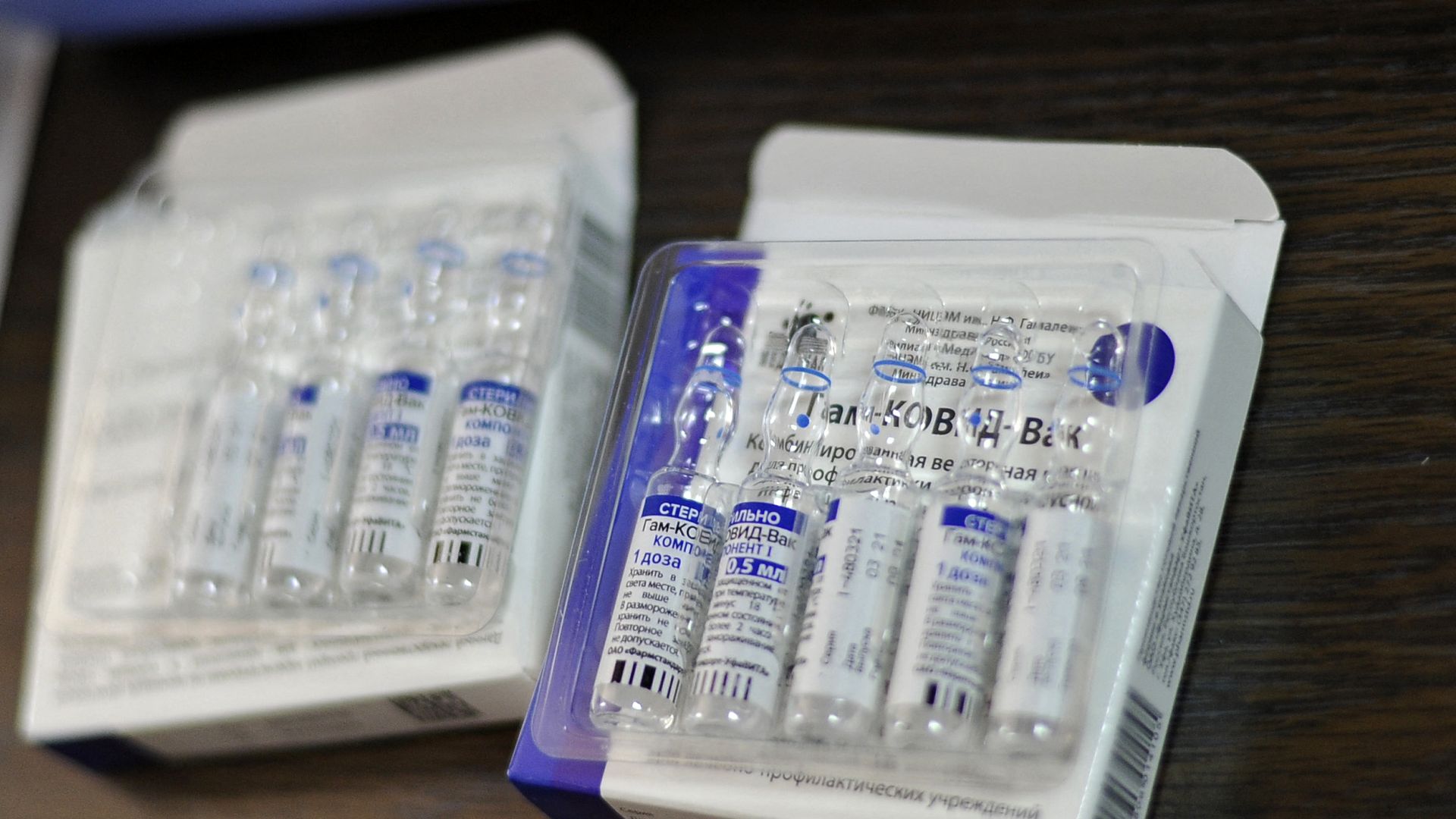
Brazilian health regulators said this week they will not recommend importing Russia's Sputnik V vaccine, citing unknowns and safety concerns about the shot's development and manufacturing.
The big picture: Brazil has seen a recent surge in COVID-related cases and deaths, driven by relaxed mitigation measures and a more contagious local variant that has overwhelmed the country's health system. To date, roughly 6% of Brazil's population has been inoculated against the coronavirus, Bloomberg reports.
Brazil's Senate officially launched an investigation Tuesday into the government's handling of the coronavirus pandemic, a move that could bring political consequences for President Jair Bolsonaro, Reuters reports.
Why it matters: Brazil has suffered the world's second-highest death toll from COVID-19, with roughly 400,000 deaths, per Reuters.
Foreign students from China, Iran, Brazil and South Africa will be exempt from pandemic travel bans and will be allowed back into the U.S. as long as they have proper visas, the State Department announced in a statement.
Why it matters: International students are a major source of revenue for U.S. universities and institutions saw their enrollments plunge last fall.
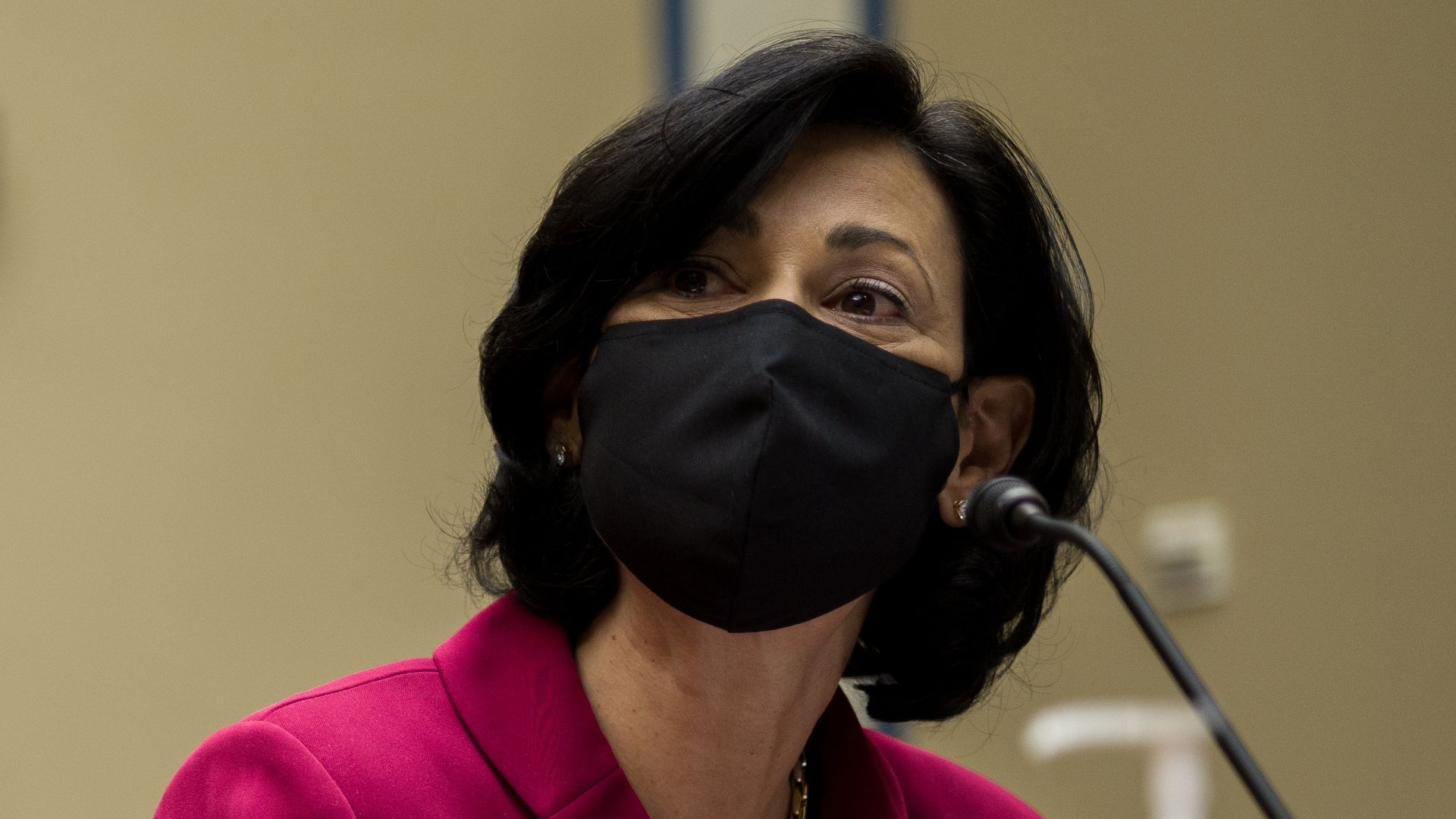
Fully vaccinated people can venture outdoors without masks, according to updated guidance from the Centers for Disease Control and Prevention issued Tuesday.
The big picture: The guidelines come as more than nearly 29% of people in the U.S. have been fully vaccinated and more than 42% have received at least one dose.
An oral antiviral drug to stop the virus that causes COVID-19 from replicating could be ready next year "if all goes right," Pfizer CEO Albert Bourla told CNBC on Tuesday, adding that the drug should work against all variants of the virus.
Several big health insurers have quietly begun charging patients for their COVID-19 treatment, Kaiser Health News reports.
Why it matters: Insurers waived most cost-sharing for coronavirus treatments last year, but those waivers are now expiring. And the costs for people who end up in the hospital "could be substantial," per KHN.
Employers are taking a harder look at mental health benefits and employee resource groups as they design their post-COVID benefits packages, according to a new survey by Willis Towers Watson.
Details: 51% of employers said mental health is among their top three benefit priorities; and 33% said the same for employee resource groups.
The White House is unlikely to include a major effort to lower prescription drug prices in its upcoming legislative package, the Washington Post and the Wall Street Journal reported yesterday.
Why it matters: Such a measure would allow Medicare to negotiate the price of drugs and is expected to lower U.S. drug spending by billions of dollars — which has been a top Democratic priority for years.
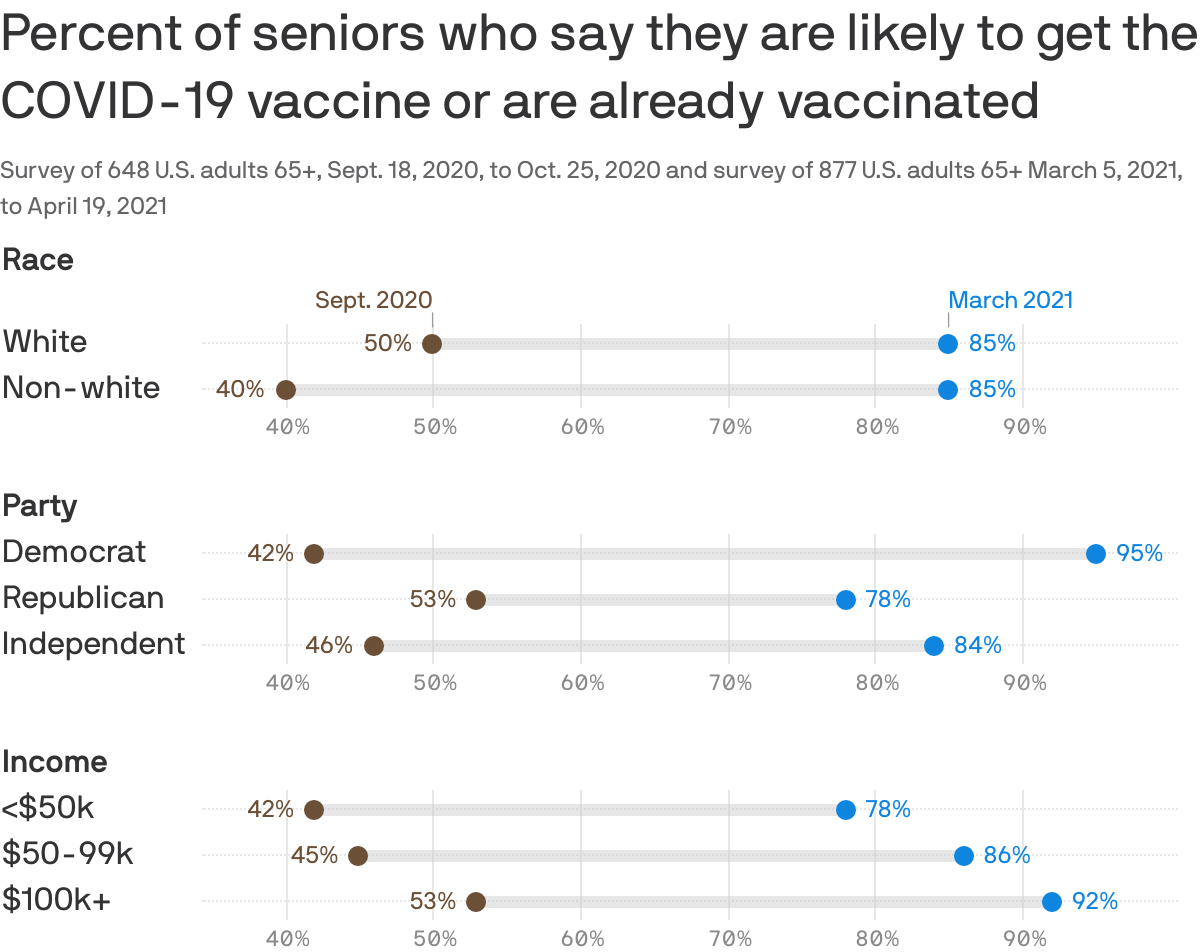
Seniors are more enthusiastic about the coronavirus vaccines than younger Americans, but even that high-risk population is still subject to some partisan divides, according to Axios-Ipsos polling over the last several months.
The big picture: In the most recent waves of our Axios-Ipsos survey, 85% of seniors said they had already been vaccinated, orwere likely to get vaccinated.
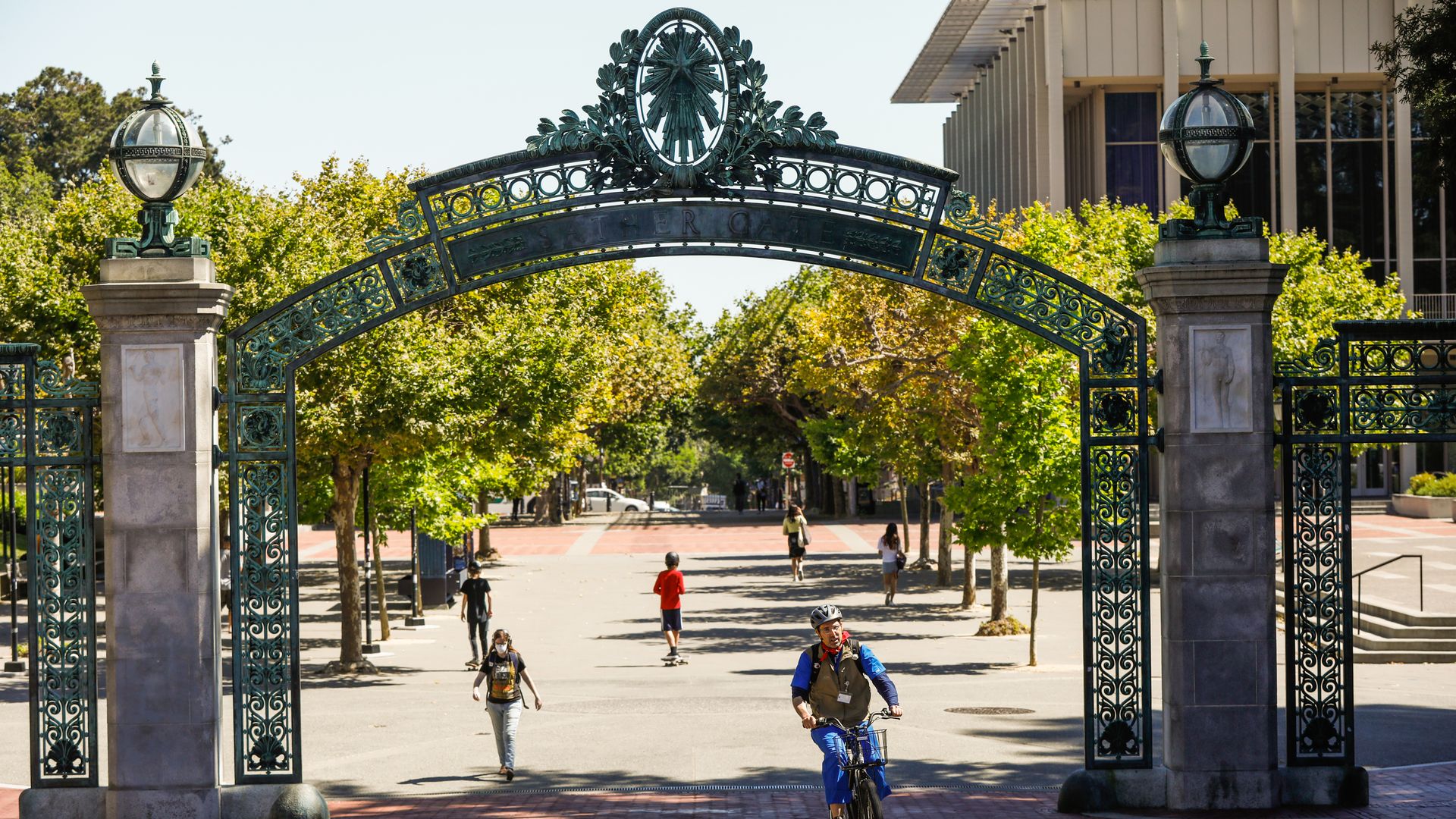
Several state university systems and public universities have announced in the past week that they will require students returning to campuses in the fall to be vaccinated against COVID-19.
Why it matters: The expansion into state and public school systems will significantly boost the number of institutions requiring coronavirus vaccines.
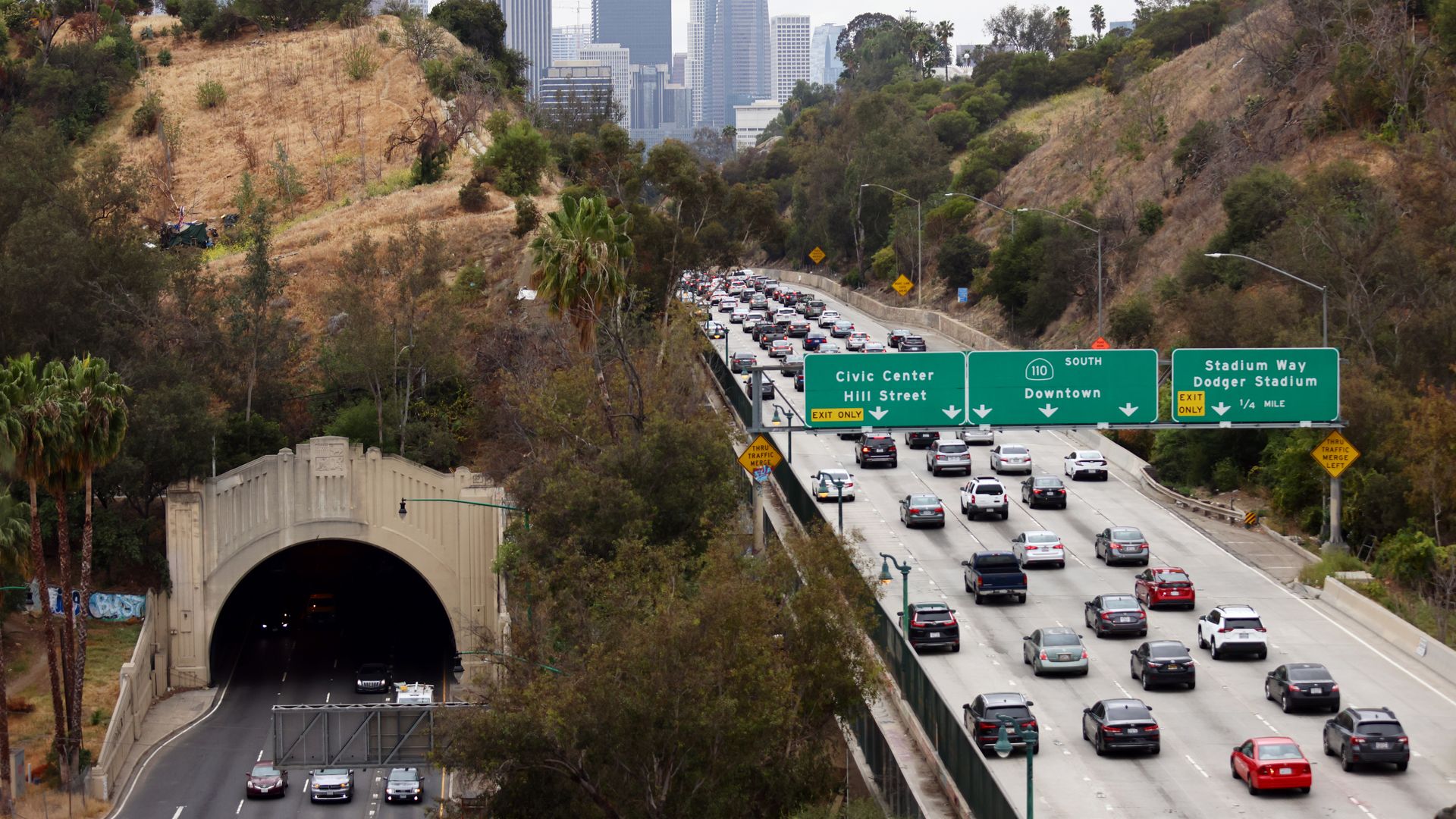
The Environmental Protection Agency (EPA) on Monday signaled its intention to rescind Trump-era policies blocking California from setting its own vehicle carbon emissions rules.
Why it matters: The move would restore California's ability to be an environmental regulator after former President Trump stripped the state of that right.