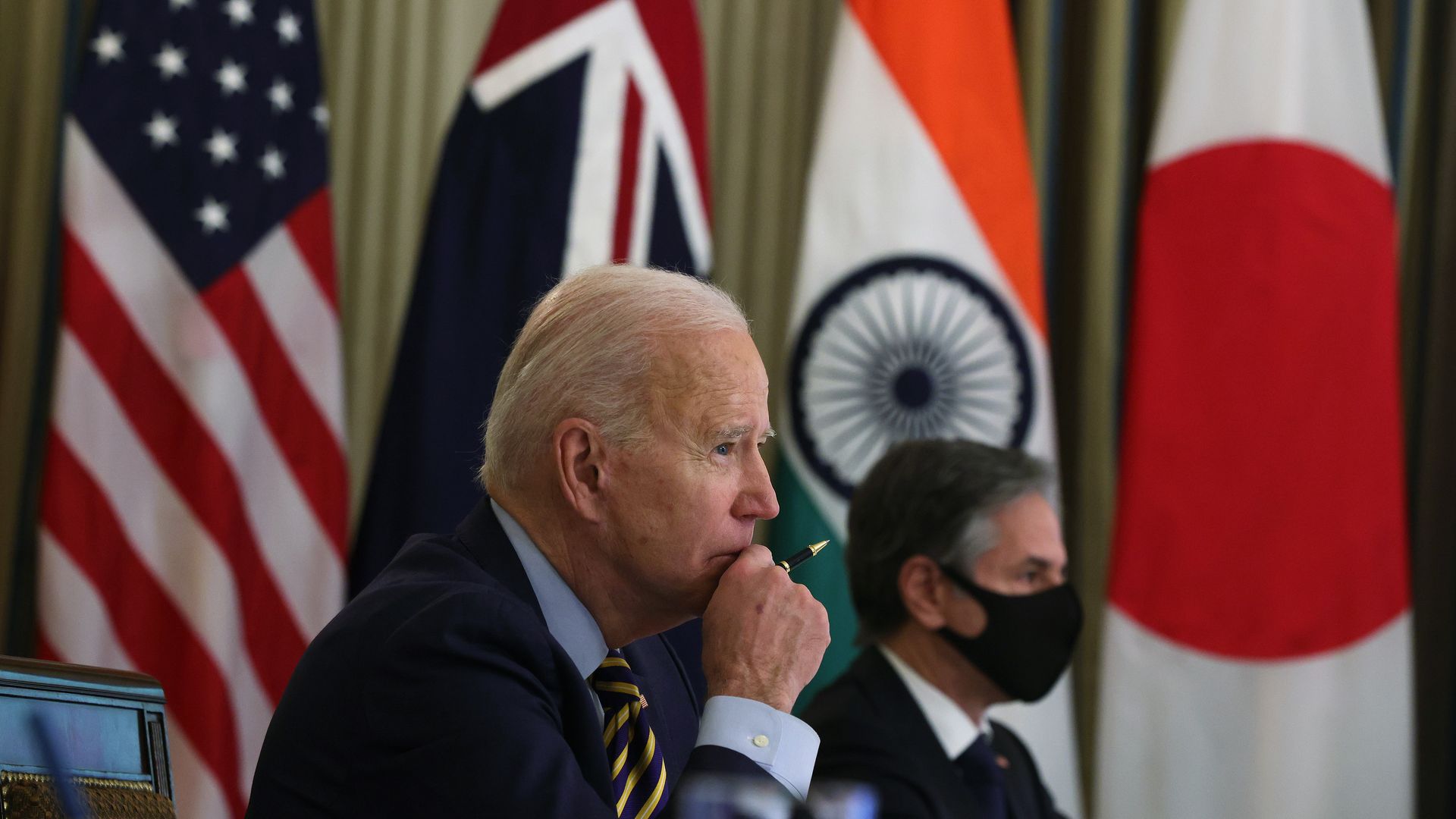
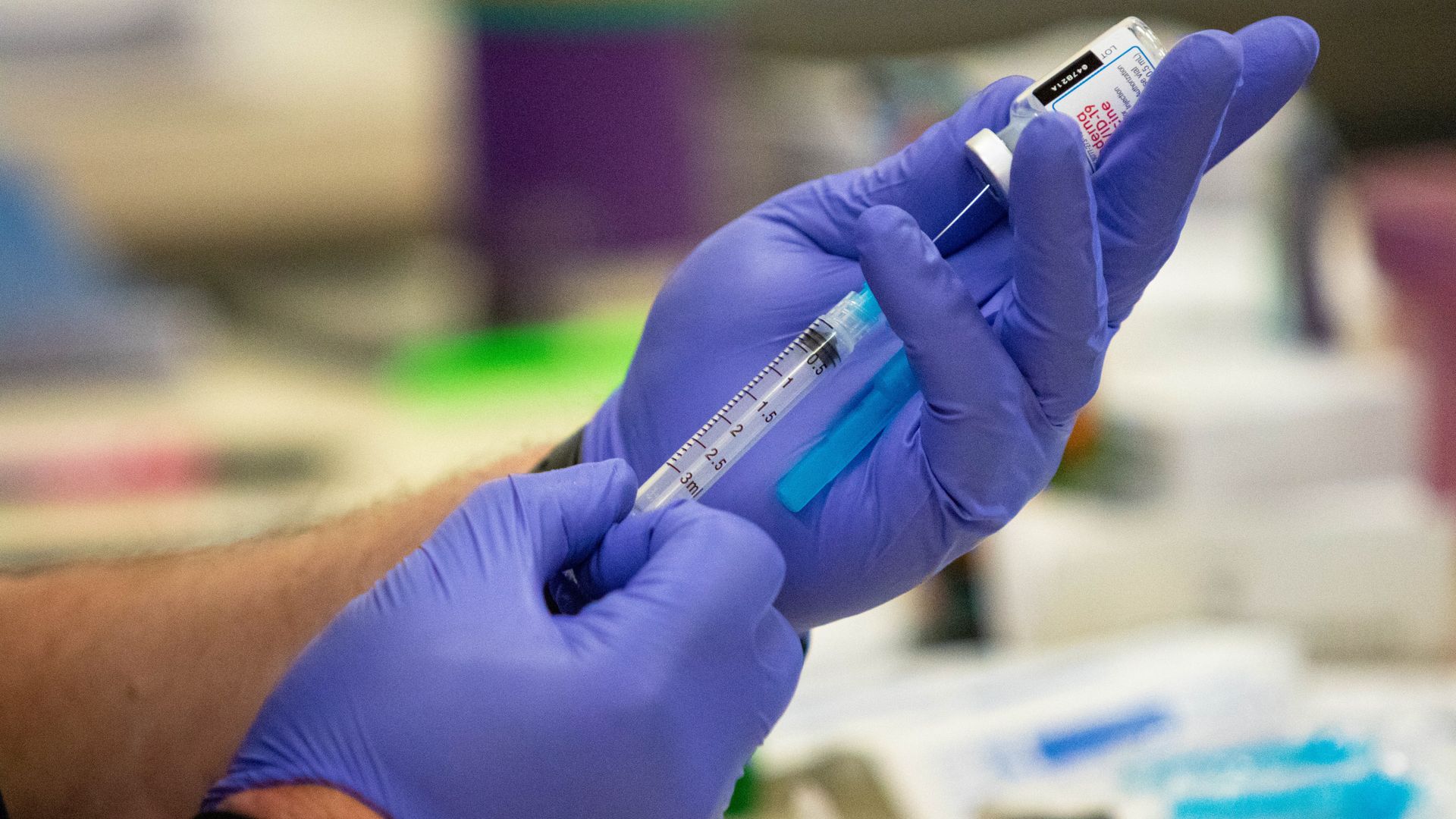
The Biden administration took its biggest step yet toward becoming a global supplier of coronavirus vaccines, announcing that it would export 60 million AstraZeneca doses over the next several weeks.
Why it matters: President Biden has been under intense global scrutiny for his "Americans first" approach. Alone among the four major producers, the U.S. has kept nearly its entire supply up to now.
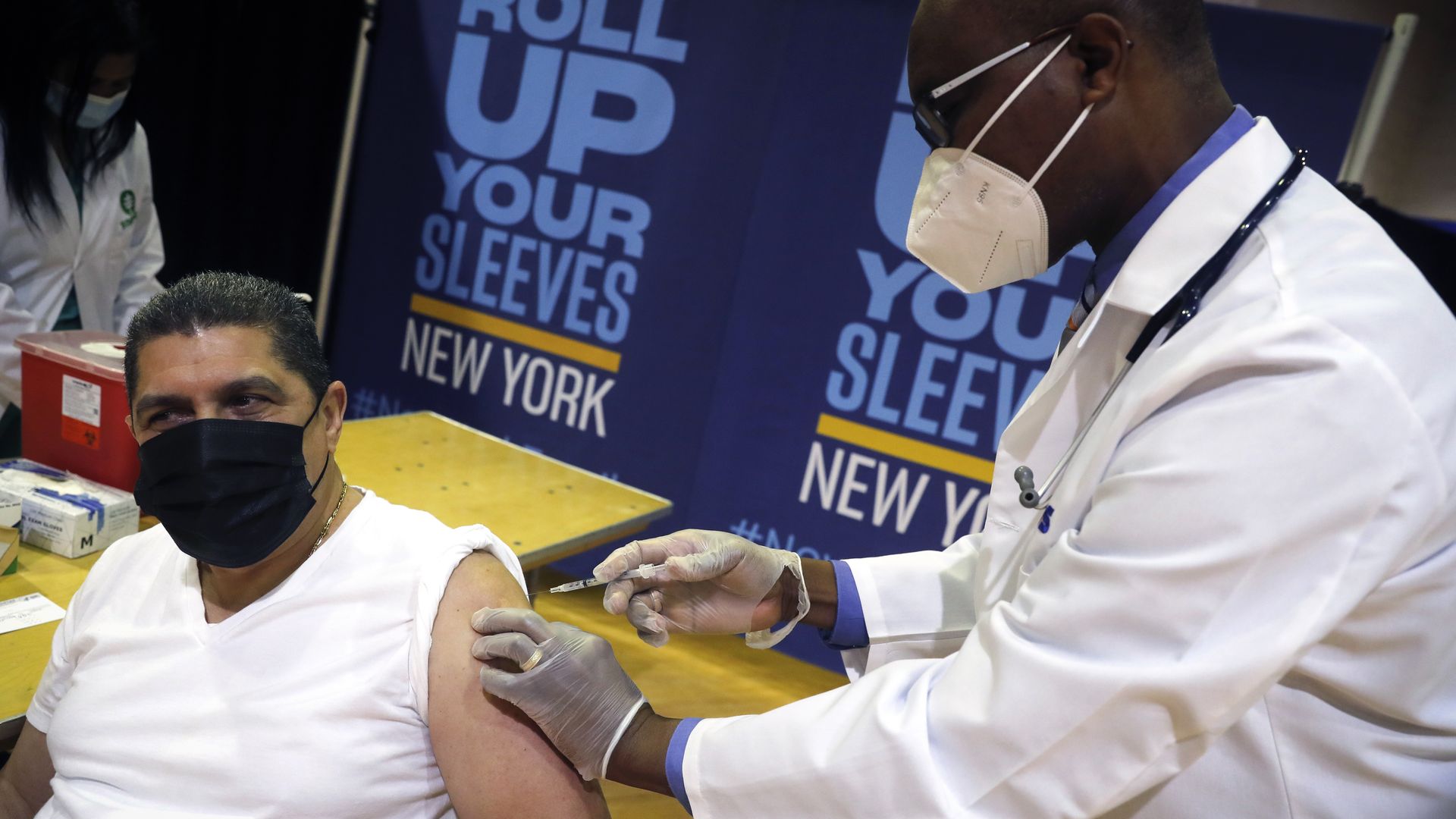
New data shows that around 8% of Americans who have gotten a first dose of the Pfizer or Moderna vaccines have missed their second doses. That figure, compounded with data on vaccine hesitancy more broadly, doesn’t bode well for the U.S. reaching a vaccination threshold that allows for a return to normalcy some time soon.
Axios Re:Cap digs into those numbers and what they tell us about vaccine hesitancy with health policy expert Dr. Zeke Emanuel, who advised President Obama and served on President-elect Biden’s COVID-19 task-force.
The U.S. will begin sharing its full inventory of AstraZeneca vaccine doses with countries around the world once an FDA safety review is complete, AP reports.
Why it matters: The Biden administration had been under intense global pressure for refusing to share its stockpile of the AstraZeneca vaccine, which is critical to vaccine rollouts in countries like India but not approved for use in the U.S. Per AP, the administration now expects to be able to share around 60 million doses in the coming months.
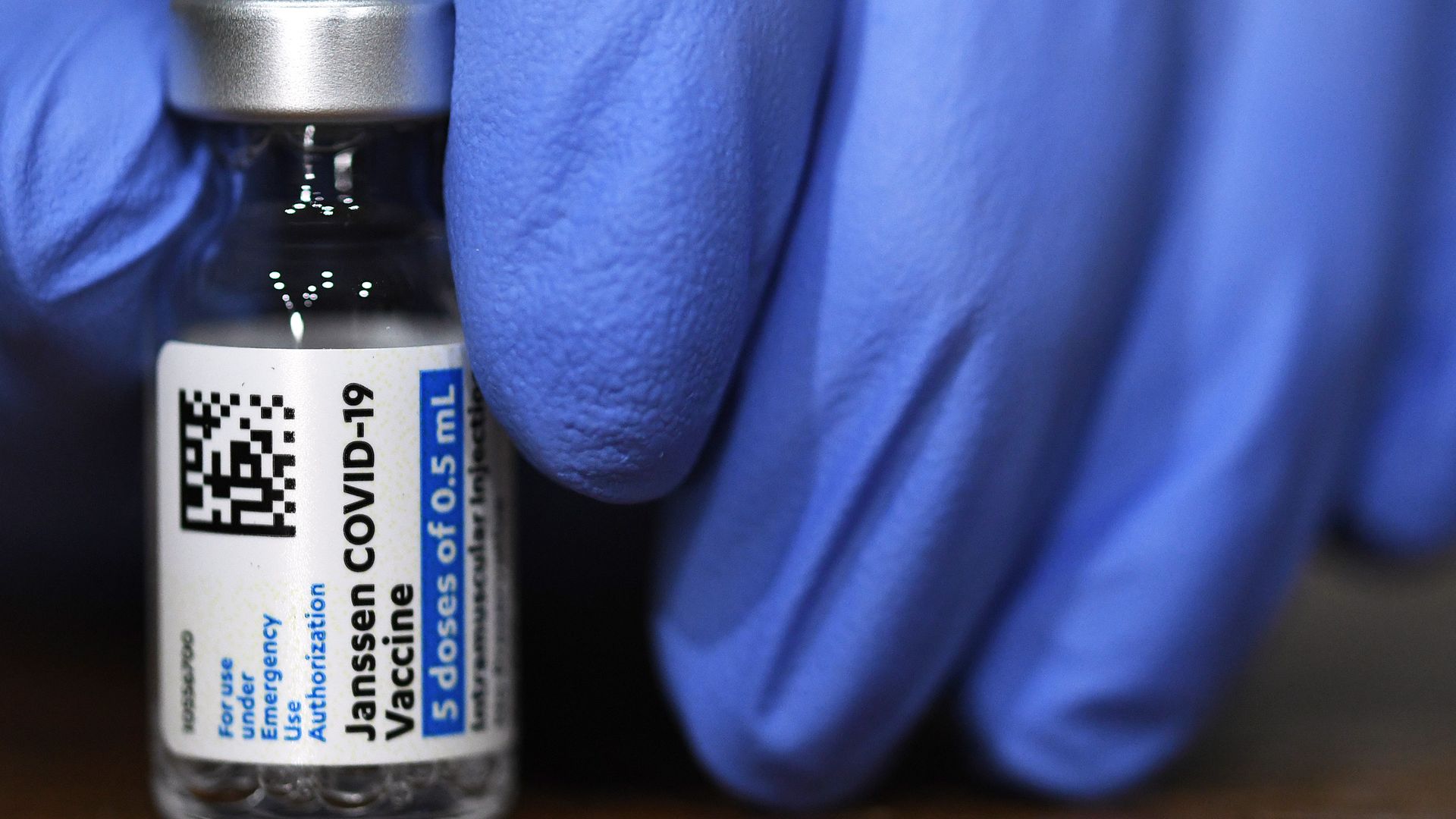
About 3 in 4 unvaccinated adult Americans are unwilling to get the Johnson & Johnson coronavirus vaccine, a Washington Post-ABC News poll out Monday indicates.
Why it matters: Less than half of all U.S. adults polled said they thought the J&J shot — which presents fewer logistical challenges than the more temperature-controlled, two-shot Pfizer and Moderna vaccines — is safe.
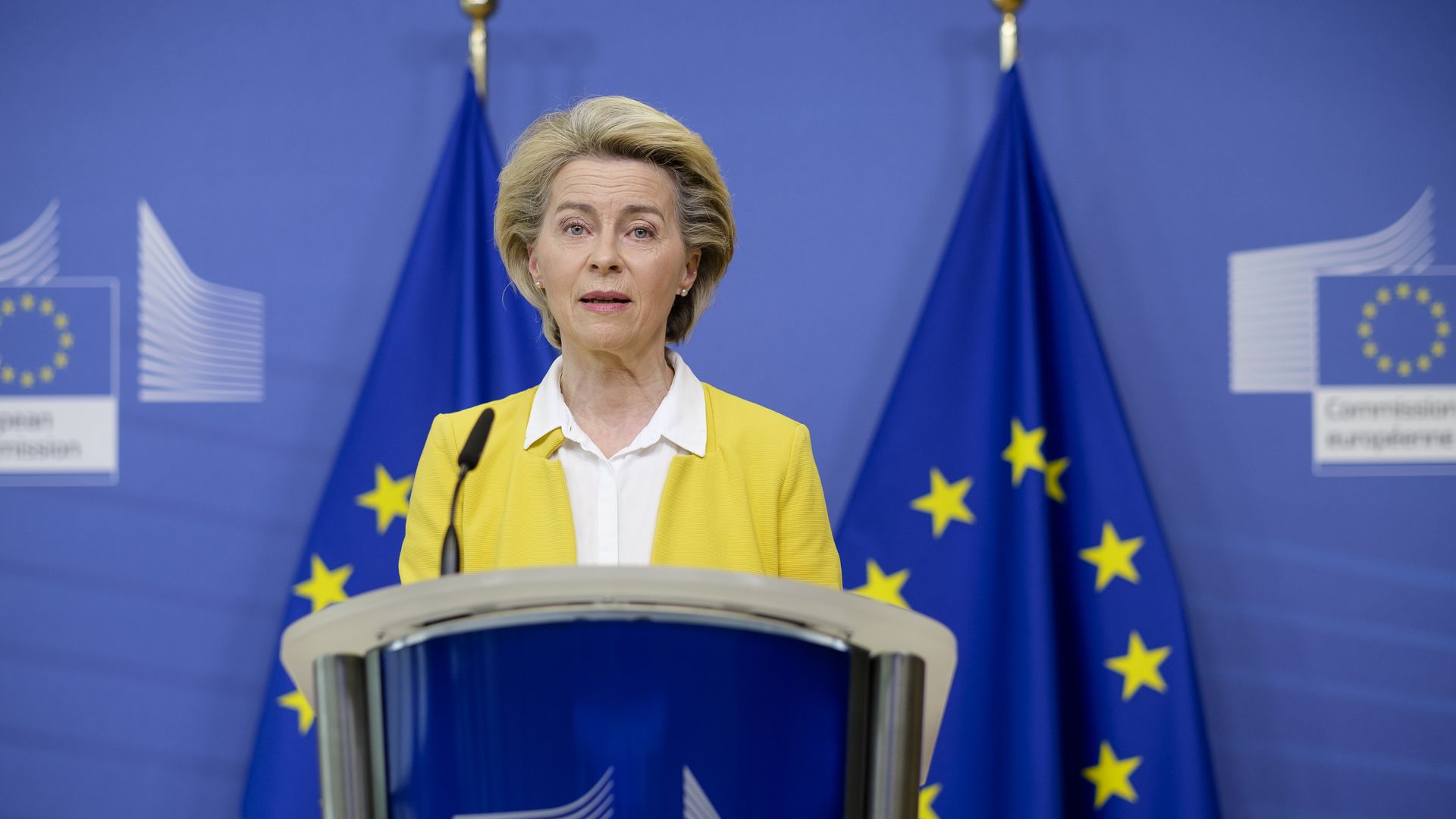
The European Commission has launched legal proceedings against AstraZeneca for providing only a third of the supply of coronavirus vaccines agreed to in its contract, a spokesperson confirmed Monday.
Why it matters: It's the latest in a string of controversies related to the European Union's vaccine rollout, which has been plagued by supply shortages, a slow pace of distribution, and concerns about potential rare blood clots linked to AstraZeneca and Johnson & Johnson.
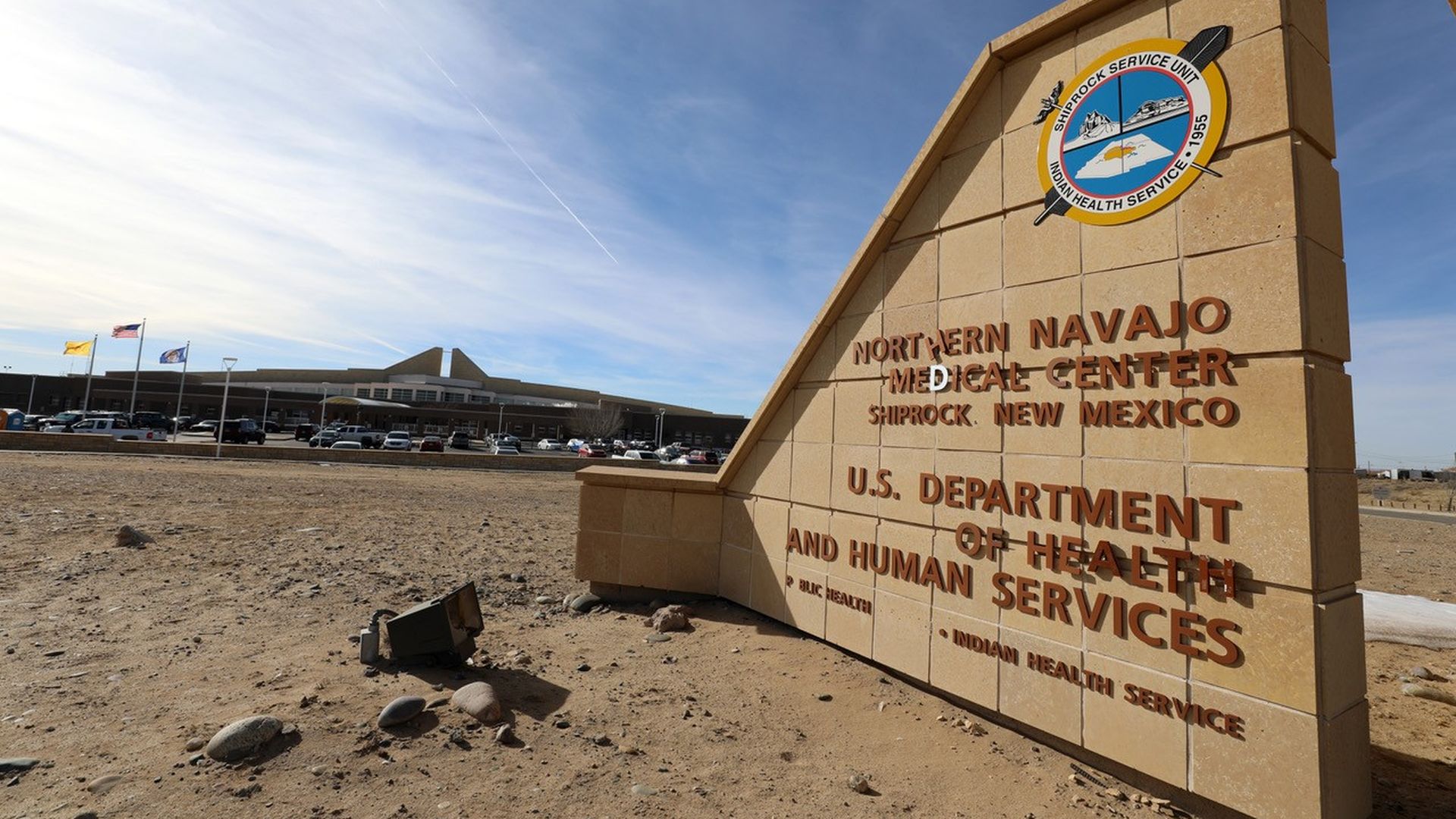
Months after reporting dangerously high COVID-19 infection levels, the Navajo Nation now says it has vaccinated more than half of its adults for the disease, outpacing the rest of the U.S.
Why it matters: The Navajo Nation is the largest reservation in the U.S., with over 300,000 members.
Sanofi announced Monday it will manufacture up to 200 million doses of Moderna's COVID-19 vaccine at its site in Ridgefield, New Jersey, from September.
Why it matters: The agreement between Sanofi and Moderna should not only boost the U.S. coronavirus vaccine rollout, it should also help global efforts as the doses will likely be exported.
The research is becoming only more clear: People who have had COVID — even those who never had severe infections — are at risk of ongoing health problems, including some serious ones.
Why it matters: Long after the majority of Americans are vaccinated, patients and the U.S. health system will likely bear the brunt of millions of people who are struggling to get back to normal.
Essential workers who are not in health care are less likely to want a vaccine than the rest of the general public, according to new figures from the Kaiser Family Foundation.
Why it matters: As vaccines become more available, health officials are increasingly grappling with vaccine hesitancy, particularly among those most at risk.
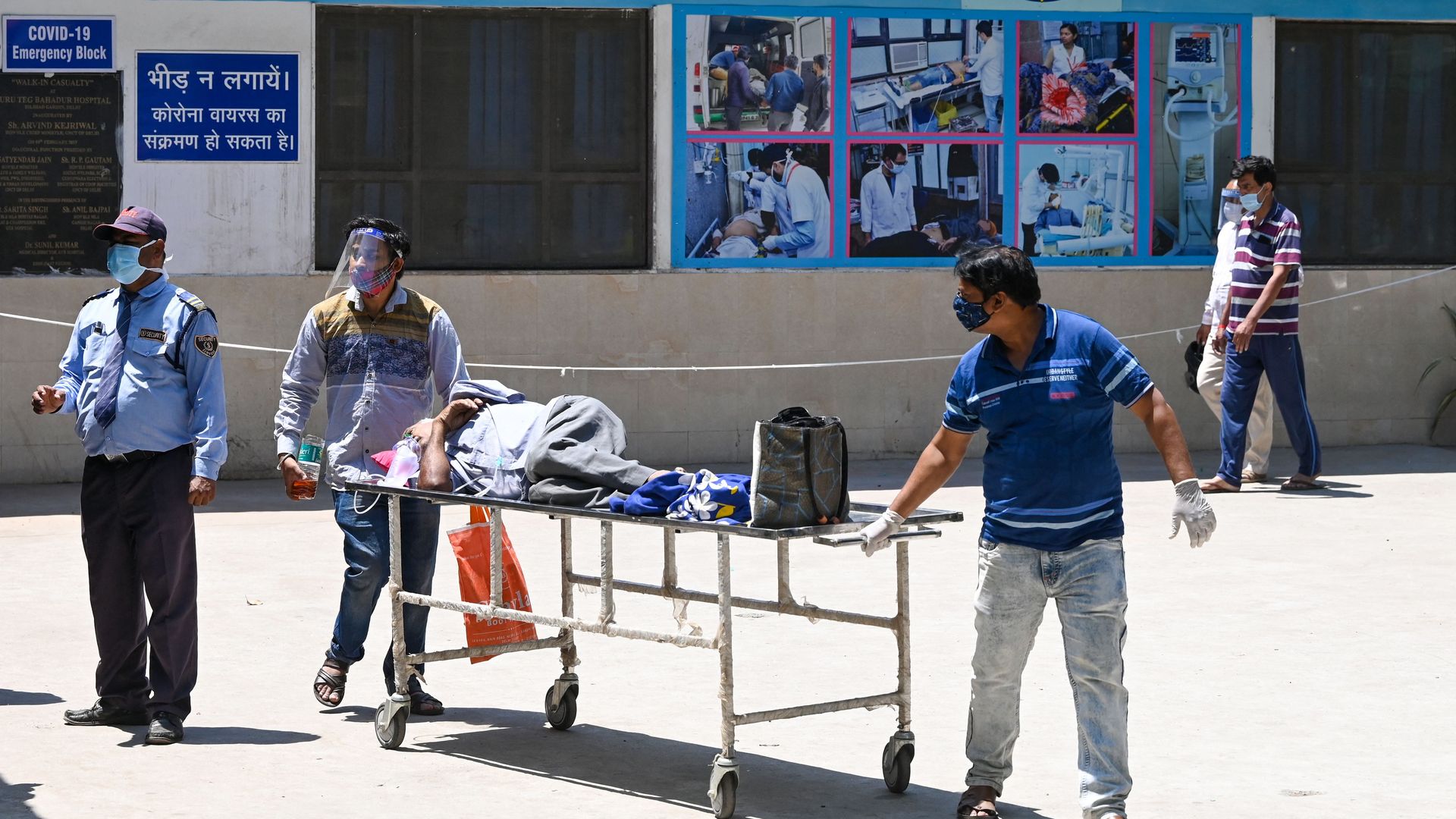
The Biden administration has pledged to send vital resources and supplies to India, as the country set a new global daily COVID-19 cases record for a fifth straight day Monday.
The big picture: As hospitals continued to be overwhelmed with coronavirus patients amid a widespread oxygen shortage, India's health ministry reported 352,991 more infections, taking the total past 17 million. A record 2,812 deaths were confirmed Monday, taking the total to 195,123 since the pandemic began.
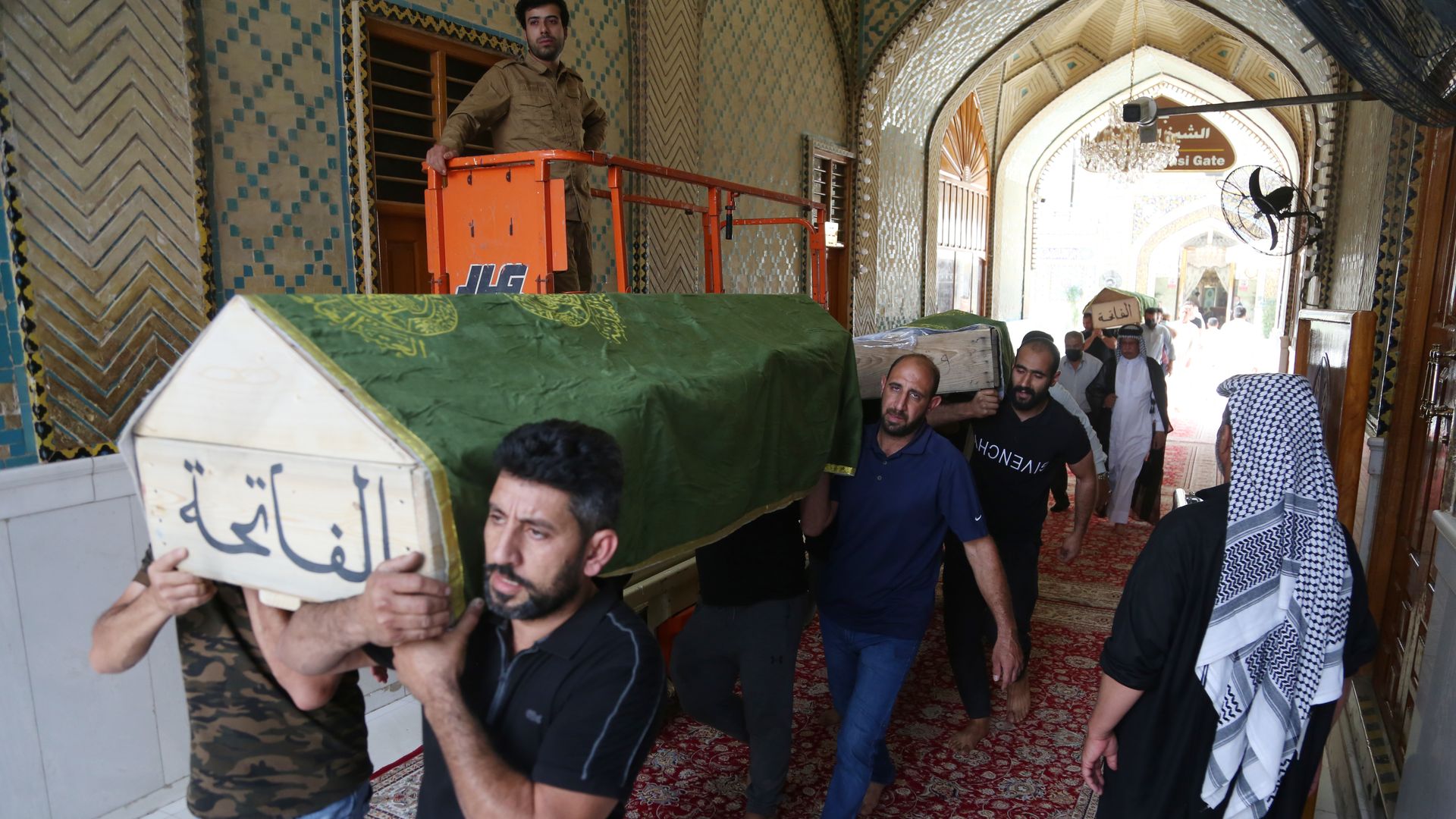
Iraq's Prime Minister Mustafa Al-Kadhimi announced Sunday an urgent investigation into a fire at a hospital in southeastern Baghdad that killed at least 82 people and wounded 110 others a day earlier.
Driving the news: Kadhimi has given investigators 24 hours to report back over the fire, which started on a floor designated for the pulmonary intensive care unit of the Ibn al-Khatib hospital after an accident caused an oxygen tank to explode, according to officials.