Facebook says it will take tougher action during the pandemic against claims that vaccines, including the COVID-19 vaccination, are not effective or safe.
Why it matters: It's a partial reversal from Facebook's previous position on vaccine misinformation. In September, Facebook CEO Mark Zuckerberg said the company wouldn't target anti-vaccination posts the same way it has aggressively cracked down on COVID misinformation.
Many of America's COVID-19 spikes came on the heels of holidays, when friends and families gathered to celebrate. Could Super Bowl LV lead to another spike?
Everything seems to be on the right track with the coronavirus in the U.S., finally. Vaccinations are going up and cases are going down. But variants could mess it all up.
Driving the news: South Africa hit the brakes yesterday on a planned rollout of the AstraZeneca vaccine, after a clinical trial appeared to suggest that the shot didn't work against the South African variant — arguably the scariest of the variants.
No matter how hard you squint, or what angle you look at it from, the coronavirus vaccines are a triumph. They are saving lives today; they will help end this pandemic eventually; and they will pay scientific dividends for generations.
The big picture: The pandemic isn’t over. There are still big threats ahead of us and big problems to solve. But for all the things that have gone wrong over the past year, the vaccines themselves have shattered even the most ambitious expectations.
Roughly 32 million Americans have gotten at least one dose of a coronavirus vaccine, according to data from the CDC. A little less than one-third of that group has gotten both doses.
Why it matters: The Biden administration is trying to get as many shots into as many arms as quickly as possible — the key not only to saving lives today, but to containing the pandemic and heading off the spread of more dangerous variants of the virus.
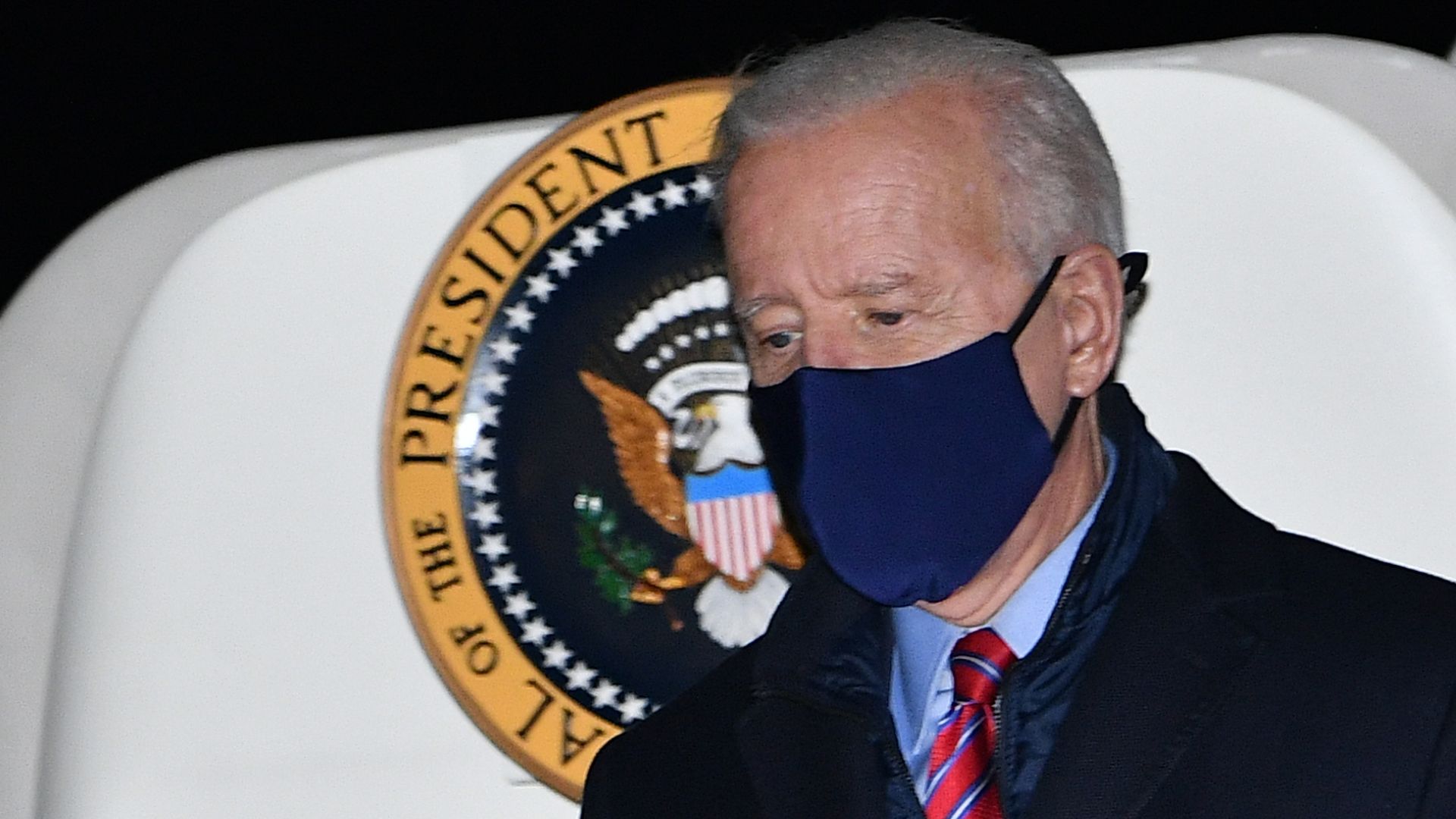
School closures across the country and a lack of in-person learning due to the coronavirus is "a national emergency," President Biden stressed in a pre-Super Bowl interview with CBS on Sunday.
South Africa stopped the distribution of the AstraZeneca-Oxford vaccine on Sunday, after researchers found that the vaccine "provides minimal protection" against infection from the new strain first identified in the country, Reuters reports.
Why it matters: A halted vaccine rollout is a huge setback for South Africa as it struggles to curb the spread of the virus and its variant and the country approaches 50,000 deaths.
Why it matters: The preprint study from MedRxiv, which has not been peer-reviewed, comes after the CDC and top infectious disease experts have warned that the highly transmissible COVID-19 variant could become the dominant U.S. strain.
Why it matters: Black communities in the U.S. have borne a disproportionate brunt of the effects of the pandemic. Data also now suggests they are being vaccinated at far lower rates than white Americans in the states that collect such information, writes Axios Vitals author Caitlin Owens.
Sarah Gilbert, a co-developer of the Oxford-AstraZeneca vaccine, told the BBC on Sunday that an updated vaccine will likely be available this fall to combat the COVID-19 strain first detected in South Africa.
Why it matters: The variant found in South Africa has concerned experts, including Dr. Anthony Fauci, and there have been several confirmed cases of the likely more transmissible strain in the U.S.
The NFL's giant COVID-19 experiment ends Sunday with the improbable feat of an on-time Super Bowl, capping a season with no canceled games.
Why it matters: The season suggests that with the right resources, safety measures and cooperation — all of which have been lacking in the general U.S. response — life can go on during the pandemic without uncontrolled spread of the virus.