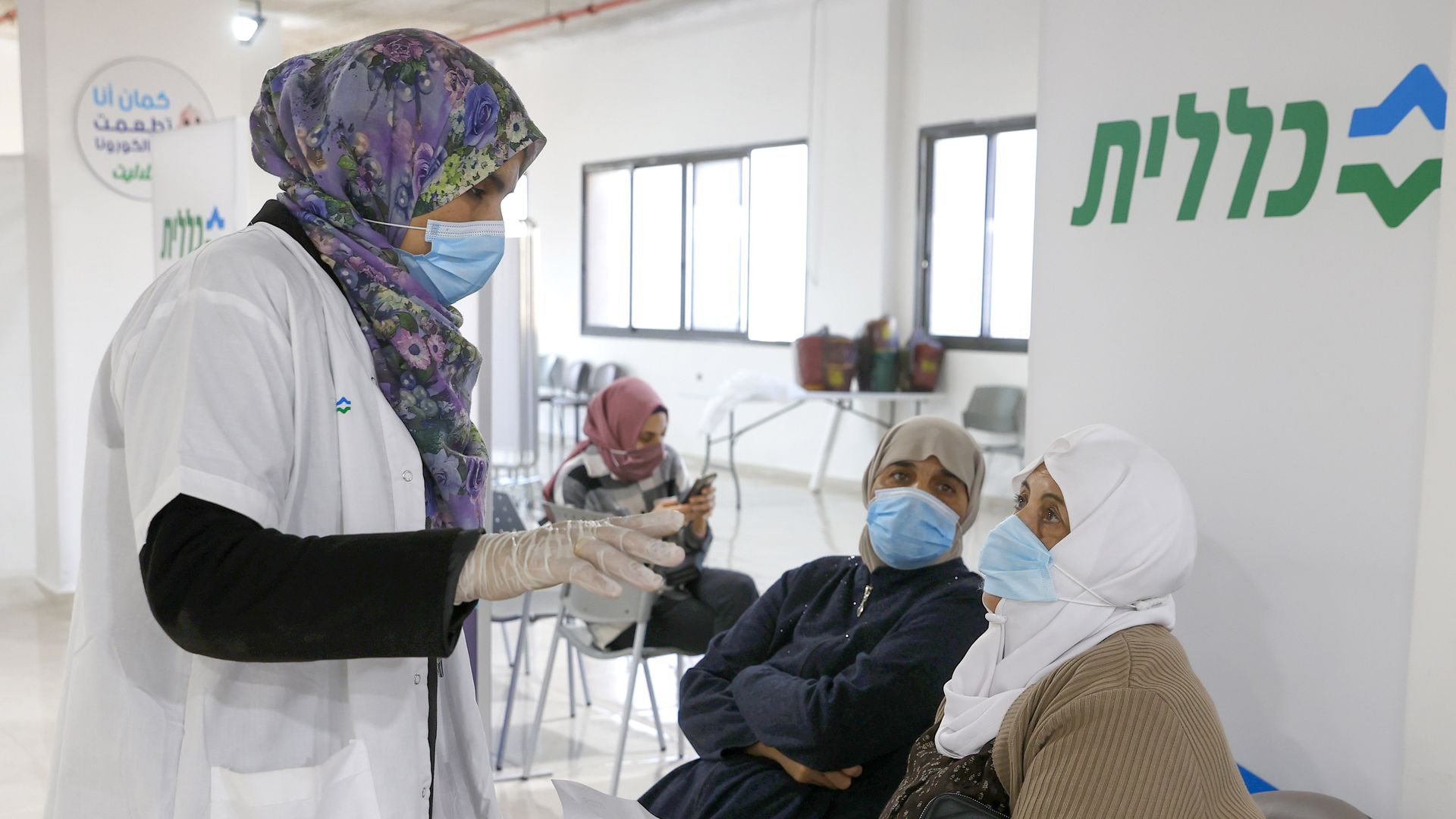
Israel will impose new restrictions in its countrywide lockdown, closing schools and nonessential businesses beginning Friday to combat surging cases of the coronavirus, government ministers voted Tuesday.
The big picture: Israel’s COVID-19 cases, which dropped in October, have jumped to more than 5,000 reported daily in the new year, Johns Hopkins University data shows. Prime Minister Benjamin Netanyahu called on the public Tuesday to heed new restrictions as a faster-spreading variant of the virus first detected in the U.K. multiplies.
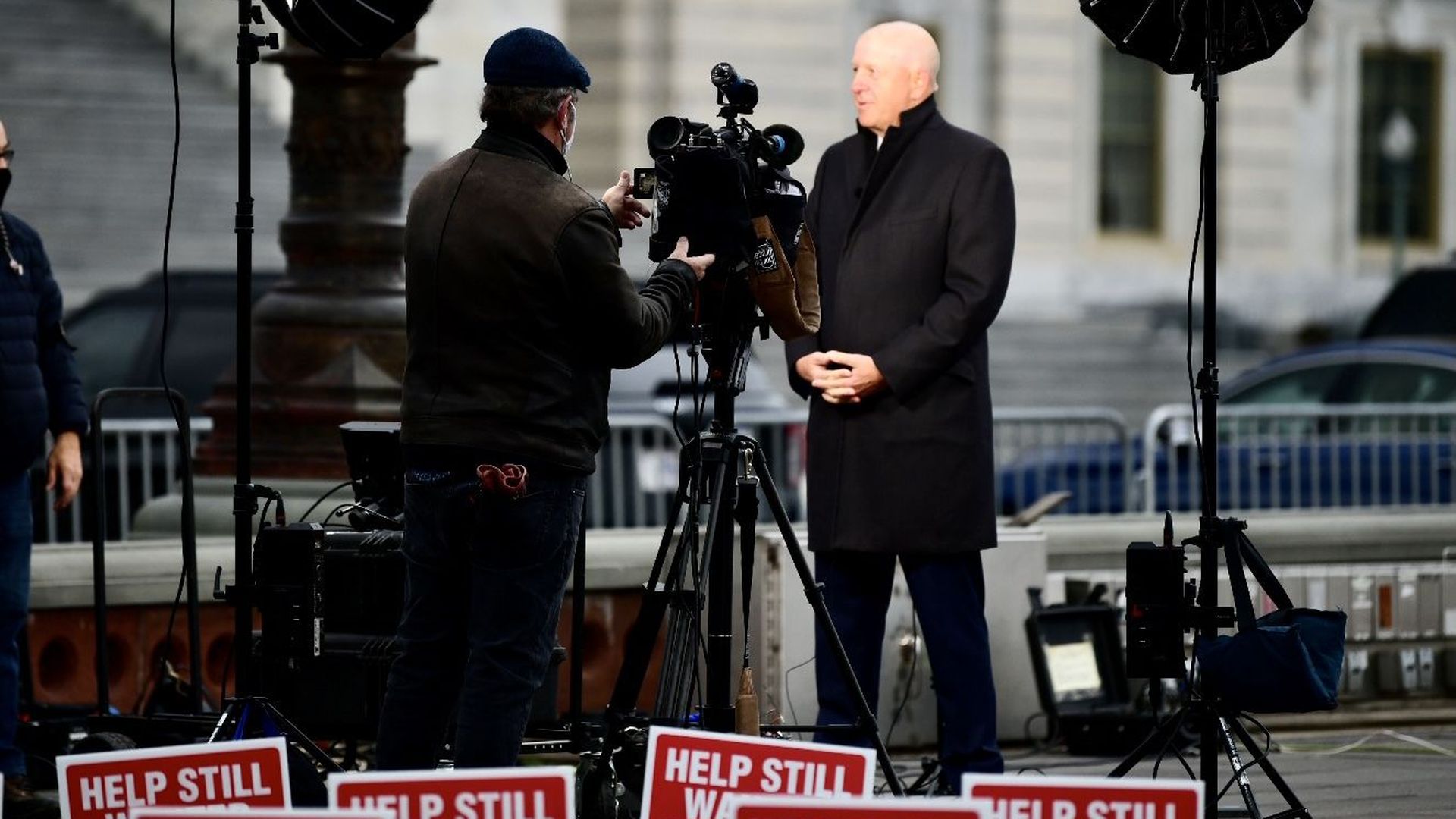
In Washington on Tuesday to meet with small businesses, Goldman Sachs CEO David Solomon told Axios that some of the survival pivots entrepreneurs have made in the past year will last past the pandemic.
What he's saying: "A lot of small businesses have had to make some investment in digitization and technology to connect to their customers more digitally than directly," Solomon said. "Some of that will last and will help their businesses."
World Health Organization director-general Tedros Adhanom Ghebreyesus admonished China on Tuesday for delaying authorization that would allow groups of scientists from other countries to investigate the origins of the novel coronavirus in Wuhan.
The Food and Drug Administration released a statement last night throwing cold water, for now at least, on ideas to shake up coronavirus vaccine dosing regimens in order to stretch limited supplies.
What's happening: Some experts have been pushing ideas like delaying the administration of second doses or halving the vaccine dosage given in order to vaccinate more people sooner, but none of these methods have been tested in clinical trials.
A World Health Organization team is beginning a long-delayed investigation in China into how SARS-CoV-2 emerged, as a theory about a possible lab accident is raised in a major magazine.
Why it matters: Understanding the origins of COVID-19 is vital if we're going to prevent the next pandemic.
Only about 14% of the roughly 2.5 million COVID-19 vaccine doses distributed to nursing home residents and staff have been administered, according to data from the Centers for Disease Control and Prevention.
Why it matters: The slower-than-ideal rollout illustrates the complexity of vaccinating what should be one of the easiest populations to reach — and one that remains extremely vulnerable to the virus.
Why it matters: New York is the fourth state to confirm a case of the variant, which is believed to be at least 50% more contagious. Colorado, California and Florida have also reported cases.
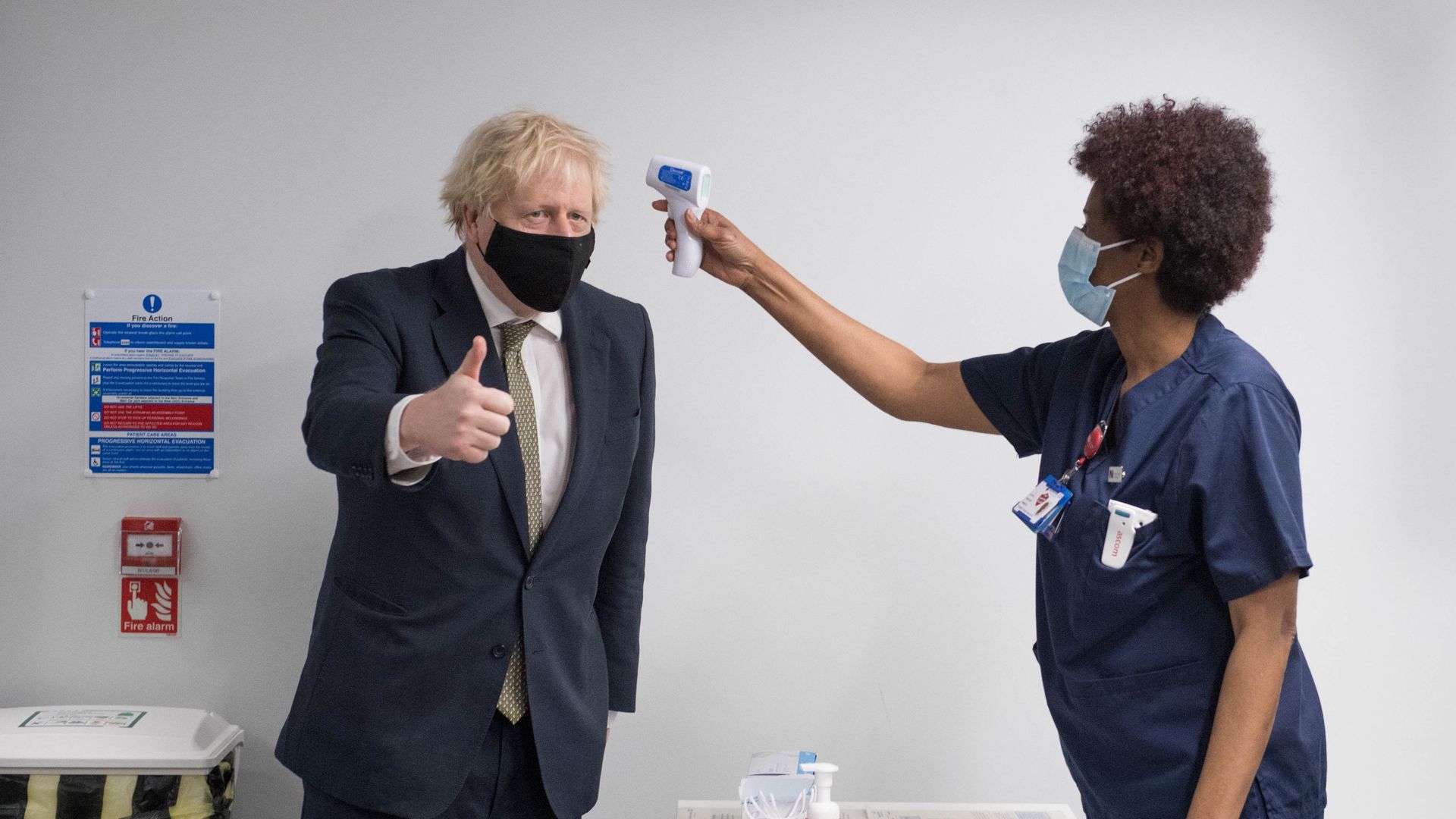
U.K. Prime Minister Boris Johnson announced on Monday that England will enter a six-week lockdown, as the spread of a highly contagious new coronavirus variant threatens to overwhelm the National Health Service.
Why it matters: It's England's third national lockdown, following the initial March restrictions during the start of the pandemic and a four-week "circuit-breaker" in November.
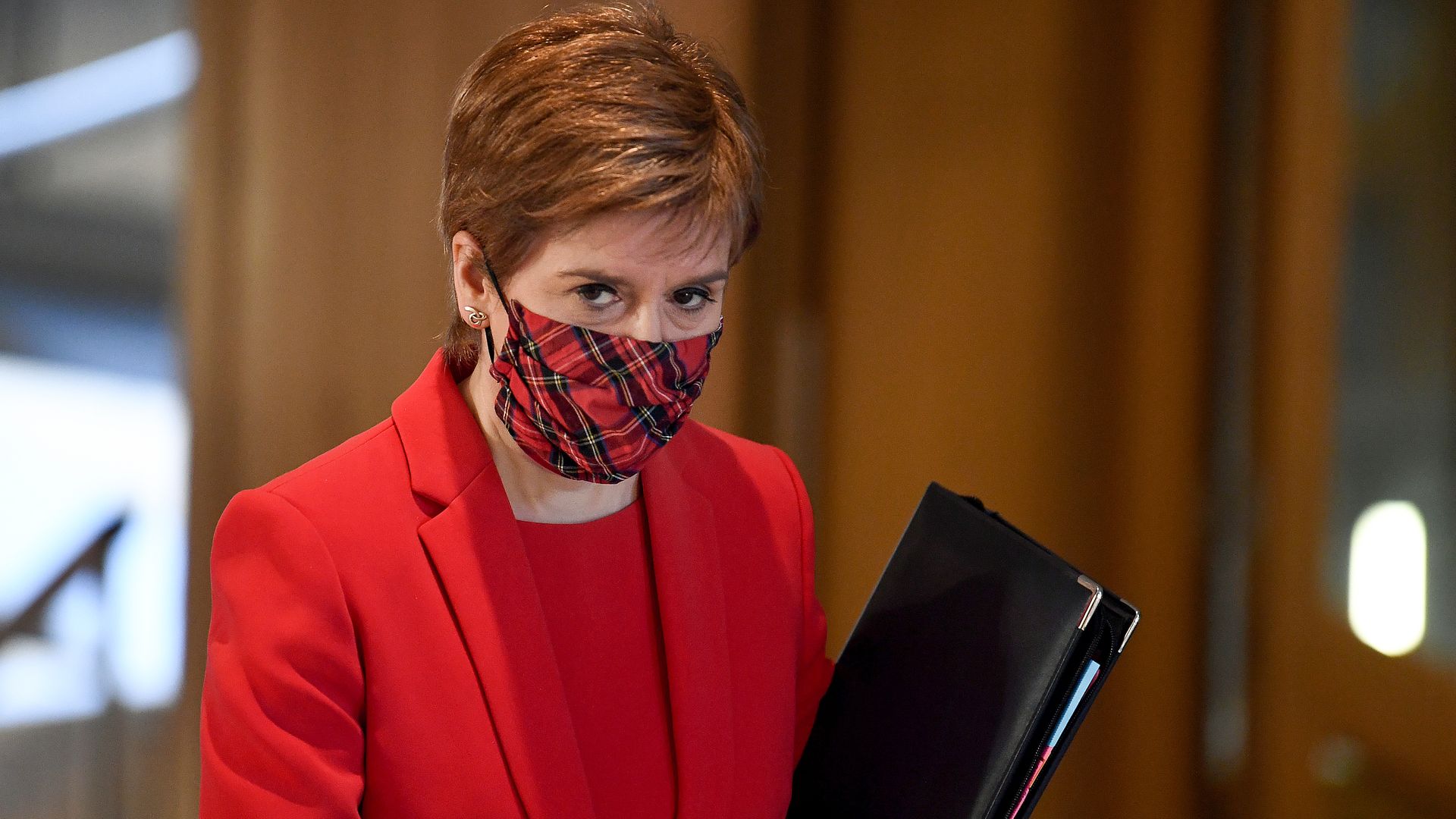
Scottish First Minister Nicola Sturgeon said on Monday that Scotland would enter a month-long lockdown beginning at midnight, as a highly infectious COVID-19 variant continues to spread rapidly throughout the United Kingdom.
Why it matters: Sturgeon warned that rising infections are putting "significant pressure" on the National Health Service, and that hospitals could reach capacity in three to four weeks. As a result, people must legally stay at home and work from home when possible.
Part of the reason experts are so willing to shake up the vaccine process is a new, more contagious strain of the virus that's spreading around the world.
Why it matters: There's no evidence so far that the mutation makes people any sicker. But if it's more contagious, that means more people getting sick, a certain portion of which will require care from the already-strained health care system.
The vaccine rollout is not going as planned so far, and has run headfirst into resource shortages and staffing issues caused by the raging pandemic.
Why it matters: The Trump administration's goal of vaccinating 20 million people by the end of year fell drastically short, raising concerns about how long it may be until enough people are vaccinated in the U.S. for life to return to normal.
Failing to put the most vulnerable Americans at the front of the line for coronavirus vaccines will exacerbate the gaping racial and ethnic disparities that have characterized the pandemic, experts say.
Why it matters: The Americans most vulnerable to the virus are disproportionately people of color. And there are a lot of reasons to doubt that vulnerable people will actually end up getting their shots first, despite some efforts to make that happen.