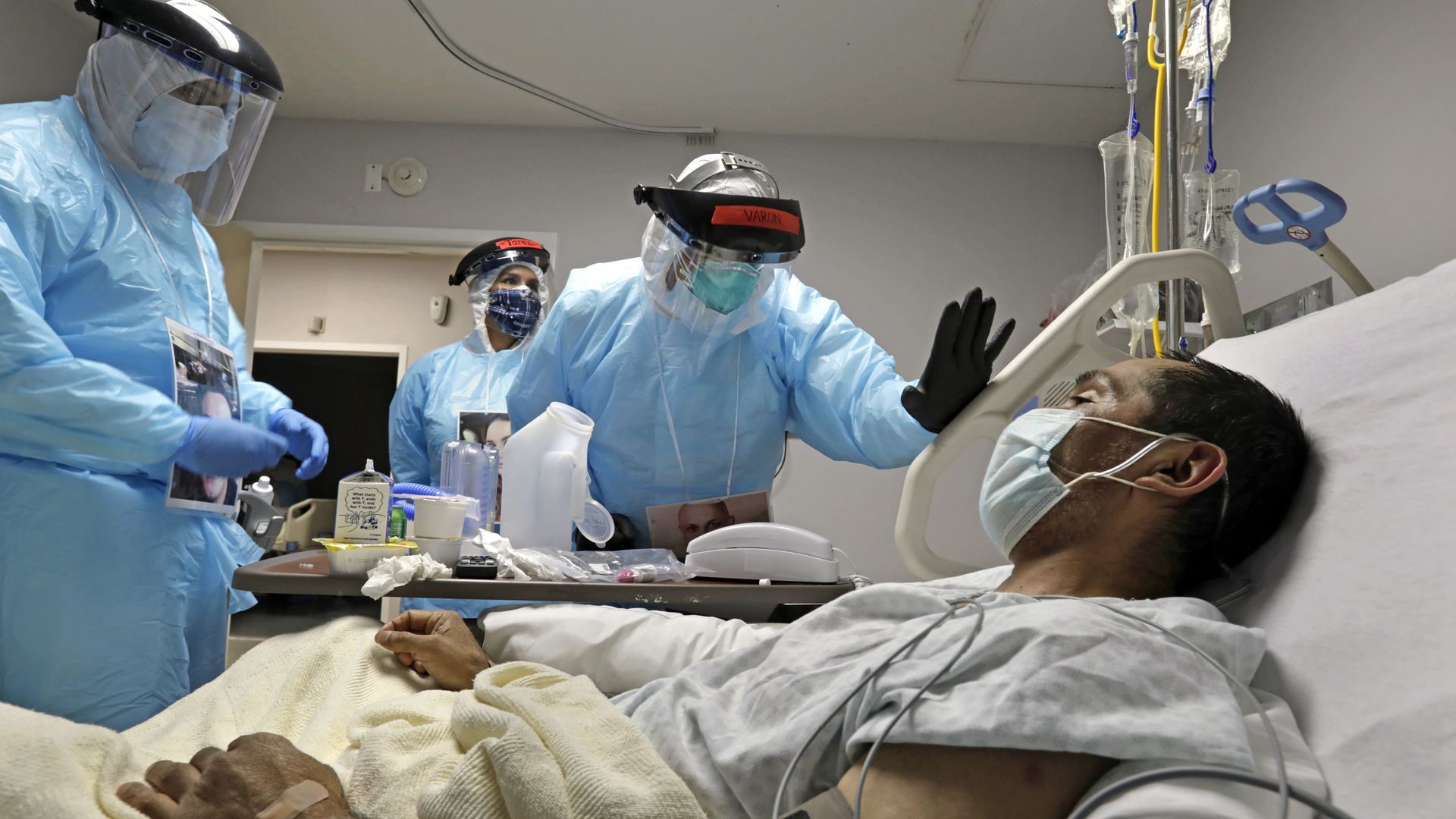
97% of intensive care beds in Houston's Texas Medical Center are occupied as of Wednesday.
Why it matters: Houston is the epicenter of the coronavirus outbreak in Texas. The state reported a record number of coronavirus cases in the last 24 hours, per the state health department — which is not purely due to expanded testing.
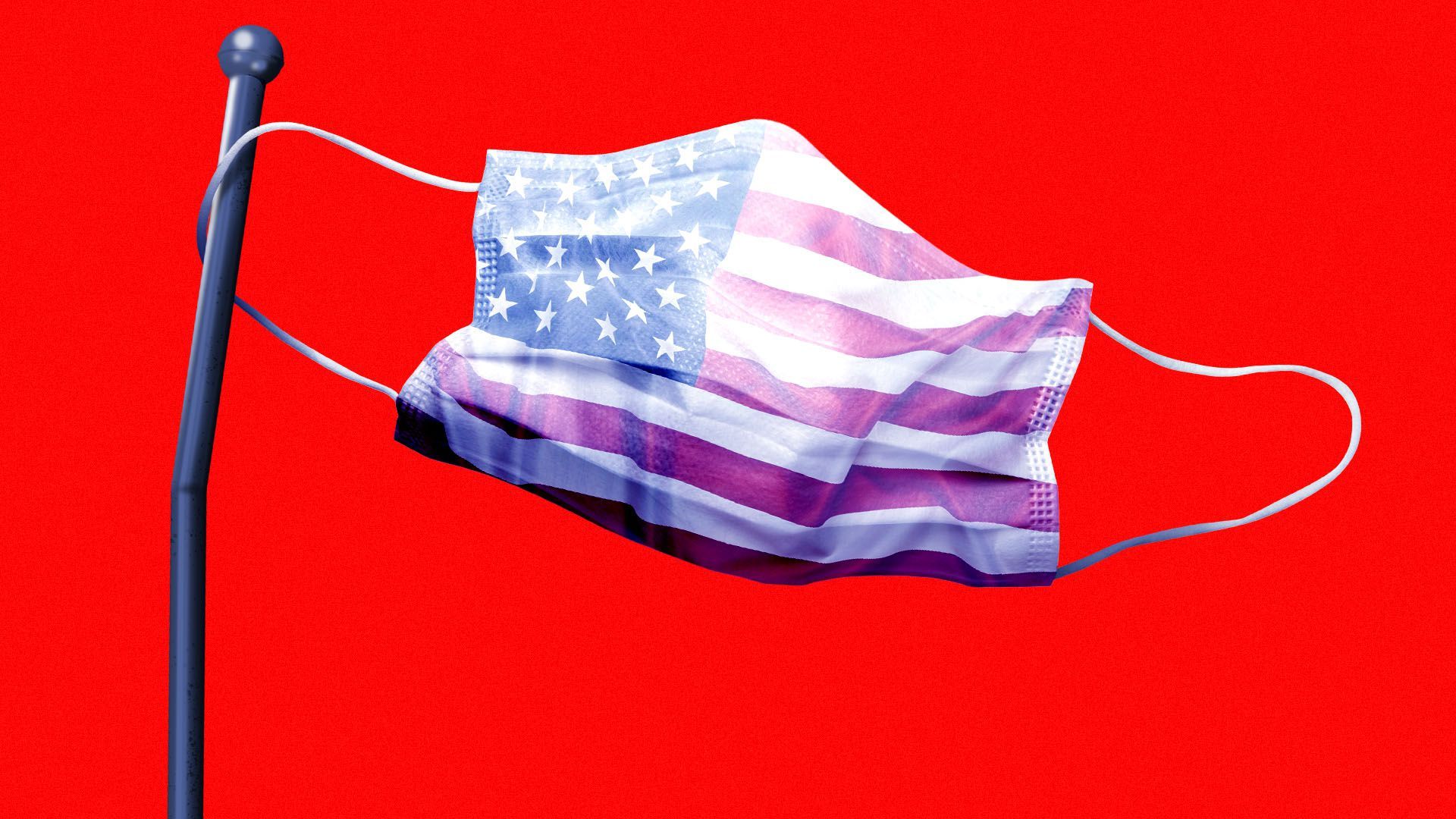
Mask-wearing has become the latest partisan division in an increasingly politically divided pandemic.
Why it matters: It's becoming increasingly clear that wearing even a basic cloth mask is one of the most effective ways to prevent the spread of COVID-19. But whether or not people are willing to wear one has less to do with the risk of the pandemic than their political affiliation.
Gov. Roy Cooper said that face masks should be worn by everyone in public across North Carolina and paused the next phase of the state's reopening on Wednesday.
Why it matters: Coronavirus hospitalizations in the state have continued to rise since last month, although there was a slight dip on Wednesday, according to state health department data.
64 college-aged people who were on a spring break trip to Cabo San Lucas, Mexico in late March contracted COVID-19, with one-fifth showing symptoms, a Wednesday case study from the Centers for Disease Control and Prevention shows.
Why it matters: The report reveals how universities that are planning to reopen this fall must prepare for clusters of cases that could easily spread among groups of young, healthy students.
Bayer has agreed to pay just over $10 billion in order to settle roughly 125,000 claims that its Roundup weedkiller cases cancer and resolve potential future litigation, the company announced on Wednesday.
The big picture: The settlement includes a $1.25 billion deal for possible future litigation against the company by people who report being diagnosed with non-Hodgkin's lymphoma (NHL) after using Roundup.
The coronavirus pandemic has exacerbated childhood hunger among many families for the first time, Rhonda Jackson, director of the No Kid Hungry Campaign in Louisiana, said Wednesday at an Axios virtual event.
What she's saying: "Louisiana was one in four children that faced childhood hunger. Now the rest of the country looks like that. And what that looks like in real-time is parents having to make the decision if they’re going to actually feed a kid or if they’re going to have to perhaps buy medicine."
New York, New Jersey and Connecticut will impose a travel advisory and 14-day quarantine for travelers from states with high coronavirus infection rates beginning tonight at midnight, New York Gov. Andrew Cuomo announced Wednesday.
Why it matters: New York went from being the epicenter of the pandemic, with the highest rate of infections, to now having one of the lowest rates in the country. Meanwhile, many states in the South and West have seen their infection rates skyrocket as restrictions have been lifted.
Chinese tech giant Lenovo is joining a growing list of tech firms that see a business in helping other companies reopen amid the COVID-19 pandemic.
Why it matters: Technology can't address all the issues related to a return to office life, but there are lots of opportunities in the software and hardware needed to detect fevers, keep workers physically separated and track which workers have been in contact with one another.
Consumer confidence had its first major decline since March 31 as a new round of coronavirus cases have spiked, according to the HPS-CivicScience Economic Sentiment Index.
By the numbers: Consumer confidence fell 1.3 points to 47.8. The index's previous reading showed a record increase in confidence in finding a new job and the overall U.S. economy, but both indicators fell — dropping by 2.4 and 2.5 points, respectively — in the latest survey. Confidence in making a major purchase also declined by 1.5 points. ESI's two other indicators, confidence in the housing market and confidence in personal finances, were flat.
Governors may soon have tough decisions to make as coronavirus infections continue to increase in the U.S., and new data shows Americans are clearly in favor of shutting economies down again rather than risk infection.
Driving the news: A new survey from data firm CivicScience of nearly 2,500 U.S. adults finds 65% of the general population over the age of 18 supports returning to lockdown if cases of COVID-19 rise significantly.
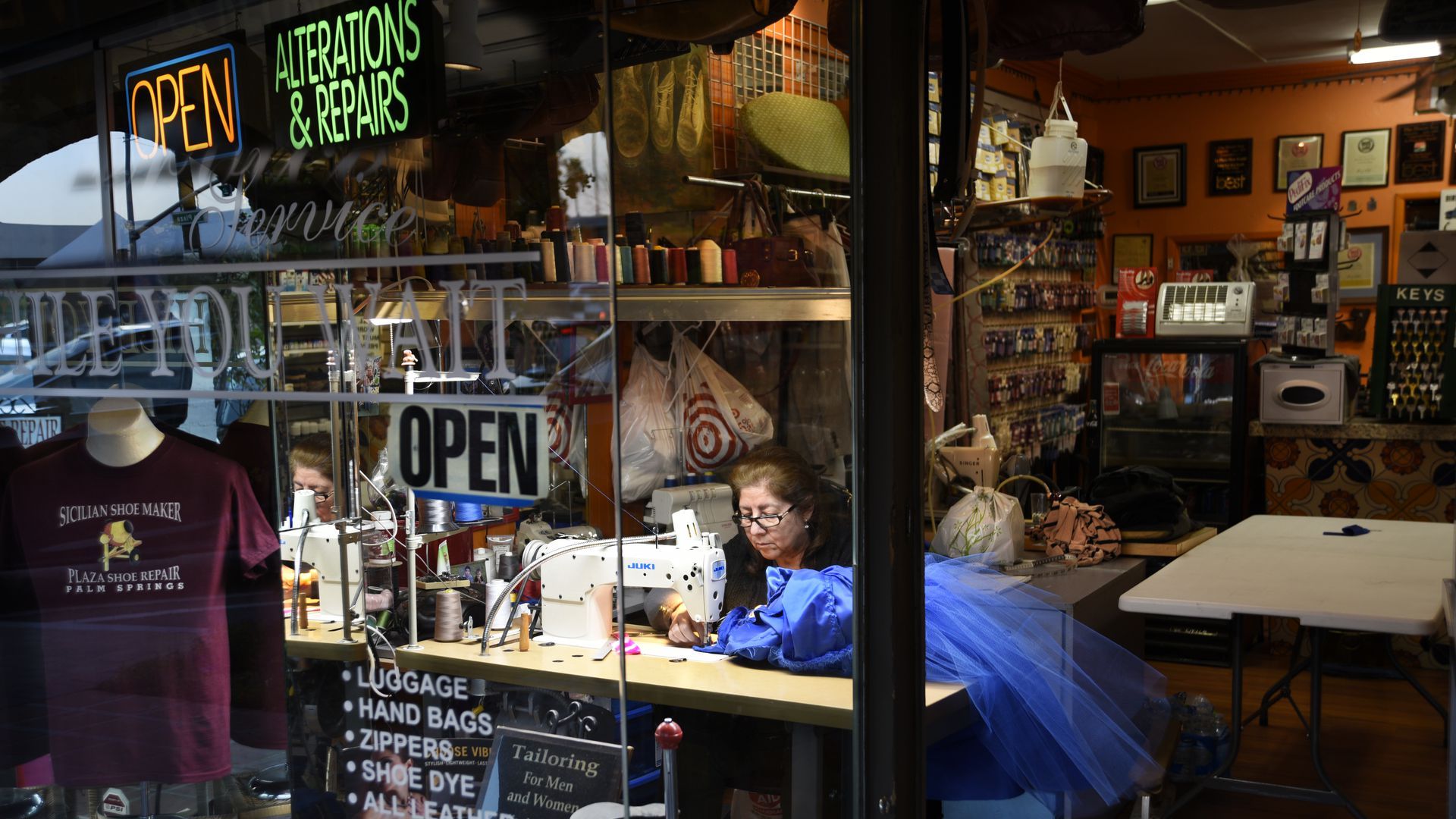
U.S. macroeconomic data is broadly improving but many small businesses are facing a perilous recovery as they attempt to stay afloat after coronavirus-driven lockdowns throughout the country. That's true even for the many that received government assistance.
By the numbers: A recent poll of 7,317 small business owners by Alignable finds that 43% of firms that received money through the Paycheck Protection Program (PPP) say they could be out of cash in a month or less.
A federal judge upheld Tuesday the Trump administration's rules requiring hospitals to publicly disclose the prices they've negotiated with insurers — information that both hospitals and insurers would very much prefer to keep secret.
The state of play: The American Hospital Association sued to block the rules, arguing that they exceeded the administration's legal authority and infringed on hospitals' First Amendment rights. The court rejected both arguments.
Countries around the world and the global economy are desperately waiting for a coronavirus vaccine, and experts say there is a chance one will become available in record time.
The state of play: We really need it to come through, especially in the U.S. — where we're not doing so great on anything else. The spike in cases we're seeing across the South and Southwest is not simply the result of more testing. All indications are that it is the result of a worsening outbreak.
Even while still living in the midst of the coronavirus pandemic, we're starting to see the long-term effects of lost schooling, curtailed travel and shuttered businesses.
Why it matters: The U.S. will see some $7.9 trillion in lost economic growth through this decade, according to the Congressional Budget Office. The World Bank, meanwhile, predicts global gross domestic product will shrink by 5.2% in 2020 alone — nearly three times as much as the 2009 recession.
Scientists say accelerating deforestation could lead to increased human contact with pandemic diseases, and could also worsen the current coronavirus pandemic, NPR reports.
What's happening: Money and resources for monitoring tropical forests in Southeast Asia, Africa and South America have been transferred to help fight the pandemic, turning a blind eye toward illegal deforestation activities like logging and mining.
Lingering post-pandemic remote work could redistribute some New York City and Silicon Valley jobs to the American heartland, and smaller cities are already competing to attract talent — but it won't be so easy.
The big picture: Although U.S. workers will have the option to scatter and get out of the crowded and expensive metros, the pull of those places may be too strong for the second-tier cities to win out.