Wednesday's health stories


WHO warns renewed violence in Congo endangers Ebola efforts
The escalation of violence in the Democratic Republic of the Congo jeopardizes the recent gains made in halting the ongoing Ebola outbreak and could trigger a surge in new infections if health care workers and civilians are not protected, World Health Organization officials warned Wednesday.
The perfect storm: Peter Salama, WHO's head of emergency response, said Tuesday they were "extremely concerned" about recent violence that in some areas endangered health officials and halting the Ebola prevention and treatment regimes.
News Shapers: The Vaping Debate
Tuesday morning, Axios Executive Editor Mike Allen hosted a series of conversations on the risks, reality and innovation challenges facing our public health, particularly as they relate to the rise in e-cigarette use. While regulators like the Food and Drug Administration (FDA) have declared the rapid rise in youth vaping to be a "public health emergency," vaping advocates are fighting back — arguing that e-cigarettes give adult cigarette addicts a safer alternative.
Why it matters: This debate was brought to a head last month when the FDA issued a notice to the most popular makers of e-cigarettes. The notice declared that these companies had 60 days to prove they can keep their products away from minors or risk a complete ban.
FDA Commissioner Scott Gottlieb
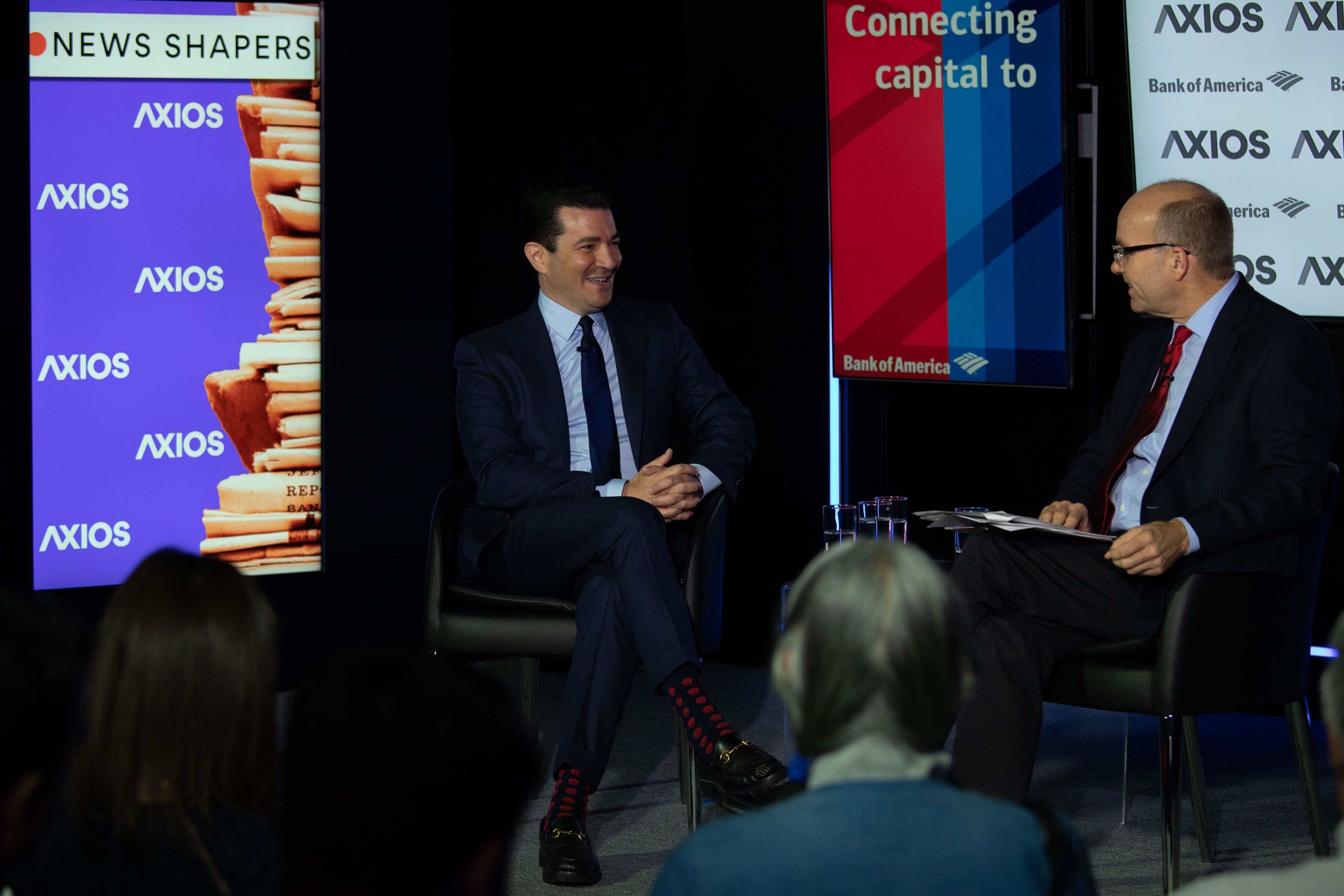
Gottlieb discussed the data he's seen on the rise of vaping in high schools and middle schools and the measures the FDA is considering to mitigate it.
- What caused the problem. "We have two problems: [e-cigarettes] are too appealing to kids and they’re too accessible to kids." E-cigarettes often come in flavors like skittles, watermelon or cotton candy, which critics argue heighten their appeal to minors.
- How big the problem is. "This is a public health emergency. ... There’s nothing to indicate to me that this trend isn’t growing. We’re getting into frightening numbers of kids using these products."
- Curbing underage use of e-cigarettes. The Food and Drug Administration is considering a ban on the online sale of e-cigarettes, and new limits on flavored products are also on the table, Axios' Sam Baker reports.
Winston Churchill High School Students

High School students Brandon Schoenfeld and Jaclyn Frank spoke about what they see as the vaping culture at their school and what fuels it.
- The power of access. "Kids can get their hands on the devices much easier. ... There’s a lot of retail stores that will sell to kids. Fake IDs are used not just for alcohol but for vaping," Frank said.
- Not everyone vapes. "The kids who aren’t involved in the culture of going out and drinking and smoking aren’t involved in it. The kids who are involved now have a new outlet to be involved," Schoenfeld said.
American Vaping Association President Gregory Conley

Conley discussed how e-cigarettes are a safer alternative to cigarettes and why he thinks having flavored e-cigarettes is important.
- A cigarette alternative. "E-cigarettes help adults get off of deadly products. ... The vast majority of vapers are using non-tobacco flavors. That’s why so many former tobacco users say it’s so effective."
CATCH Global Foundation CEO Duncan Van Dusen

Van Dusen dug into the appeal of vaping, its risks and CATCH Global Foundation's e-cigarette prevention program CATCH My breath, which is currently in 49 states.
- The tech appeal of vaping. "[Vaping] looks more like something that would be produced by apple than a big tobacco company."
- The importance of prevention. "If you reward nicotine receptors early, you’re more likely to become addicted. If you don’t reward them, the receptors will have atrophied. That’s why it’s important to prevent middle schoolers from starting."
Go deeper:
Thank you Bank of America for sponsoring this event.
The opioid crisis is everywhere
Simply going to work in the morning puts a lot of people on the front lines of the opioid crisis, whether or not they want to be — and whether or not they’re prepared to be.
What's happening: "Service workers are … the unwitting first line of medical responders," CityLab reports, because public restrooms have become such a popular place to use opiates.
Congress releases its final opioids bill
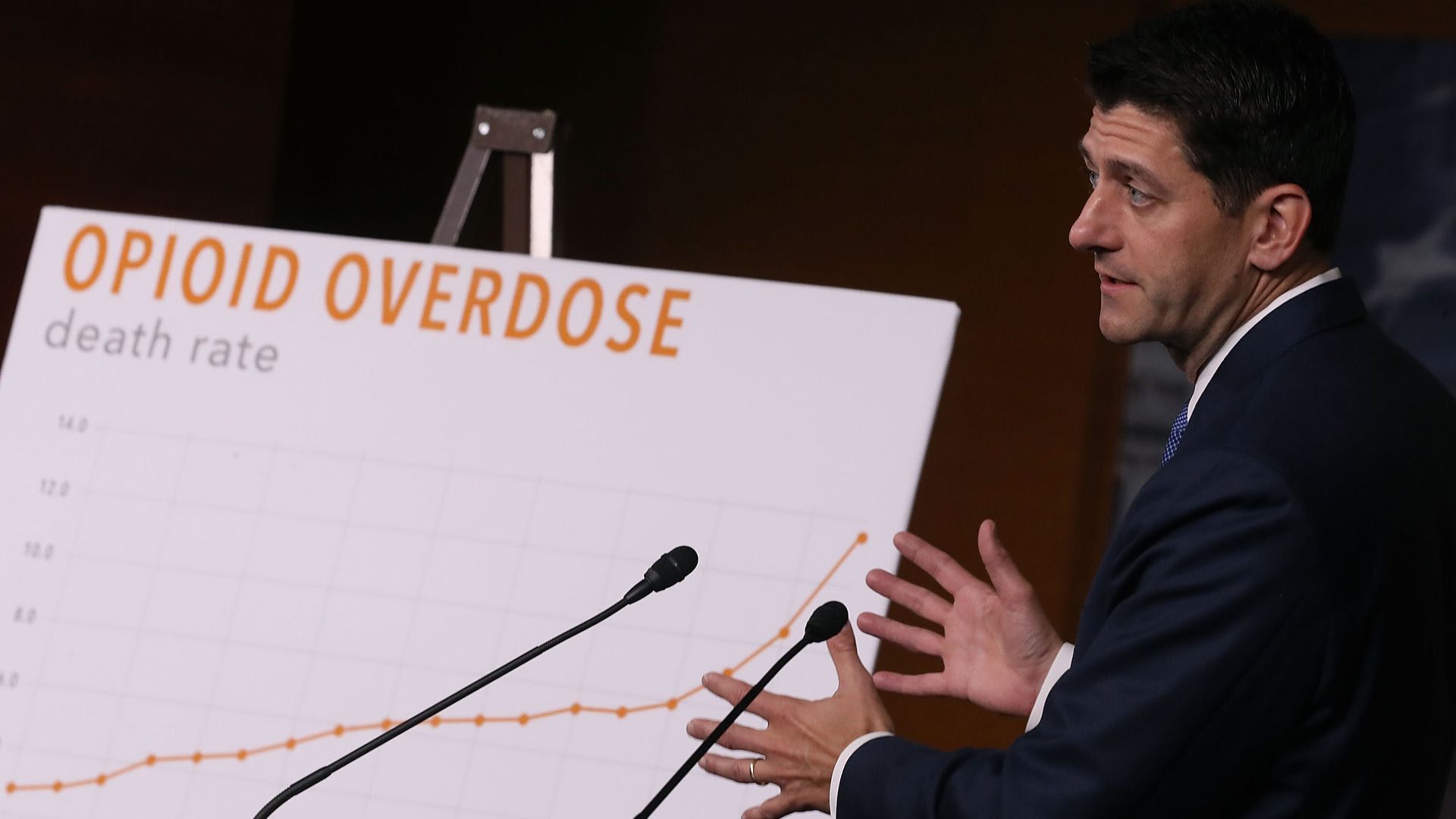
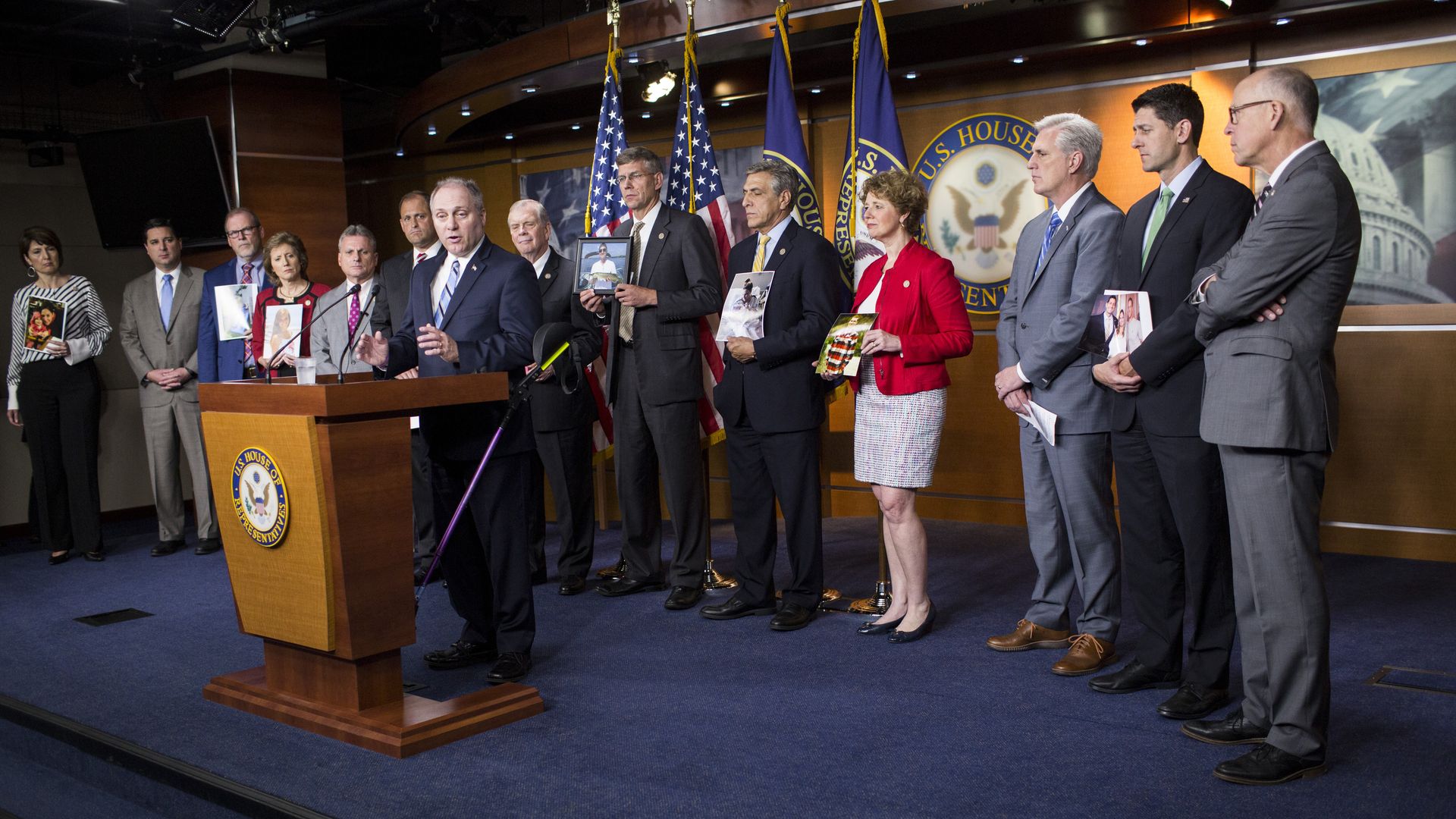
Republican and Democratic lawmakers from the House and Senate released their final opioids package last night, bridging the differences between bills the two chambers passed previously.
The big picture: This is a big bill and there are provisions in here that public health experts believe will make a difference.

Podcast: Facebook's photo fallout
Instagram's co-founders are leaving Facebook, and Dan discusses the fallout with Axios' Ina Fried:
"Something smells rotten in Menlo Park, where Facebook used to have a reputation for being the big tech company that founders wanted to sell to."
Go deeper: Instagram gives Facebook a new life


FDA may ban online vaping sales
The Food and Drug Administration is considering a ban on the online sale of e-cigarettes, Commissioner Scott Gottlieb said at an Axios News Shapers event this morning. New limits on flavored products are also on the table, he said; the agency will release new data about teen vaping and announce its next steps in November.
Why it matters: Gottlieb has consistently said e-cigarettes can be a safer option for adults who smoke cigarettes, but that the products are "too appealing" and "too accessible" to children and teens. Regulations to ban or at least curb online sales or flavored products could come soon, Gottlieb said today.
Ban Ki-moon: U.S. health care system "morally wrong"
The U.S. health care system is "unethical" and "politically wrong, morally wrong," former United Nations Secretary-General Ban Ki-moon said in an interview with The Guardian, adding that government officials are beholden to industry interests.
Why it matters: Ban's comments echo the left's growing enthusiasm for "Medicare for All," or something closer to a single-payer system. "Medicare for All" caught on in many Democratic primaries this year and is already shaping up as a defining debate for 2020.
Drug prices aren’t going down
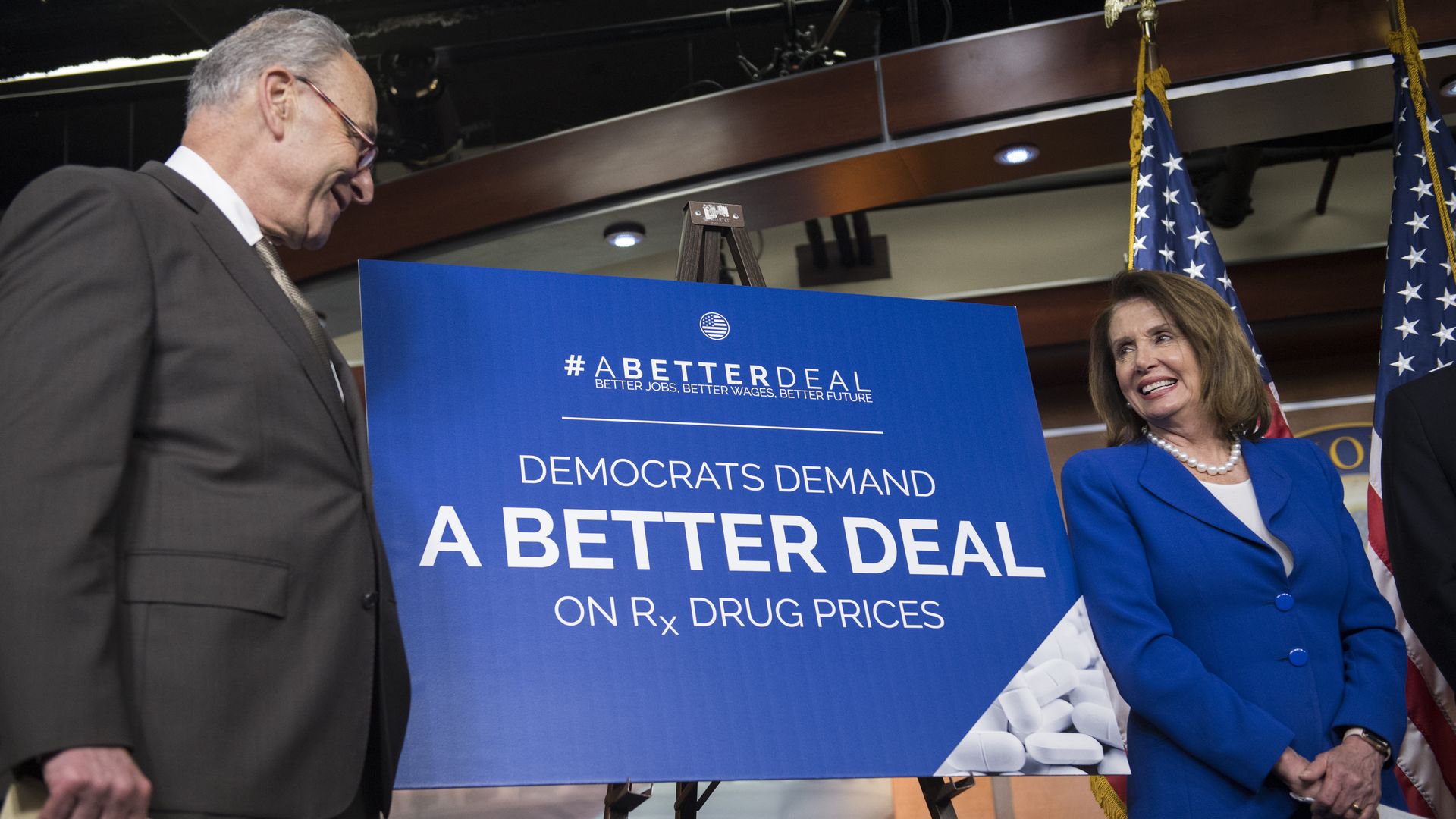
Drug prices are still climbing higher, despite President Trump’s promises of big and immediate discounts.
By the numbers: At the end of July, drugmakers had raised the price of brand-name products more than 4,400 times this year, compared with 46 price cuts, according to an Associated Press analysis. That works out to 96 increases for every reduction.
Congress' final opioids bill takes shape
Congress' final opioids legislation will expand Medicaid coverage for addiction treatment and will not include a Medicare provision the pharmaceutical industry has lobbied for, according to Modern Healthcare's Susannah Luthi.
The details: Per Modern Healthcare, the House and Senate have agreed to lift the so-called "IMD exclusion" in their final opioids package, which will allow federal Medicaid money to flow to more treatment centers.