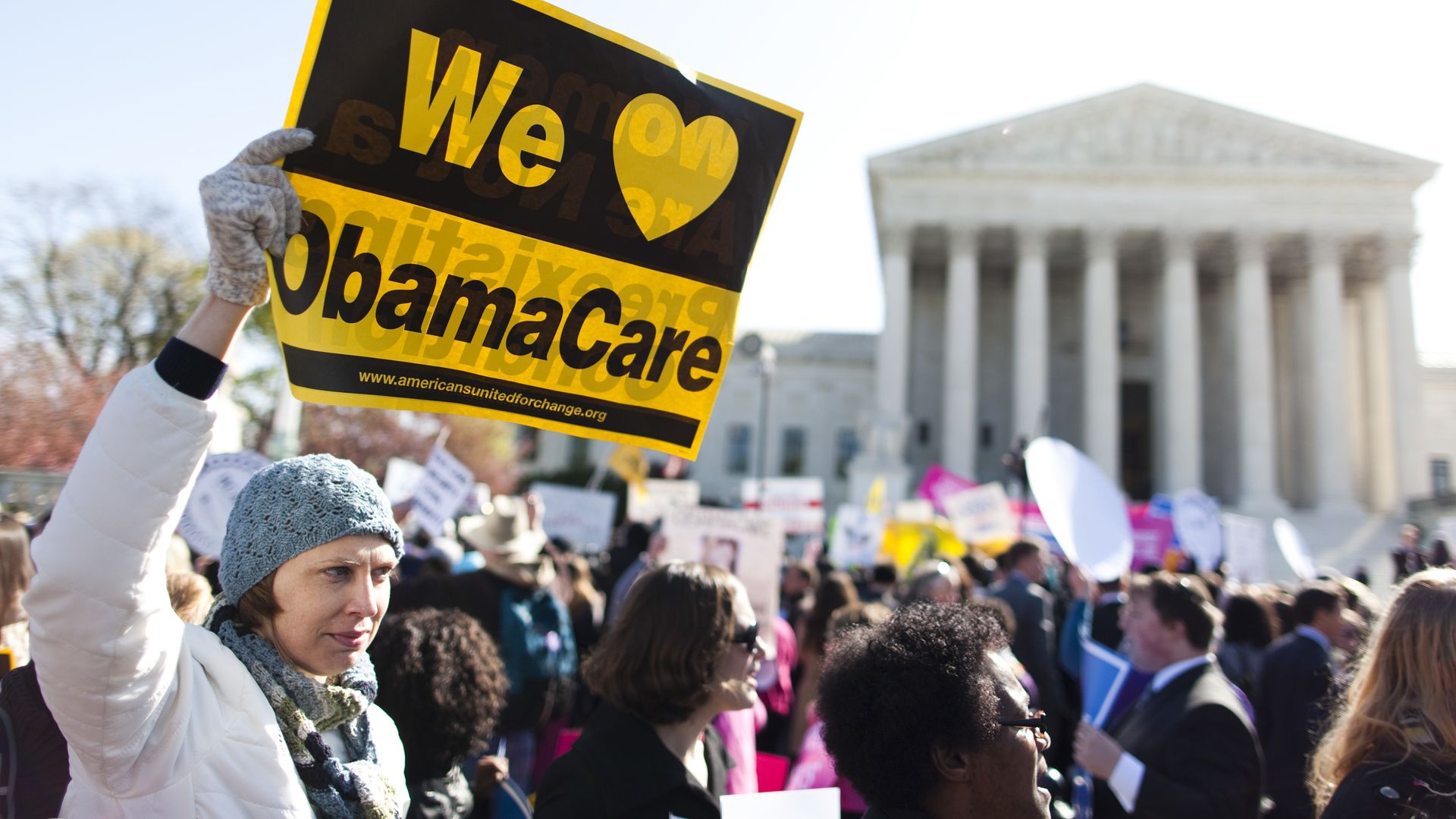
A group of liberal states will be allowed to defend the Affordable Care Act in court after a federal judge in Texas today granted their request for a formal role in the latest constitutional challenge to the ACA.
Why it matters: The ACA's allies would much rather have a voice of their own in the lawsuit — which challenges the ACA's individual mandate — rather than leaving the pro-ACA argument entirely in the hands of the Trump administration.
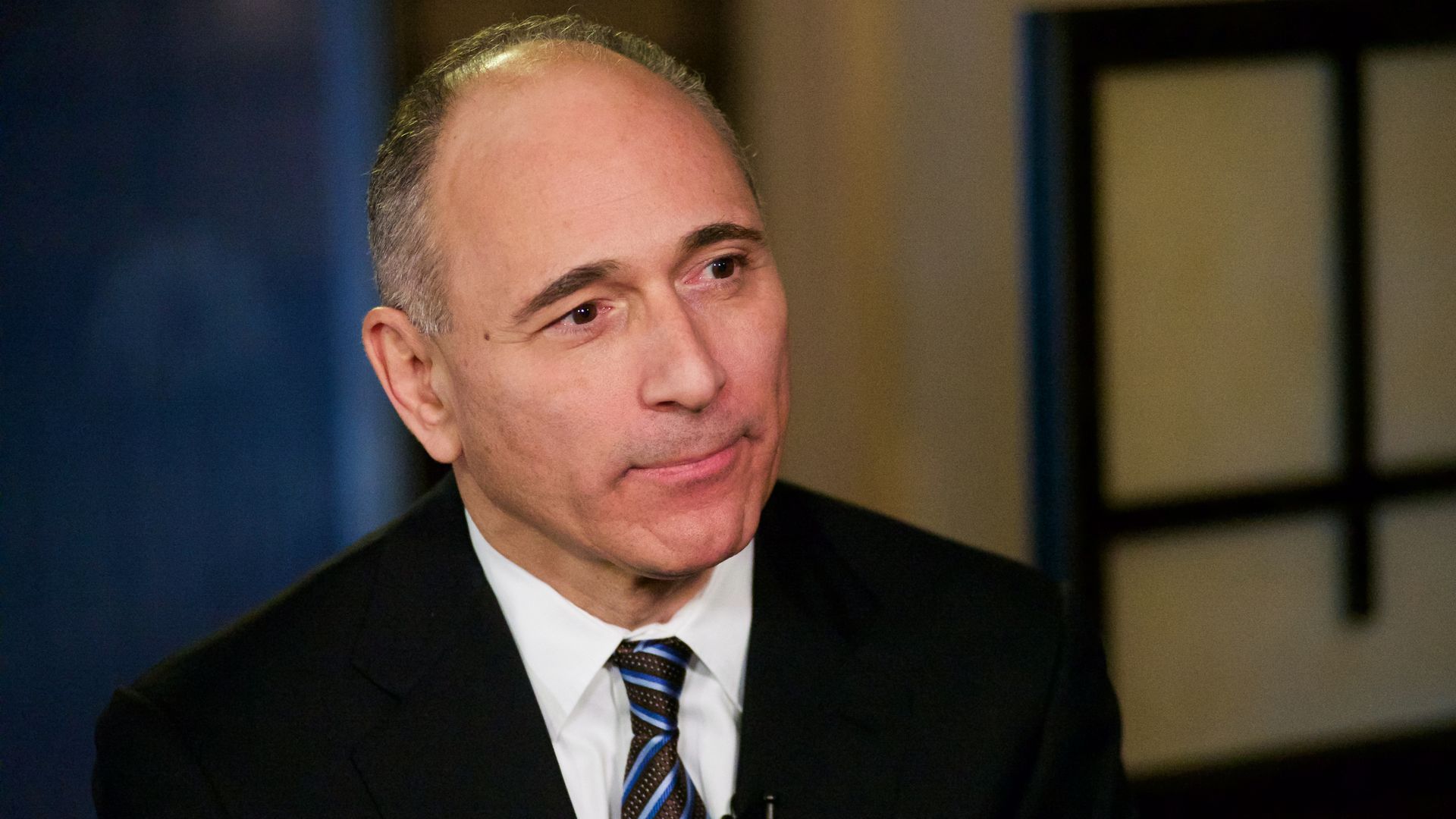
Former Novartis CEO Joe Jimenez told Forbes he is "accountable for everything that happened" with the pharmaceutical company's decision to pay President Trump's former lawyer, Michael Cohen, $1.2 million for consulting on Trump's health care agenda.
That's not all: Forbes also asked Jimenez if anyone at Novartis could have prevented the deal from happening. "I would say no, because of the speed with which we were moving, and that was a mistake. We should have done more due diligence. We should have slowed down."
Last year, New Jersey awarded pharmacy benefit manager OptumRx a $6.7 billion contract to oversee prescription drug benefits for the state's 835,000 public employees, retirees and dependents. But now New Jersey has to redo the process after a court said OptumRx "improperly hedged" its contract.
The big picture: There's reason to believe this type of financial hedging exists in most contracts involving the big PBMs.
More adults may be giving e-cigarettes a try, but fewer people are making it a habit, according to research published in Journal of the American Medical Association Tuesday.
Why it matters: E-cigarettes often contain the addictive ingredient nicotine and other substances that the Surgeon General says may be dangerous, particularly to young people. Non-smoking advocates say the prevalence drop is encouraging, but the government still needs to mandate further research and curb teenage usage.
There were over 300,000 cases of chlamydia, gonorrhea, and early-stage syphilis detected in California during 2017 — a 45% jump from 2012 and the highest levels since 1990, the San Francisco Chronicle reports.
What's happening: Lower rates of condom usage and fewer STD clinics are driving the increase. But a new factor is social media, James Watt, of California Health Department, tells the Chronicle.
In 1979, the U.S. was in the middle of the pack, worldwide, in terms of per capita health care spending and life expectancy. But then in 1980, costs rose while outcomes deteriorated. Health care economist Austin Frakt has some possible answers in the New York Times' Upshot.
Why it happened: Multiple experts told Frakt they think the high inflation of the 1970s contributed to rising health care costs worldwide, but that the U.S. simply had weaker tools in place to constrain those costs.
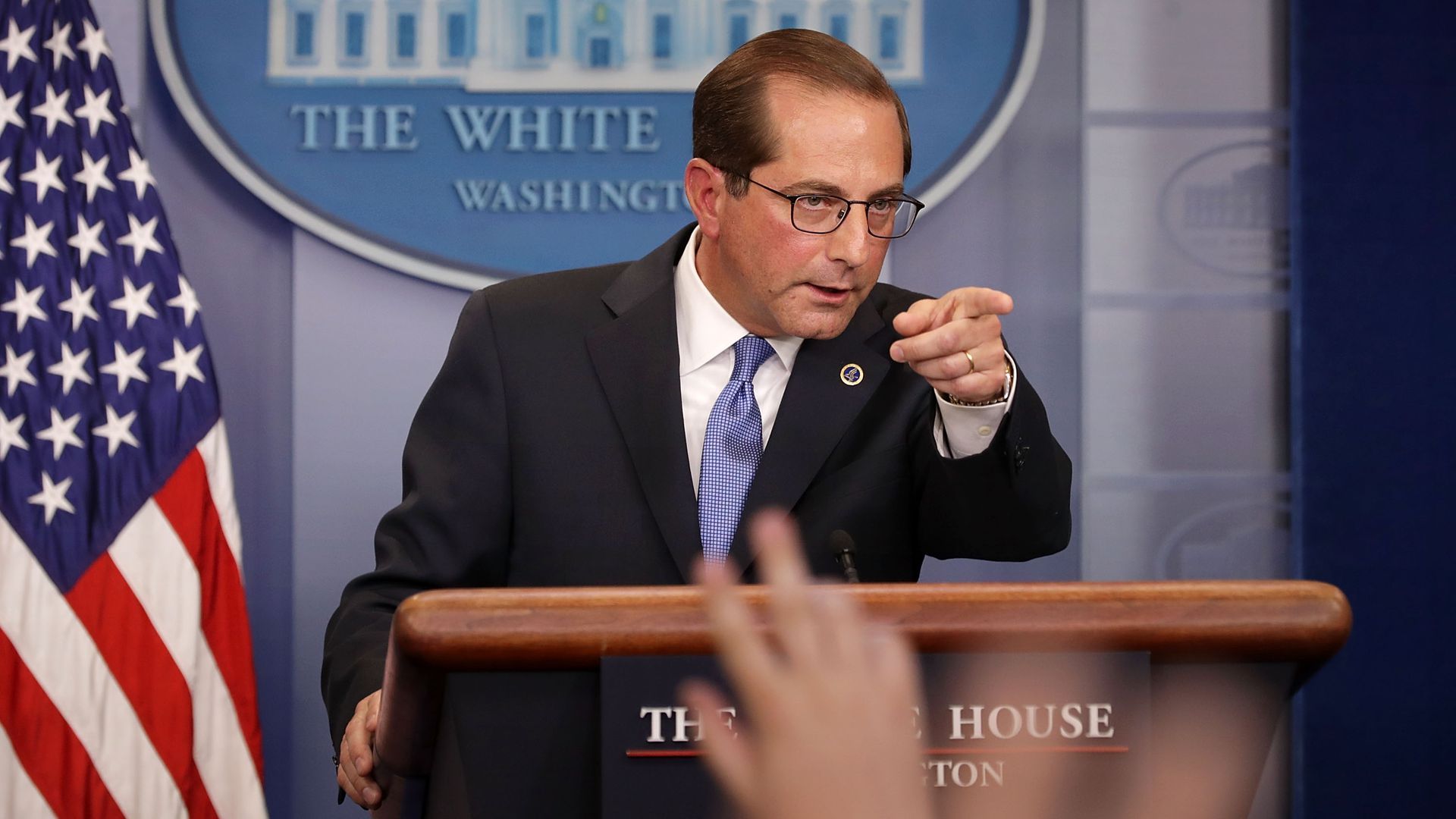
HHS Secretary Alex Azar implicitly pushed back yesterday on some of the “meh” reviews that initially greeted the White House’s big plan to lower drug prices. "These are big moves, this is harnessing Medicare, this is negotiation,” Azar told reporters.
Reality check: Yes, there are some potentially significant outcomes on the table here. The catch is that there are no assurances they’ll actually happen.