The Affordable Care Act’s tax increases were concentrated among the wealthiest 1% of Americans, while its benefits were spread broadly among the poorest 40%, according to new data from the Congressional Budget Office. The CBO examined how the law affected household incomes in 2014, the first year many of its key provisions took effect.
The bottom line: At least as far as this analysis goes, the ACA helped more people than it hurt. Whether you want to call it “redistributing wealth” or “reducing income inequality,” the ACA achieved it. Or, in CBO’s words, the law “made household income more evenly distributed.”
The opioid/heroin/fentanyl crisis is both a public health issue and a law enforcement issue — and law enforcement clearly was the higher priority yesterday as President Trump unveiled his administration's latest proposals to combat the crisis.
What he said: Trump spent the bulk of his time in yesterday's speech talking about drug dealers and illegal products. He talked at length about giving some drug traffickers the death penalty; he talked about "sanctuary cities" and made a pitch for the border wall; and he talked up a "just say no" type of TV ads to discourage young people from trying drugs. Public health interventions took a backseat.
Things are looking worse by the day for efforts to stabilize the Affordable Care Act's insurance markets. You might think Democrats would want to protect President Obama's signature achievement, or that Republicans would be motivated to prevent big premium hikes heading into midterms. But other political considerations are proving more influential.
Why this matters: If Congress doesn't step in, coverage will likely become more unaffordable for more people, and insurers may exit some markets altogether.
The chance of becoming infected with a common respiratory virus on an airplane may be smaller than originally thought — less than 3% unless you are sitting within one meter of an infected person, where your chances rise to 80%, according to a study published in PNAS Monday.
Why it matters: There are more than 3 billion airline passengers annually, and global health officials want to learn more how infectious diseases are transmitted, particularly after reported transmission of cases of flu pandemic and severe acute respiratory syndrome (SARS) via planes.
In a speech in New Hampshire addressing the opioid crisis, President Trump said that the Department of Justice needs to be tough toward drug dealers and "that toughness includes the death penalty." He went on to praise other countries who execute drug dealers, saying "they don't play games."
Why it matters: Trump said he's not only addressing the opioid crisis, but "the general drug crisis." Trump said "unless you have really bad penalties, led by the death penalty...we won't get anywhere."
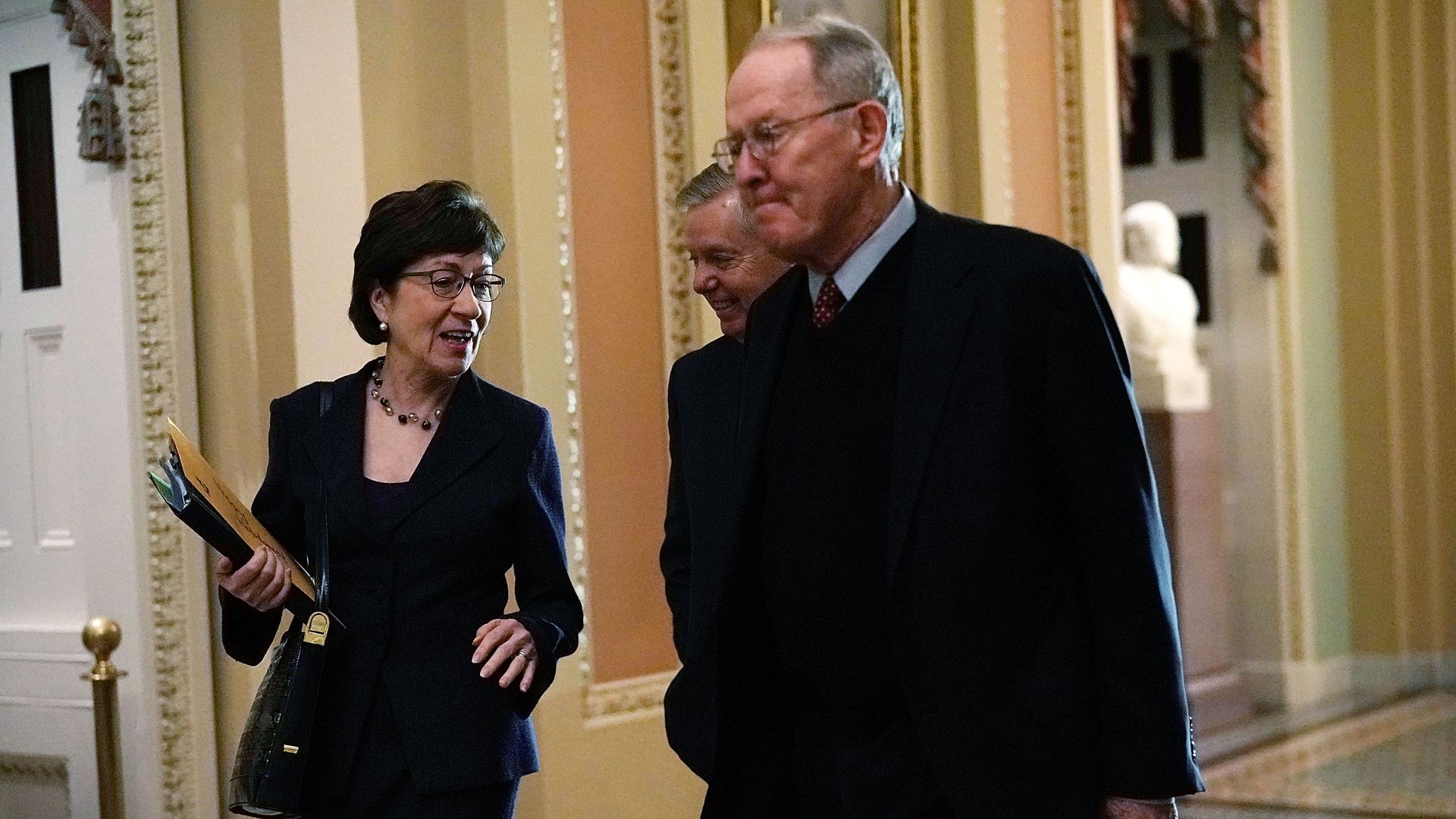
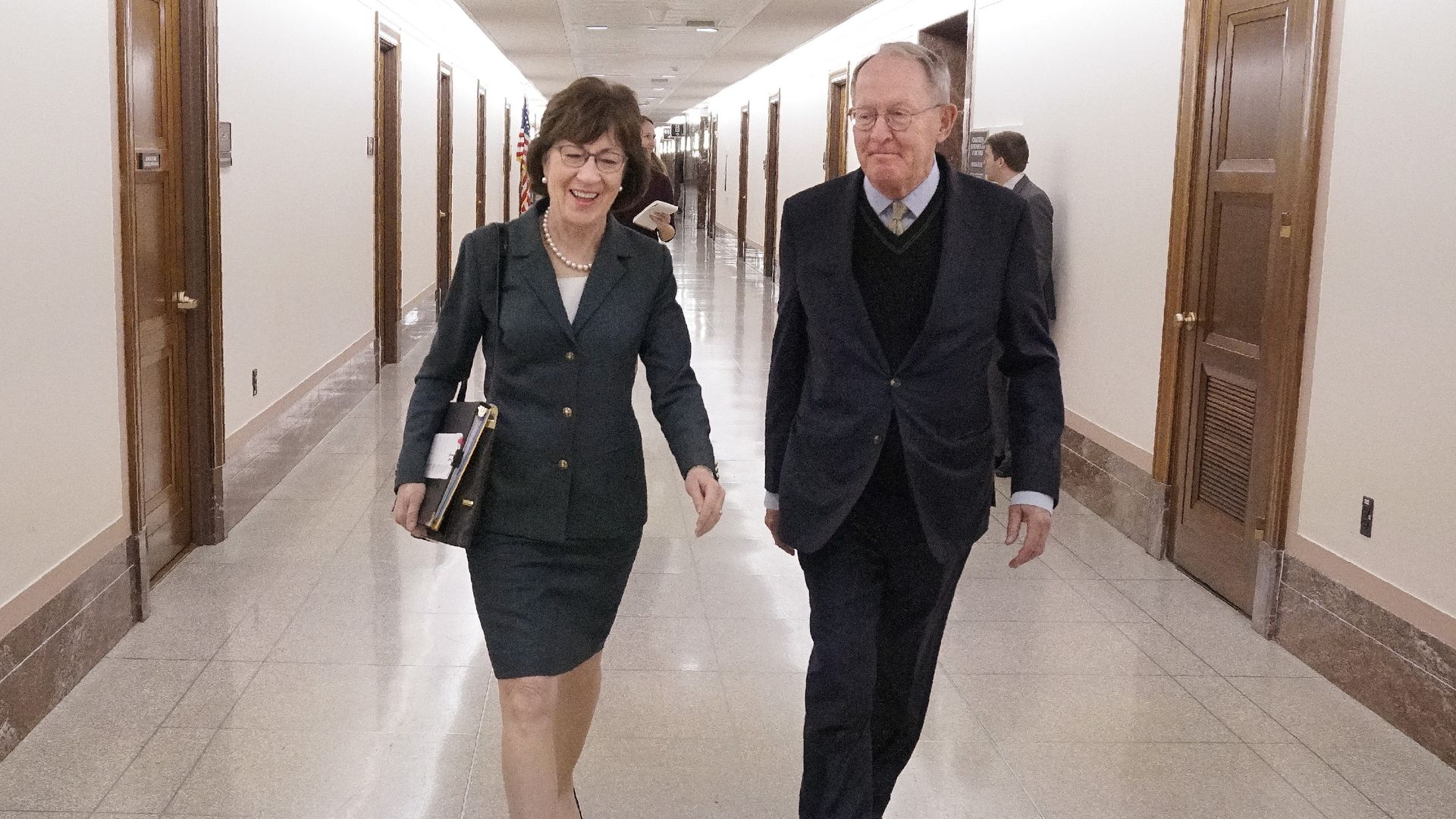
Sens. Lamar Alexander and Susan Collins have now formally introduced their proposal to stabilize the Affordable Care Act’s insurance markets. The details are about what we anticipated: three years of funding for the law’s cost-sharing payments; three years of funding for a new reinsurance program; and a smattering of new regulatory flexibilities.
What’s next: Alexander and Collins are hoping to get this proposal included in the omnibus spending bill Congress needs to pass this week. We should find out soon whether it's in or out.
This week is likely Congress' last chance to pass legislation stabilizing the Affordable Care Act's insurance markets, and it's anyone's guess what lawmakers will end up doing. On top of the political uncertainty, the policies they're considering are more complicated than they seem, and the results could be a mixed bag.
Why it matters: What Congress does here will have a big impact on millions of people's insurance premiums, and on insurance companies' decisions about whether to keep participating in these markets.
Republicans have discovered their tax law contains a mistake and are hoping Democrats will help them fix it. But if the narrative of "one party passed a giant law and now wants to change it" sounds familiar, Republicans are insisting this is different from when they wouldn't help fix the Democrats' Affordable Care Act.
Between the lines: This is a great indicator of why Congress struggles to get anything done — because now the precedent has been set for one party to refuse to fix problems with the other party's laws. And for what it's worth, some Democrats are also denying the parallel — because, of course, they say their ACA process was much more inclusive than the GOP's tax one.