Wednesday's health stories

Time to scrap Obamacare’s value-based purchasing?
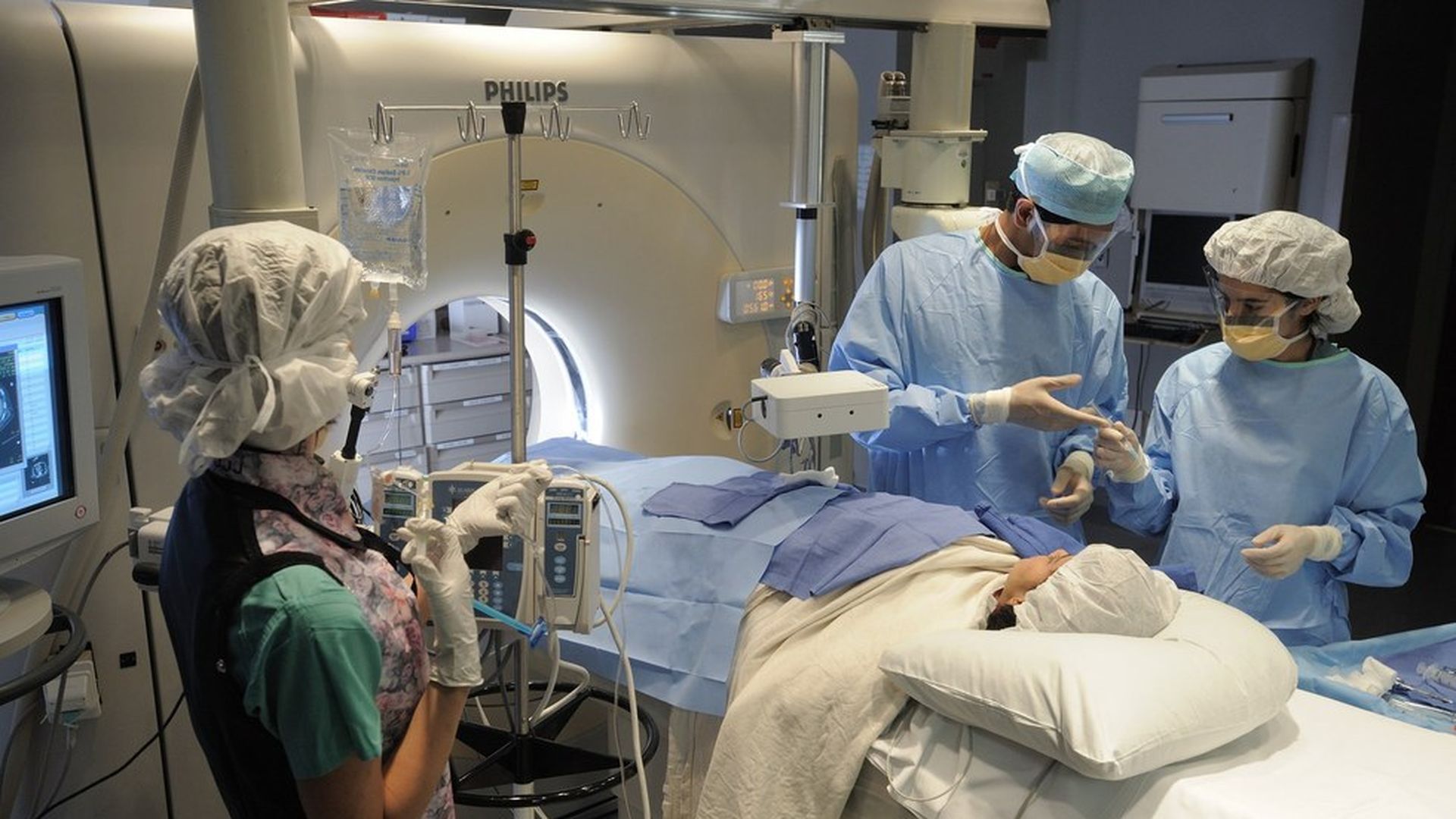
Dr. Ashish Jha of Harvard University penned an interesting post that wonders if the health care industry should throw in the towel on value-based purchasing — a program structured by Obamacare to reward high-quality hospitals and penalize lower performers. "Given its cost, this national program should be retooled or stopped," Jha writes.
The problem: Hospitals don't have a lot at stake with value-based purchasing, since only 2% of their Medicare pay is subject to the program. "Incentives that put 5% or even 10% of a hospital's Medicare payments at risk would ensure that hospitals pay attention," Jha writes.
He also says that if value-based purchasing were to continue, policymakers should track the right clinical measures, such as mortality rates, and make the program more transparent. It's unclear, however, if it would survive in a Republican replacement for Obamacare.

Alexander will push Republicans to give financial help to insurers
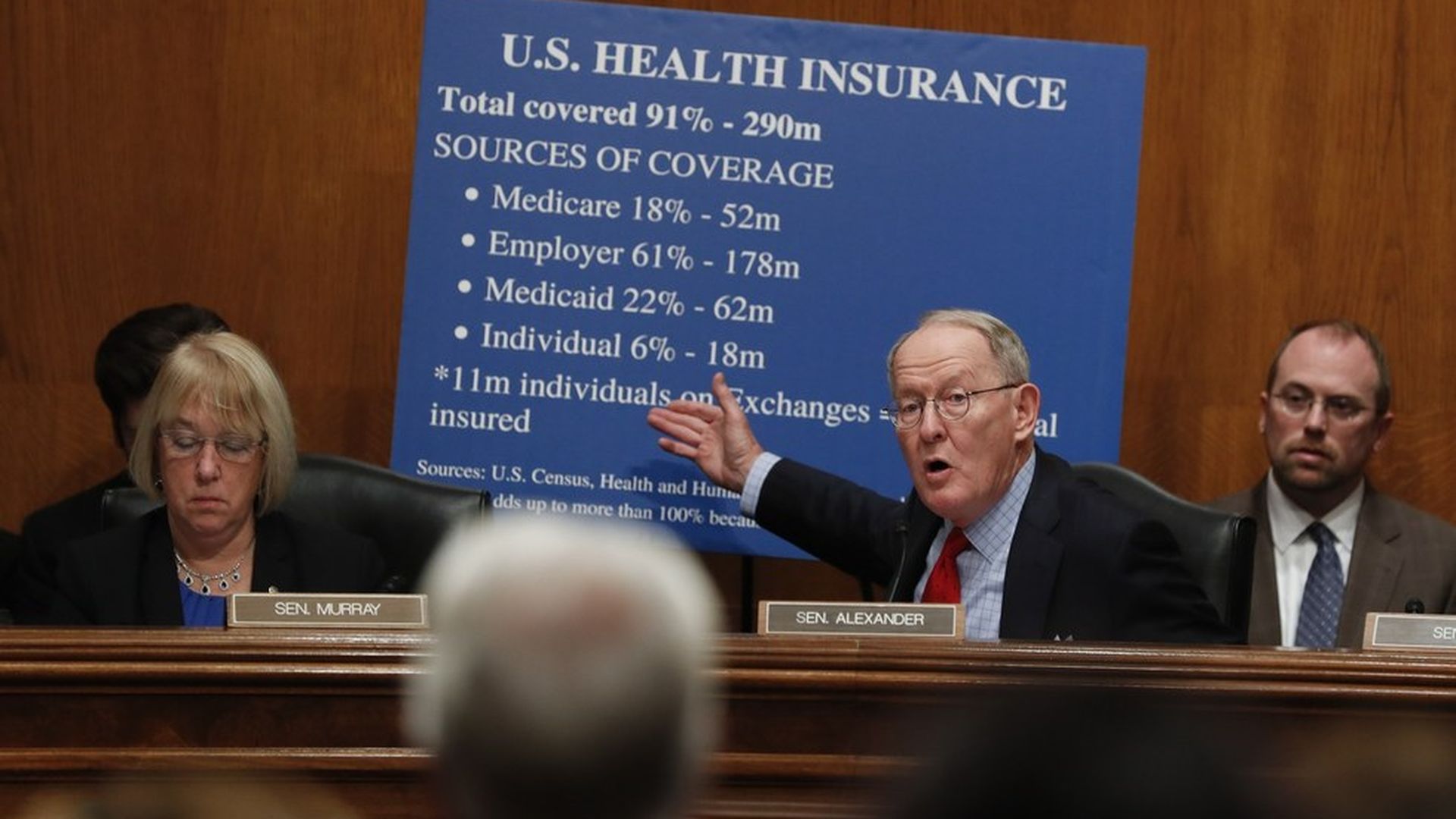
Senate HELP Committee chairman Lamar Alexander used an Obamacare hearing Wednesday to signal that he'll push for financial help for insurers in the individual insurance market — a goal confirmed by his aides. It was a sign that Alexander, ever the pragmatist, will try to convince other Republicans that they can't keep holding out against "insurer bailouts" if they want the post-Obamacare market to be stable.
The key quote: Some things "can be done temporarily to stabilize that market for two or three years while we discuss everything else. And I think it means Republicans are going to have to approve things we might not normally support" and so will Democrats. Read on for more highlights from the hearing.
Anthem pushing hard for Obamacare fixes
Anthem CEO Joe Swedish said Wednesday that the individual market under Obamacare "has not been working well," and his insurance company is aggressively lobbying Congress to make specific changes, which could determine the extent of Anthem's Obamacare participation in 2018.
Anthem's biggest demands: Repeal the health insurance tax (which is temporarily suspended for this year), extend so-called "grandmother" plans (pre-Obamacare policies) indefinitely, decrease the number of exemptions for special enrollments, and prohibit third parties (such as dialysis groups) from steering patients into Obamacare plans when they are eligible for Medicare or Medicaid.
Why this matters: Anthem is one of the biggest publicly traded health insurers in the Obamacare marketplaces, covering about 839,000 exchange enrollees as of Dec. 31. If Anthem doesn't get what it wants and retreats, that would be a huge blow to the marketplaces — perhaps destabilizing. It's worth noting, though, that Anthem expects to break even or be even slightly profitable on its Obamacare plans for 2017.

This Swiss drug company isn't worried about Trump

Roche Holding AG, the Switzerland-based pharmaceutical company, came away with an 8% higher profit than last year, the equivalent to $9.7 billion, according to WSJ. And even though there will be cheaper alternatives to their cancer drugs available next year, the company plans to release a new line to keep their profits high.
Trump's putting pressure on drug companies to lower their prices, but Roche isn't worried for these reasons:
- They already offer cheaper versions of their drugs, which has saved them from suffering as much as other pharmaceutical companies.
- CEO Severin Schwan sees the company's drugs as "true innovation," because they are difficult to replicate or replace with other companies' drugs.
- He says he already invests "over-proportionally" in the U.S., employing more than 25,000 people, and the U.S. benefits a lot from the industry. (Roche also makes almost half of its revenue in from the U.S.)
Why it matters: This is a good early indication of how the biggest international drug makers are reacting to Trump's latest comments on drug prices.
Obamacare remains small part of business at HCA
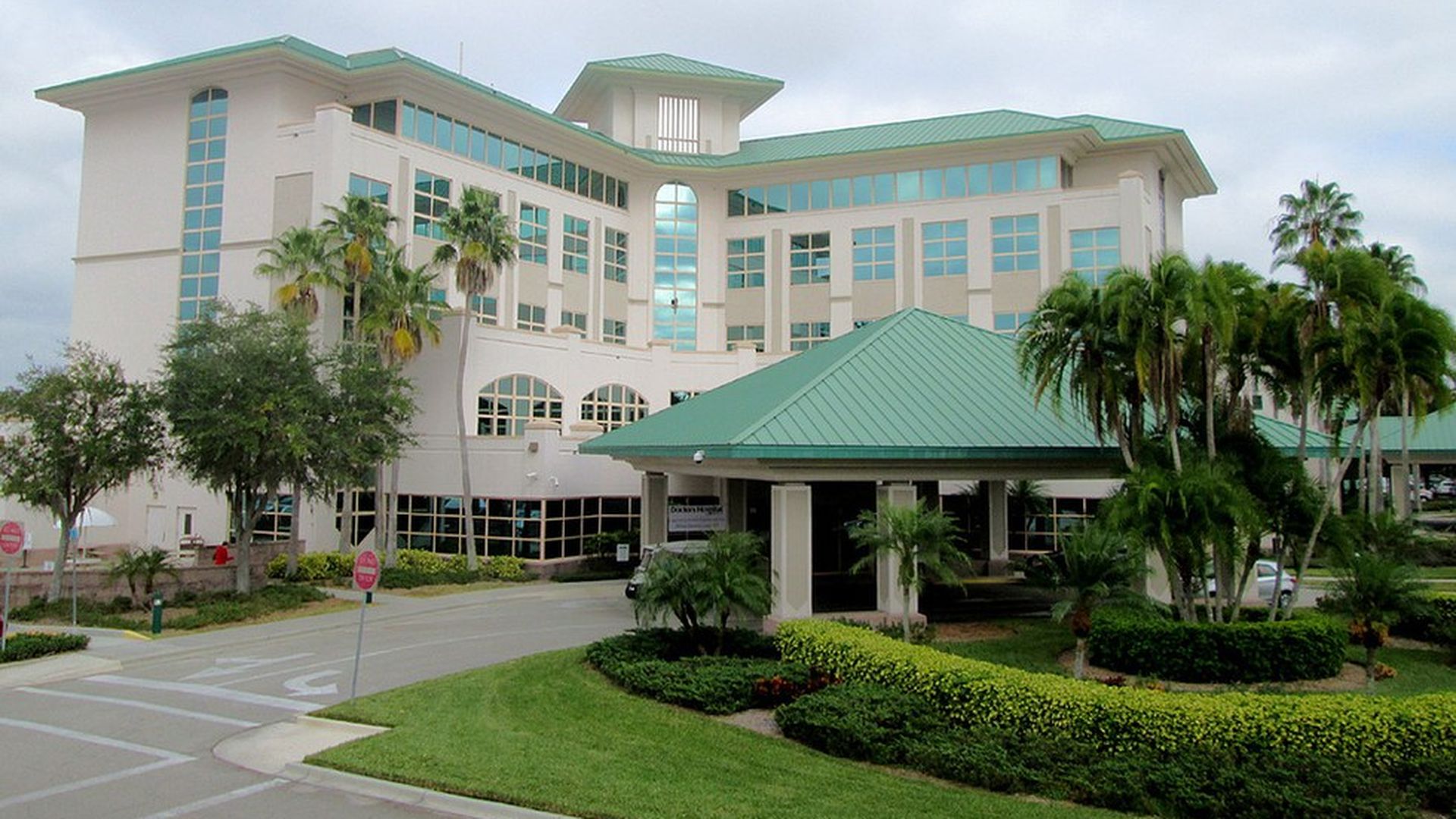
HCA, a publicly traded chain of 170 hospitals and 118 surgery centers, recorded only a mild boost to its profit from patients who bought health insurance through the Obamacare exchanges.
HCA's chief financial officer, Bill Rutherford, said on an earnings call Wednesday that even though HCA hospitals had seen more Obamacare patients in 2016, just 2.7% of all hospital admissions and 2.4% of emergency room visits were from exchange members. Obamacare had a net positive effect to HCA's adjusted earnings before interest, taxes, depreciation and amortization of roughly 5%.
For 2017, Rutherford said the $41.5 billion company expects to see a modest increase in Obamacare patients, but he admitted that's a "subjective" guess given the current climate to repeal and replace the law.
Why this matters: People with Obamacare coverage have gone to the hospital and doctor more, but those patients are just a small fraction of a hospital's business. Medicare and Medicaid, the two primary government health insurance programs, are much more vital to hospital chains like HCA. Obamacare's Medicaid expansion, in particular, has heavily reduced uncompensated care.
Aetna's financial power grows despite setbacks
Here are the main takeaways from Aetna's fourth-quarter report and investor call:
Still immensely profitable: Don't let Aetna's Obamacare losses obscure the fact that this is still a massive health insurance company that is making a lot of money from the taxpayer-funded Medicare and Medicaid programs, as well as from people who have employer coverage. Aetna covers more than 23 million people.
An appeal decision on Humana is coming soon: Aetna is still weighing its options after the proposed merger was struck down. Mark Bertolini, Aetna's chief executive, said the insurer would decide whether to appeal the judge's ruling before Feb. 15, the deal's expiration date. If Aetna throws in the towel, it will have to pay Humana a $1 billion termination fee.
Aetna won't re-enter the Obamacare markets: Bertolini told investors "the intended goals of the (Affordable Care Act) have not been achieved," and that Aetna has no intention of re-entering or expanding into the marketplaces next year since the risk pools will deteriorate. But he said he was optimistic the next health care reform debate will focus on the "lack of access to affordable health care." That word — "access" — mirrors the language of House Speaker Paul Ryan and is very different from universal coverage.
Doing fine on Medicare Advantage: Aetna is highly profitable in the private alternative to traditional Medicare, proving it can do just fine without Humana, a Medicare Advantage powerhouse. Bertolini and crew also subtly mentioned that it has a "strong pipeline" for its Medicare Advantage plans offered through employers and other large groups. (Last year, the company argued that cuts to employer Medicare Advantage rates would harm seniors and the program. Nothing of the sort has happened.)
Aetna's profits drop, but overall revenue still up
Aetna announced this morning that its fourth-quarter profit dropped 57%, to $139 million. Most of the drop in profit was tied to an early retirement program Aetna offered last fall as a way to slash costs. The Obamacare exchanges dragged down its overall profitability, but Aetna's government programs, specifically Medicare, continue to rake in taxpayer-funded cash. Aetna's total revenue in 2016 was $63.2 billion, a 4.7% jump from 2015.
Why it matters: Even though Aetna's net profit shrank in the fourth quarter, analysts thought it could've been worse for the health insurance giant.
The bigger issue is figuring out what to do now that its proposed acquisition of Humana was struck down. Aetna continues to say it is considering an appeal, but it gave 2017 guidance as if it were a "stand-alone" company.
Some interesting Obamacare figures: Aetna had to pay $690 million into the Affordable Care Act's risk adjustment program, which is used to help out insurers that had the most expensive customers in the marketplaces. The insurer also expects to receive $465 million under the risk corridor program, based on results from 2014 through 2016. Aetna bailed on most of the exchanges, not because they weren't profitable, but because Aetna was trying to get approval for its Humana deal.