Monday's health stories

Here's how the House might cover pre-existing conditions
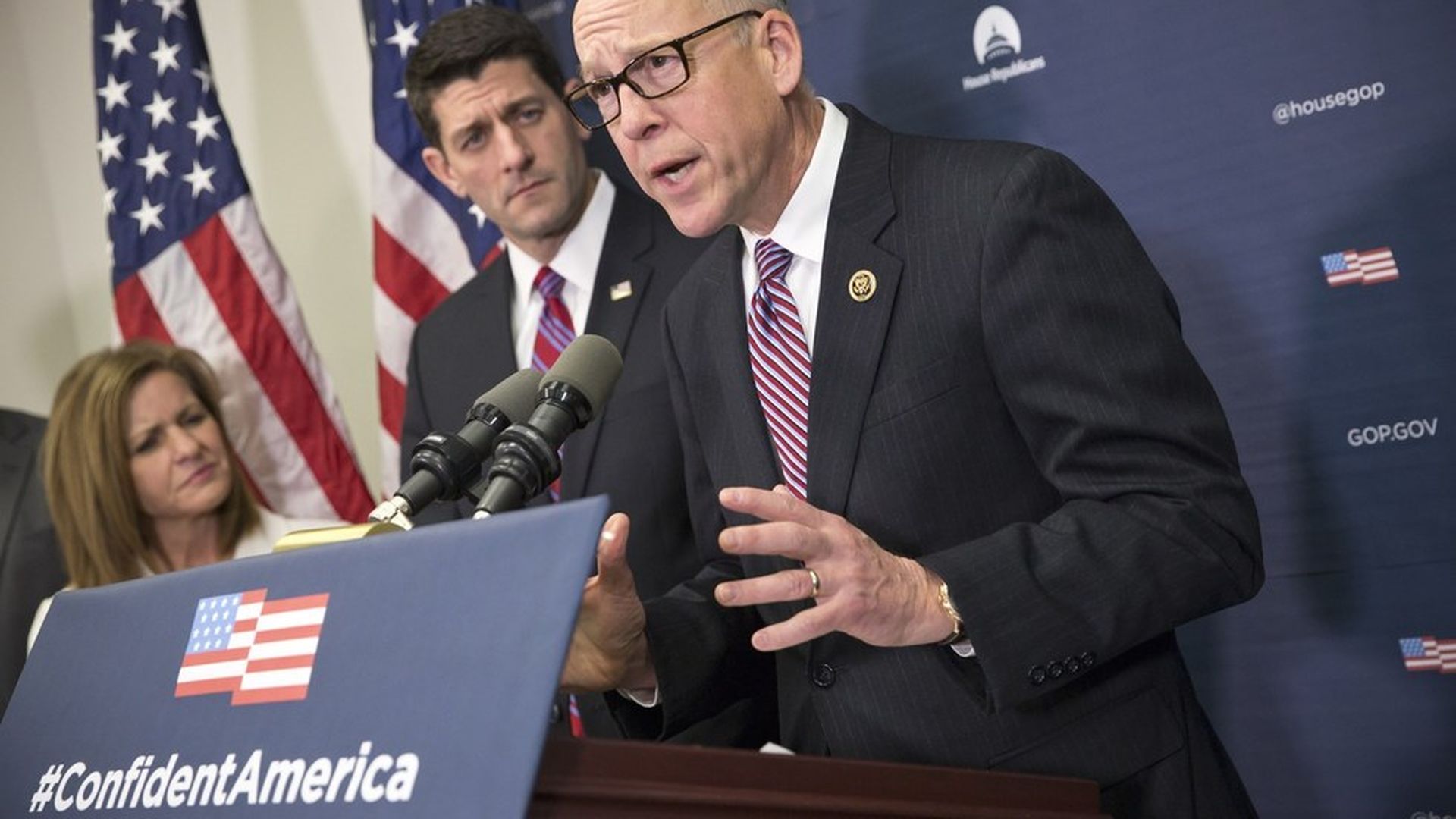
The House Energy and Commerce Committee is probably going to take the continuous-coverage approach, which means people with pre-existing conditions will be covered as long as they have kept themselves insured. Here's the discussion draft of their bill, which the committee will talk about at a hearing Thursday. It has all of the language about requiring the coverage from insurers, but the continuous-coverage language hasn't been written yet.
Committee aides tell me that part is likely to be introduced by Rep. Susan Brooks, but the details — like how long a person would have to stay insured — are still being worked out. Their goal is to find the right incentives for people to stay insured, and to mirror employer-based coverage as closely as possible. Also still being discussed: whether to prevent insurers from charging more to people with pre-existing conditions, not just require insurers to cover them.
Other bills the committee will talk about on Thursday:
- Letting insurers vary premiums by age at a 5 to 1 margin, rather than 3 to 1 under Obamacare.
- Verifying that people who sign up outside of open enrollment are eligible to do it.
- Setting the grace periods for paying premiums to match state laws.
Will Obamacare repeal get back on track?
This week gives Republicans a chance to try to recover from last week's stumbles, which included a GOP retreat that didn't produce any clear consensus on an Obamacare replacement plan — but did produce a leaked recording of everyone arguing about it behind closed doors. There was also the Trump administration's attempt to shut down Obamacare outreach, partially dialed back on Friday so it's limited to $4 million to $5 million in TV and radio ads. (The official HealthCare.gov Twitter account is back to tweeting reminders to sign up.)
Couple of things to watch this week:
Will piecemeal work? It's clear that the House, at least, is starting with a bunch of smaller Obamacare replacement bills, with crucial details they're still working out. That's certainly the case with pre-existing conditions. Republicans are trying to shut down the talk that they don't have plans, but they don't have a ton of time to work out details if they want to meet their goal of a House vote by early March.
Will Obamacare enrollment recover? There won't be a total blackout of Obamacare outreach after all, but it's not clear how much that will help the signup effort. One way or another, open enrollment is ending under an administration that's hostile to the law. The message it sent by trying to stop outreach, according to Larry Levitt of the Kaiser Family Foundation, is that it "seems more intent on accelerating the demise of the health law than on running the program effectively and keeping insurance markets stable."

Key part of GOP health plans may raise out-of-pocket costs
Most Republicans agree on one part of their Obamacare replacement: It will include greater use of health savings accounts. But after years of outcry over rising deductibles and out-of-pocket spending under Obamacare, they could face their own backlash over this policy — because it's built on, well, high deductibles and out-of-pocket spending.
President Trump himself endorsed health savings accounts at the Republican retreat in Philadelphia last week, saying they give people more choice over what insurance plan is right for them. But he's also been vocal about the need to lower deductibles and out of pocket spending, echoing the populist outcry over health care costs.
But health savings accounts are tied to high-deductible plans — and that's deliberate, because the idea is to make consumers take more responsibility for their health care spending. Greater use of the savings accounts "runs counter to Trump's talk about lower deductibles and out of pocket expenses," Ed Lorenzen, a senior adviser at the Committee for a Responsible Federal Budget, tells Axios.