Friday's energy & climate stories


This man has a strategy for using Bezos' climate billions
HOUSTON — Tom Taylor, president and CEO of the $10 billion Bezos Earth Fund, lacks a climate background.
- But he brings business and engineering experience — and, crucially, Jeff Bezos experience — to the role.

Stock indexes step into correction territory


When the Iran war started, market analysts issued reassuring notes: Short-lived geopolitical shocks don't typically rattle the stock market, they said.
Why it matters: We're now into month two of conflict. Equities are wobbling, and investors are growing increasingly skeptical of President Trump's assurances.
Where it stands: The tech-heavy Nasdaq index is now down 11% from its record-high close on Oct. 29 — officially entering correction territory.
- The Russell 2000, an index tracking smaller companies, landed in correctionville last week.
- The S&P 500 has held up a bit better, but it's down 7.2% from its closing high.
Catch up quick: Minutes after the market closed Thursday, Trump posted that he was extending the deadline for Iran negotiations.
- "As per Iranian Government request, please let this statement serve to represent that I am pausing the period of Energy Plant destruction by 10 days." That would bring his latest deadline to Monday, April 6.
The latest: That statement didn't calm the markets for long. Oil prices spiked to around $110 a barrel when the market reopened.
- "While the delay might reduce some of the immediate escalation risk, it offers no new visibility on the path toward resolution," Deutsche Bank analysts wrote in a note this morning.
The big picture: If the market does take a another leg down, the effects on American households would be more pronounced than in previous oil price shock moments.
- Nearly 40% of household wealth in the U.S. is tied up in stocks — compared with about 10% during the 1990 oil price shock, UBS economist Arend Kapteyn said in a note yesterday.
- That means Americans would be hit with a double whammy from the geopolitical conflict: higher energy prices and lower brokerage account balances. That in turn would be a drag on overall economic growth, as households cut back on spending.
- It would also be another downer to the consumer mood.
Zoom out: The stock market doesn't typically take kindly to long periods of high oil prices stemming from Middle East Conflict.
- Over the past 50 years, there were nine oil price shocks, where prices rose 20% or more, according to an analysis from Joe Seydl, a senior markets economist at JPMorgan Private Bank.
Zoom in: Four of those shocks led to a selloff in stocks — an S&P decline greater than 10%:
- The 1973 oil embargo, the Iranian hostage crisis, the 1990 Gulf war and the Russian Invasion of Ukraine in 2022.
- In each case, oil prices rose more than 50%.
Stunning stat: The price of Brent crude is up nearly 40% from the beginning of the war.
Yes, but: It's not just the oil price that triggered the selloff, Seydl writes. Each of those selloffs coincided with either a recession in the six months after the shock or Federal Reserve interest rate increases.
- The past doesn't predict the future.
What to watch: Weekend postings by Trump. The president has had a tendency to escalate the conflict with Iran with social media posts on Saturdays and Sundays that in turn has driven a lot of market volatility.

Pentagon weighs sending 10,000 more combat troops to the Middle East
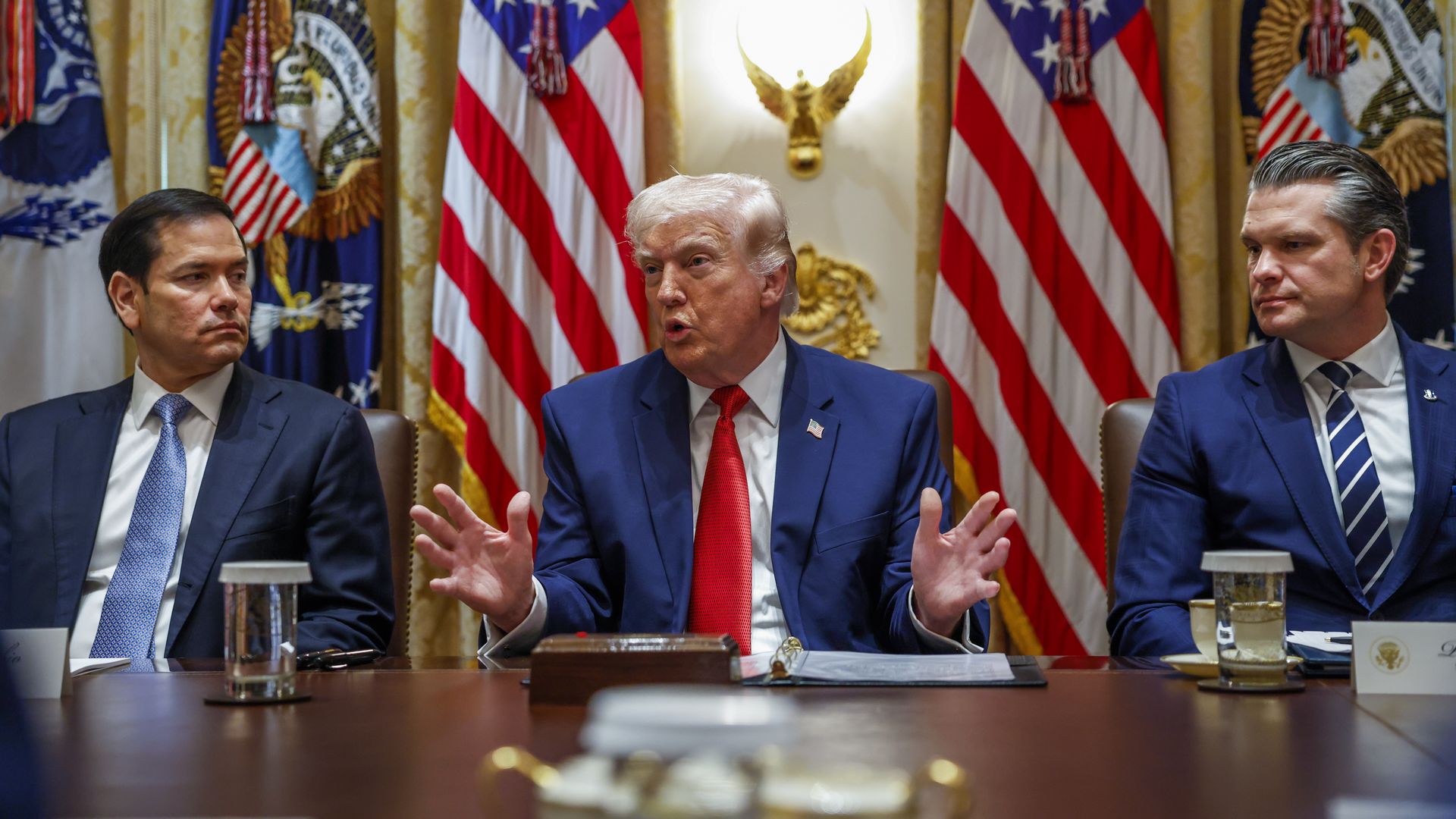
The White House and the Pentagon are considering sending at least 10,000 additional combat troops to the Middle East in the coming days, according to a senior U.S. defense official.
Why it matters: If the Trump administration decides to send extra troops, it will significantly increase the number of combat soldiers the U.S. has in the region. It is another signal that a U.S. ground operation in Iran is being seriously prepared.

Energy execs say they're trying to address ratepayers' anger
HOUSTON — Several top energy executives and a federal regulator had a message Thursday for Americans angry about soaring electricity bills: Help is on the way.
Why it matters: The cost of electricity — which has spiked across much of the country over the past year — has become a top-tier political issue, with Democrats making it a focus of their affordability push.

Trump extends deadline for Iran negotiations
President Trump extended the deadline for negotiations with Iran and paused his threat to bomb Iranian energy facilities by another 10 days.
Why it matters: The Trump administration through a group of mediators, Pakistan, Egypt and Turkey, has asked Tehran to hold a high-level meeting this week to discuss a U.S. proposal for ending the war.

Federal power regulator to big tech: Let's talk
HOUSTON — The top U.S. electricity regulator publicly prodded tech companies on Thursday to engage more as they race to power a massive buildout of AI data centers.
Why it matters: Big Tech is moving fast to lock in power — but must navigate a slower, more complex grid it doesn't fully understand.

Iran war will jolt U.S. inflation, new analysis finds
The Middle East conflict wiped out what would have been a modest upgrade to global growth and a stable inflation picture.
- That has been replaced with a fresh warning about soaring energy costs and U.S. prices, which are projected to run far hotter than expected.
Why it matters: What was a more manageable inflation story now looks like a pressure test for central banks that may need to raise interest rates — or hold off on further cuts — even as growth weakens.

Iran war could boost Trump's Alaskan gas vision
HOUSTON — The stunning Middle East supply disruption could lower hurdles to building a long-planned Alaskan gas pipeline and export project that the White House covets.
Why it matters: "That's probably our single most important energy infrastructure project of this whole administration," Energy Secretary Chris Wright said at CERAWeek on Tuesday.

Why the U.S. Treasury market is like a rom-com
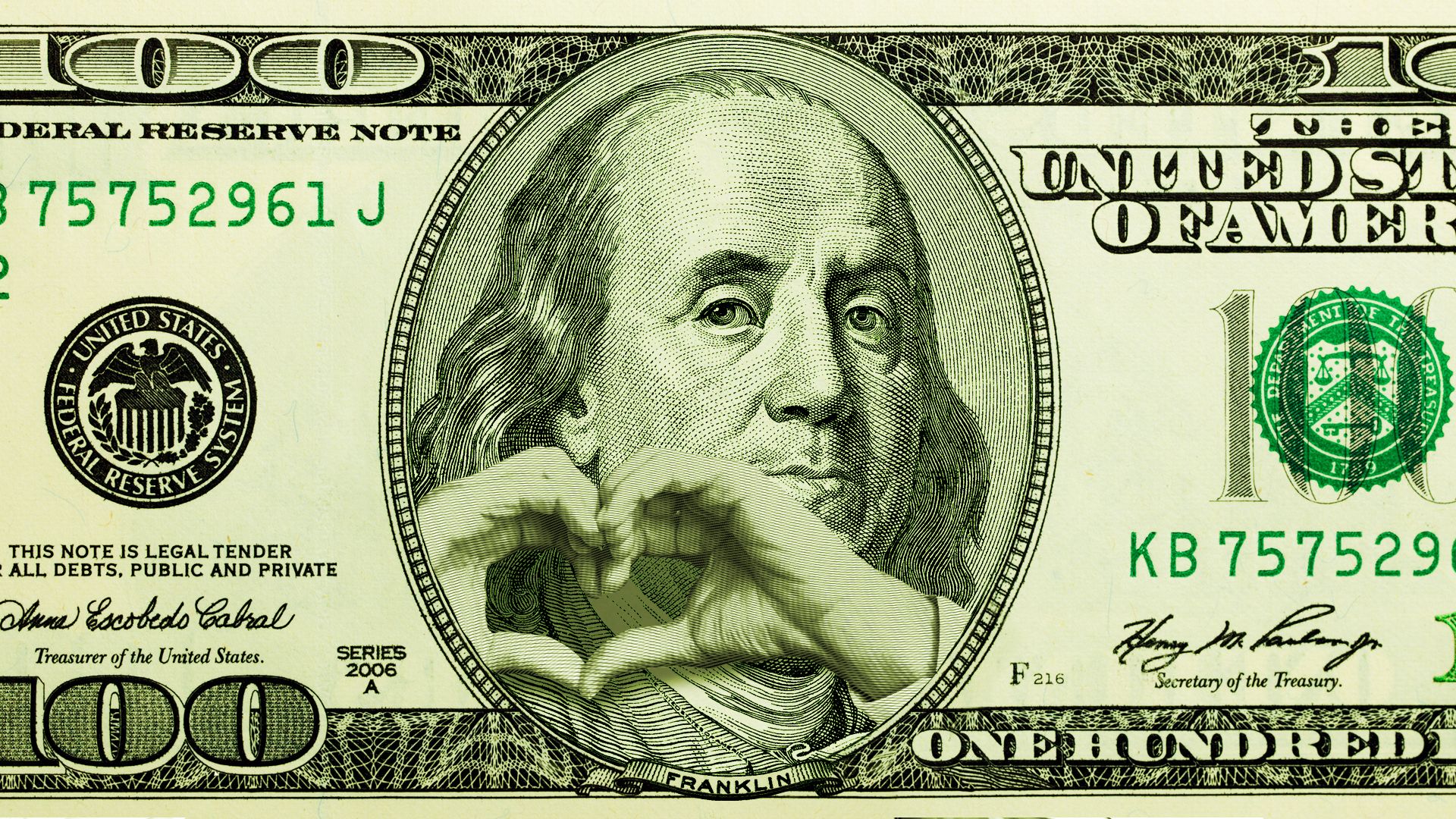
At a Senate hearing earlier this month, economist Martha Gimbel compared a wonky thing, the U.S. Treasury market, to something very relatable, a Hallmark rom-com.
Why it matters: She hit at the essence of what's confounding experts in government debt:
- Why haven't bond investors penalized the U.S. for its erratic policymaking and weakening institutions by meaningfully driving up the country's borrowing costs?
The big picture: Gimbel and other experts believe that the answer is that there's not yet a good alternative to the enormous market for Treasurys, so investors stick with the "cleanest dirty shirt."
- "People think that U.S. Treasurys are the only large safe asset, so people are still buying them," Ugo Panizza, an economist and director of the International Center for Monetary and Banking Studies, told Axios earlier this year.
The U.S. is "currently the boyfriend at the beginning of the Hallmark movie in the big city, where the girlfriend is still going out with him, even though she knows that it's wrong," Gimbel, executive director of the Yale Budget Lab, put it.
- "But at some point, it, she's going to go home to the small town and find the nice firefighter and realize that there's another option."
- "And we don't know when that will happen."
Between the lines: Metaphors are good for getting people's attention on issues that are hard to grasp.
- Gimbel even got a laugh out of the room — no small feat at a hearing before the Senate Subcommittee on Fiscal Responsibility and Economic Growth.
What to watch: If investors ever find a better option than Treasurys, that would be a huge problem given that we are borrowing a lot of money right now.
The latest: The energy shock driven by the Iran war has helped drive up the yields on U.S. debt.
- The MOVE Index, which tracks volatility in the Treasury market, is spiking above its 52-week average — as it has during other moments of economic shock.
- "Investors' concerns include an unsustainable American fiscal position, rising inflation risk and a growing uncertainty about war," RSM chief economist Joseph Brusuelas wrote in a note Wednesday.


How it works: There are reasons for investors to be wary of buying sovereign debt.
- Governments are hard to sue, and it's difficult to enforce your claims against them.
- "They can do things that private companies can't, like pass laws and inflate their currencies," Panizza and University of Virginia international law professor Mitu Gulati explained in a piece for Reuters last summer.
Zoom out: That's why the countries that attract the most investors are the trustworthy ones with strong institutions. They are rewarded with lower borrowing costs.
- 17th-century England is the textbook example. It was able to borrow more because it had effective institutions that checked the king's temptations, per a well-known paper from 1989.
- This helped the country become a superpower.
What they're saying: The U.S. is still considered exceptional among investors, says Layna Mosley, a professor of politics and international affairs who directs the Princeton Sovereign Finance Lab.
The bottom line: Investors still see the U.S. as the safest bet around, but if ever a new hometown hottie materializes — watch out.