Saturday's energy & climate stories

This man has a strategy for using Bezos' climate billions

HOUSTON — Tom Taylor, president and CEO of the $10 billion Bezos Earth Fund, lacks a climate background.
- But he brings business and engineering experience — and, crucially, Jeff Bezos experience — to the role.

Stock indexes step into correction territory


When the Iran war started, market analysts issued reassuring notes: Short-lived geopolitical shocks don't typically rattle the stock market, they said.
Why it matters: We're now into month two of conflict. Equities are wobbling, and investors are growing increasingly skeptical of President Trump's assurances.
Where it stands: The tech-heavy Nasdaq index is now down 11% from its record-high close on Oct. 29 — officially entering correction territory.
- The Russell 2000, an index tracking smaller companies, landed in correctionville last week.
- The S&P 500 has held up a bit better, but it's down 7.2% from its closing high.
Catch up quick: Minutes after the market closed Thursday, Trump posted that he was extending the deadline for Iran negotiations.
- "As per Iranian Government request, please let this statement serve to represent that I am pausing the period of Energy Plant destruction by 10 days." That would bring his latest deadline to Monday, April 6.
The latest: That statement didn't calm the markets for long. Oil prices spiked to around $110 a barrel when the market reopened.
- "While the delay might reduce some of the immediate escalation risk, it offers no new visibility on the path toward resolution," Deutsche Bank analysts wrote in a note this morning.
The big picture: If the market does take a another leg down, the effects on American households would be more pronounced than in previous oil price shock moments.
- Nearly 40% of household wealth in the U.S. is tied up in stocks — compared with about 10% during the 1990 oil price shock, UBS economist Arend Kapteyn said in a note yesterday.
- That means Americans would be hit with a double whammy from the geopolitical conflict: higher energy prices and lower brokerage account balances. That in turn would be a drag on overall economic growth, as households cut back on spending.
- It would also be another downer to the consumer mood.
Zoom out: The stock market doesn't typically take kindly to long periods of high oil prices stemming from Middle East Conflict.
- Over the past 50 years, there were nine oil price shocks, where prices rose 20% or more, according to an analysis from Joe Seydl, a senior markets economist at JPMorgan Private Bank.
Zoom in: Four of those shocks led to a selloff in stocks — an S&P decline greater than 10%:
- The 1973 oil embargo, the Iranian hostage crisis, the 1990 Gulf war and the Russian Invasion of Ukraine in 2022.
- In each case, oil prices rose more than 50%.
Stunning stat: The price of Brent crude is up nearly 40% from the beginning of the war.
Yes, but: It's not just the oil price that triggered the selloff, Seydl writes. Each of those selloffs coincided with either a recession in the six months after the shock or Federal Reserve interest rate increases.
- The past doesn't predict the future.
What to watch: Weekend postings by Trump. The president has had a tendency to escalate the conflict with Iran with social media posts on Saturdays and Sundays that in turn has driven a lot of market volatility.

Pentagon weighs sending 10,000 more combat troops to the Middle East
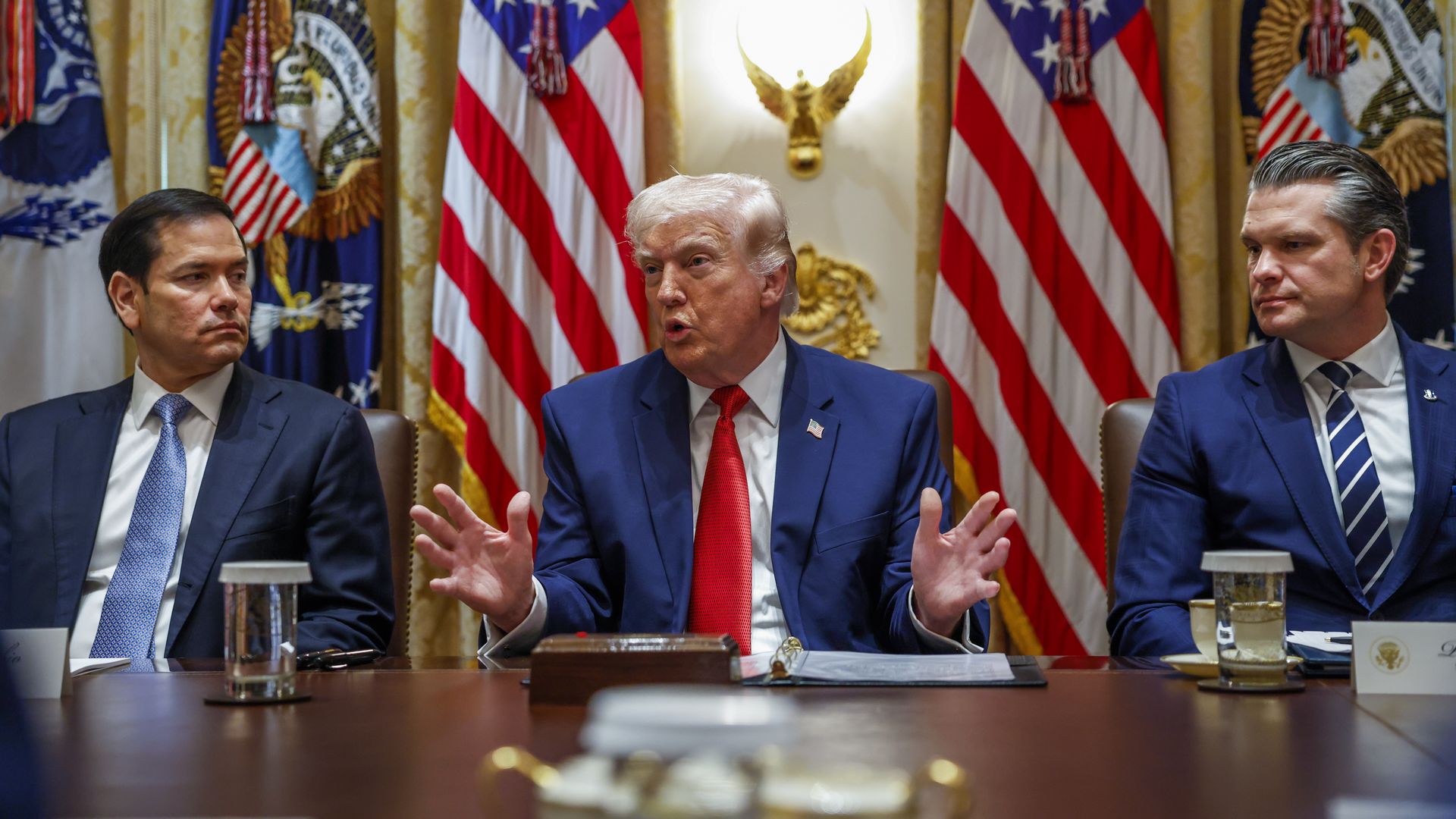
The White House and the Pentagon are considering sending at least 10,000 additional combat troops to the Middle East in the coming days, according to a senior U.S. defense official.
Why it matters: If the Trump administration decides to send extra troops, it will significantly increase the number of combat soldiers the U.S. has in the region. It is another signal that a U.S. ground operation in Iran is being seriously prepared.