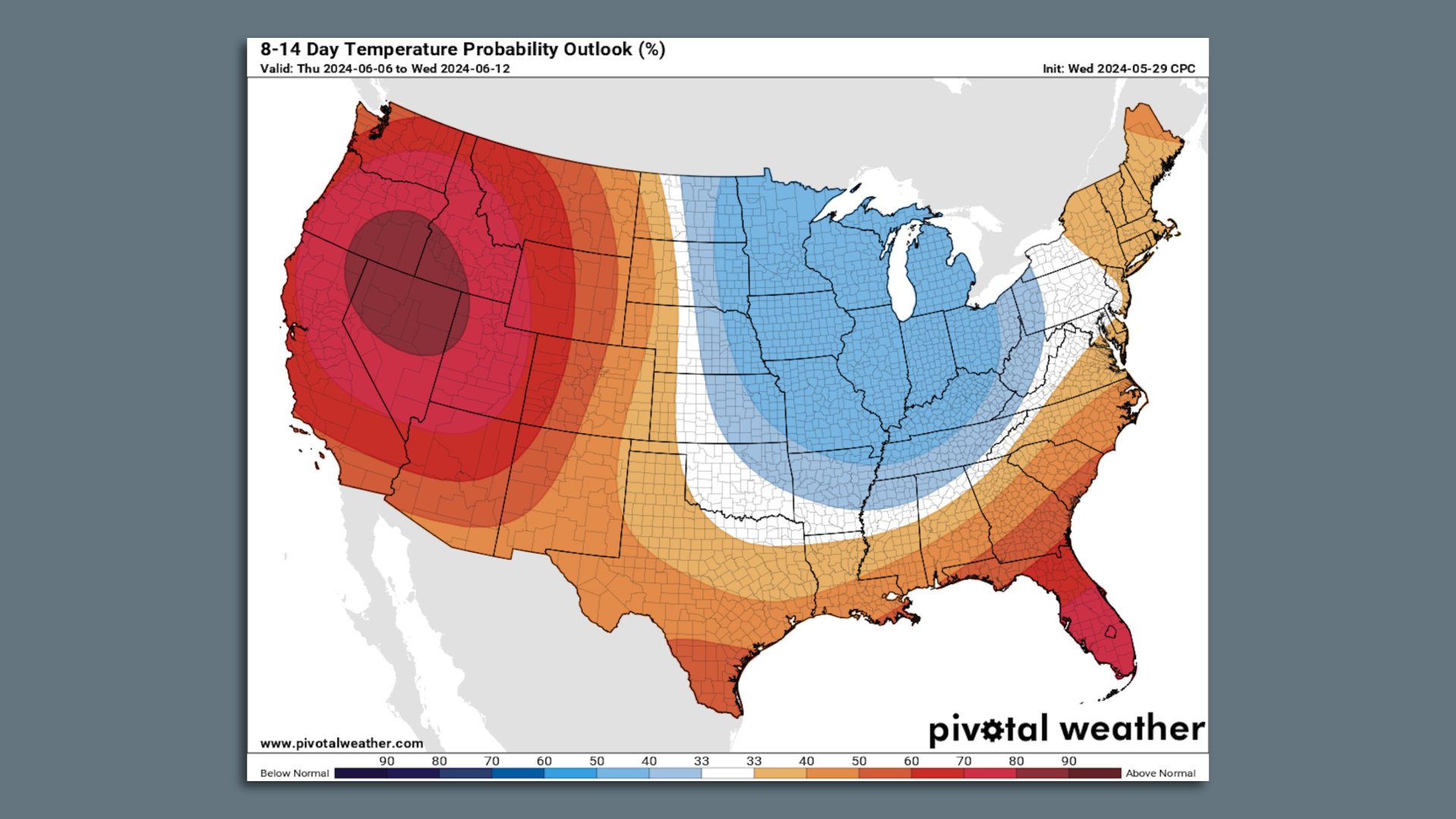
An early to mid-June heat wave is likely to take place across large parts of the U.S., the National Weather Service warns.
Why it matters: With meteorological summer kicking off on June 1, this will mark the first big heat wave of the 2024 warm season — and is expected to swamp areas from California to Colorado, north to Canada, and south to the Mexican border.
Why it matters: The delay in fulfilling the pledge, which was made at the Copenhagen climate talks in 2009, generated resentment and doubts among developing nations regarding future climate funding promises.
Washington, D.C.; Minnesota's Twin Cities; and Irvine, California, have the best public park systems among the country's 100 most populous cities, according to a new report by the pro-park nonprofit Trust for Public Land.
Why it matters: Residents in high-scoring cities are more socially connected with their neighbors, per the report — including those from other socioeconomic groups, with whom they might not otherwise commingle.
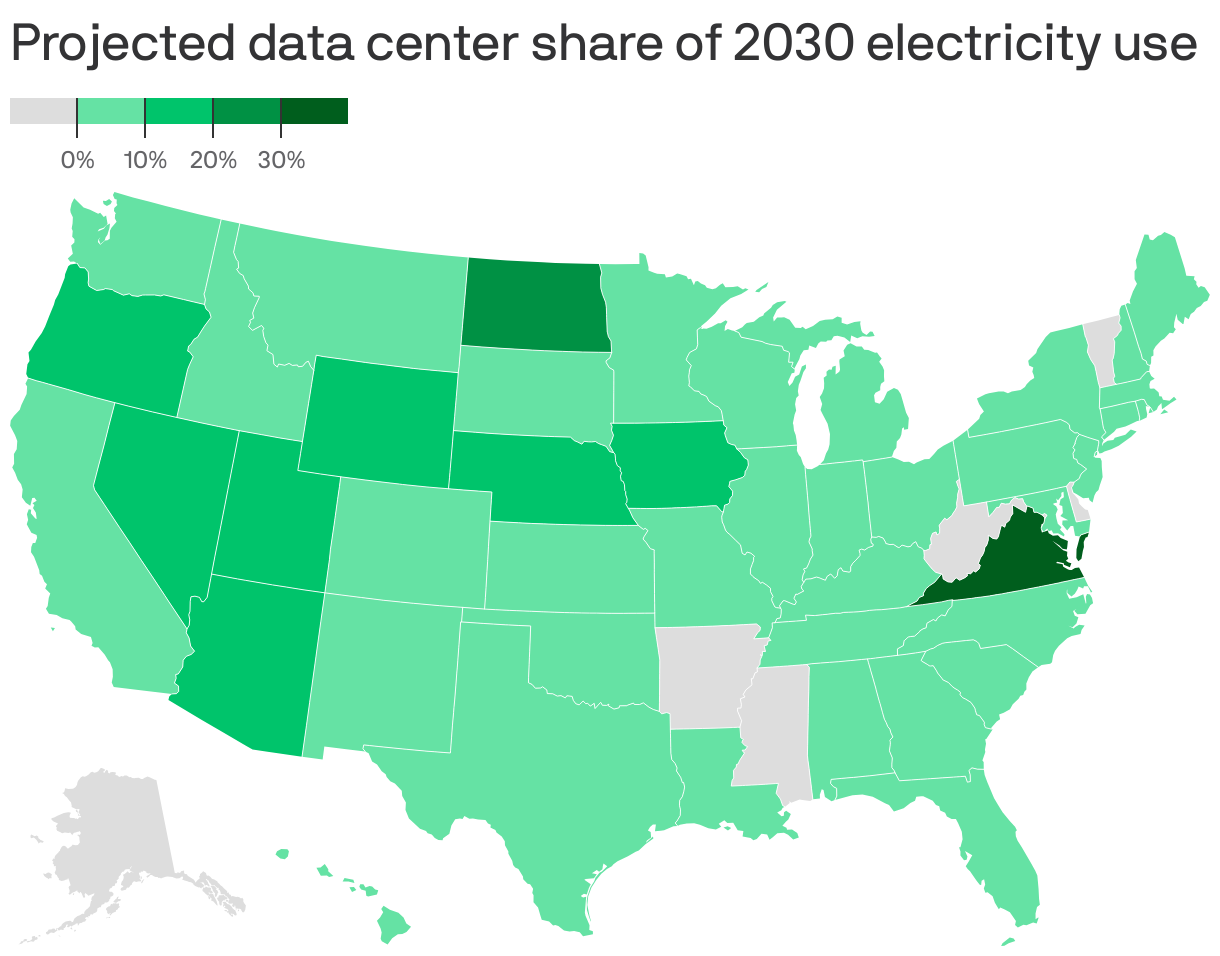
New projections help crystallize a huge challenge: meeting the surging energy needs of data centers as artificial intelligence joins other forces pushing up U.S. power demand.
Why it matters: The balance of fuels that meet this added thirst — gas, renewables, coal, batteries, nuclear and more — will sway future carbon dioxide emissions.
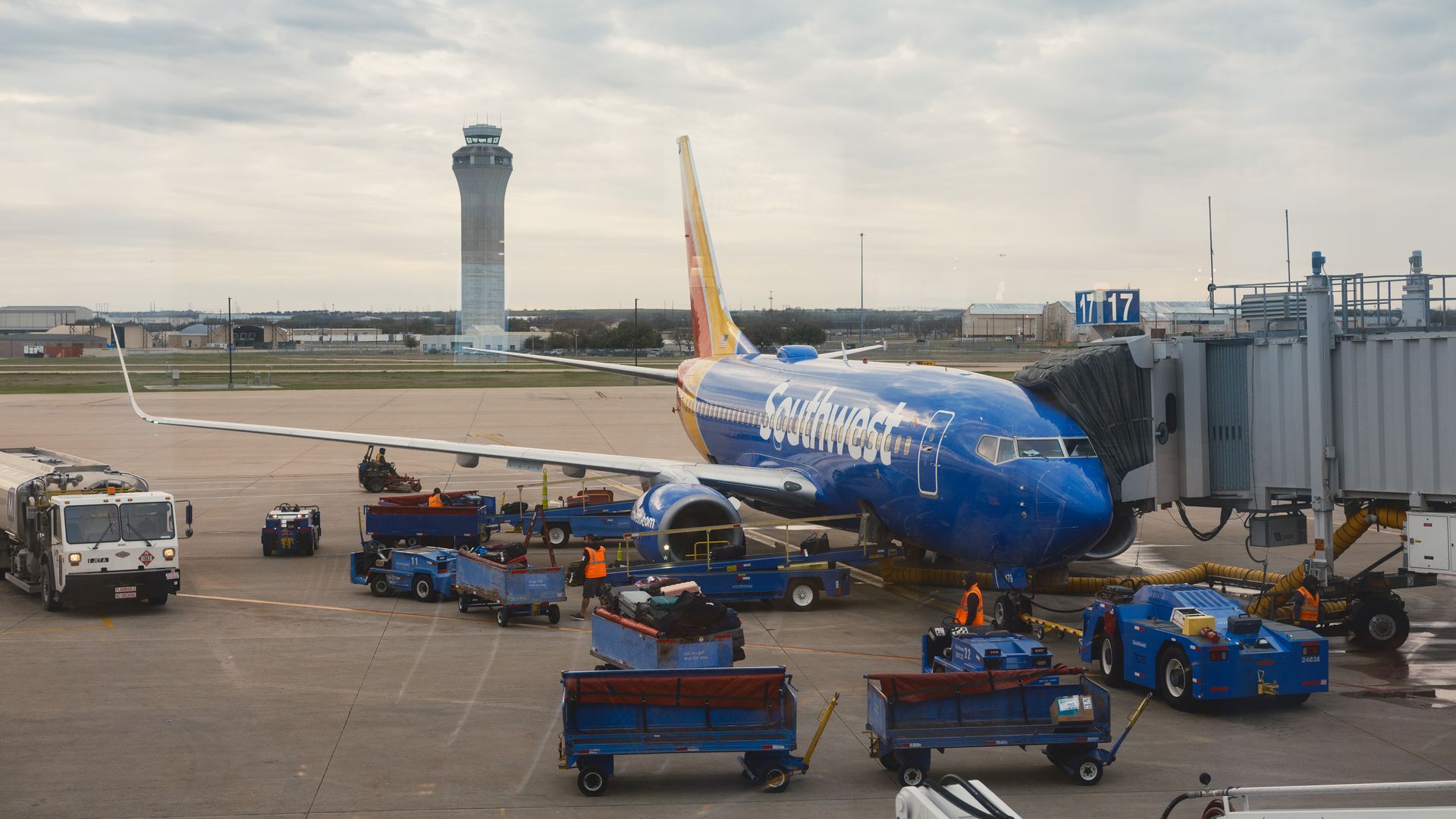
Numerous Southwest Airlines flights were delayed as the company reported a power outage hit its data centers in the Dallas area on Wednesday.
Why it matters: While a Southwest Airlines spokesperson said it had "resolved a brief technology issue" that was caused by Wednesday afternoon's outage, the airline has been in the spotlight after thousands of flights were delayed in late 2022 and again in early 2023 due to severe weather and exacerbated by tech issues.
Why it matters: It comes with a slew of perks, from boosting mental health to aiding scientific discovery.
By the numbers: 96 million Americans — more than 35% of people who are 16+ — have taken part in bird-watching or bird conservation activities, according to a 2022 U.S. Fish and Wildlife Service survey.