Heat wave headed for Western U.S. as extremes hit Gulf Coast, globe

Add Axios as your preferred source to
see more of our stories on Google.
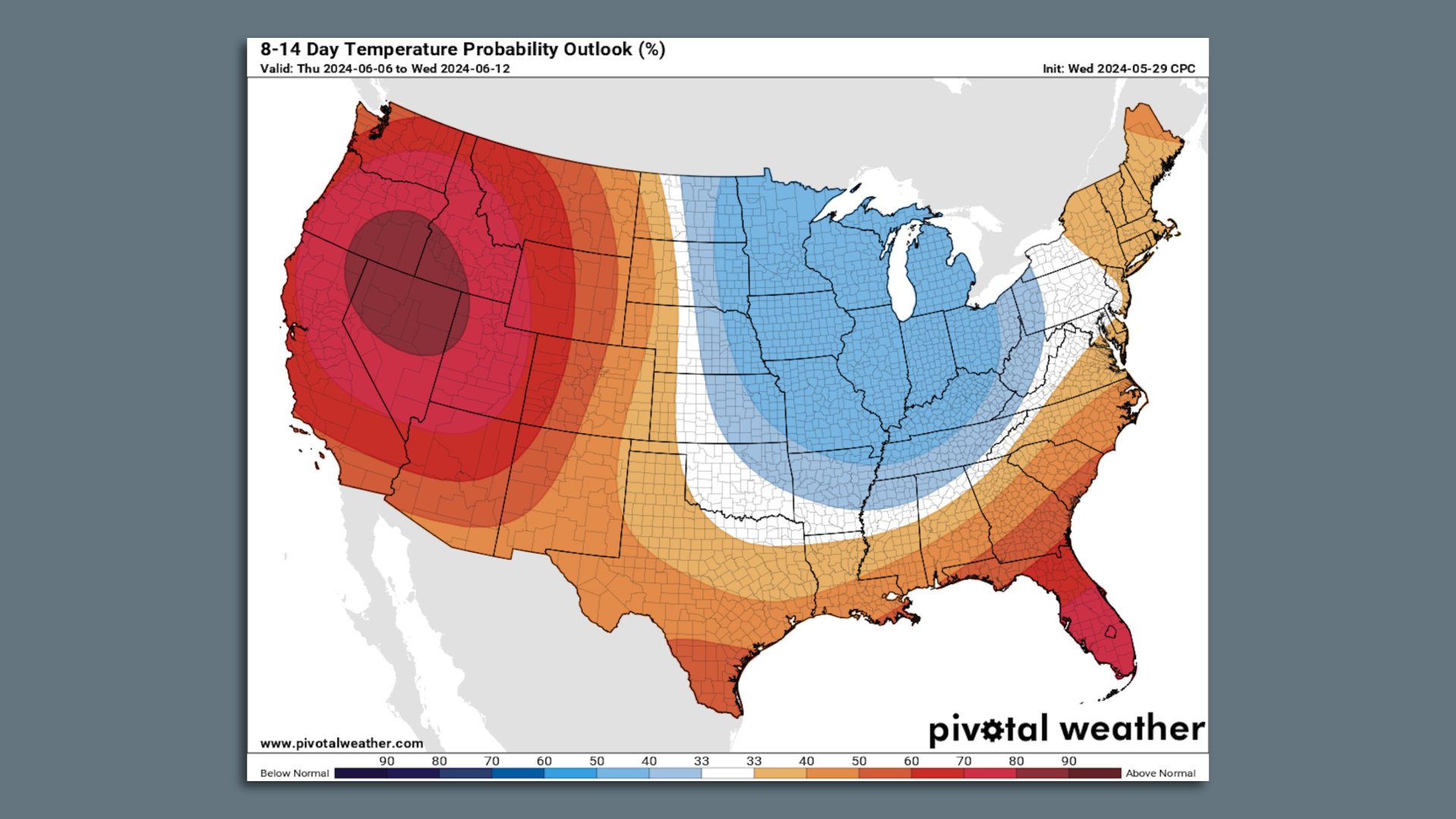
Map showing the likelihood of hotter than average conditions across the West and Gulf Coast from June 6 to June 12. Photo: Pivotal Weather via NOAA/CPC
An early to mid-June heat wave is likely to take place across large parts of the U.S., the National Weather Service warns.
Why it matters: With meteorological summer kicking off on June 1, this will mark the first big heat wave of the 2024 warm season — and is expected to swamp areas from California to Colorado, north to Canada, and south to the Mexican border.
- It will also be a stark departure from recent conditions in the West.
Threat level: More significantly, computer models are hinting this wave will not be fleeting, but may come to dominate much of June in the West and possibly beyond that.
- NWS' Climate Prediction Center forecasters are highlighting the period from June 4-8 as being particularly hot across the Great Basin and inland California, though the entire West is likely to be affected.
- Excessive heat is especially likely in California's Central Valley region, where unusually high temperatures are especially dangerous for agricultural workers.
Zoom in: The heat wave, which NWS describes as "persistent," will result from a building high pressure area (or heat dome) that is projected to park itself across the West during early-to-mid-June.
- It may come to overstay its welcome, too.
- Some of this heat may be be borrowed, initially flowing north from the heat dome that's repeatedly broken all-time temperature records across Mexico and Central America, bringing severe drought conditions.
- In this sense, the upcoming setup may involve one heat wave seeding another.
- In a forecast discussion on Thursday morning, NWS meteorologists said high temperatures will run 10-15°F above average across the West, with even greater anomalies of 15 to 20°F degrees or greater, for the Central California valleys and parts of the Great Basin by late next week.
What we're watching: West Texas into the Southwest are likely to see highs well into the 100s, which is more typical of July or August than early June. The discussion stated that forecasters have "The expectation this heat wave will continue beyond the current forecast period into at least next weekend."
- Meanwhile, there are signs in computer model projections of the heat lasting longer than that, or subsequent heat domes building in behind it.
Between the lines: The heat wave may bring the season's first 110°F or greater high temperatures to Phoenix, with triple-digit-heat in California's Central Valley as well.
- The NWS heat risk tool shows "major" heat risk conditions edging into California's Central Valley on June 5, as hot weather expands from southern Texas westward.
- The expected weather pattern change is in line with NOAA's summer outlook, which showed some of the highest odds of above average temperatures for the June through August period would be across the West and Southwest in particular.
Context: The link between human-caused climate change and morefrequent, intense heat waves is firmly established in the scientific literature. Studies have warned of far more dangerous conditions to come depending on the pace and extent of greenhouse gas emissions cuts.
- Climate Central's Climate Shift Index, which measures the influence of climate change on daily weather conditions, shows that climate change made daily average temperatures on May 28 at least five times more likely across southeastern Texas, South Florida, nearly all of Mexico, and large portions of India and Pakistan, among other parts of the globe.
In a typical year, extreme heat is the biggest weather-related killer in the U.S.
- Heat waves last year killed hundreds in Phoenix, for example, and the first extreme heat event of the season tends to be more risky for vulnerable populations because they are not yet accustomed to these conditions.
- While much of the West had a banner winter for rain and snowfall, repeat heat waves over the summer can dry out the now more abundant vegetation enough to raise wildfire risks by late summer, or early fall.
Zoom out: So far this spring, record-breaking heat has largely been confined to coastal Texas, particularly southern Texas, but also including the Houston metro area, much of Louisiana, and South Florida.
- Record high temperatures have repeatedly been set in these regions, along with milestones for the hottest overnight minimum temperature. This is expected to continue into June.
- Part of the reason for the heat in this region is warmer than usual waters of the Gulf of Mexico, with some role being played by the Mexican heat dome as well.
- Looking at the even bigger picture, this heat wave comes amid global headlines of scorching temperatures, particularly in India. Delhi reached an air temperature of 46.8°C (116.2°F), which was just 0.4°C (0.72°C) below the city's all-time highest temperature.
- Globally, May is likely to become the 12th-straight hottest month on record, as 2024 tracks toward one of the top two warmest years.
