Phoenix temperatures could hit 110 in coming weeks


Add Axios as your preferred source to
see more of our stories on Google.
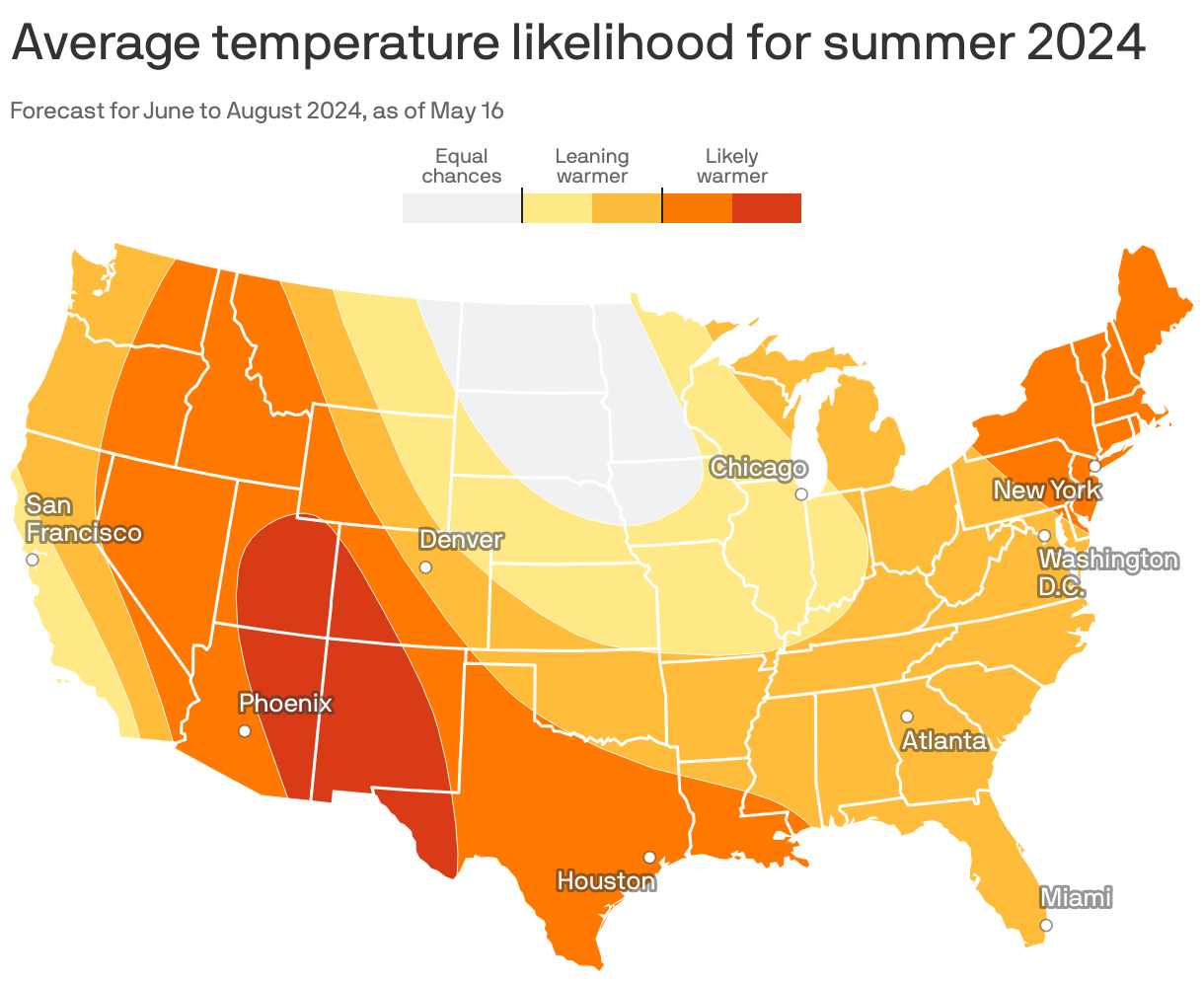
With last year's record-setting summer burned in our memory, forecasters are readying for another potentially brutal heat season in Phoenix.
Why it matters: Heat is the top weather-related killer in the U.S. in a typical year.
- The Department of Health and Human Services recorded 2,302 heat deaths in the U.S. in 2023. More than a quarter of them occurred in Maricopa County.
State of play: Our high temperatures in the low 100s this week are only slightly higher than the average of 99 for this time of year, but are expected to get more intense as early as next Thursday, according to National Weather Service Phoenix meteorologist Tom Frieders.
- He told Axios the Valley could see highs approaching 110 in mid-June, well above normal for that time of year.
Between the lines: It's too soon to know whether July will bring persistent 110-plus temperatures like it did last year.
- The length and intensity of our extreme heat largely depends on the monsoon, which is currently trending to arrive later and deliver less precipitation than normal, Frieders said.
Catch up quick: Sky Harbor recorded 31 straight days of at least 110 last summer, making it the longest heat wave ever recorded in Phoenix.
- The city saw a record 19 days with overnight low temperatures at or above 90, an all-time record warm low temperature of 97, and a record-setting 17 days with highs at or above 115 degrees in July, according to the National Weather Service forecast office in Phoenix.
- And we were the first major city in the country to reach an average monthly temperature higher than 100, with an average July temperature of 102.7.
Between the lines: Valley officials have promised a more proactive response this year, adding several respite centers with extended hours.
- Burton Barr Library is serving as a 24/7 cooling center throughout the summer.
Zoom out: Above normal temperatures from June through August are likely across most of the U.S., Dan Collins of the Climate Prediction Center told reporters earlier this month.
What we're watching: One potentially worrisome trend is the likelihood of below-average precipitation and unusually warm temperatures across the Southwest and West overall, which could lead to an active second half of the wildfire season, despite abundant winter precipitation in most Western areas, Collins said.